Adventure Time, Animation, Lifestyles

“Ocarina” Review

O 1.png

Original Airdate: July 17, 2014

Written & Storyboarded by: Tom Herpich & Steve Wolfhard

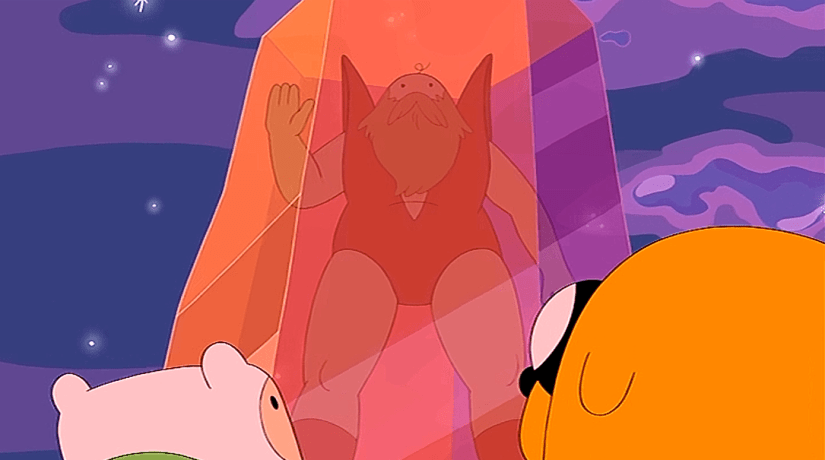
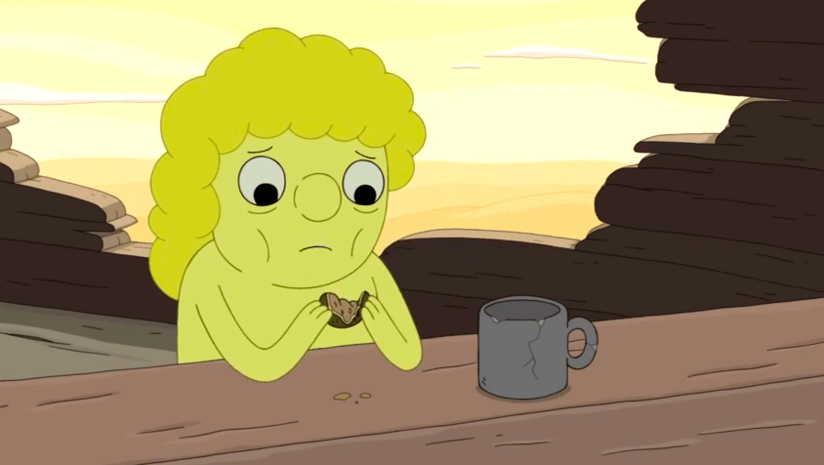
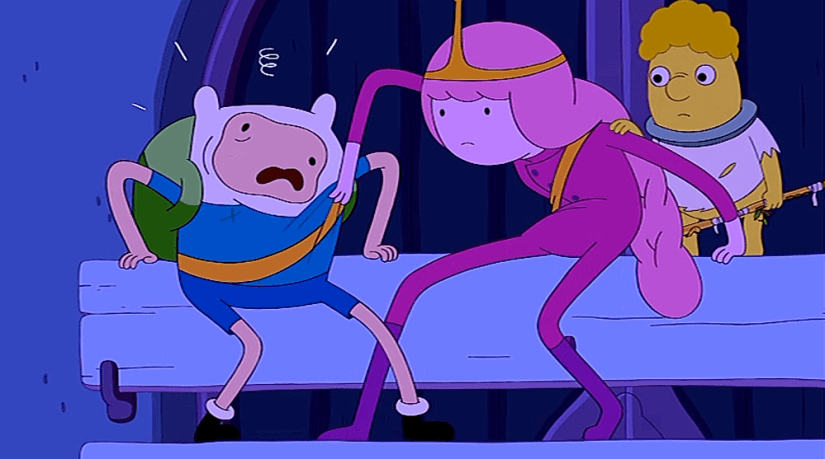
We haven’t seen much of Jake’s children after their debut episode a season earlier, aside from recurring appearances of Jake Jr., a brief scene with TV, and a cameo of all the kids at Tree Trunks and Mr. Pig’s wedding. Ocarina brings the attention back to all of the pups, with specific focus on Kim Kil Whan. This episode goes through great lengths to showcase how negligent Jake can be as a father, though not through his own intentions. Jake does love and care for his pups, he simply has trouble reaching out to his children because he doesn’t understand fatherly expectations. Jake likely doesn’t understand how to help his kids, and has insecurities whether they actually need him or if he’d be intruding on their lives. It’s a bit of a difficult situation that clearly makes Jake look like a deadbeat in the eyes of some, namely Jake Jr. and especially Kim Kil Whan. I really expected Jake to be presented as unlikable in this one, though I think Kim Kil Whan comes off as much more of a jerk. He’s pretty relentless in his treatment of Jake, and even if Jake was as bad of a father as he suggests, his actions are still pretty vengeful and harsh regardless. Despite this, I think the conflict is still interesting in how it takes both Jake and Kil Whan’s perspectives into account, and presents likely the most complicated relationship among Jake and his pups.

O 2.png

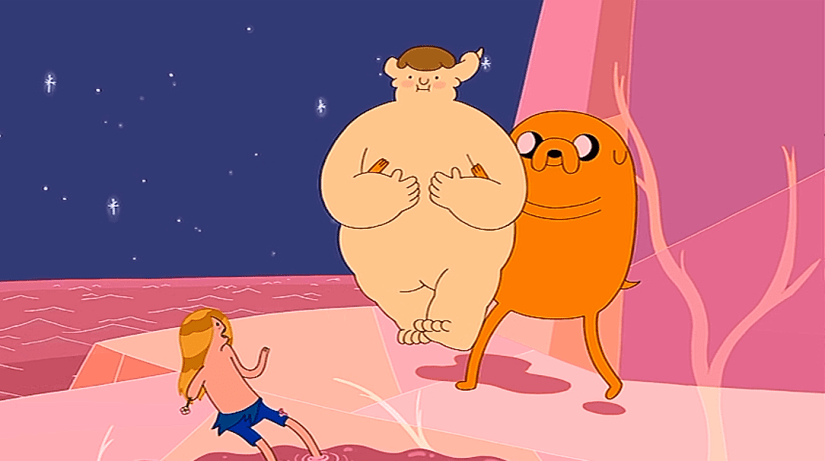
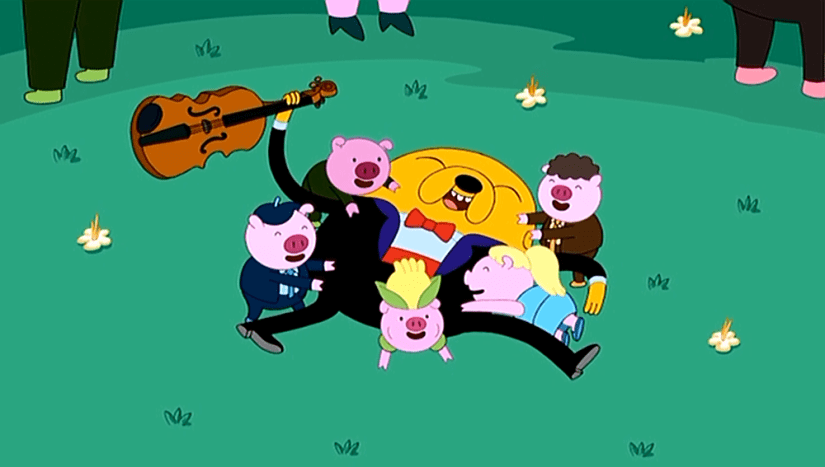
The pups all hanging out together on their birthday was a delightful treat, especially because it is the sole opportunity in the ENTIRE series for them to actually interact! Yeah, aside from their debut episode, this is the only time in the series we actually see the kids interacting with each other, and while I wish we could have had more scenes like this, it’s good fun regardless. It’s cool to see a character like Viola, who hasn’t had any chances to develop in the past, deliver a couple of lines. And it’s cool to see how all of them view their father; Jake Jr. has spent the most time with him, and while she respects him, she understands that he isn’t the best father. T.V. downright resents him, while Viola dramatically glorifies his existence. Charlie is the only one without defined feelings about her father, and she wouldn’t even have a speaking role of her own for another whole season.

Kim Kil Whan perhaps has the strongest feelings of angst toward his father, as he doesn’t downright hate him, but believes that he is not a model citizen and is without goals and aspirations. Kil Whan views him as an absolute loafer who doesn’t possess quality values because of his carefree lifestyle. The truth of the matter is that Kim Kil Whan knows as little about his father as Jake knows of him. Kim Kil Whan is simply going off of his basic knowledge based on the amount of time he’s actually spent with his father, and has automatically deemed Jake as an irresponsible person. What Kim Kil Whan fails to realize is that Jake’s irresponsibility certainly makes up a part of his personality, though, not all of it. Jake struggles to understand responsibility because he’s never been in a situation that has required him to be entirely responsible. His one main stance of authority throughout the years is his role as Finn’s guardian, though that even comes with its fair share of brotherly nonsense.

O 3.png

Kim Kil Whan’s ultimate procedure to help Jake get off of his lazy ass is selling the Tree Fort to various renters, after buying the deed from Marceline (in her first appearance this season). The idea of stealing Jake’s house is cruel on its own, but giving him and Finn the worst possible spot in the fort is exceptionally malicious. I think Kim Kil Whan’s sympathy is kind of killed by just how extreme and mean his actions are. Pressuring Jake into adopting a more traditional adult lifestyle is one thing, but literally forcing him out of his own home to do so seems entirely apathetic. I don’t necessarily bring this up as an actual flaw of the episode, but I think it’s certainly hard to like Kim Kil Whan as a character through all of the cruelty he puts Jake through. Jake, with all of his flaws, is still sympathetic and likable because we know that he cares about his children, he simply does not know how to express that love. Kim Kil Whan only wants what’s best for himself, and completely disregards the happiness and quality of life of his father in the process. Kind of hard to like the guy, because he’s not even especially fun in his dickish-ness, but again, I think his situation in relation to Jake is still pretty well-defined. I like how far he’s trying to go to change Jake into a better version of himself, but simply does not understand how Jake functions as a person.

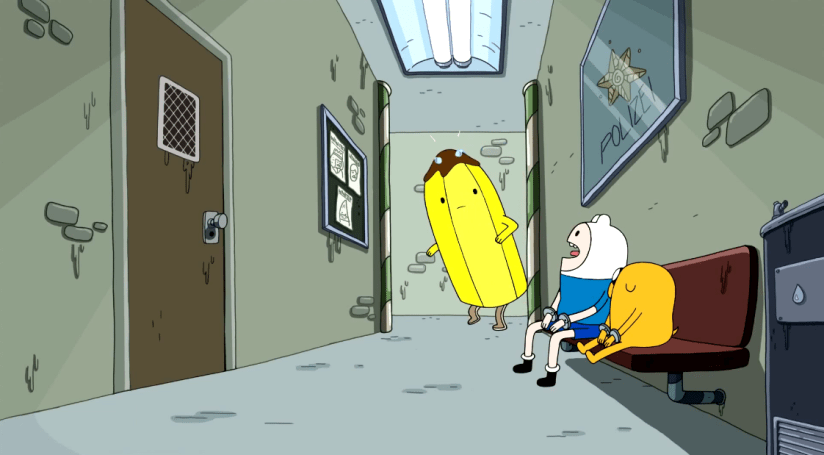
While sharing the Tree Fort, Finn and Jake must deal with the absolute insanity of having roommates, who are, for the most part, newly designed background characters. Pretty cool to see a whole bunch of unique characters we’ve never seen before, when the episode could have so easily recycled random Candy Kingdom citizens to fill these spaces. But, per usual, Adventure Time takes that extra effort even when it’s not even necessary in terms of the story. These quirky one-offs are all pretty cool, namely Mr. F and Mr. B, who have increasingly large feet and buttcheeks respectively. And nothing could have prepared Finn and Jake for their incarceration after simply using soap in (what was) their own home. This is the type of episode where I really wonder what BMO was up to, but I’m probably overthinking it. Perhaps he was on a camping trip with Air that weekend.
O 4.png

Finn’s certainly dumbed down in this one, but in a way that I actually find more humorous than distracting. Herpich can often write him in a manic way where his goofiness either comes off as somewhat out of place or downright hilarious, and this one falls more into the latter. Finn really isn’t the brightest bulb in the shed, and he doesn’t really have people around him to teach him about how the real world works. Thus, he has no idea what a deed is or what it means to possess ownership of property. This failure to understand the world is slightly improved, once Jake tells Finn a tale about how rule making actually came about. The sequence is competently animated, and sums up quite fascinatingly how rules were only created to essentially help people in power, and everyone else was doomed only because of their circumstances of not being on the “right” side. It’s a message that has come off as controversial for some, and even I think it’s a bit too political for Adventure Time to tackle, but I think it’s more so a product of Jake’s perception, and was intended to be subjected to debate. I still think it’s a little weird coming from Jake, as this episode emphasizes just how much he cruises through life, but it still makes sense regardless. Jake really has never had a sense of power in any sort, so he likely feels inferior to those more powerful than him that oppose him. AKA, Kim Kil Whan.

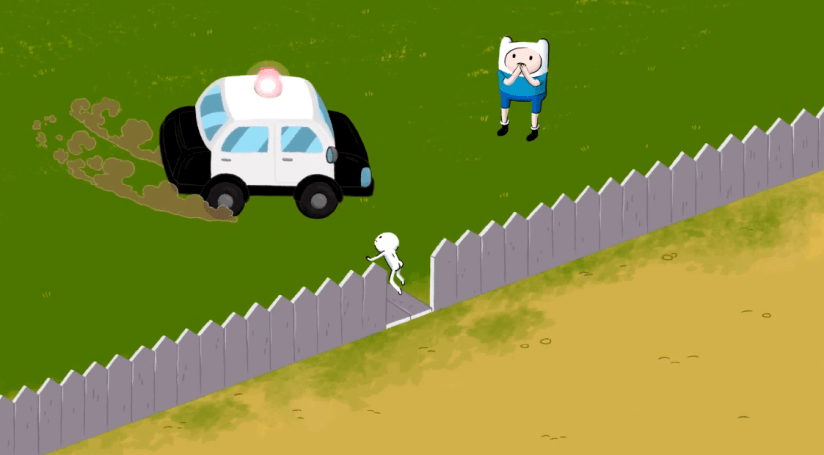
The feud continues as KKW consistently combats Jake’s efforts to get out of his sticky situation. As F&J strategize how they’re going to get out of said situation, Finn suggests that maybe the boys should actually consider getting jobs. It’s one of three moments where Finn considers taking on a more adult form of labor; he considered actually becoming a cop in Candy Streets, wonders if he should take on a paid opportunity in this episode, and later ponders taking on his parents’ company in The First Investigation. Though Finn hasn’t made any significant steps forward in this development, it is a sign of his maturity regardless that he does ponder such a scenario, it just so happens that he’s already committed to protecting Ooo. Perhaps the series will end with Finn getting an actual job, which would be a fitting conclusion to this ongoing motif.
O 5.png

As their plans continue to backfire, Jake falls into the brink of despair as he fails to understand why exactly KKW resents him. This is where Jake’s failures as a father are most apparent: he is unable to pick up on social cues between his children. Jake does not understand what exactly he’s done wrong because he’s unable to completely understand his children. Granted, KKW isn’t exactly an open book, but Jake very rarely senses emotional turmoil unless it is completely out in the open. KKW’s more secretive emotional state has left Jake with very little to work with or understand what exactly Kim Kil Whan wants from him. I wouldn’t be surprised if, this entire time, Jake legitimately believes this is based on a financial disagreement. It isn’t until Finn puts the idea in Jake’s head that KKW may have some unexplained issues that Jake begins to realize the possibility of such a dilemma.

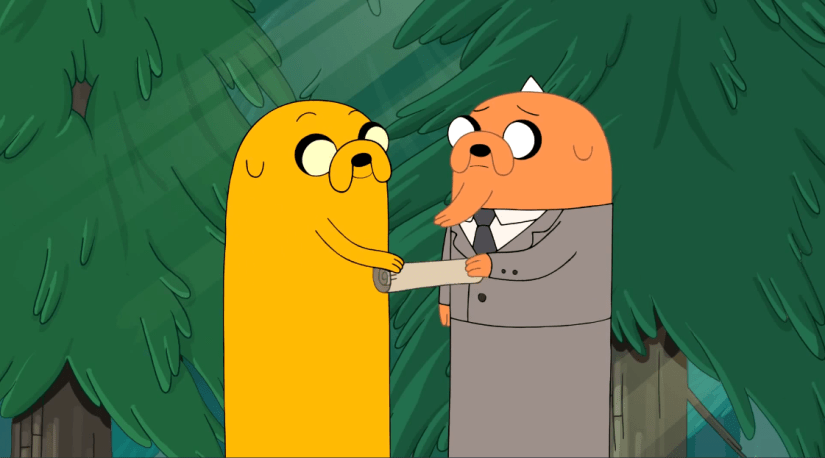
During their convening at KKW’s house, Jake’s attempt to comfort his son is done in the most “Jake” way possible: he humorously dances over to his son and presents him with an ocarina, as he repeatedly says “I love you” over and over again. The gift is once again a failure on Jake’s part to understand his son, though it surprisingly works. Kim Kil Whan doesn’t accept the gift as actual incentive, but realizes the heart and novelty that was put into said present. As Jake mentions he never even looked for a job, Kim Kil Whan begins to understand and accept that his father’s behavior is just a product of his personality, and his lack of a professional lifestyle is what makes Jake so vulnerable to be caring and lovable. Though KKW is disappointed with his father’s failure to take on responsibilities, he at least realizes that he is loving. This is KKW’s biggest and most important takeaway from his father thus far. And as they bid goodbye during that entirely poignant and muted shot, theytwo are left with a different level of respect for each other: Jake respects his son for accepting his gift and giving him his house back and KKW respects his father for being a genuine person. Inside his house, Kim Kil Whan confides in his wife that his plans simply did not work out, to which his wife responds with sympathy. KKW’s wife likely thinks Jake is a deadbeat as well, though, as Kim Kil Whan got to know Jake on more than just a surface level, as the audience of Adventure Time was able to do throughout the years, he realizes what a kind-hearted soul his father is, despite his flaws.
O 6.png

The ending was originally much sadder, as stated by Steve Wolfhard. KKW mourns over how childish his father’s behavior is, and as his daughter Bronwyn asks who he is speaking of, KKW simply responds with “nobody.” I think this would have definitely been profound and impactful, but it’s best that the show does acknowledge that, while Jake is far from the best father, he at least tries. In the Adventure Time world, there are so many fathers who just don’t give a shit, and while Jake has had numerous different reasons for not being the most competent dad, he’s proved that having a genuine attitude can sometimes be enough. Kim Kil Whan knows that Jake will never be able to be the most earnest or competent father as himself, but he’s left knowing that, even through his lack of provision, Jake is still filled with love. Which is why the positive outcome of this episode is so appropriate. I still think Kim Kil Whan’s actions are a bit too harsh for me to actually grow any kind of affection for the character, but the issues presented in this episode are quite interesting. I like how much the episode battles back and forth with Jake’s quality as a father, and almost leaves you wondering if he is a good dad by the episode’s end. Many will say yes, and many will say no. Regardless of what you think, the episode presents a lot of different parental issues that are well-explored and insightful, leaving us with scattered information to draw our own conclusions about Jake’s most complex relationship.

Favorite line: “I love Dad and everything, but he’s only ever met me twice.”

Adventure Time, Animation, Lifestyles

“The Tower” Review

TT 1.png

Original Airdate: May 5, 2014

Written & Storyboarded by: Tom Herpich & Steve Wolfhard

James II was a bit of a farce in showing just how okay Finn is doing after his amputation and the fallout with his father. Yet, The Tower shows us in great detail that Finn isn’t really in a good state of mind since he left the Citadel. He still has unaddressed turmoil to deal with, and he attempts to do so in some arguably unconventional ways.

TT 2.png

After his previous heartbreak of losing his girlfriend, it makes sense that Finn still would not understand that things are not supposed to automatically return to normal after traumatic events. Finn tried everything he could to deflect the sadness that was brought on by his break up, as Finn still is under the impression that sadness isn’t relevant to him. As he mentioned all the way back in Dad’s Dungeon, Finn believes crying is really only healthy when people die (though he is seen crying in Sugar-boarded episodes, which is unarguably a product of her emotive writing style) and that he should be keeping his chin up no matter what life throws at him. Though it isn’t sadness he’s struggling with in this one, it’s primarily anger and frustration, which also fall under the five stages of grief. Finn isn’t seeking emotional validation this time around; the boy is out for revenge. Finn looks to the “eye for an eye” philosophy as a means of reaching a solution to his issues, though through his experience, Finn learns that this isn’t exactly the proper way to deal with his problems. In fact, I think the episode is very clever in terms of never siding completely with one of the three main characters featured; Finn, Jake, and Princess Bubblegum all have their separate idealistic views when it comes to figuring out how to help the situation, and while some lean in a more helpful way than others, no plan seems completely competent by the episode’s end. The issue is much too complex to receive a straightforward answer, and The Tower is challenging in all the right ways.

After blowing up the prosthetic arm made from candy that PB gave to him (which was pretty poorly constructed… definitely was just a temporary gift from Bubblegum until she was able to build a more superior one), Finn is lectured by Jake, who believes that the donation of arms are doing more harm than good for Finn’s psychological health. Once again, Jake and PB are at odds with their belief mechanisms. Jake thinks more emotionally, while PB thinks more logically. Jake is likely under the impression that Bubblegum gave Finn the arm so he could simply replace it and move on with his life, yet Jake knows Finn, and he knows that he needs time to deal with his issues and not just immediately move on from them. Jake tells Finn that he needs to move at his own pace, and not to let anyone make him feel like he has to feel better immediately, which is pretty solid advice. Finn is possibly the only person in existence who lost his arm and his father all in one day, so only he knows how he’s feeling and how he should take this time to grieve. Where Jake’s advice is misleading is the introduction of the “melon heart” concept. Like every character who tries to help Finn in this episode, Jake means well, though his implication that Finn should “trust what his heart tells him” is a somewhat dangerous misconception. People are more susceptible to think and make decisions based off of their emotions rather than logic, and often times those emotional decisions can be self-destructive and over-impulsive. Jake doesn’t really have to worry about this because he’s emotionally sound, meaning that most of his thoughts can be based off of a combination of his feelings and his life experience, while Finn is less mature emotionally and isn’t able to create rational decisions based on his own feelings. This is why Finn’s immediate thought process is that he should seek revenge, though Jake warns that the information being sent to Finn is incorrect, and that he should listen harder. This of course does not help in Finn’s thought process, and only makes him dwell on those thoughts of revenge even harder than before.

TT 3.png

As Finn ponders outside the Treehouse on what his feelings are telling him and how he should actually go about these feelings, he unexpectedly gains a telekinetic arm brought about by his emotional ambiguity. And as far as ambiguity goes, I appreciate the arm’s mysterious nature. This is the only episode is appears in, and likely is a product of Finn trying to tell himself something that he isn’t even aware of yet. Though Finn follows the arm’s alleged instructions by building on a tower leading him into space.

As Jake returns from the spaghetti store, he comes across PB and her squadron of Banana Guards, and the tower that Finn has begun to build. This provides for some really great disagreements into the PB and Jake dynamic, where the two argue what is best for Finn in his time of need. It really feels like two parents arguing, and as is in the present, Jake and PB are the closest thing to parental figures that Finn has. Jake continues to argue that Finn needs to work things out on his own, and that Bubblegum should T.M.L.O. (that means ‘lay off’) though PB is more under the impression that Finn is a danger to himself and the people around him in his current situation. PB’s belief system is definitely flawed for reasons we’ll explore later, though I think it’s clear that she’s in the right at the moment. Jake is thinking compassionately of his brother and wants him to figure out his own path, but when it involves extremes like traveling into space and building a giant, unending tower surrounding Ooo, it’s pretty obviously irrational and dangerous. This goes back to where Jake and PB’s belief systems contrast with each other: Jake is thinking based on emotions, while PB is thinking based on logic.

TT 4.png

The detail put into Finn’s tower is great, showing just how much of a variety of different materials is actually being put into said tower. There’s tons of stuff from the Candy Kingdom, and also an inclusion of flaming debris that obviously comes from the Fire Kingdom. Also the horrified deer that wants nothing more than to get off of the tower. The song that accompanies the building sequence is the ever-catchy “Baby’s Building a Tower Into Space.” It’s a pretty simple tune, but one that’s funny enough and almost nursery rhyme inspired that it easily embed itself into my head. It’s a song that constantly repeats itself throughout the episode, and also finds its way into the actual score, and it’s a nice running motif that helps show Finn’s desires of revenge in an almost cutesy sort of way.

This one is also pretty beautiful in its scenery, as well as its atmosphere. There’s that extended entrance into dawn sequence that quietly showcases the citizens and surroundings of Ooo, right before the sun rises and the beautiful morning sky backgrounds appear before the long-pan of the still developing tower. Love the extra detail added to the tower as well, where the contents have gone from simple bricks and debris to actual ice castles and even penguins.

TT 8.png

Another character aside from the main cast who offers her own inspiration and life experience is a cloud named Caroll: a very enjoyable shut-in who rejects her past history as a puddle of water. The advice that Caroll offers to Finn is possibly the most irrational, and I think Finn acknowledges that in a way. Caroll, at the very least, acknowledges that revenge is not healthy and Finn should not be so vengeful in his actions, yet she is still misguided by her own confusing principles. Caroll has never comes to terms with her former self, and is ironically unable to move on from her traumas because she is focused on never reliving them again. Thus, Caroll has caused her development to become stagnant, simply because she is too fixated on hating everything that came before her cloudy state. She’s become cold and cowardly because of her history, and is more inclined to run from her troubles rather than deal with them head on, to which she still suffers from some nasty anxiety-driven issues. This is shown in her debut scene, where she attacks Finn and angrily yells in him for trying to swim in her, when Finn was not even considering such an opportunity. Caroll is merely haunted by her past self so much that she pushes away everyone and everything because of it. Though I think Finn is smart enough to realize that this is not a healthy alternative either.

When Finn finally blacks out upon reaching the brink of space and is rescued by “Martin’s” ship, Finn cannot help acting like a kid on Christmas at the thought of extracting revenge against the man who hurt him so much. As Finn powerfully punches his father, he begins tugging at his arm until Martin pitifully utters “… my favorite arm,” mirroring Finn’s line earlier in the episode. It’s an obvious, but effective moment that has Finn realizing that he doesn’t want to inflict the same pain that that his dad inflicted on him. And in an ultimate twist: it turns out to be PB the entire time!

TT 5.png

While Bubblegum left Finn with the message that revenge isn’t the proper way to take care of his issues, I’m not completely sure she was in the right here either. She subdues Finn’s anger and makes him feel less vengeful, but she uses trickery and deceit to do so. Her exchange sums it up her misdoings real nicely.

“You were hallucinating like crazy so it was really easy to trick you. I figured you’d thank me later after learning your lesson.”

Once again, PB uses logic and deductive reasoning, rather than thinking about Finn’s emotional fragility in the situation. She automatically assumes her plan is the exact thing that will make Finn feel better, and while it arguably works to some degree, I think Finn leaves feeling more confused than anything. He learned a valuable lesson, but one of his closest friends tricked him to do so, and he never got any closure with the situation at all. Still, props to PB for taking a black eye and trying regardless, it just didn’t seem like using deceit was the “fix-all” to Finn’s issues. On a more critical aspect, how does Princess Bubblegum know what Finn’s dad looks like? I mean, I guess you could imply that Finn or Jake described what Martin looked like to PB at some point, and since it was dark in the room, Finn couldn’t really decipher between a fake or real Martin. Still, I think it’s a bit contrived with how she’s able to emulate Martin’s voice, but I’m willing to glance over it for now.

TT 6.png

Finn announces that he’s feeling neutral to Jake. He’s not exactly feeling better, but he at least let go of his anger and decided to put empathy first. He may still be struggling, but he no longer feels like he needs to put anyone else through shitty circumstances because of his own. That is, except for PB, who experiences a whopping arm injury after Finn knocks the tower onto the Candy Kingdom. Yikes.

Otherwise, this is a very well-executed episode. I like how different each point of view is presented, and how each perspective has its own list of pros and cons. In the end, the episode never feels completely one-sided, and we’re left with the idea that the means of a solution for this dilemma is just as confusing to Finn as it is to all of us. Finn is at least left accepting that this is going to be a tough period in his life, and that there really isn’t anything that is going to give him instant gratification. All he can hope to do is better himself a little bit at a time, and try to understand the situation a bit more in depth. These concepts, along with a good bit of humor, and some nice artistic attributes from Steve Wolfhard and Tom Herpich, really help to make this episode soar.

As an added bonus, here’s some arm-concepts that Steve Wolfhard whipped up for this episode!

TT 7.png
Finn’s two-armed shadow: continuity error or intentional? You decide.

Favorite line: “I just thought about my anxieties and it’s like my mind hand touched a hot memory stove.”

Adventure Time, Animation, Lifestyles

“Escape from the Citadel” Review

EFTC 1.png

Original Airdate: April 21, 2014

Written & Storyboarded by: Tom Herpich & Steve Wolfhard

Of all the trials and tribulations that Finn has experienced over the years, none compare to the sadness and disappointment that came along with meeting his human father. Though Finn had his bouts of skepticism and confliction in regards to meeting his father, nothing could have prepared him for just how shitty Martin Mertens really is.

EFTC 2.png

First off, let me just say that the presentation of this episode alone is incredible. The Citadel is likely one of the coolest locations in the entire series, with its heavily pink and purple color scheme, its lovely designs (of both the guardians and the monsters are are incarcerated), and just the overall background details of how the entire setting literally begins crumbling throughout the entirety of the episode. Man, it’s all so awesome! The attention to detail with how well this episode captures the collapse of a society entirely in the background, while the main focus is centered on the drama between Finn and his father, is executed masterfully.

And let’s get right into the pathetic piece of shit himself: Martin. Martin is the definition of a careless dick character that’s written exceptionally well, mainly because of how unforgiving Tom Herpich and Steve Wolfhard were when conceiving his dialogue. Martin doesn’t have any sympathetic or charismatic attributes: he’s purely an asshole because he doesn’t put any effort into caring for his son. His one-dimensional nature is refreshing, because I was so worried that, at any point in this episode, he was going to have some sudden moment of compassion or it would have been revealed he was in some form of trance the entire time, but that would have been way too obvious and would have ruined anything they were trying to carry across through this character. The main thing to gather from his character is to show how truly human Finn really is. While Finn has some interesting cosmic developments later on in this season, he was not born as some kind of prophecy or came from a long line of super righteous heroes; Finn grew up like any other human child: being conditioned by his surroundings and the people who cared for him. Finn is kind and caring because his true parents, Joshua and Margaret, raised him to be such a person. The idea of Martin and Finn being complete polar opposites is certainly upsetting, though entirely plausible. Heroism and kindness are not genetic traits, and Finn owes none of his positive characteristics to Martin. The promo for this episode incorporated the song “Cat’s in the Cradle” in the background, and I can’t think of a more fitting way to foreshadow the father-son relationship that develop between Martin and Finn.

EFTC 3.png

The relationship that the two share is certainly uncomfortable to watch, in all the right ways. It seems like with each passing conversation, Martin’s treatment of Finn only worsens as the episode progresses. Finn is nothing but property to Martin; a means of helping him out of trouble and helping him to “escape the citadel,” though Martin wants nothing to do with him otherwise, and does not want to build an emotional connection with his son by any means. Finn begins to acknowledge this little by little, but is not able to accept it by any means necessary. Though Finn realizes he has loved ones and people to care for him, he is still conflicted because he doesn’t know why he was abandoned and left alone in his own feces as a baby in the first place. He’s at the age where he wants to know about his existence and place in the world, and this is the next step into figuring out who he really is.

Yet, Martin offers no answers, and only puts a further hold on Finn’s developmental process. Martin even begins to warp Finn’s perspective by blaming him for the reason the two of them were separated in the first place. Again, Martin has no time to humor Finn’s emotional turmoil, and wants to rush through the interrogation as fast as possible in order for him to successfully escape. But, without answers, Finn isn’t able to fulfill the closure that he craves so severely. And without that closure, Finn feels as unloved and worthless as ever. The funny part about all this is, while Martin is a character that we’re all supposed to hate and despise, he still has qualities that make him somewhat entertaining. By just how much of an absolute douchebag he is and how hard he tries to avoid his responsibilities (“I’m going to the store!”) he comes off as just ridiculous enough to kind of laugh while shaking your head at his antics.

EFTC 4.png

On the other side of things, Jake is as caring and compassionate as possible. Despite the clear anxiety and stress he experiences throughout this entire endeavor, he never leaves Finn’s side and assists him every chance he gets. Though with all love also comes tough love, and Jake has no issue calling out Finn for attempting to help Martin after several moments showcasing Martin’s neglectful attitude. Jake goes as far as to call Martin a “loser,” which is an effectively touching move that shows just how much of a disdain Jake has for this guy that he met only minutes ago. In Jake’s eyes, anyone who fails to see how special and awesome a kid like Finn is, especially when it’s his biological father, is not worth Finn’s time and that he shouldn’t even attempt to pursue a relationship with him further. And as much as we feel bad for Finn throughout this episode’s run, we also can’t help but feel so sorry for all that Jake is put through as well. The Lich is on the loose, his surroundings are falling apart, there’s absolutely no clear way to get home, and his brother is experiencing absolute pain in what was supposed to be a rewarding endeavor. The weight of the situation is surely weighing on Jake, who not only has himself and Finn to worry about, but his girlfriend and children back home. And the inevitability of whether they’ll survive through all of the destruction, combined with the drama that is currently affecting them, is enough to send the usually laid back and calm Jake into a full-fledged stress attack.

And then there’s the Lich… oh man, is he at his all-time best in this one. Seriously, his speech to Finn and Jake, as everything goes dark and Ron Perlman reads off those haunting words, is one of my all-time favorite moments in the entire series. Gonna quote this monologue to break it down a bit further:

FALL. You are alone, child. There is only darkness for you, and only death for your people. These Ancients are just the beginning. I will command a great and terrible army, and we will sail to a billion worlds. We will sail until every light has been extinguished. You are strong, child, but I am beyond strength. I am the end. And I have come for you, Finn.

The Lich’s words are antagonistic, but also convincing. The Lich doesn’t know about Finn’s current state with his father, nor does he really even care to know. All that the Lich knows is that Finn is a lifeform, which means that he has no other fate aside from death. While the Lich has tried to destroy Finn’s life, and lives of all beings, several times, Finn has averted such a future through vigilance and his own heroic deeds. Yet, the Lich does not feel intimidated by heroism or the the greater good; he has his instinctive duties to destroy all life, because all that deserves to exist is destruction. The Lich addresses how strong Finn is; Finn managed to thwart the Lich’s plans twice during the course of the series. Yet, the Lich knows that, no matter what Finn does, he cannot be defeated. There is no end to the Lich, and as long as life exists, death exists as well. Everytime he is defeated, he will eventually be revived. Because anything that represents mass destruction also represents the Lich. Yet, through all that, Finn’s strength manages to subdue the Lich once more, in one of the more disturbing and demented moments in this episode. As the fleshy-white substance latches onto the Lich, he begins to grow flesh and blood, in a painful, convulsing experience. Jake’s reaction speaks words, as he briefly opens his eyes and watches the horror in front of him, only to soon close his eyes and avoid such terror all together.

EFTC 6

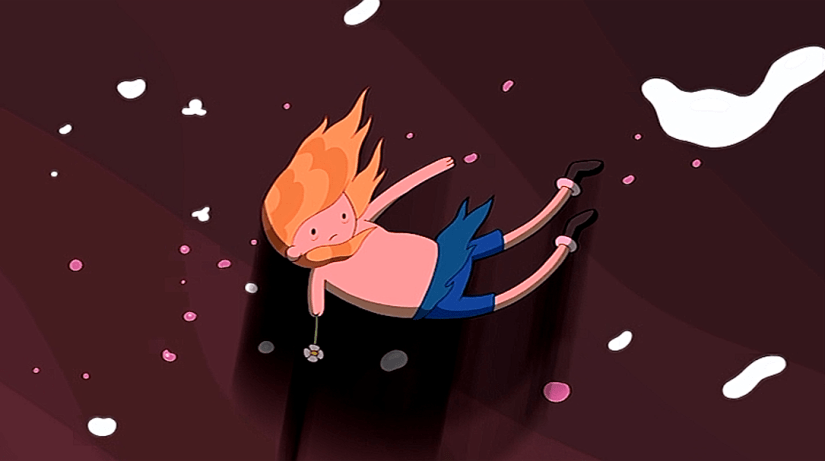
Though Finn’s duties are not done, as he still wants to reach out to his father in a demand for answers. Finn latches on to the severed stem that separates himself from Martin, in a desperate attempt to keep the connector together (tremendous symbolism, by the way) as Finn’s anger, fear, sadness, and stress take over his body in the form of his grass sword. As the engrossed grass arm tries to hold on as tight as it can, Martin effectively separates himself from Finn, and Finn separates from his right arm. Finn has not only lost his father, but a part of himself as well. The anxiety and intensity with which this past scene is executed, along with its transition into complete and utter silence, is some of the most “edge of your seat” material you’ll ever see in Adventure Time. Coupled with the fact that people had been waiting YEARS for Finn to lose his arm, thanks to heavy foreshadowing (and an upcoming episode that would simultaneously kill the dreams and aspirations of all of those who looked forward to it the most. Heh.) As the unending frustration of Finn’s dilemma increases to a point where you feel like your beating heart cannot stand anymore, the episode takes a moment to stop entirely to let everything sink in, and allow your heart to almost stop to a complete halt as we watch Finn sadly, and lifelessly float to the bottom of the crystallized fluid. In his downward floating, some of the growth goop gets onto Finn’s stubby arm, as a flower begins to grow. This shows two things: 1. That the eternal grass curse is very much still active within Finn’s body. 2. That beauty can exist in even the most tragic situations.

As Jake fishes Finn out, his behavior is incredibly nuanced and considerate. He doesn’t immediately start asking Finn if he’s okay or freak out for putting his own life in danger. Jake simply takes the time to silently check if Finn is alright, prop him up for comfort, and tells him “it’ll be okay, dude.” In just a few simple words, Jake really shows how much he does care for Finn and how much he understands Finn’s pain. Though he can’t relate to the parental neglect, Jake knows how much Finn must be suffering, and while he also understands that Finn isn’t going to be able to immediately feel better with his situation, Jake still wants Finn to know that everything is going to work out in the end. And even if that doesn’t get the water works going, Shelby, still in Jake’s ear, crawls out to lie on Finn’s lap like a puppy dog to comfort him.

EFTC 5.png

Even through all the heartache we just suffered, we get a bit of a happy ending with the Lich rebooted into the form of a baby. This is a decision I’m… kinda okay with? We get some decent episodes and concepts out of it, but I’ll discuss in further episodes how I feel about Sweet P as a character. I like the idea of birth being the factor that essentially “defeated death,” though I still am uncertain if this was a long term decision I liked for the Lich’s character. Regardless, I do enjoy the ending that reveals that Tree Trunks already wants a divorce after presumably only being with Mr. Pig for a month or so. A hilarious idea that shows how easily she feels stagnant in her relationships, and how the role of being a parent apparently (pun intended) changes everything. Somehow it even works out!

I have a few minor gripes with this episodes, one being the whole babified Lich concept, which again is more revolved around my uncollected thoughts with how this was executed over the course of many seasons, and the other being that some of Finn’s dialogue can be a bit too goofy at times in Herpich’s segments. It’s okay to keep him wacky to keep the heavier scenes lighter, but Finn screaming “UH OH” over and over when his dad basically loses his leg makes him feel dissonant to the entire situation at hand. Though, while that particular instance bothers me a lot, the other moments are brief and few. Otherwise, I think this one is pretty fantastic. It’s a really exciting episode that holds every bit of my investment everytime I watch it, and it’s equivalent to that of an emotional rollercoaster. It’s a terrific start to the season long arc of Finn’s inferiority complex regarding his relationship with his father, and one that leads to many, many interesting opportunities down the line.

EFTC 7.png

Favorite line: “The Lich is super cute now, and he smells real neat!”

Adventure Time, Animation, Lifestyles

“Lemonhope (Part 1 & 2) Review

Screen Shot 2018-04-27 at 4.54.02 PMScreen Shot 2018-04-27 at 4.58.16 PM

Original Airdate: March 10, 2014

Written & Storyboarded by: Tom Herpich & Steve Wolfhard

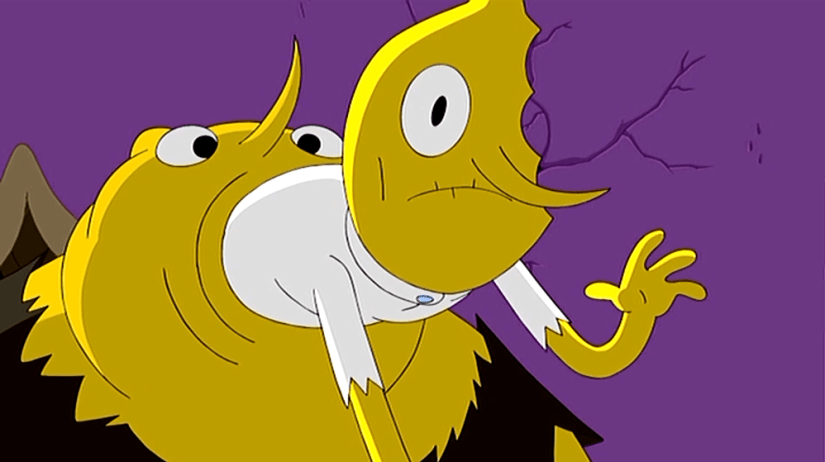
This two parter brings Lemonhope back into the spotlight after his first appearance in Too Old. And, as anyone else, I was looking forward to, or at least interested in, how the eventual battle between Lemonhope and Lemongrab would come into fruition. This episode, in turn, gave me something I really wasn’t expecting in the slightest. Where I figured the conflict between Lemongrab and Lemonhope would be solved through a high stakes battle between the Candy Kingdom and Castle Lemongrab, it is instead a mostly experimental journey exploring Lemonhope’s character and how he differs from the traditional Adventure Time hero. But its unconventional nature only contributes to its success, and ultimately is a gateway for some of the trippier and more surrealistic AT episodes that would become more commonplace during the following season.

Screen Shot 2018-04-27 at 4.55.19 PM.png

Lemonhope is an interesting character… he is certainly on the more selfish side, and many people have attributed his behavior as negative character flaws. Yet, it’s his depiction that, in my eyes, makes him so interesting and unique as a protagonist. If you think about his circumstances and what he’s up against, it’s somewhat ludicrous that people are expecting such a prophetic and heroic method of saving “his people.” The beginning video demonstrates how deranged and oppressive the community of Castle Lemongrab has become following Lemonhope’s departure. Lemongrab has essentially become a tyrannical dictator where absolutely no one is allowed to stray from his vision or even attempt to leave Castle Lemongrab. It’s riddled with hauntingly humorous lines such as “morale has never been higher since we got rid of hope.” And it’s with this video that really shows how much Castle Lemongrab has fallen, and how everyone in the kingdom has almost completely lost hope. Yet, they all depend on the actions of one little boy to single handedly save an entire kingdom and to bring everyone into a more suitable living style. I don’t know, doesn’t that sound a little fucked up to anyone else? Apparently to Lemonhope, because he’s pretty much opposed to returning to his former lifestyle in every way possible.

Lemonhope’s selfishness is well-defined. He was abused, tortured, and born into cruelty at the hands of the Lemongrabs. His people allowed him to leave with the sole implication that he would in turn get stronger and return to save the entire Earldom. Yet, Lemonhope simply wants to be free. Free from his state of torture, free to do whatever he wants in life, and free to choose his own path beyond his original conditional living. He isn’t able to be free and move on, simply because he’s continuously pressured into believing that he is the sole savior over everyone. Lemonhope has a debt to pay for his people allowing him to leave, but he just simply does not want to be a Finn the Human-type hero that conquers adversaries each and everyday. He’s a kid, and he wants nothing more than to just have a lifestyle of freedom and a lack of worries.

Screen Shot 2018-04-27 at 4.56.37 PM.png

The issue with Lemonhope’s actions is that his duty to preserve Castle Lemongrab still troubles him subconsciously. Through his nightmares, Lemonhope is approached by his demons and worries. In his first dream, Lemonhope is awoken to an area that is surrounded by nothing but the color gray. This signifies Lemonhope’s morally skewed choices and how they define him as a character. Through his own endeavors, he experiences a knocking at his front door. The knocking represents the impatient urges that are calling him to act upon his duties. The second dream deals with his fears of his character being defined by him abandoning his people and ultimately being deemed as “unacceptable” as Lemongrab, as alluded to earlier by Princess Bubblegum. Lemonhope fears being controlled by anyone like his was controlled by Lemongrab, so the signs that Princess Bubblegum is too trying to control him in one way or another only further contributes to his decision to completely seclude himself from everything he’s ever known.

These dream sequences are really fantastic examples of Tom Herpich and Steve Wolfhard at their all-time most allegorical. Herpich in particular gets very cinematic and unique in his aesthetics from this point on, and it’s a turn in writing that really helps Herpich develop into an even better storyboard artist than he already was.

The first act ends with Lemonhope trying to make it on his own, but failing to do so. Lemonhope’s ultimate desire and goal was to be “free,” yet he’s arguably more lost than ever. Lemonhope believed that being free was to go out on his own and to do whatever he wanted, yet his foolhardy attitude has led him to be left with absolutely nothing but the memories of his past life and the nightmares that haunt him. It’s this realization that I wish came a bit more into play by the end of it, seeing as how Lemonhope’s failure to survive on his own is never really harped (no pun intended) upon again.

Screen Shot 2018-04-27 at 4.57.11 PM.png

However, his interactions with Phlannel Boxingday in the second half really show off some personal growth from the little lemon boy. He learns that being free doesn’t always mean being alone, though, of course, it doesn’t nearly solve all of his issues. Phlannel Boxingday’s identity is kept purposely vague for the audience to draw their own conclusions as to what/who he actually is. The only constant with viewer theories is that he has some form of relationship to Princess Bubblegum. He has a knowledge of zanoits, speaks German, and has the exact number of letters in his name as Princess Bubblegum (not to mention that their first and last names start with “P” and “B”). My thoughts definitely lean to the idea that Phlannel may be Princess Bubblegum in disguise, and we see that she’s capable of creating such a facade later in The Tower. I’d be willing to bet that she would do something like this to try and further persuade Lemonhope into returning to his people and also saving his kingdom. I think the much more interesting theory, however, is that Phlannel is a mirage that represents what Lemonhope wants Princess Bubblegum to be. Phlannel shares many of the same elements of Bubblegum’s character, though he never pressures Lemonhope into saving his people and allows him free will. Phlannel helps guide Lemonhope onto a path that Lemonhope himself chooses in order to relieve his own demons, not one that Phlannel is trying to force him to pursue against his will. Lemonhope’s desire to be free also revolved around his freedom to choose whatever he wanted to do, and while he never truly wanted to return to Castle Lemongrab, he chooses to do so on his own terms, not anyone else’s. This also is why Phlannel only appears to Lemonhope, and is not able to go with him to battle Lemongrab.

Lemonhope heeds Phlannel’s advice after experiencing yet another nightmare involving Lemongrab. In Lemonhope’s dream, he’s confronted by an overly obese Lemongrab munching onto a cow. As Lemonhope tries to escape, and is urged to escape by the cow, Lemonhope realizes that he’s being puppeteered by a larger version of himself. Lemonhope begins to realize at this point that only he is supposedly holding himself back from saving the Lemon People, and he’s haunted by the choices that he himself set out to pursue.

Screen Shot 2018-04-27 at 4.58.45 PM.png

As Lemonhope returns to the miserable looking Castle Lemongrab, he’s greeted by a surprise appearance of the obese dictator himself, Lemongrab. I really like how effectively the show has positioned Lemongrab as a villain. He went from being a somewhat psychotic, yet sympathetic character into a full-fledged autocrat. His antagonistic role in this one is definitely strong, and it’s easy to buy into the fact that this man single-handedly corrupted an entire kingdom. Yet, even with all that he has going for him, Lemonhope is able to easily defeat his opposer through the music from his harp. Or, in other words, ‘twas beauty, killed the beast.

In a dream he experiences during his unconscious state, Lemonhope is finally able to answer the knocking by climbing through his gray surroundings into a brighter, more comfortable spot. Lemonhope is able to escape his area of moral ambiguity into a more enlightening state of euphoria and peace of mind. Yet, even with all he has accomplished and achieved through his actions, Lemonhope later acknowledges to Princess Bubblegum that he only came back so he wouldn’t have to think of his people or PB ever again. It’s disheartening to some, but really shows that Lemonhope always stuck to his original desires and goals of simply being free to do whatever he wanted to do in life. Whether he did it for the right reasons or not, he still came back and saved his kingdom, so does it even really matter what the basis of his actions were to begin with? Lemonhope may have been selfish in pretty much everything he chose to do, but he still made heroic sacrifices for it regardless, which ultimately shaped his legacy among the views of the Candy People. By the end of it, were reminded once again that in this world, there are Finn the Humans and there are Lemonhopes: those who choose to be heroes, and those who do not. Often times in the world we want certain people to be these grand saviors and have so many expectations for them, but Lemonhope was one who simply didn’t want any of it, and sometimes that’s okay too.

Screen Shot 2018-04-27 at 4.59.26 PM.png

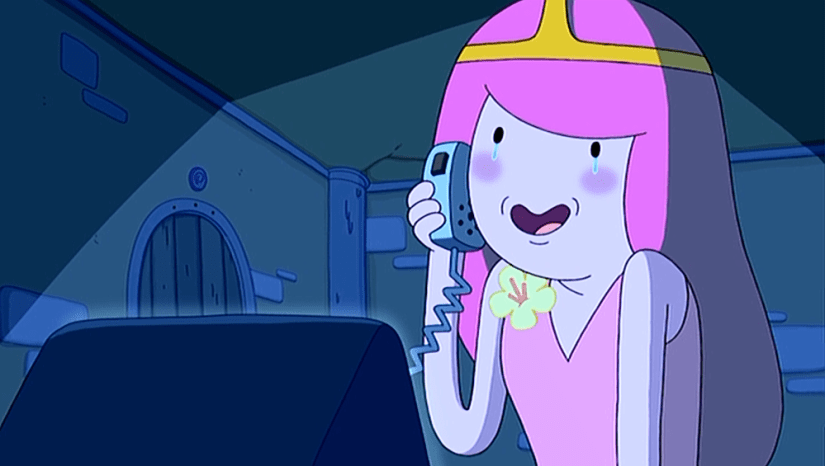
Princess Bubblegum has not forgotten his sacrifice, however, and even wrote a melancholic tune about it. As PB begins singing poignantly, a brief glimpse into the future of Ooo is shown. A somewhat demolished Candy Kingdom, an overly grown Treehouse, and the still in tact Castle Lemongrab are shown. It’s really a tearfully beautiful moment that truly emphasizes that nothing in the current Land of Ooo is forever, and that eventually, all of the lovely characters we’ve grown to appreciate so much will die off. It’s a sad but honest truth, and one that is explored through a beautiful melody, terrific landscapes, and an overall atmospheric tone that carries through powerfully to the end. It shows that even though Lemonhope never wanted to be a hero, he’ll be remembered as one regardless.

Lemonhope isn’t a personal favorite of mine, but I think it’s a pretty great example of Adventure Time at its most experimental. A new star character, some nice bits of surrealism, and an overall compelling main story that is filled with Adventure Time-y goodness throughout. I think what stops this one from being one of the all-time greats for myself is that I believe the first part is a little slow. Following Lemonhope’s escape from the Candy Kingdom, there’s many atmospheric bits of him attempting to live on his own and finding his own way of living, and while that’s all fine, I don’t really think it ties into the second part that greatly. As I mentioned earlier, Lemonhope’s main desire was to be free and on his own, but he quickly learns that it’s tough to be free and live life solo because he doesn’t have easy methods of providing for himself. This is mostly ignored in the second part, where it deals with his continual frustrations in regards to whether he should return to Castle Lemongrab or not. I feel like there’s a bit of a conflict with what exactly these two parts are trying to showcase, and while both of them are done well, I wish there was more of a coherent connection. Also, this is more of a nitpick, but there’s this really weird moment where Lemonhope’s voice isn’t filtered and he sounds exactly like Morty from Rick & Morty. It’s more of a funny little mishap than an actual problem, however. Otherwise, Lemonhope does everything it sets out to do quite well, and what was expected to be a big battle-heavy episode ended up being a very emotional tale revolving around inner conflict, and that’s exactly the kind of expectation-defying move I’d want from this show.

Screen Shot 2018-04-27 at 4.59.48 PM.png

Favorite line: “In conclusion, no one needs to come here ever, especially Lemonhope, and I ate my brother. Goodbye!”


Adventure Time, Animation, Lifestyles

“Apple Wedding” Review

AW 1.png

Original Airdate: January 13, 2014

Written & Storyboarded by: Steve Wolfhard & Tom Herpich

I previously mentioned in my review of Dream of Love that I thought Tree Trunks couldn’t really hold up an episode on her own following that episode, though I think I have to somewhat retract that statement. I have a soft spot for Tree Trunks, but for a while, I thought she was best in small doses, rather than having full episodes centered around her. But now that I look at it, some of Tree Trunks’ best episodes are yet to come, and this one is definitely an enjoyable expedition that I’ve grown fonder of over time. Apple Wedding is a fun way to gather a bunch of different characters and to put them in one place, while also introducing a handful of new and equally entertaining characters. There’s definitely a lot going on in this one, though to its advantage.

AW 2.png

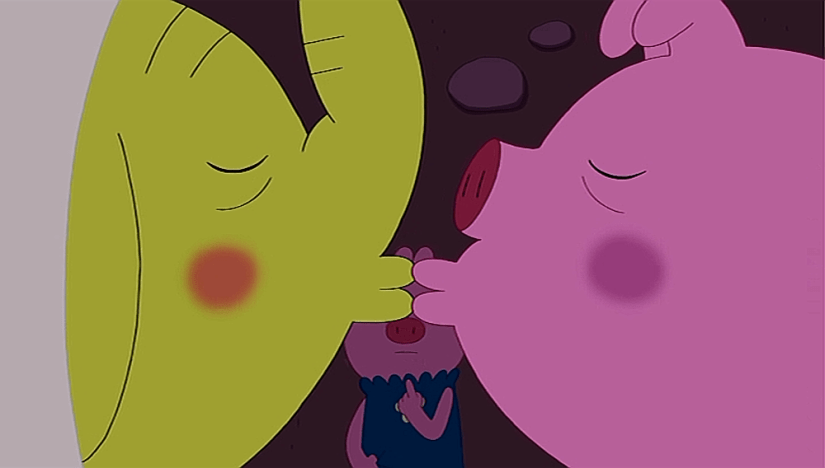
Let’s go over the main story first: Tree Trunks and Mr. Pig are getting married! This seems like a pretty appropriate development in their relationship; we haven’t really seen anything major from the two of them since Dream of Love, though, given their heavy infatuation with each other in that episode, it only makes sense that they would rush into getting married in what is presumably only a year later. It seems obvious that Tree Trunks is getting up in the years (I think… I mean, her mom is still apparently alive after all) and given her past history with men, I think she’d most likely end out her years with someone by her side. I buy into it though, because I think Mr. Pig and Tree Trunks actually make a pretty cute pairing for each other. Though, it’s most funny to me that, while the episode is called Apple Wedding and revolves around Tree Trunks and Mr. Pig’s wedding, the two never really feel like the main focus. Everything’s connected to their story, but tons of different things are going on around them. Even a good amount of time is dedicated to showing their family members.

We meet Tree Trunks’ mother, who is a hilariously horny elephant that gives us some insight into where TT’s risque behavior comes from. We’re also introduced to Mr. Pig’s extended family (by the looks of it, most of Tree Trunks’ relatives must have died off) including his mother, who has plenty of enjoyable overreactions, as many mothers would when their child’s wedding day occurs. We also get to see what I assume to be Mr. Pig’s nieces and nephews playing and messing around with Jake, which I thought was just adorable. PB’s statement “I haven’t seen Jake this happy in a while,” adds a layer of poignancy to his actions. Jake is probably still not over the fact that he never got to properly raise his children, and now that Finn’s going through his own developmental issues, he is probably thrilled that he has a chance to hangout with and play with a group of children. It’s also a somber inflection from PB that leads me to guess that Jake really isn’t as happy as we’re used to seeing. It’s obvious that Jake pushes away his stressors and doesn’t really like to deal with them, and I get the feeling that PB picks up on that where Finn does not.

AW 3.png

On the Princess Bubblegum side of things, her subplot provides for some fun characterization as well. This episode introduces the one, true King of Ooo, who is a favorite of storyboard artist Steve Wolfhard, and I think this provides for one of his best appearances. I really enjoy the dynamic between PB and King of Ooo, and how it becomes a rivalry of pride by its last moments. And it makes sense why PB would hate him! Bubblegum has worked hard to build her kingdom from scratch and make a name for herself, while the King of Ooo is simply a swindler using a false name to gather the masses. Bubblegum’s determination to expose him is a lot of fun, even if she does end up taking it a bit too far. I was initially annoyed with her decision to lock up everyone after they rebel against her, but I think it works in the sense that it emphasizes her absolute disdain for the King of Ooo, and it’s just genuinely a funny twist. So I’m okay with it.

Aside from those two stories that are mostly major, this episode is also chock full of much smaller stories. Tree Trunks’ ex-husband Wyatt gathers some attention, and man, what a sad loser he is. I really love the way BMO’s absolute enthusiasm is diminished after talking to him for a few minutes, and you can really gather what kind of a person Wyatt is in just a few scenes. There’s always that one sad asshole who ruins a wedding by boring people to death with their own love life, and Wyatt embodies everything those sad assholes possess. After only knowing BMO for like, 15 minutes, he’s totally ready to ask her to move in with him, just because he constantly needs that attention. And BMO’s reaction is perfect; I love how she completely disappears for the entirety of the episode following this scene.

AW 4.png

Finn’s duty to stop LSP from ruining the wedding is fun as well. I love how this is an actual job Finn is given, as in Lumpy Space Princess just generally does this every single time there is a wedding in Ooo. Really adds to her demented, egocentric behavior. The episode does a great job of making her seem haunting and antagonistic as well, even if her motivations are, at core value, quite silly. Also, according to the storyboard, LSP’s dress is an exact copy of Princess Diana’s dress. In the promo art that Wolfhard conjured up, it depicts LSP preparing to defile a grave a steal someone’s dress from inside. So, was that actually Princess Diana’s dress? Interesting thought.

Also depicted in the promotional artwork is Cinnamon Bun returning to the Candy Kingdom once more to bar tend at the wedding. And his appearance is relatively funny! His mix-up of “take around these drinks ‘for us’” and “walk to the zoo and back” really cracks me up every time I hear it, and is one of my favorite Cinnamon Bun lines in general. Also, I love the collaboration of different things coming together, as PB flies the King of Ooo’s jet, LSP gets closer to the wedding, TT nearly says “I do”, and much build up is put on CB shaking that bottle of champagne. Yet, it was entirely a farce and no significance was actually carried out by the bottle. It’s quite funny.

AW 5.png

Annnd, everything is tied together at the end when PB frees everyone (literally, everyone) from prison. Honestly, this scene was a missed opportunity to include Pete Sassafras finally getting released from prison. I wonder how long he was actually in there for. But, regardless, Tree Trunks and Mr. Pig are able to have some alone time for some hardcore fucking while PB watches. Shield your eyes, kiddies!

This one is definitely a lot of fun, mostly deriving from its ability to combine so many ideas with one concept. It’s fun to see this lot of different characters, and each story feels equally as entertaining as the other. It’s a wedding episode that doesn’t feel at all schmaltzy or drawn out, and one I seem to enjoy more on each rewatch.

King of Ooo’s attorney Toronto was initially supposed to appear in this episode, though it was cut from the storyboard. You can see the deleted scenes here.

AW 6.png

Favorite line: King of Ooo dot cooooom!!!


Adventure Time, Animation, Lifestyles

“Dungeon Train” Review

DT 1.png

Original Airdate: September 30, 2013

Written & Storyboarded by: Tom Herpich & Steve Wolfhard

Dungeon Train takes on an interesting perspective; while Too Old and Love Games dealt mostly with how Finn was reacting to his break-up, and Earth & Water dealt with Flame Princess’s point of view, this one revolves around how Jake is responding to Finn’s own sadness. The episode accomplishes such with pretty sympathetic results, and I think it’s a really heartfelt testament to just how much Jake cares about Finn. However, the content of this one can be a little bit middling.

DT 2.png

The beginning is really nice, albeit a bit scary. Finn’s clearly still sad about his girlfriend, but this episode carries across his feelings as legitimately depressive. Finn states, “I just been feeling kind of… gray, is all. Like my inside voice has been kinda quiet lately. Not a lot of instructions forthcoming, y’know?” signaling that this sadness he’s been feeling has led him in the direction of despondency and just genuinely feeling unmotivated. It’s sad to see that, as much as Jake wants to help, he’s just simply not always the perfect person to give Finn sound advice. That’s not to say that he never has given Finn positive advice, though often when confronted with raw emotion, Jake has difficulty expressing himself in the right manner that is supposed to cheer people up. He’s in the middle of possibly the happiest relationship he’s ever been through with Lady, so it’s most likely difficult for him to work up the proper response that will help Finn to move on. That’s where the Dungeon Train comes in.

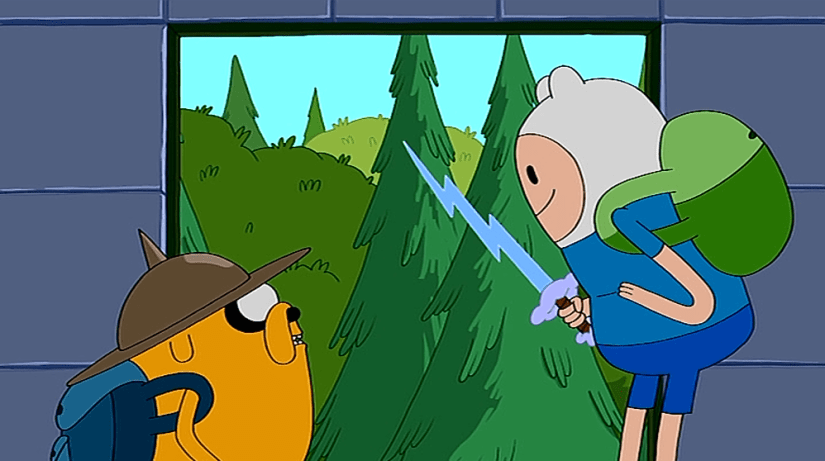
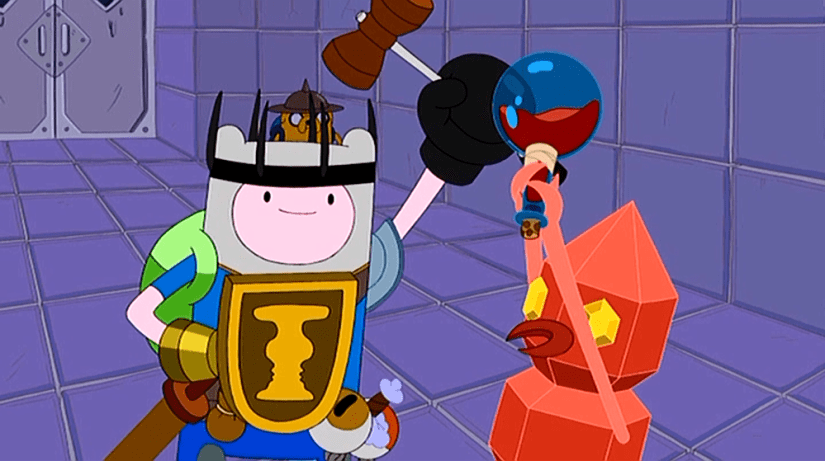
The Dungeon Train is a very cool MMO-inspired battle platform with many cool foes for Finn to face (love the designs of the crystal ants and the hair apes; both of them would end up being standard foes in the actual AT video games). There also some cool bits of loot, especially the lightning sword. I know there would never be a proper outlet for Finn to use it, as he currently possesses the Demon Blood Sword and would acquire the Grass Sword right after, though the lightning sword is pretty well designed and has a very unique feature. Finn’s response to all that the Dungeon Train has to offer is quite endearing, and Jake’s response is even more endearing. Another instance of some terrific voice acting from John DiMaggio in this one, as Jake reads off some really poignant lines that I don’t think would have nearly been as effective without DiMaggio’s inflections. That simple utterance of “welcome back, buddy” before the fade to black is undeniably sweet and really shows how much Finn’s happiness means to Jake.

DT 3.png

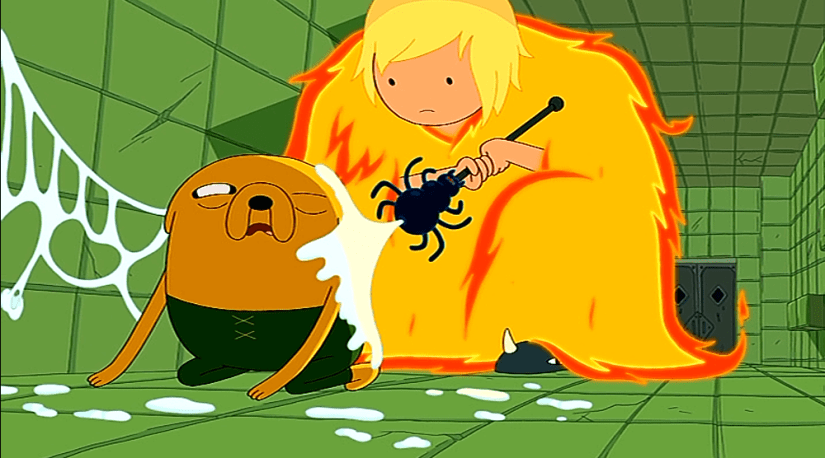
Though, the fun is short lasting, as Finn slowly becomes engrossed, and quite frankly obsessed, with the actual dungeon train. Again, we’ve learned through a brief conversation in Earth & Water that Finn finds his sadness easier to cope with when he does have something to completely focus his time on. The dungeon train not only offers Finn something to focus all of his negative energy on, but it’s also something Finn genuinely enjoys doing. It’s an escape for him. The issue is that obsession of any kind, whether good or bad, is harmful. Finn is using this distraction to completely block out the hardships of reality and believes that if he simply keeps battling for as long as possible, he’ll never have to deal with his issues again. Whether this is true or not, this is what Finn sets out to do, much to Jake’s dismay. And this is certainly an interesting development of Finn’s character, though I think the actual events surrounding him are somewhat dull.

About five minutes of this episode includes Jake getting fed up with the dungeon train as Finn continues to pursue different challenges, and I couldn’t help but feel Jake’s pain a little bit. Not that I was legitimately frustrated by the episode, but I kind of grew tired of seeing the designs of the dungeon beasts and the repetitive nature of what the episode was trying to get across. It was all used as a means of showing how obsessive Finn was becoming and how tedious it was becoming to Jake, though there aren’t many jokes, interesting foes, or even a high sense of energy to carry it through. Definitely like what the episode was portraying, but not necessarily how it was executed.

DT 4.png

The episode picks up again as Jake befriends one of the hair apes on the top of train, as he ponders what his kids are doing at the moment. It’s another poignant line delivery from DiMaggio himself, and shows a bit into Jake’s frustrations with his own self. As he chases around his brother deflecting his emotions all day, his children continue to grow up around him, and he isn’t even there to watch them. Obviously he loves Finn and wouldn’t leave him to rot in the dungeon train, but there surely are some days where Jake probably feels the guilt and weight of being a parent, and isn’t even able to be with his kids half the time. Poor guy.

This all comes to a boiling conclusion as Jake angrily scolds Finn for becoming the very thing he sought out to destroy, while Finn shoots him with some nasty looking spider webs. This is where Finn, using the future orb that Jake had previously picked up, discovers that he will continue to explore the dungeon for the rest of his life, as Jake follows behind. I have a couple of questions here; so, is the orb a factual look into the future? Like, is this legitimately what the future holds? Because in that case, why is Jake still alive? Obviously Jake’s half-alien self prevents him from aging the same way a dog would, but he’s already decades older than Finn at this point in shapeshifting dog years. Maybe I’m nitpicking, but I just don’t buy that Jake would live to see Finn in his older years. That gave me a sad writing it. I do enjoy how this futuristic Finn once again contributes to the missing right arm allusion that the show has emphasized so heavily lately.

DT 6

But fortunately, Finn comes to his senses and returns to Jake (love the “very special” music here; it would later become a staple of the Grassy Wizard episodes). Finn acknowledges quite maturely that, while he realizes that he can’t stay on the train forever, he does want to stay on for another week or two. It shows that Finn isn’t completely ready to face reality, but he does know that he will have to eventually. And it’s especially sweet that he does so not just for himself, but for Jake. Jake, who selflessly stuck by Finn no matter what, did leave at least one positive lasting impression to his brother: that Finn cannot just simply focus on contributing to his own happiness, but the happiness of his loved ones as well.

Dungeon Train is decent. I think it has plenty of slow moments, but the overall connectivity of Finn and Jake is what carries it through quite successfully. I really dig the individual character exploration of the boys that this episode set out to do, and I think in return we got some really nice emotional performances from both Finn and Jake. I just wish the middle parts gave me a bit more to chew on. On a different note, this is the first time Flambo’s brother is mentioned, and it’s sad to think that he’s mentioned as many times as Flambo actually appears after this episode. I miss that little fire scamp.

DT 5.png

Favorite line: “What… is the meaning of ‘spoon’?”

Adventure Time, Animation, Lifestyles

“Too Old” Review

TO 1.png

Original Airdate: August 12, 2013

Written & Storyboarded by: Tom Herpich & Steve Wolfhard

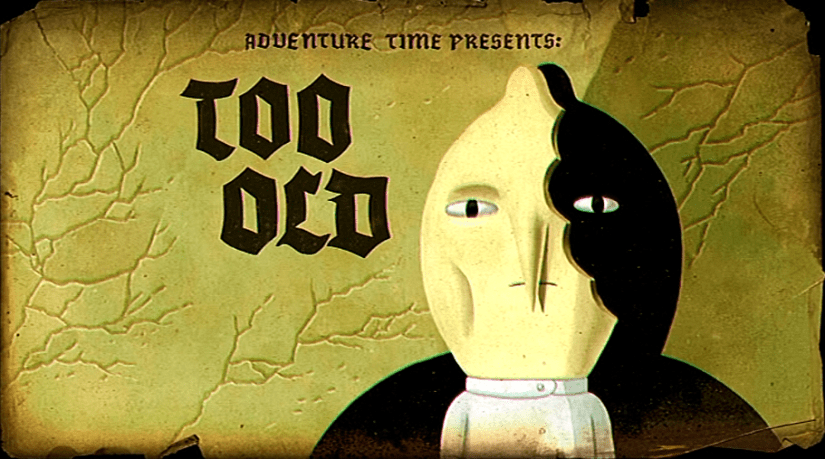
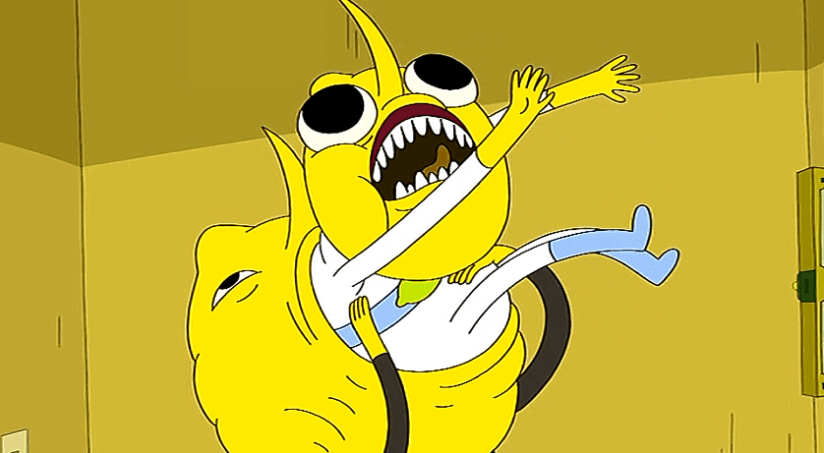
After the preview came out for Too Old following the release of Frost & Fire, the entire fandom was in somewhat of a tizzy. People were really, really pissed at Finn (the comments on this particular YouTube video are a trip down memory lane) and it didn’t help that his behavior in this one was considerably more offensive than the last episode. While Finn’s manipulative behavior was generally based off of ignorance and hormonal urges, this episode features him being purposely lying and deceitful, downright creepy, and virtually pathetic and useless in his environment. That being said, I initially hated this one. I couldn’t believe the way Finn’s character was bastardized, and it doesn’t help that the episode is a bit of an ear sore as well. The Lemongrabs are constantly shrieking throughout the entirety of this one, and while it’s helped the characters really make a unique identity in the past, it’s just downright unpleasant in this one. Yet, time has been good to Too Old. What I initially thought was an irritating expedition through Castle Lemongrab with some really unlikable moments with Finn, I now believe is a really intriguing cautionary tale of trying to relive the past. And with tons of little details sprinkled throughout the episode’s run, I actually think it’s a pretty brilliant allegory.

TO 2.png

Too Old mimics Too Young to a tee. Aside from its title, the episode uses the basic structure of Too Young’s individual moments to carry the plot and its motif along smoothly. Even the title card music is the exact same jingle that was heard during Too Young’s title sequence. Yet, this isn’t a sequel episode. A sequel, by definition is “a published, broadcast, or recorded work that continues the story or develops the theme of an earlier one.” Too Young, in contrast, was a mostly bright and colorful tale with silly jokes that revolved around the bittersweet relationship between Finn and PB. Too Old, however, focuses not on a bright and colorful story, or the sweeter elements between Finn and PB, but a dark and twisted tale of a creation gone corrupt and Finn at his absolute lowest. Let’s start with Lemongrab.

Lemongrab has certainly come a long way since his first appearance. Initially an ineffectual and goofy tyrant, Lemongrab has gone from having absolutely nothing to having practically everything that the Candy Kingdom possesses. Lemongrab has a proper kingdom with citizens, the company of a brother, and enough food to make for an absurdly overweight lemon. The one thing that Lemongrab didn’t consider when building his kingdom, however, was building a kingdom based out of love and care for his people. Lemongrab simply decided to create for the sake of creation. Fascinated with his own ability to make citizens, he continued to do so and caused his kingdom to become overpopulated. Now he simply has a plethora of candy citizens who he doesn’t even love or care about; he simply was interested in their creation, and by the time the next lemon person came along, he was already disinterested in the last. On top of that, his brother, who was once built to be his equal, was quickly distorted into his oppressor. The fatal flaw in the creation of Lemongrab 2 was believing that a second Lemongrab would help to round out the first. Yet, what PB didn’t realize, was that Lemongrab only believes in himself. If someone’s methods don’t line up exactly with his, they’re automatically deemed as oppressors of his beliefs and tactics. And, though the two Lemongrabs were built exactly the same, the first Lemongrab has much more life experience than the first. The first Lemongrab has been hardened by society and has grown to be bigoted against anything that goes beyond his own way, as he was virtually born into this world alone. Lemongrab 2 was never built to be alone; Lemongrab 2 always had his brother since the moment he was conceived, and doesn’t possess the selfishness and ego that his brother has developed.

TO 3.png

What this all boils down to, basically, is that Lemongrab believes he is finally greater (or at least up-to-par) with his creator. Having an array of servants, citizens, and entertainers, he finally feels like royalty. And this really shows during Lemongrab’s royal dinner. As PB and Finn arrive, a Lemon Person announces the arrival of the two, followed by a Lemon Person abruptly falling from a trapeze, alluding to Cinnamon Bun doing the same thing in Too Young. What seems like a brief, cute reference to the past episode is actually a pretty in depth look into Lemongrab’s psyche. This introduction of PB and Finn, as well as the trapeze act, is how Lemongrab believes people are supposed to be greeted in a sophisticated, upstanding kingdom. Cinnamon Bun’s entrance, was of course, based on his own bumbling stupidity, rather than an actual elaborate performance. This view of ignorance on how a kingdom is supposed to be run is ultimately what leads Lemongrab into absolute fascism.

Say what you want about PB’s own policies and treatment of her people, yet she puts her heart, blood, sweat, and tears into caring and loving for her people and giving them a serviceable living experience. Lemongrab, on the other hand, only cares about himself and his own way of living. He could care less about the other Lemon People and their own quality of life; he simply wants to create a luxurious living community for himself as a status of his importance. The only person he has an ounce of care for, aside from himself, is Princess Bubblegum, though this care is often combatted with hostility. I don’t believe for a second that Lemongrab invited PB over for her to see how much the kingdom has improved, but rather to one-up her and to show that he is now more dominant than his creator.

TO 4.png

Yet, Lemongrab’s kingdom is based on a single ruler’s mindset, rather than the success and individuality of others. Whether the Candy Kingdom contains truly unique and inspired Candy People or not, they do have their own sense of individualism and their own distinct mindsets. This is why, when we’re introduced to Badlemonnohope (nicknamed Lemonhope), his identity and mindset offer a much higher sense of individuality and character than anyone else in the Earldom. He chooses his own path and interests, which is why Lemongrab has deemed him as obsolete among the crowd of lemon people that surround him. The reason I’m explaining all of this in great detail is particularly because I think Lemongrab’s descent into pure tyranny is actually quite well-rounded. It derives from systematic inadequacy and a sense of inferiority toward his creator. Lemongrab simply believes that emulating a fictitious utopian society based on what he has seen can create a bustling and admirable community, though all of what he thinks makes up a thriving kingdom is a mere facsimile of the Candy Kingdom. And his insistence that PB was behind all of this, that she is at fault for his shortcomings, is simply an excuse at this point. While some of PB’s errors and flaws could be attributed to Lemongrab’s suffering in You Made Me, at this point, Lemongrab uses his creator as a mere scapegoat for his own flaws, marking a full transformation into villainy as opposed to a sympathetic anti-hero. Once again, his selfishness comes out when addressing PB by his balcony, “You try to steal my Lemonhope away?!” His possessiveness towards Lemonhope shows that Lemongrab merely thinks of him as property; a token to add to the completeness of his kingdom. And, despite all of Lemongrab’s monstrous actions, an almost completely devoured Lemongrab 2 professes his life experiences and what he’s learned through his encounters with his devious brother: that lemons should not squeeze other lemons to get by, but allow lemons to grow and flourish. A silly analogy, but one that shows that Castle Lemongrab isn’t completely devoid of empathy and hope. The lemon people, through their suffering, have learned to empathize as well, and continue to look on towards hope for the day they will be rescued. Though, one must also remember: the desires of the Lemon People still remain deeply selfish. They look for freedom of their own, yet depend on one very little boy to save an entire society of people. This comes in handy when taking a look at Lemonhope’s selfishness in his own star episode, which has gotten a lot of flack, but is considerably more understandable when looking at the sour nature of the Lemon People in general.

Whew, so that was Lemongrab’s portion, now let’s look at the horny teen at the center of it: Finn. After the events of Frost & Fire, Finn most likely was heartbroken and ashamed over the loss of his girlfriend. Having no one but himself to blame, Finn was left alone with nothing but his own guilt to bear. This is also a time where, as we’ve discussed, Finn has yet to even border emotional maturity. That’s why, instead of addressing the thing that he has done wrong and allowing time for himself to grieve, he turns to a comfortable source of endearment of whom he spent much simpler times with: Princess Bubblegum. Probably the most rewarding time that Finn has experienced in his youth did take place when Lemongrab usurped Prubs; spending the entire day pulling pranks and being childish with someone he cares for deeply was something that Finn truly cherished and enjoyed more than anything else. Finn longs for the simple days of being a child, when he didn’t have to deal with the tough trials of relationships, and when he could spend time with someone he remembers having terrific times with. What Finn hasn’t acknowledged is that times have changed since he last pulled a series of pranks on the cranky lemon man. Finn does not realize that he cannot simply escape from his issues using glamorized memories, and that the memories he has left behind cannot simply be recreated.

TO 6.png

This is where most of his jerkiness comes from; first, from his childish lie to Jake in order to spend time alone with Princess Bubblegum. People have targeted this one especially, though honestly, I wouldn’t be surprised if Finn held some hostility for Jake after contributing to the third occurrence of Flame Princess and Ice King’s fight in the past episode. Though it’s never addressed upfront, and his guilt most likely puts most of the blame on himself, I get the feeling that Finn is looking for a scapegoat to put blame on, much like Lemongrab, which leads him to targeting Jake. It’s mean on it’s own, but Finn’s insistent urge to manipulating PB proves that he hasn’t completely learned from his actions in the past episode, if at all. Finn simply wants to find a quick and easy way to feel good again, and selfishly does not consider the wellbeing of others in the process.

It’s interesting to note that Finn barely even reacts in relation to the Lemon-centric plot. It makes it somewhat ingeniously tied together in my eyes that these two character’s failure to recreate the past have virtually nothing to do with the other: Lemongrab could give less of a shit about Finn’s boner issues, and Finn doesn’t realize the severity of Lemongrab’s corrupt government. He’s still too young to look beyond situations as a fun and enticing adventure, which is why he weighs Lemongrab’s abusive, dictating nature as equal to the day when Lemongrab took over the kingdom. Finn doesn’t yet grasp political issues like this, and the first time he encountered such an issue, he attempted to solve it with pranks and gags. Naturally, he believes the same solution is in place, yet only through PB’s solemn words is he able to realize that exploding pudding isn’t going to save Castle Lemongrab. Finn wasn’t looking to save an entire kingdom; instead, he was looking to have a fun time with an old friend (or in this case, an old flame). Yet, growing up is realizing that life isn’t always a little boy game, and that sometimes there are dire consequences to deal with. Trying to pretend that the past can simply be emulated every time something bad happens is completely ineffectual, and Finn cannot ignore his shame and guilt forever.

TO 5

When looking at Finn that way, I think it is a lot more forgivable that, by the end of this one, he does at least learn something from his actions. We aren’t just treated to a barrage of insufferable Finn moments that have no real payoff for his character (as The Red Throne would later be guilty of), as these moments are all vital for giving Finn a reality check that is much needed. Aside from Jesse Moynihan, Steve Wolfhard and Tom Herpich seem to be the most ballsy in exploring the darker and more uncomfortable portions of Finn’s personality, and I really enjoy these expeditions. Even if Finn is somewhat of an uncharismatic dick, you really have to look at it from the perspective of a 15-year-old boy. That doesn’t automatically correlate to decent writing, yet I think Finn’s issue at hand is presented with meaning and purpose. Finn is a sweet kid who wants the best for everyone, but as life has taken a turn for him, he has put his emotional sensitivity behind him and simply wants to be numbed to his own errors. And the sad truth of the matter is that a lot of nice people in the world have been negatively altered by the circumstances of life, to the point where their behavior is completely unrecognizable from their past self. 

Of course, at the center of this is PB; the level-headed guardian who just can’t catch a break. I sympathize with her a lot in this one, though there isn’t a ton of focus on her perspective. Her own creation has become a legitimate monster, and tons of people are suffering because of it, while the one person she thought could lessen the burden of a stressful trip actually made things more complicated and difficult. The poor gal just wanted to get through an already expectedly painful dinner.

TO 7.png

The humor in this one is paper thin, though this is a part of the series where I care much less about how funny an episode is and rather how captivating it can tell a story in the course of 11 minutes. Though this episode does have its funny moments, especially within the little details. BMO continuously trying to get into the bath with Jake while he’s on the phone with Finn is adorable and hilarious, and I don’t think I’ll ever get over the fact that the lemon toilet is a fucking juicer. There’s no way that isn’t excruciating.

I think some of my initial criticisms still stand, as the constant screaming of every single line performed by the Lemongrabs can grate on me a bit, but I think there’s some really brilliant undertones to this one that help it skyrocket beyond my first impressions. Capturing the motif of change between two distinctly different characters is interesting enough, yet there’s so many layers to Lemongrab and Finn’s individual identities that I feel like there’s so much you can read into and enjoy upon multiple viewings. Is Finn a dick? Yes. But this is an episode where he needs to be a dick. I can’t imagine the episode and allegories within this one working as well if Finn was just depressed or ignoring his issues the entire time. These choices, while potentially detrimental to Finn’s character, really work to emphasize a dangerous lesson in life, and to show its viewers the consequences that come with it. Whether it be Lemongrab’s inability to comprehend what it means to be a true leader, or Finn’s neverending issues with ladies, this episode combines two of the series recurring themes and blends them together for one completely uncomfortable, yet fascinating journey. It’s one of my favorites of the second half of season five, and one of the most interesting depictions of Finn during the fallout of his relationship.

Favorite line: “… and you’ll never get yelled at. Unless you drink my soda from out of the fridge.”
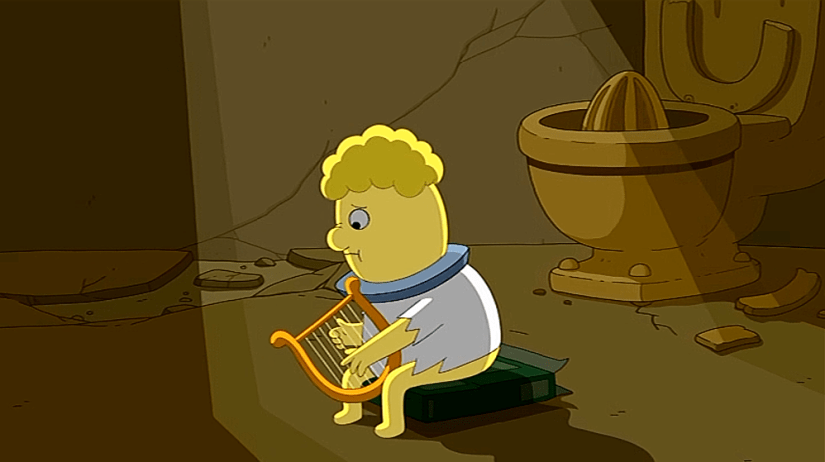
Adventure Time, Animation, Lifestyles

“Be More” Review

BM 1.png
One of my favorite title cards in the series. So beautifully atmospheric as BMO begins his search for meaning.

Original Airdate: July 22, 2013

Written & Storyboarded by: Steve Wolfhard & Tom Herpich

Any episodes focusing on BMO up to this point have revolved around his wildly vivid imagination, while also emphasizing the tragedy of his character. While cute and filled with creativity, BMO is also notorious for his desire to feel human emotions like anyone else, and “be more” than just a robot. It’s fitting then that Be More doesn’t focus on the tragic or darker elements of the character, but rather ties BMO to a heartwarmingly sweet origin story.

BM 2.png

It starts out, however, with a brief bit of innuendo that comes across as a somewhat somber portrayal of BMO’s character. He’s deleting files, or in this case, “deleting brain cells” which is a pretty obvious euphemism for drug use. Not sure why BMO would want to do something detrimental like this, but my guess is that it’s likely for experimentation and a possible surge of entertainment. Afterall, we never see him doing something like this following the episode, so it seems pretty obvious that BMO did learn his lesson.

But the rest of the episode is exceedingly less dark. It’s mainly a fun and light Finn, Jake, and BMO adventure, but a pretty good one at that. It’s one of those episodes that is just really likable in how nice the characters act around each other. The dynamic of Finn and Jake being BMO’s caretakers has been existent for a while, but I think this is perhaps one of the sweetest examples. I love how they willingly would rather put themselves into a potentially dangerous situation than to have BMO’s memory wiped completely, as expected. Most heartwarming is their intricate (albeit hilariously poor) ideas to disguise themselves as MOs, even if they have no idea what an actual MO aside from BMO looks like. I also love the brief glimpse of Finn’s chubbiness. Love how they give him some curvy edges; it makes sense that he wouldn’t be especially physically fit, because I’m sure he doesn’t really exercise outside of the typical adventure.

BM 3.png

Love the MO factory! First, I enjoy how it is apart of the Bad Lands; I like it whenever AT acknowledges some form of consistency with its geographical settings, so continuously adding new locations within designated landmarks (as Xergiok’s house was in The Great Bird Man) is pretty nifty to me. The MO Factory itself gives off some rad dystopian vibes. There’s broken glass, rustic growths, and just some generally off-putting shades of gray and blue that help add to its somber surroundings. The actual MOs themselves are a lot of fun. DMO (voiced by Aziz Ansari) is an enjoyably sassy and stuck up adversary for the boys, as are the quite bumbling SMOs. I originally viewed them as carbon copies of the Banana Guards, but I actually think they’re funnier than the average Banana Guard appearance. I enjoy their mundane work oriented conversations and their frequent use of the term “goof.” Also, the concept of robots trying to eat and drink on this show will never not be funny to me.

This one also has some moments of genuine excitement. The cart ride through the MO factory is just as funny as it is riveting; Finn memorizing the map right down to its corkscrew, is both wildly funny and absurd. A lot of it is boarded by Steve Wolfhard, who typically has nice drawings, though they don’t always translate terrifically when it comes to the animation process, but this sequence actually looks quite nice. There’s also a few cool Easter eggs, like the addition of AMO’s room, who would eventually play a bigger part two seasons later. Wolfhard is a stickler for including tiny bits of lore and information that could or could not come back in the future depending on what he or the other story editors wanted to do with it.

BM 4.png

The cream of the crop of this one is the ending, where we’re introduced to Moe, another semi-human who created BMO. Moe is a character I’ve always wished that we got to see a little more of, but I do enjoy the mystery surrounding him and his connections to creating modernized, as well as futuristic, technology after the apocalypse. The idea behind BMO’s creation is as sad as it is cute; sad because BMO was never used for what he was intended for, as Moe was never able to have children, but cute because BMO was essentially able to fulfill his purpose by meeting Finn. I don’t think we’re ever going to get a flashback story on how BMO, Finn and Jake met, nor do I think it’s necessary, but I assume that Finn did come across the little console when he was somewhere between 9-12, allowing BMO to make the connection he was intended to, and to “be more” than that. It really is the most adorable way to give BMO an identity beyond him just being a video game console. Though BMO was most likely never told his purpose, he likely knows his purpose regardless. He is there to be more than just a robot, and he constantly acknowledges it by not “feeling” like a robot. Despite his constant struggle with his identity and morality, BMO is simply going through the phases of what it means to be a living being, whether he knows it or not.

So yeah, I like it! It isn’t as dark or as analytical as some of the other BMO episodes we’ve gotten in the past, which I tend to get into more, but this one is just a fun, heartfelt journey that gives BMO an appropriately fitting origin. Tom Herpich’s promo art was almost as good as the title card itself, so I’ll share with you here.

There was also an original ending in the storyboard where Moe asked Finn, Jake, and BMO to leave so he could use the bathroom, and I’m really glad they took it out. Would’ve totally killed any warm feelings Be More left me with.

BM 5

Favorite line: “How’s your goofy wife?” “Pretty goofy!”

Adventure Time, Animation, Lifestyles

“Another Five More Short Graybles” Review

AFMSG 1.png

Original Airdate: June 17, 2013

Written & Storyboarded by: Tom Herpich and Steve Wolfhard

Another Five More Short Graybles is the second Graybles episode in one season, so going into this one, it already feels somewhat like Graybles burnout. I don’t know why they chose to put two Graybles episodes so close together, but ignoring that fact, this one is a lot sloppier and more disjointed than Five More Short Graybles. Though, in typical Graybles fashion, it has some bits that work and some that don’t.

AFMSG 2.png

The interludes with Cuber this time around feel somewhat lazy and more like filler than anything. Cuber hasn’t had much of a role in any of the Graybles episodes, aside from just being there to fill the “childlike host” archetype, and he still continues that trend, though it isn’t particularly entertaining and it takes up more time than it needs to. The birdhouse bit felt more slow paced than anything, and I really wish they would’ve removed this bit completely so the actual stories have a bit more time to develop and breathe a little.

The first story revolves around Jake and Jake Jr., which is easily the best story out of all of them. Jake and his daughter were perfectly jovial and had a strong connection in the previous episode, though this one focuses more on Jake’s awkwardness when it comes to not understanding the feelings of the pups and knowing how to connect with them emotionally. Jake Jr.’s concerns and frustrations in regards to her future leaves us with a very eloquently put statement that reads as relatable and genuinely well-put, though Jake isn’t able to connect as well because he still doesn’t understand where his daughter is at in her developmental stage. So, instead, he tries to amuse her with a distraction from her psychological troubles, even if it fails miserably. Again, I enjoy Jake Jr.’s presence here. I like how she’s kind of just your typical late teen, but she reads more as cool and likable than a bland stereotype. I enjoy how she supports her dad’s efforts to impress her, which shows that she may be even more mature than Jake at this point. I also like how her stretchy powers are achieved through her hair! Love the gag that ends it all as well, with Jake presenting the alleged newspaper from the following day that says, “JAKE JR. REAL COOL KID! Daddy’s Angel witnesses report. By Jake “The Dad” The Dog.” Jake is too darn sweet.

AFMSG 3.png

The Cinnamon Bun bit is exceedingly annoying. I’ve never been a huge fan of O.G. Cinnamon Bun, and his appearance here really emphasizes why. He’s loud, obnoxious, and practically mentally insane at times. I don’t think there’s a single part of him that is charming or likable, and I welcome with open arms the day that he moves into the Fire Kingdom. Also, I think the Jake nightlights in this one are such a wildly bizarre sight gag. I wonder who manufactures these babies, and I also wonder why Finn and Jake have one themselves. Can you imagine having a nightlight with your face on it?

The Ice King scene is also kind of dry. I love the joke with his checklist and the separation of that one “e.” but the exchange with his penguins just seems a bit too familiar. Every Graybles episode up to this point features a story involving Ice King and his penguins, and this one just doesn’t really feel fresh or new in any sense. One thing I do like is the DVD of “Basic Mortality,” which very much seems like a pre-Mushroom War crime drama. Though, have we seen DVDs in the show before? My memory might be tricking me, but I feel like everything video related has been on VHS up to this point. Kind of seems like an inconsistency if that’s the case, similar to how all of the intricate cellular phones in the first few seasons became standard touchscreen phones after a period of time. Also, the inclusion of the “Airplanes Taking Off” DVD cracks me up, especially the review on the cover by C. Tinker: “Gripping… sensual.”

AFMSG 4.png

The Lemongrab story that follows… oh man. I’ve watched this one so many times that it isn’t quite as crazy and hilarious as the first time I saw it, but it still remains one of the most jaw-droppingly amusing moments in the entire series. The voice work by Justin Roiland is terrific, as usual, and the absolute screams of terror as Lemongrab 2 is quite graphically eaten by his brother is just bafflingly hilarious. It also serves as an introduction for the eventual tension between the two Lemongrab brothers, as well as Lemongrab 1’s obsession with eating other people. All over poor little Lemonsweets, who tragically died in the incident. RIP.

Mr. Fox’s story doesn’t provide a ton… I do enjoy Mr. Fox in his smaller moments, especially his voicework by Tom Herpich, though I don’t think his character is really interesting enough to carry even just a Grayble. His main character trait is that he is incredibly lonely, though he’s kind of written without much of a personality in this one. And even then, do most people even know who Mr. Fox is up to this point? Like, even if you’re the most diehard of Adventure Time fans, I could still see someone scratching their head upon first seeing this short and saying, “oh yeah, that guy…” so his inclusion does make for a bit of an interesting choice. I do like the use of Mr. Fox’s subconscious, however. Jake’s subconscious was a gag in season one that didn’t make a ton of sense with the world of the show, though I do enjoy how this one adopts it as just a part of AT’s world and makes it more of a solidified aspect of the mythos. I do hope M.F.’s subconscious eventually led him to that treasure.

AFMSG 5.png

The theme of the Graybles isn’t directly announced, which is a practice I actually support, because it makes guessing the motif that much more difficult. Though, I really only figured it out from looking on the wiki: the Graybles reference the five stages of grief, Finn “accepted” the package from Jake, Cinnamon Bun experienced a “denial” of light, Ice King used “bargaining” to watch his DVD, Lemongrab experienced “anger”, and Mr. Fox noticed the “depression” in the bed. I also think it’s funny how this one was advertised as a Father’s Day special, probably confusing most into thinking that was the overarching theme. Jake is Jake Jr.’s father, Princess Bubblegum is a parental figure to CB, Ice King is somewhat of a father to his penguins, the Lemongrabs took care of Lemonsweets, and Mr. Fox’s doesn’t really have anything to do with being a father figure. He takes care of the bugs… I guess? I’m just happy this isn’t the theme they likely went for.

So it’s somewhat polarizing, as most Graybles episodes are. I think this one’s especially rushed and doesn’t really have that many good stories, though the moments I enjoyed were a lot of fun. I will say this: it’s definitely more interesting than the Graybles episodes prior. I think I’ve watched the Lemongrab scene about 100 times more than any of the other Graybles before this. I also like how this one connects the stories with a particular line, that only gets more absurd and wacky as it goes along, my favorite being “what a jerk,” that is altered by Finn harmlessly saying, “what? A jerk?” That was a lot of fun and provided for some good laughs along the way. And it actually does have some moments that carry over into other episodes, namely the tension between the Lemongrabs and Mr. Fox’s experience with his subconscious. So while I can’t say it’s as coherently put together as Five Short Graybles or Five More Short Graybles, it’s definitely a bit more subversive than those first two.

AFMSG 6.png

Favorite line: “Cinnamon Bun, you can’t sleep with a night-light anymore. You’re basically thirty—it’s starting to bum everyone out.”

Adventure Time, Animation, Lifestyles

“BMO Lost” Review

BMOL.png

Original Airdate: April 15, 2013

Written & Storyboarded by: Steve Wolfhard & Tom Herpich

The way I see it, there’s two different methods I take to reviewing these episodes: by their quality, and by personal delight. For example, Puhoy is an episode that I think does everything exceedingly well and is a thoroughly enjoyable experience, but it doesn’t really hit anywhere on a personal level. That doesn’t diminish its quality at all, but a different episode, like Gotcha! is a perfectly serviceable episode on the surface, but one I plain just don’t like because I don’t really care for Lumpy Space Princess that much. Quality and personable connections don’t really have to coincide entirely, but usually if I’m not looking at one of those traits, I’ll look to the other. And in this episode, BMO Lost, it’s one that isn’t really technically anything special in terms of quality, but I’m a stickler for anything BMO, so I like this one quite a bit. In fact, it’s one of my favorites of the first half of the season. Though I do acknowledge that I think one person’s feelings towards BMO could make or break the episode for them.

BMOL 2.png

For the most part, BMO Lost really is just a celebration of the titular character. Most of the humor, charm, and entertainment derive strictly from the tiny console in this, and it’s one I find myself constantly snickering at by just how “in his own world” BMO actually is. And I can also see chunks of this episode as BMO being unlikable to some, like BMO completely tuning out Bubble’s story, or how he covers up baby Ricky’s hand because he sees it as an imperfection. To me, that only drives home the naivety of his character. I love how innocent and brutally honest he can be at times, and if you ask me, there’s no better team that carries across that blend of charm and unintentional jerkiness than Herpich and Wolfhard. It’s no wonder the two of them have so many BMO centered episodes under their belt; they do exceedingly well at contributing depth and bluntness into BMO’s character that is so irresistible. Almost every line that BMO utters in this one hits home for me, it’s almost like watching a gallery of terrific line deliveries and quirky nonsense, mostly as a result of Niki Yang’s terrific voice acting, per usual.

The other star character of this one is Bubble, voiced by LeVar Burton, who you might otherwise know as the host of Reading Rainbow. Burton’s voicework in this one can easily be described as endearingly bland. There’s nothing special or particularly hilarious in regards to his deliveries, yet he carries across such an honest charm and genuine tone that I can’t help but find it exceedingly likable. In addition to that, I also like the simplicity of his design. It’s just a circle with two dots and a smile, but the transparency of his body allows for some pretty cool visual touches at times, and allow for the woodland backgrounds to really shine through. There’s also a decent amount of visual gags they accomplish with this, namely in the scene where he has to save BMO and baby Ricky from the waterfall, but doesn’t have anything physical strength to do so. While we’re on the subject, holy shit! That dead hunter with a gun is just chillin’ out in the open right in front of our eyes. I know we’ve seen plenty of dead people and apocalyptic Easter eggs in the past, but I can’t recall one in the recent future that’s been this explicit and out there.

BMOL 3

And then there’s baby Ricky, or should I say, Sparkle, who doesn’t do much in terms of having any funny moments or driving the plot further that much, though it does provide for an interesting connection made with BMO. I think BMO’s feelings towards him can easily be described as any child who has been around a baby, and BMO’s maternal (I know I keep referring to BMO as “he” in this one, but truth be told, I can make up my mind which pronoun is most fitting in this one) instincts come out in full force. There are a lot of cute and funny ways BMO interacts with Sparkle, but it also provides for the most dramatic moment in the episode: when Sparkle’s mother finds her baby. BMO quite selfishly tries to take Sparkle away from his mother, and when he loses, Sparkle’s mother simply utters that BMO should be ashamed of himself. Cue a fade to black, where BMO reflects sadly on himself, and the realization that he doesn’t have his life and reality in his grasp as much as he once thought. The entire day was one big game to him that was soiled by the realization that he took his game too far, and now he’s more lost physically and mentally than ever.

However, Bubble does bring up an optimistic solution when BMO realizes he’s closer to his home than he once thought, and, upon returning home, Bubble reveals his inner most thoughts to BMO. It’s a very lovely and heartwarming scene that, believe it or not, is actually pretty convincing. I do really believe that Bubble loves BMO and that BMO helped show him the way, and none of it feels too mushy or melodramatic. I genuinely enjoy the connection this bubble has with this video console.

BMOL 4

And I’m not lying guys, that scene where Jake enters the scene and pops Bubble fucking killed me. There’s three times I’ve cried/gotten misty eyed at this show: the ending of I Remember You, the ending of The Light Cloud, and the climax of this fucking episode. I don’t know if it was because I was still a sensitive, angsty teenager when this first aired, but by God, seeing one of BMO’s close friends get virtually “killed” was heartbreaking. And it made me despise Finn and Jake for at least the next 5 or 6 episodes. I’ve simmered down now and the popping scene strikes me as more shockingly funny than depressing, but still, that shit is burning me somewhere deep down inside. But of course, it’s made lighter by the fact that Bubble is now free as “Air,” and he’s able to watch over BMO for the rest of eternity, to which BMO happily responds. It’s a really unsettling “what the fuck” ending that is only made better by BMO’s reaction to all of it. I love that, despite being promised a lifetime of never being alone for a second, BMO instead is excited that he doesn’t have to deal with loneliness and can instead enjoy the company of a playmate forever. It’s a really cute and funny ending that really captures the magic of BMO.

So again, if you’re not a BMO fan, I’m not sure how much you’ll actually get out of this one, but for my money, I really enjoyed it. It’s a cute spotlight moment for BMO, with some legitimately heartwarming moments, as well as plenty of silly and laughable moments. It’s one that I definitely hold dear to me, and focuses on all of the best aspects of BMO’s personality in the most respectful and passionate way.

BMOL 5.png

Favorite line: “Thanks to us he’s going to grow up and be anything he wants to be: a strapping horse whisperer or a sexy hitman or whatever.”