Adventure Time, Animation, Lifestyles

“The Invitation” Review

TI 5.png

Original Airdate: January 30, 2017

Written & Storyboarded by: Polly Guo & Sam Alden

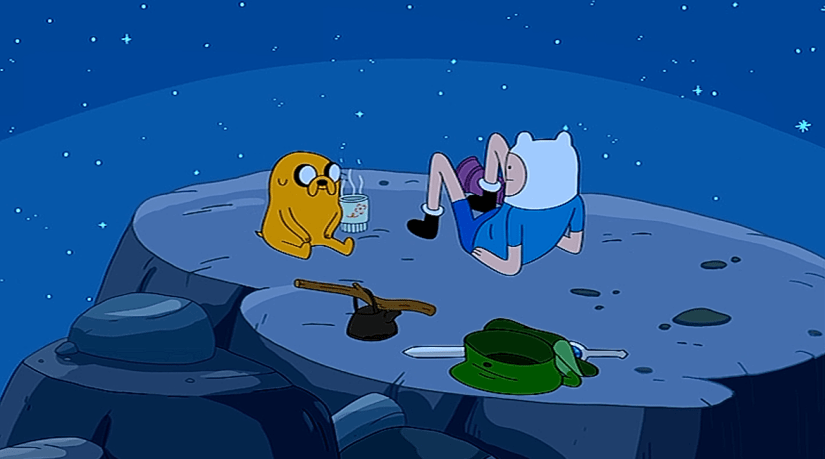
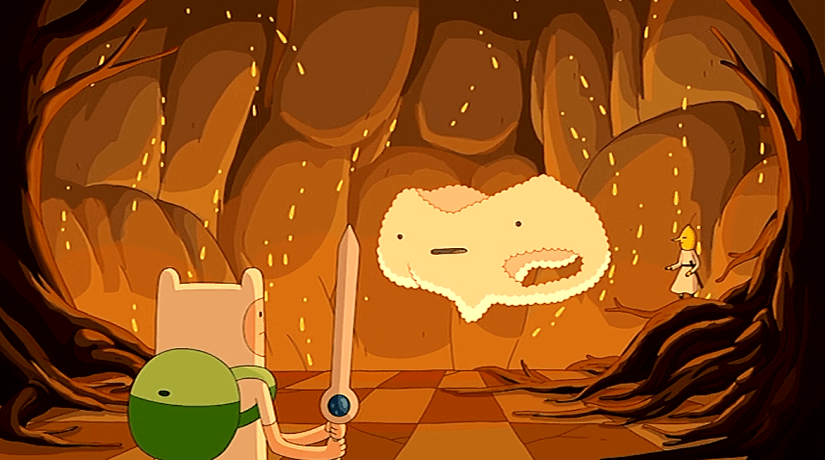
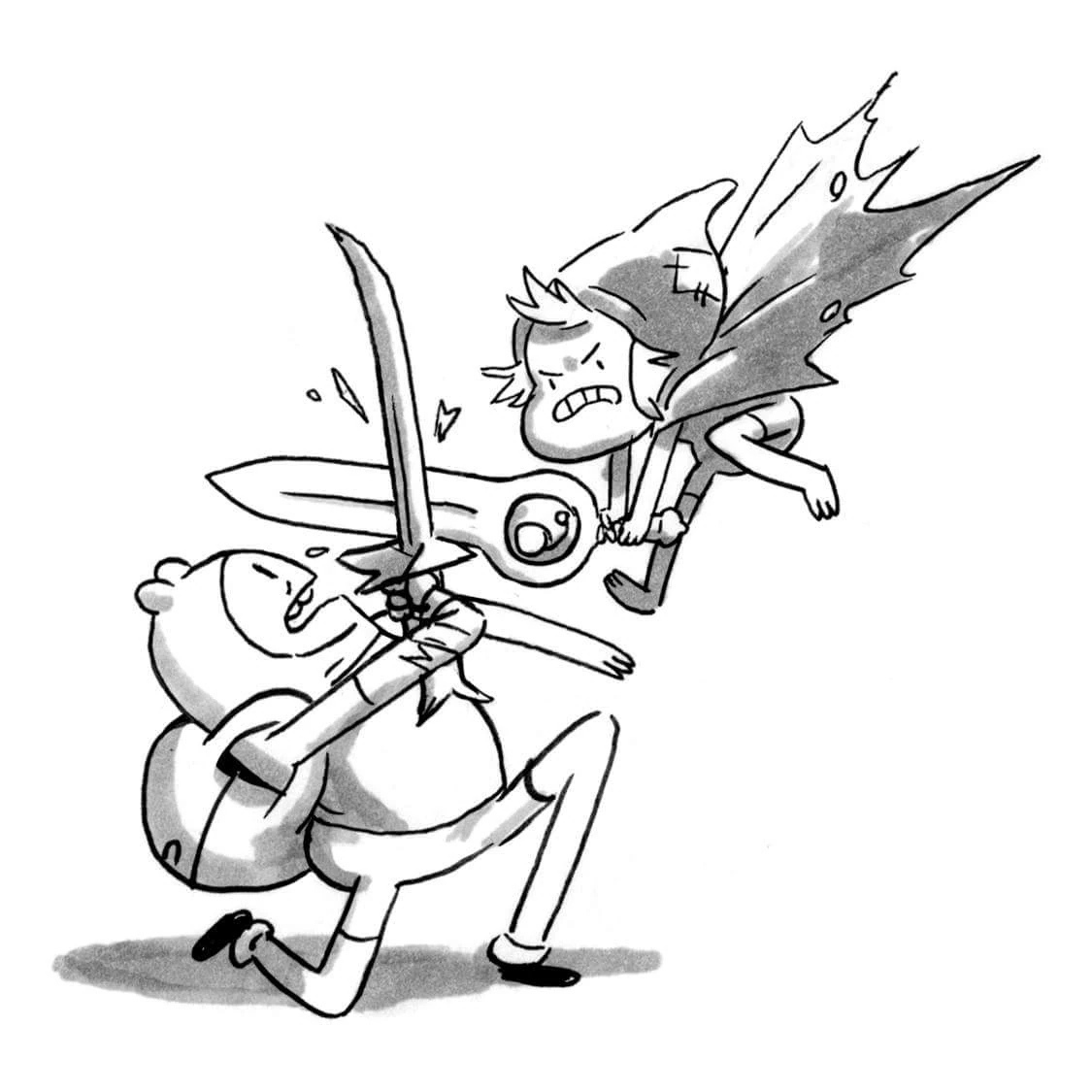
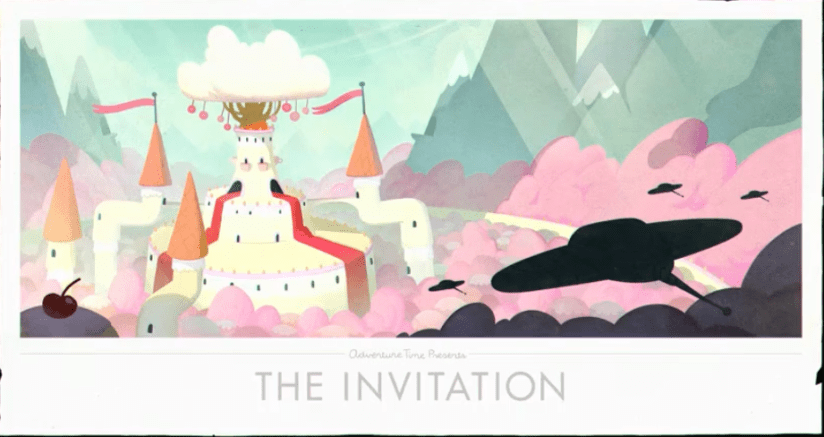
We’re finally at Islands, folks! These next bunch of episodes are big ones, and answer some of the most sought-after AT questions from the past few years. Without a doubt, this was the miniseries I was the most excited for. While I could get behind the hype of Stakes, I’m much more invested in Finn’s character than I am with Marceline at this point in the series (though I still do love Marcy), and couldn’t wait to unravel some of the deeper mysteries surrounding Finn’s character, including where he came from, the status of his people, and how his abandonment came into play. But, I’m getting ahead of myself… my full length overview of the Islands miniseries will be released once we get through all eight episodes. For now, we have the episode that started it all, The Invitation! While I’ve been fairly critical of “setup” episodes in the past, such as Finn the Human and Marceline the Vampire QueenThe Invitation is pretty much the perfect example of a setup episode. Not only is it rifled with an array of various different major and minor characters and terrific interactions between them, but in general, The Invitation feels big. Finn, Susan, Jake, and (possibly) BMO embark on a grand adventure full of huge possibilities, and the episode doesn’t once stray way from showing how crucial and potentially risky this whole expedition really is.

ti 1

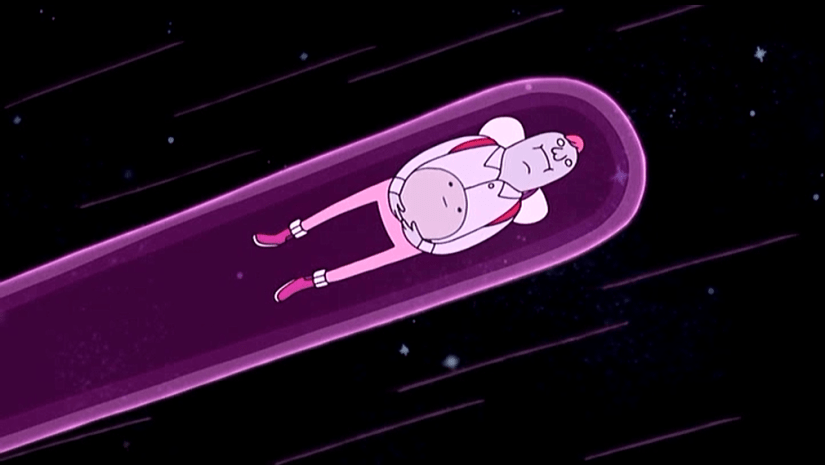
The beginning of the episode doesn’t hesitate to jump right into things, as we get a bit of a prelude to the story of the miniseries as a whole through the interactions of a girl and her doll. The setting for these first few minutes is a little odd to me… the Beach has never been shown to be an attraction for residents, as I always just assumed the Candy People didn’t have a reason to sit out, tan, and soak around in the water for any reason. It’s still a little weird to me, but I’m alright with it, just because it does seem like a perfect place for Mr. Cupcake to relax and flex his muscles. His sequence at the beginning is quite humorous, and hey, apparently his name is Todd? I always assumed that his first name was “mister.” Does this mean that Old Mr. Creampuff has a real name as well? (Edit: I just noticed that this is a reference to A Glitch is a Glitch, where he is referred to as Todd. What a callback!)

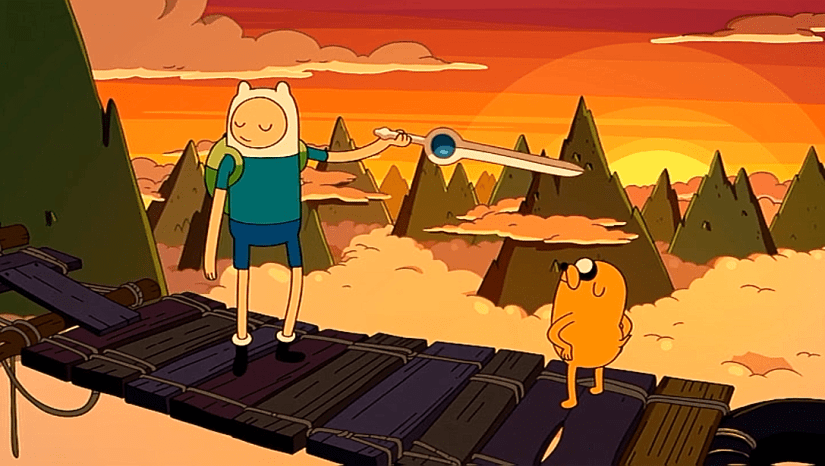
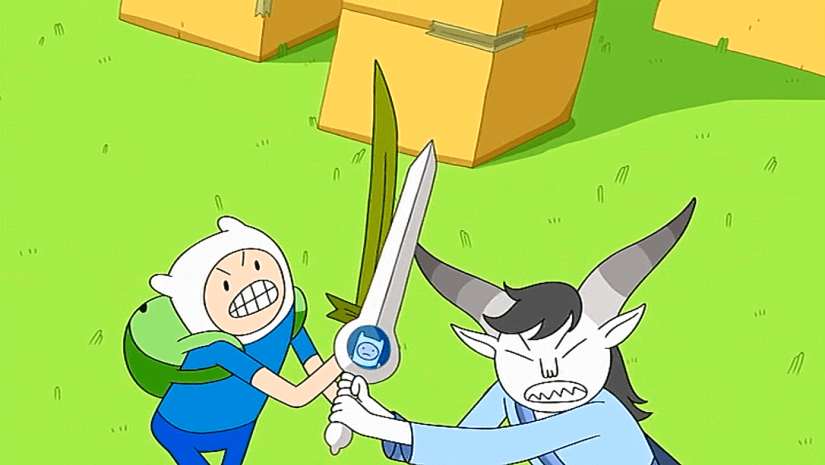
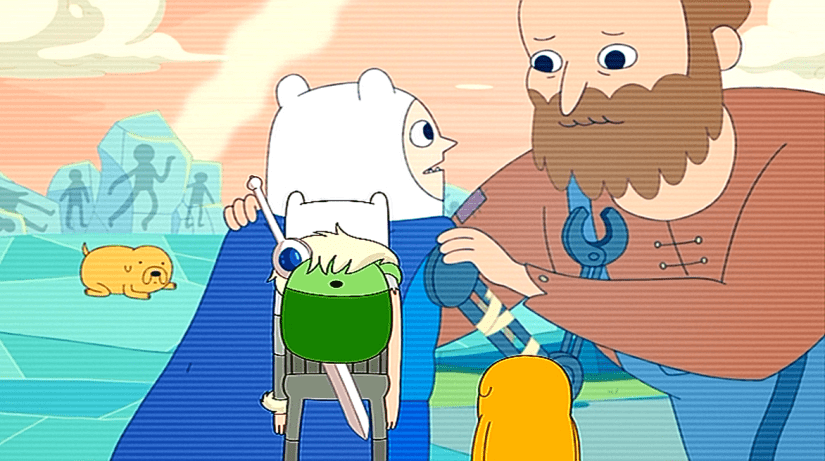
The silliness continues when we cut back to our main boys, who are shopping in preparation for an upcoming funeral. For anyone who hasn’t seen an episode of Adventure Time before, I feel like Jake’s line of “we’re gonna look awesome for this funeral!” sums up perfectly the balance of wackiness and darkness within the world of AT. The scenes in which Finn, Jake, and various other guardians of the Candy Kingdom protect against the emissary from Founder’s Island are high-energy fun. It’s pretty apparent by the presentation that the Founder’s Aircraft is quite powerful, though not entirely from my perspective, because by this point in time, the Gumball Guardians being defeated by anyone and everyone is nothing new. It’s essentially their birthright. This episode also debuts Finn’s new sword, which is unarguably his lamest sword to date. Not even entirely sure where it came from – it looks nearly identical to Rattleballs’, which was seen previously used by Finn in Do No Harm, but I do wonder how it was acquired by Finn himself. Perhaps Rattleballs chose to retire from swordsmanship after the events of Reboot and gave his sword to Finn? Not that it really matters, but it does interest me.
TI 2.png

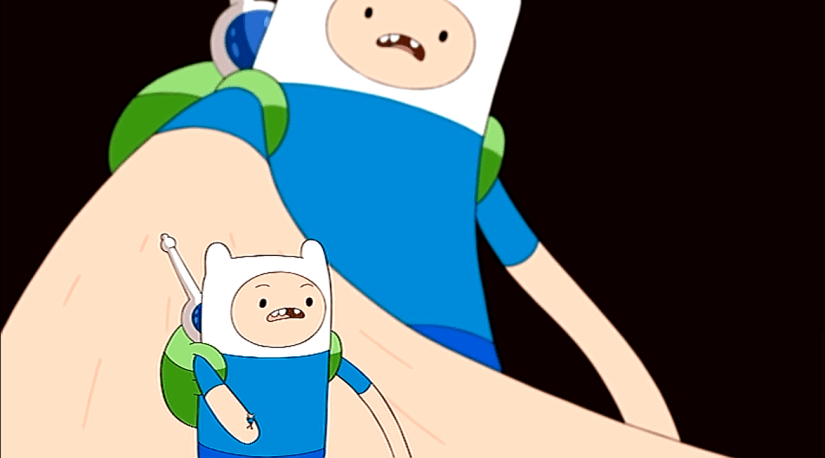
I mentioned some really great character interactions within this episode, and yeah, it’s chock full of ’em. I love Jake immediately smashing the aircraft right before Finn is able to retrieve answers, as Finn presumably tries so hard to lash out at his best friend in frustration and simply accepts the results of what happened. I feel like this sequence could be used to represent the relationship between the series and its viewers quite accurately. I do enjoy how Finn has let go of some of the guilt he has held against himself so critically in reference to what happened with Susan. He simply apologizes briefly once more, and let’s things go from there. There’s really nothing more he can do to change what has already happened, after all. Similarly, I love how cold-hearted PB is in this episode. She’s not particularly close with Susan, and likely holds her accountable for harming Finn and Jake so brutally. She does a really great job of playing the part of the protective momma bear in this episode, even cuddling BMO as if she were her baby. That was straight-up adorable! I do think Finn’s reasoning for joining Susan is quite appropriate given that he likely doesn’t want the people around him to worry about what’s truly going on inside of his head. He’s old enough at this point and feels as though he doesn’t want people to go out of their way to worry about him, but of course, he isn’t really fooling anyone. Jake is there to support him, like always, but isn’t always assertive in trying to make Finn react emotionally to any given situation. Momma-Bear PB, on the other hand, knows something else is up. Also, there are some really nice storyboard moments within this episode. Love the way Alden made Finn play with and stretch out his bottom lip when scanning over the map of the Islands.

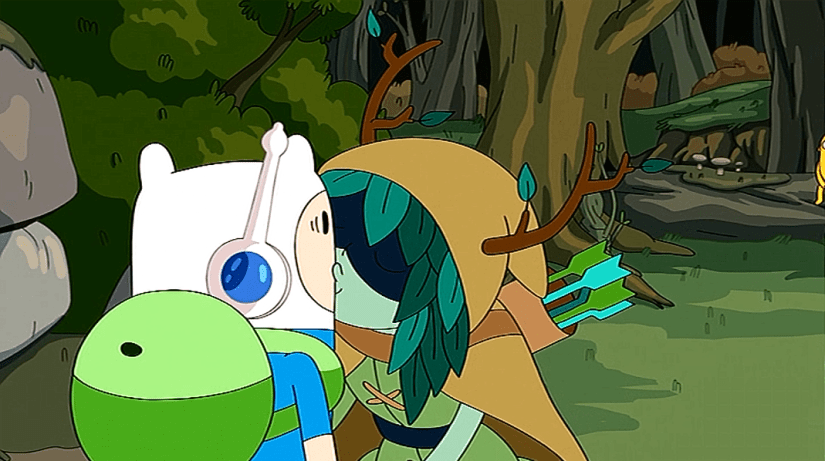
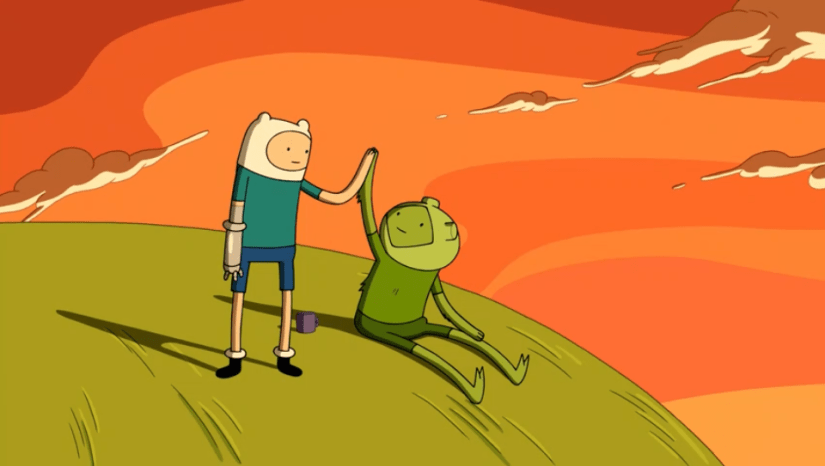
The scenes to follow are shot beautifully, and filled with some great interactive moments. I loved Finn’s heart-to-heart with Fern upon the top of the Tree Fort. I truly did not expect to see Fern again so soon, but I really love that, of all characters, this episode took the time to have Finn bid farewell to him as well. This is especially sweet on Finn’s part; Fern’s self-esteem is likely in a bit of a pit after realizing that he truly isn’t who he believed himself to be as he sits in the shadows of his former self. With Finn’s proposal, Fern finally gets the chance to claim his own identity, and also to get some attention as the designated hero of Ooo. Their bonding is really nice, especially with Fern’s “thanks for trusting me.” I love that sweet grass boy. Not to mention, their completely awkward handshake. Even with all of the nice interactions they do have, it’s totally unsurprising that they’re still awkward around each other. How could they not be? It was real nice to see Charlie again, and it’s also cool to see once more how the pups deal with their own insecurities in relation to their father. Charlie’s not really living the most glamorous life, and probably feels ashamed that Jake is (apparently) seeing her this way. It’s always cool to see the unique, differing perspectives that each pup has toward their dad. And of course, Jake’s goodbye to Lady really melts me. I love Jake’s expression during this scene, it really emphasizes just how much he cares for her. The icing on the cake is what Lady’s response translates to: “Don’t worry too much about me and just go be a good big brother.” D’aww. Even NEPTR gets to give a little goodbye to his creator, without the company of Shelby, who I can only imagine was unconscious from a long night of partying.

TI 3.png

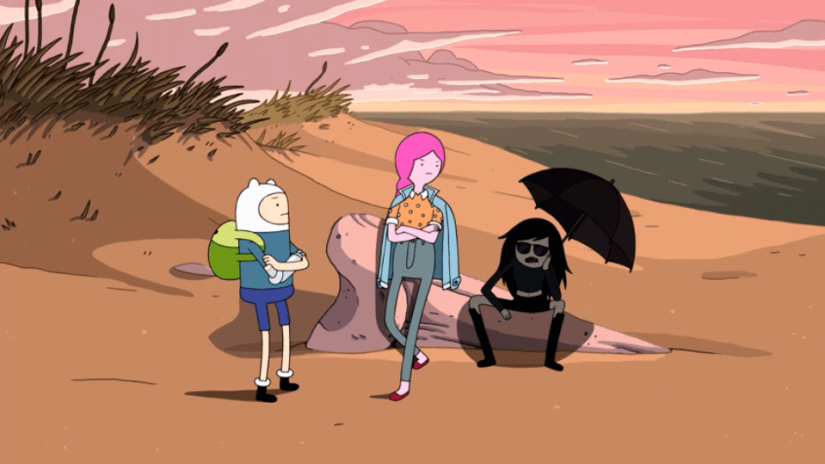
PB’s cold-hearted, motherly nature does go a bit to the extreme when she almost seems angry at Finn for leaving on this journey in general, but again, you can totally sense where her overprotective attitude is coming from. It’s a really well-drawn sequence: I love how, during the lecture, Finn barely makes eye-contact with PB at all. Again, he’s likely trying to put off feeling emotional about the series of events in general, and doesn’t want to make a big deal about anything, despite his true intentions that PB can easily see through. Luckily Fern intervenes before things can get too heavy between them, as Finn says his goodbyes and the four set off on their journey. I do like Marceline being there, though I wish she did interact with Finn a bit more before his departure. Her shutting PB the fuck up was funny, however, and it got a little kick out of me to see her overtly flirting with Susan.

Overall, The Invitation is pretty great, and I’d even call it a potential strong-point of the miniseries. Like I mentioned, this episode is just so great at showing how important this trip really is, how tough some of these goodbyes are, and how much fun the writers can have while covering all of it. It perfectly captures the excitement I was feeling for the miniseries in general, and does not disappoint with hyping up that excitement even further. Marceline the Vampire Queen, the premiere of the Stakes miniseries, felt like it was more focused on executing really over-the-top and forced bits of humor, while The Invitation focuses on just the right amount of humor within its interactions and also reminds us why we should care about this story to begin with. Even in its first entry, The Invitation gives me enough of a reason to care about each individual goodbye that sets these characters further on their journey into the unknown.
TI 4.png

Favorite line: “You got this, Finn Mertens. You’re a buff, little, bionic baby!”

Adventure Time, Animation, Lifestyles

“High Strangeness” Review

HS 1.png

Original Airdate: January 25, 2017

Written & Storyboarded by: Pendleton Ward & Sam Alden

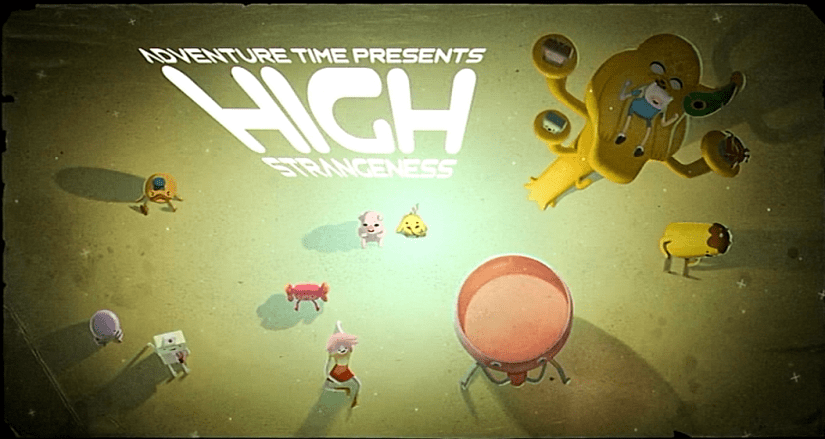
These first six episodes of Season 8 were initially aired in “bomb” format, meaning within the same week. Of all six episodes, High Strangeness was likely the one that I was looking forward to the least. By watching the initial previews, I was really under the impression that this would be one of “those” later season episodes that tries so endlessly hard to replicate the random wackiness of the earlier seasons, but never really gets it quite right. On top of that, this was Pendleton Ward’s return to the storyboarding front after being absent for the entirety of two seasons, and I was somewhat skeptical about how in touch he would be with his creation after being gone for so long. Likewise, his board partner Sam Alden seemed like an… odd fit for him. Alden typically specializes in adding coherency to Jesse’s overly heady stories, while occasionally hitting on the humor of individual character moments. It seemed like an odd pairing to say the least, but with that skepticism aside, this episode is pretty great and likely my favorite of the bunch (save for Do No Harm). Not only is it a hilarious episode with tons of sight gags, subtle moments, and terrific one-liners, but it’s also surprisingly heavy in its closing moments.

HS 2.png

I never knew that I wanted an episode centered around Tree Trunks’ extra-terrestrial husband and offspring, but it surprisingly just kind of makes sense. As promiscuous as she is, I have no problem accepting that, at some point in time, Tree Trunks fucked and married an alien. It’s a hilariously over-the-top bit of character building for her character, but it’s fitting nonetheless. Dunno why, but I feel like Pendleton Ward really specializes with Tree Trunks and Mr. Pig’s characters. I have no proof to back this, because Ward has not written or boarded a single episode with these two as the focus, but I get the feeling that they’re just his type of characters. They’re silly, often bizarre, and simple. Not to imply that Ward doesn’t work well with complexity, as Adventure Time was his creation after all, but his approach to writing for these characters channels into his roots as a storyteller. The reason we care for Finn and Jake initially is because they’re so simple and silly, whereas TT and Mr. P are pretty much in the same vein.

A lot of those small, subtle moments of humor that I mentioned earlier run rampant in Ward’s section of the episode, in the best possible way. I can’t even express to you guys how much I love the blank-faced Finn portrait above Tree Trunks and Mr. Pig’s bed. It’s like, why the fuck is that even there? I mean, yeah, he’s a close friend to both of them, but why would they position a portrait of a 16-year-old kid directly in the center of their bedroom? What makes this so hysterical is that, again, it kind of makes sense. With Tree Trunks and Mr. Pig’s strange lifestyles, I can totally see this being a decision that they sat down and chatted about. Also, Mr. Pig’s way of taping his loved ones’ noses as they snore is both demented and kind of sweet. I only say sweet because I really can’t resist that moment of Mr. Pig looking over Sweet P. while he sleeps. That melted my heart.

HS 3.png

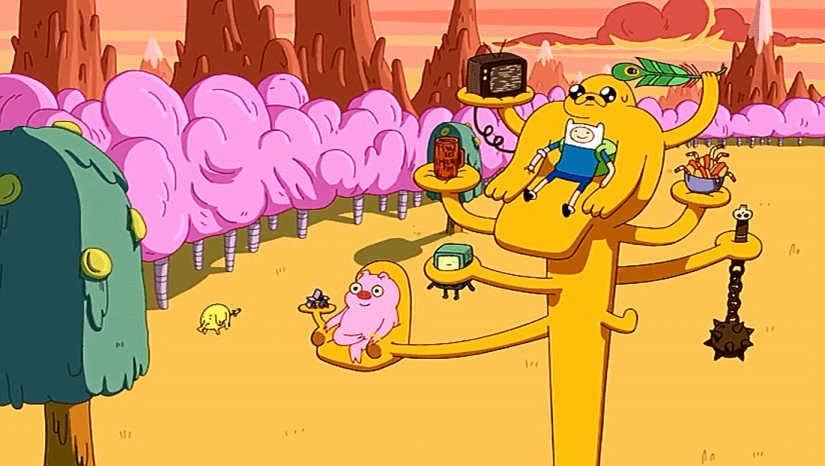
The scenes to follow at Princess Bubblegum’s science festival are equally as bizarre and delightful. That pose of Jake stretching into a comfortable seat while holding BMO and holding various objects is another example of something that only a goofball like Ward could come up with, along with the shoe camera that Starchy utilizes and PB’s Texas shaped button. The addition of Princess Bubblegum and her plans of colonization are really what add another layer of substance to this episode. I was curious as to how PB’s developmental transition would change or alter her character, and I’m glad that this episode shows that she does still battle with her own morality in reference to what is best for her people and the Candy Kingdom in general. Here, it’s a more complex situation than what we’ve dealt with in the past. No one from the Candy Kingdom is directly affected by PB’s decisions, but outside sources are. Bonnie likely doesn’t realize the effect she’s having to begin with, but I think she does realize from the beginning that it could have somewhat of a harmful result. Her line “I’m doing the right thing,” definitely implies that there is some form of regret behind her actions, though she knows it is important to keep her legacy and the Candy People alive and well.

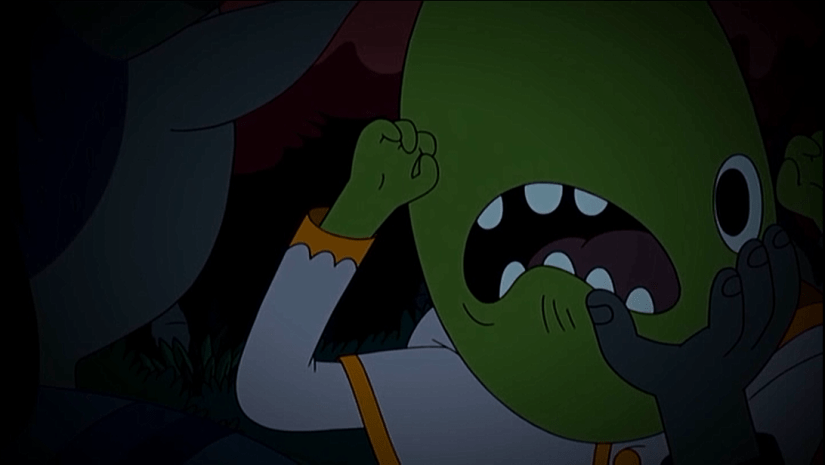
An added dose of PB’s shadiness means we get to see the Veritas Brigade once more! It’s a bit disappointing that Peace Master doesn’t appear once more, though understandable why he wouldn’t come back. The scenes leading up to TT and Starchy’s convening are just great; Tree Trunks writing “fascist” in glitter is one of my favorite gif-able moments in the series and completely unexpected… just how many kids know what fascism is anyway? Also, Starchy’s super drawn out method of getting to the secret location of the Brigade, only to find out that it’s where he and Tree Trunks had initially met, is just priceless and something I didn’t even notice on my first couple viewings. This really is a spectacular “blink and you’ll miss it” episode. In general, I like seeing the Brigade again, and even enjoy the way the members are fleshed out a bit more in this episode, like the Banana Guard and “Booshy.” One main question I have one my mind, however: what the hell happened to Toronto in that picture on the wall? I dunno if it’s something that was just generally lost in the animation process, but man, it’s freaky.

HS 4.png

When the Brigade does break into PB’s storage unit (with more hilarious tactics; Nurse Poundcake uses a smoke bomb where it’s clearly not needed) TT and PB come face to face in a dramatic way. After being abducted by the spaceship, PB begins to understand the weight of her decision, and chooses to step back from her methods. Her reasons are, again, understandable. After everything that has happened to the Candy Kingdom in the past year or so, with the passing of the catalyst comet, the invasions of vampires, and the idea that her role as a ruler is finite, PB’s choice to colonize makes sense with the reality that there are plenty of horrific things that could become of the CK (and eventually do). The scene with PB and TT walking and talking during the sunrise is another one of my favorites from the series; it’s a potent moment in which PB allows herself to become vulnerable to someone she doesn’t even like in order to reveal her personal struggles in the process. Similarly, Tree Trunks allows her stern, no-nonsense self to lighten up and compromise with someone who is presumably her strongest enemy to date. It’s a really nice moment between two unlikely characters. But of course, the episode comes to its grand conclusion when Tree Trunks’ alien husband and Mr. Pig humbly come face-to-face with each other. I really don’t know how much more stress Mr. P can take at this point.

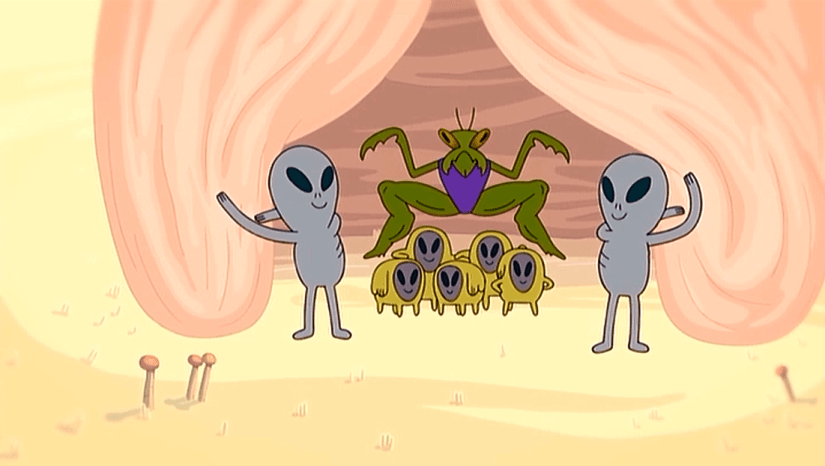
High Strangeness is, like the title suggests, an odd and unusual entry, but one that owns its bizarre nature and turns it into utter hilarity, while also knowing the importance of carrying through with its story. It’s been a long time since we’ve had a Tree Trunks-centric episode, and High Strangeness really delivers with a story that’s as silly and strange as her character, but one that also helps to flesh out the world of AT and the vulnerability of its characters. It’s also a visually strong episode, with Alden’s scenes being really well-detailed and lit, and Ward’s depictions of the alien society being just trippy enough to work. One criticism I do have is that the design of the aliens feels somewhat lazy and uninspired, but not particularly unlikable. There is a reason why the simplified big eyes and slanted nostrils is so popular, and it works within AT‘s world decently. And truthfully, any episode that involves Tree Trunks smacking Mr. Pig’s ass gets a thumbs up from myself.

HS 5.png

Favorite line: “Booshy’s only prison is this wicked planet!” “Yeah… well, join the club.”

Adventure Time, Animation, Lifestyles

“Normal Man” Review

NM 1.png

Original Airdate: May 12, 2016

Written & Storyboarded by: Jesse Moynihan & Sam Alden

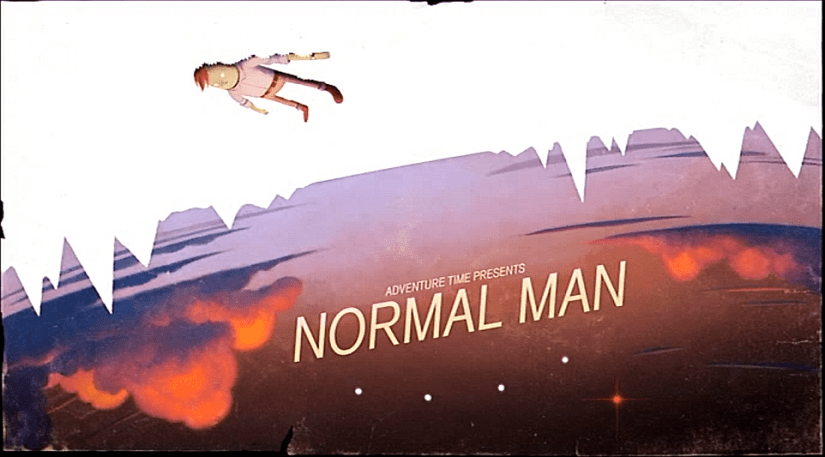
I guess it’s only appropriate the essential conclusion to Magic Man’s character arc corresponds with Jesse Moynihan’s final storyboarding effort in the series. While not Magic Man’s creator, Jesse paved the way for MM’s character by fleshing him out well beyond his initial archetype and in turn ended up creating one of AT’s most complex characters. Moynihan’s love and passion for the character really shines through in episodes like Sons of Mars and You Forgot Your Floaties, of which are two of my favorite episodes primarily because of how much Moynihan’s heart and soul was placed into them. While Normal Man lacks the headiness of those episodes (though, legend has it that this was supposed to be a much, much darker episode), it makes up for it by being both hilarious and deeply introspective. Normal Man works off of what Bun Bun set up in a lot of ways: the idea and theme of change. While Bun Bun dealt primarily with changes happening over time and within relationships, Normal Man mostly deals with a deeply interesting question: can shitty people truly change? And if so, does it make up for all of the horrible things they’ve done in the past? Normal Man argues both yes and no; a person is able to change their ways and start a new life, but only after gaining the respect and trust of others, which can often be just as difficult a journey.

NM 2.png

While not as experimental, the initial opening of the episode is about as Moynihan-y as it gets: Tiny Manticore, at the command of Normal Man, sets out to rescue his brother Glob from space, after his dissemination in Astral Plane. It’s all good fun, well-animated, and sets a very tense mood once Tiny Manticore decides to take control, but it all sets up for one huge problem I have with the premise of this episode. Now, I do really enjoy Normal Man overall, but there’s one recurring issue that really just rubs me the exact wrong way every time I watch it, and I’m surprised that no one ever talks about it. Normal Man and all other characters in the episode refer to the GGGG head as “Glob,” but… that’s not Glob. Glob was voiced by Tom Gammill in both Sons of Mars and Astral Plane, while Tom Kenny typically voices Gob. So… what is Kenny doing voicing Glob in this one? Well, my money’s on the fact that they simply couldn’t get Gammill to provide his voice for the episode, and considering that Kenny already provides his voice for two other characters in this episode, it was the easiest option at hand. On top of that, they likely thought nobody would notice due to the fact that Kenny does provide the voice for one of the four heads. Well, I NOTICED ADVENTURE TIME. YOU THINK YOU CAN FOOL ME?

Ahem. To be honest, I know this probably seems like a really overblown nitpick, but it still bugs the hell out of me. If the show wants to establish this really convincing overarching lore, then they really can’t expect me to look over this as a simple mistake. It’s actually something that also happens in You Forgot Your Floaties, when MM refers to GGGG as his sibling “Glob” followed by Tom Kenny’s lines. I do wonder if Glob is just generally the universal nickname for the “G” man, because I’m pretty sure everyone tends to neglect to remember the other G’s to begin with. When keeping that in mind, I guess it’s somewhat justified, though I overall think there needs to be stricter rules for writing the character in general, because I feel as though Glob is handled waaay too loosely to the point where the staff forgets that he’s essentially four entities in one body. Thank you for coming to my TED Talk.

NM 3.png

Anyways, the scenes to follow this convergence are a lot of fun. This is actually the second time this season that Finn has treated Jake like a straight-up dog (the first was Don’t Look when Finn utters, “what is it, boy?”) and I’m wondering if Finn subtlely picks up on these traditional behaviors whenever he enters the Farmworld. It’s funny to see him essentially wanting to adopt more humanistic behaviors, as Jake is pretty resentful to the idea.

It’s also funny to see how the boys truly resent Normal Man, and even nearly kill him. You don’t really blame them for being this way either, because the last time they even saw the guy, he turned them into food products and practically left them for dead. It’s cool how Finn takes on the responsibility likely due to the sole fact that Glob is involved. Besides being a very important figure overall, I have a feeling that Finn feels as though he almost owes it to Glob for having a part in his sacrifice back in Astral Plane. Also, Finn’s dad was the reason Glob was demolished. That probably had some moralistic factor in it as well. One of the nice smaller details in this episode is that Finn begins using his Root Sword again! It only comes back for this episode and the next, but it’s really cool that the show remembered that it even existed, while also remembering that it was one of Finn’s only swords to not get busted or altered in one way or another. It’s a nice little Easter egg for longtime viewers, of which are pretty much AT’s main audience by this point in time.

NM 4.png

What follows is classic Adventure Time; Wild Trap Mountain is about as fun a location can get. The mountain is jam-packed with tons of terrific foes, like the “Weekend Survivalists,” that one dude that NOBODY messes with (his description on the wiki reads “simply a dude that no one messes with.” It kills me), Waking Dream Demons, and of course, the Squirrel that hates Jake. I’m usually not a fan of the Squirrel outside of his debut episode in The Duke of Nuts, but man, the joke somehow manages to be way funnier the third time than it was the second time. Even after Normal Man explains who he is, Jake is equally surprised when the Squirrel reintroduces himself. It’s just priceless–that poor Squirrel only wants the satisfaction of attention. The Wild Trap Mountain journey in general is executed just perfectly. I love how it slowly builds from a tense, quiet crawl into a frantic, energetic speed-run to the top. Everything goes unimaginably wrong in the span of seconds and everything is resolved in the matter of seconds, in a way where the episode really doesn’t compensate for whether you’re even comprehending every moment or not. It’s just great. It’s also worth noting that Finn nearly stabs himself when being possessed by a parasite, which is the third time this is alluded this season, and the third time alluded to in a Jesse and Sam episode! It certainly wasn’t a coincidence that those instances were included.

Upon reaching the top of the mountain, the episode goes from energetic and thrilling to just plain hilarious. The back-and-forths between Finn, Jake, Normal Man, Glob, and Tiny are just great; from Tiny Manticore noting Normal Man’s naturally insincere sounding voice, to “two boomerangs,” to “hang on like hot snot!” this is one episode that’s relentless with jokes and one-liners happening one after the other, in the best possible way necessary. The episode does save for one soft, genuine moment as Normal Man apologizes to his brother for being a “bean show” for hundreds of years. It’s a unique situation because, while Normal Man can’t really be blamed entirely for his behavior, because magic had a huge effect on his general cognition, but he isn’t really free of blame either. He is the person who nearly killed our main heroes, threw everyone in Mars under the bus (a hilarious gag, by the way), and betrayed his brother. It does show, however, that Normal Man truly is a normal man, and like any human (or humanoid, in this case), he does express remorse over his past behavior and acknowledges his faults, rather than trying to ignore that they ever happened. The way the brothers reconcile is sweet, and shows the optimistic viewpoint that, yes, people can change and repent if they truly make an effort to better themselves in the process. While the citizens of Mars aren’t as impressed, Normal Man’s at least left with the confidence that, if he truly proves himself to be the nice, reformed person that he wants to be seen as, he’ll have no problem adjusting to his current lifestyle.

NM 5.png

Normal Man isn’t quite the deep, analytical expedition I would expect from Moynihan’s AT finale, but it does possess many elements of some of his greatest entries: mythological aspects, character development, and bizarre side character cameos, with a hint of hilarity. This really is a nice wrap-up for Normal Man’s character (even though this isn’t the last we see of him) and I’m truly glad that Moynihan essentially got to see his hard work come full circle. I really did love the guy as a writer; while he was often controversial in both his writing style and his general demeanor, there was never a doubt in my mind that Jesse wasn’t putting every single bit of his blood, sweat, and tears into each individual episode that he worked on. While I’m pretty fond of Tom Herpich as a writer overall, I don’t think there’s a single artist or writer on Adventure Time, or any animated series in general, quite as ambitious and personalized as Moynihan. I actually interviewed him a few years back after he left the show, and while he has a reputation for being pretentious among AT fans and non-fans alike, he really seemed like a humble, thoughtful dude in his responses. To end this blog with a quick tribute, I leave with you an interesting take on why Jesse thinks AT is special and different in general, per our interview.

“I don’t know really. Sometimes I felt like we were working on something very special and different, based on critical feedback. But other times I couldn’t figure out how to measure that against other shows and the feedback they were getting. I came to realize that this specialness was arbitrary and couldn’t really be gauged by any reliable standard. The only thing I could rely on was my own internal experience of working on the show, and my feeling of growing as a writer during my time there. So yeah, for me it felt very special and different. For the rest of the world of individual tastes, I really have no idea. A fan could come up to me and say how great Adventure Time is, and in the same sentence tell me how great something else is that I don’t value so much.”

Also, can we take a brief moment to appreciate that LSP and Lemongrab went on a date together? It’s a crack-pairing from heaven, I tell’s ya!

NM 6.png

Favorite line: “You turned me into a giant starfish!” “You turned me into a flaming pile of garbage!”

Adventure Time, Animation, Lifestyles

“I Am a Sword” Review

IAAS 1.png

Original Airdate: April 23, 2016

Written & Storyboarded by: Sam Alden & Jesse Moynihan

Couple of announcements before we start: I’ll be gaining back some of my free-time as we approach the month of December, so expect semi-daily reviews to return shortly. In fact, next week I plan on covering four whole episodes: Bun Bun, Normal ManElemental, and Five Short Tables. Consider it my Thanksgiving Day treat!

Secondly, the application for the Animation Podcast I’m starting up is still open till mid-December. As I mentioned, I’ll be advertising the application on this blog sporadically throughout the next couple weeks. You can apply to be a co-host on the Podcast HERE.

Finally, you can expect the release schedule of the final 50 episodes to be posted on this blog within the next few weeks. The schedule will be strictly estimated; I may jump ahead or behind (unlikely) depending on what occurs in my life. Though I will try and follow it as closely as possible, and I will eventually open up a survey where all of you readers can suggest possible “top” lists and ideas for post-blog content. Alrighty, I’ve rambled on long enough, onto the review!

IAAS 2

The concept of the Finn Sword has always been a curious one for myself: is the Finn inside of the Finn Sword the real Finn? Is the Finn within the Finn Sword a real, living entity, or some sort of a remnant of Finn’s memories? What is the true connection between Finn and the Finn Sword? Some of these questions are sort of answered in I Am a Sword and beyond, but other questions are left purposely vague. The connection with Finn and Finn Sword mostly exists on a metaphorical level, as their surface level relationship is not only difficult to understand as a viewer, but for those who surround Finn as well. Even those closest to Finn, like Jake, just dismiss it as borderline materialism. Though, the strong point of the episode is that it makes it apparent that this is a deeply personal issue for Finn, but we’re still willing to sympathize with him for those metaphorical reasons mentioned. I Am a Sword explores the connection between a boy and his sword quite interestingly, in ways that are as heady as Jesse Moynihan has ever been, with added bouts of hilarity from both Moynihan and Sam Alden.

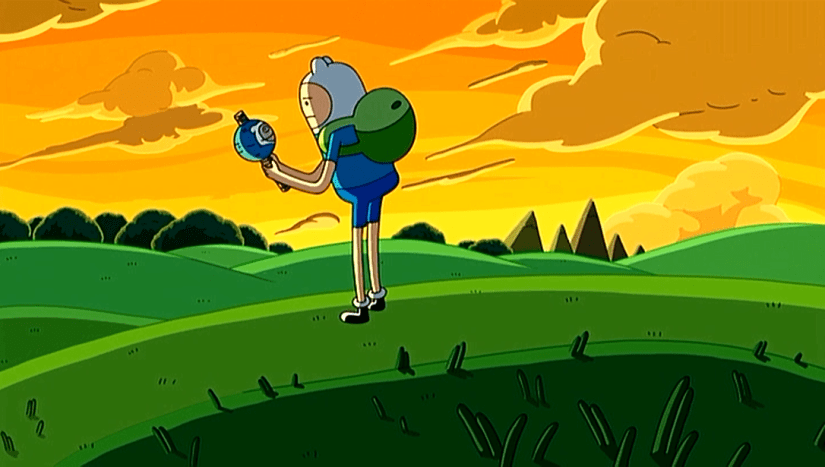
The episode opens with one of my favorite shots in the series, as Finn and Jake roam the span of a wooden bridge as the sun sets in the background. This image is so impactful that 90% of all online new sources included it when announcing that Adventure Time was ending back in 2016. Even I’m guilty, heh. In general, the moment serves as a nice introduction to the main story at hand and sets things up for the remainder of the episode when Finn accidentally launches the Finn Sword into the unknown. While a bit of a foolish decision for him to make, Finn has never been the most… careful person. He’s constantly throwing himself into the face of danger, whether it be to save his former girlfriend from burning out, the fate of humanity from Orgalorg, or even just proving a point to his brother. This is one of Finn’s major characteristics, and it certainly doesn’t make him unlikable, but it’s worth some reevaluation in regards to how this behavior affects the people around him, or even himself. I do wonder how exactly the Finn within the Finn Sword operates logically, in the sense that the Finn Sword is very clearly disapproving of Finn’s behavior. Since the Finn Sword knew Finn’s last name was Mertens back in Dentist, I do wonder if the Finn within the sword operates more on Finn’s subconscious feelings and behavioral ticks more than anything. Perhaps part of Finn knows that he shouldn’t be partaking in such risky behavior, but is compelled more by his desires to have fun and live life in an adventurous sense instead, while the Finn Sword has no purpose beyond being an alternate version of Finn, so he’s merely there to guide himself into methods of a less stressful lifestyle. Obviously, that method ended up failing.

IAAS 3.png

Finn’s feelings of guilt can easily be attributed to this neglect to care for himself and the people around him in a meaningful way, of which can be identified as a result of Finn’s trauma through his experiences with his father, that are mostly notable recently in Beyond the Grotto and Don’t Look. While Beyond the Grotto has Finn recognize that he was mistreating the Sea Lard, Don’t Look involves Finn’s ultimate guilt in not caring for those even closer to him. I Am a Sword takes it one step further by showing Finn’s guilt for mistreating perhaps the closest person to him: virtually, himself. The thing that Finn fears most is, like I’ve mentioned, treating others in a way that his father treated him. While I think that Finn is entirely too hard on himself with this comparison, it does bring up an interesting idea about Finn’s growth as he enters into his late-teen years: how much of himself does he have to sacrifice in order to be the person he wants to be? I’d be open to the argument that he doesn’t have to change anything about himself, but it’s really apparent with practically anyone that people do need to change in order to grow up, whether actively or on a subconscious level. Not necessarily in a drastic, persona shifting way, but in the sense of shaping your character and personality around the desires and moralistic attributes that one does possess. For years, we’ve watched Finn throw himself and the people around him into various different dangerous obstacles and trials, but only now is he discovering the possible consequences. While he’ll always be an adventurer at heart, his main desires and goals in present time are to be as morally astute as he can possibly be, and his recklessness is finally starting to cause major issues in his life. Of course, there’s a happy medium between the occasional thrill and being vigilant when doing so, but Finn first has to learn when to think and analyze before he seeks out such a sense of entertainment.

Finn’s moral dilemma within his own self can easily be elaborated on through Finn Sword’s experiences with Bandit Princess. Finn Sword is forced against his will to partake in illegal activities and even kill/harm other people as a result. Finn himself feels as if he’s forced to hurt other people in his actions because of the guilt that has overcome him in relation to his own personality. Finn fears that he’ll be compelled to hurt himself and more people in the future because of the way he is, as Finn Sword feels because he has no control over what he is: a sword.

IAAS 4.png

May I also take this opportunity to shoutout what a terrific one-shot villain Bandit Princess is? Not only does she possess a fantastic design, but she’s voiced by none other than Amy Sedaris, of whom I adore from a comedic standpoint, and also for her voicework. What makes Bandit Princess a terrific villain is not only that she’s hilariously hammy and boasts a terrific design, but she’s also legitimately threatening in a way that a lot of Adventure Time villains aren’t. Bandit Princess is actually shown to kill people on-screen, which is primarily a rarity for the series. Of course, it’s handled in the most PG way possible, with Mayor Cameron’s (of whom I never expected to see again)  body finding its way back to his head, but of course, there’s also the rich man and the guard of the bank, of whom we never see again and can only assumed to be dead. With a show that’s filled with threatening space gods and deities, it’s amazing that a character who is virtually powerless can be so menacing with the simple use of an item.

It’s one thing this episode specializes with in its theme: the power that items have over others. Bandit Princess achieves power from weapons, the spiky people achieve power from having money, and even a tertiary character like Spear Bear bases his entire identity around his sole possession. Of course, I could go into great detail about this overarching theme, but I’m gonna leave that topic for someone who does my job better than I ever could, Uncivilized Elk! This video hits it out of the park with everything that this theme aims to accomplish. Check it out if you haven’t! Also interesting to note: Bandit Princess was originally supposed to be portrayed by Penny from City of Thieves, as seen in this concept art. This is a callback that I’m actually glad we didn’t get, because I overall really enjoy Bandit Princess as a character, and feel as though Penny simply could not take on this role in an enjoyable fashion. It does make me wonder if Bandit Princess is the technical ruler of the City of Thieves, or if it’s a self-proclaimed title to begin with.

IAAS 5

Speaking of callbacks, this episode is riddled with them, in the best way necessary. Not only does it help contribute to that overarching theme I had mentioned earlier, but it’s also refreshing to use pre-existing locations as a method of exploring the Land of Ooo. While it’s always nice to visit new territory and landscapes, it’s also cool to see that these tertiary locations are a legitimate part of Ooo, and that Finn and Jake are able to access them at any point. Though not intentional, I think it’s even cooler that Moynihan and Alden chose perhaps the two most disposable episodes (Gut Grinder and Box Prince) to revisit, which shows that even the most forgettable AT entries still exist and have importance within this world.

The moments of hilarity within this episode are too many to name. Right up there with Joshua & Margaret Investigations, this episode has a plethora of funny one-liners. Of my favorites are Jake listing off the various different things that give Finn nightmares (of which are too high in number by this point), Finn and Jake’s back-and-forth about what happens to decapitated chickens, and one line that I still find so hilarious that I’m just gonna leave it at the bottom of the page to (hopefully) leave you with a laugh after you’re done reading. It’s really amazing to me that heady writers like Jesse and even Sam are, without a doubt, the best comedy writers from this seasons. Flute Spell, I Am a Sword, and Normal Man all play around with some rather intricate stories, but are ultimately just as hilarious as they are thought-provoking. One thing Alden gets down pretty well is the smaller details; Finn helping BMO get a staple out from the stapler was just adorable, and the game Finn ends up playing is actually created by Charlie! Look at Jake, being a good dad and supporting his kids’ endeavors.

IAAS 6.png
Love how this shot mirrors Finn & Jake looking over the Spiky Village in Gut Grinder.

What the episode ultimately boils down to is Finn making the same mistake that he made at the beginning of the episode: trusting his impulses, rather than his methods of logical thinking. While he may see it as a choice of pride, Finn is enrolling himself in yet another reckless decision where he simply does not have the upperhand, and he actively refuses to let Jake help him out. Instead of confronting the issue at hand by addressing what went wrong, Finn thinks he’s doing right by making the situation his sole responsibility, but ignores what got him there to begin with. While I call bullshit on a golf club being his weapon of choice (he still has the root sword, and we even saw Nothung within his treasury!) it’s a great item that’s used to represent how he truly didn’t think this situation out to begin with, and had it not been for his grass sword, he likely would’ve been toast. But the grass sword can also be a key indicator of Finn’s lack of control, as it’s the finishing blow that destroys the Finn sword completely.

It’s funny, because I remember when this episode first aired, people were convinced that Finn would be in a coma until the Finn Sword was revived. While I was never under that impression, it is easy to see how affected Finn is by the death of his Finn Sword, and how he was always true in his efforts to inform others about the special connection. That connection was always legitimate, and Finn is now left with the terrible sadness of essentially “losing himself” by not being able to trust in his own actions. Season seven has been great with refusing to stray away from Finn’s own personal issues; while season six could easily be seen as a culmination of everything that Finn has learned so far in his life, season seven shows that, even with the potential for resolution, life continues to throw curve balls regardless. As BMO so eloquently states:

You mean some people are just pure city sidewalk boom-boom from a rat donk and that’s all there is to it?”

IAAS 7.png

The statement is there to show that there will always be shitty people who do shitty things to others, but Jake’s unsure response shows that there’s something even more threatening than not trusting others, and that’s of course the lack of trust in one’s self. Finn has been faced with shitty people for a majority of his life, and while he’s always been able to cope with that, he fails to cope with specific issues within himself. And the world will continue to be wooly-booly for himself, unless he’s able to regain that trust and self-control back. While Finn is stuck with repressing his issues for now, we’re left with one haunting image that shows how this issue is fair from over: a green glow emitting from the Finn Sword. Finn’s battle with his own identity has only just begun!

I Am a Sword is not only deeply hilarious, but also takes a look at the larger picture with how Finn is dealing with his own insecurities at this point in his maturity. This episode shows that, while he’s learned a lot, he still has a long way to go in his own personal growth, and that relates entirely to how he views himself and treats the people around him. It also does a terrific job of exploring one of the most complex relationships in the entire show, that will only continue to grow in complexity as time goes on.

IAAS 8.png

Favorite line: “I was born with rabies and my parents didn’t love me ’cause they both had mono!”

Adventure Time, Animation, Lifestyles

“Flute Spell” Review

FS 1.png

Original Airdate: March 12, 2016

Written & Storyboarded by: Sam Alden & Jesse Moynihan

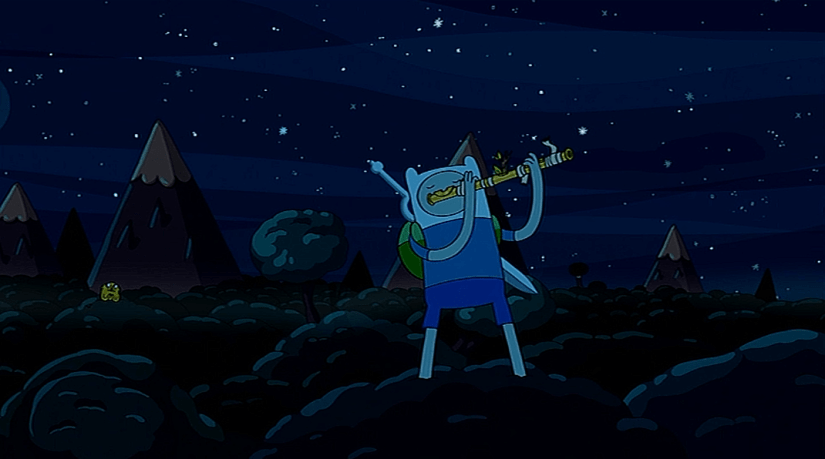
Flute Spell is remembered for being the “Huntress Wizard X Finn” episode, as one would expect it to be, but honestly, I think this episode makes for a really great star appearance of Jake. Throughout the exploration of Finn’s character and his relationships in the past few years, Jake has typically remained as a bystander. He helped to coach Finn through his crush on Princess Bubblegum in earlier years, and initially assisted him in securing a relationship with Flame Princess, but otherwise, he hasn’t been very involved in this aspect of Finn’s life. Some of these reasons may include the fact that he unintentionally had a part in Finn’s breakup with Flame Princess, or perhaps that he simply can’t relate to Finn’s underlying turmoil. Regardless, he does his best to help Finn connect with Huntress Wizard and to build a healthy, honest relationship between the two, and it’s really sweet.

FS 2.png

Not to mention Jake is thoroughly hilarious in this episode. In the first 10 seconds, we start out with the amusingly jolly song “My Name is Jake,” which is not only a great platform to callback several old characters and concepts (i.e. APTWE and Maja, the villagers from The Visitor, and Jake constantly being faced with Death) but also epitomizes Jake as a character. While I’m thoroughly invested in all of the character drama that this series has to offer, it’s so delightful to have one main character that has no surface level issues. Jake has a terrific relationship with his girlfriend, lives with his brother and his best friends, has five children to spend his time with (even if it is to T.V.’s dismay), and is always faced with a plethora of fun adventures to take on. He’s certainly not without his own personal problems, but there’s no boiling turmoil that threatens Jake’s psyche. He’s simply a carefree dude that is able to live a fulfilling life because he has a terrific support system and is meeting all of his personal needs. Remember this bit, because it’s important later on!

Of course, Jake’s concerns aren’t limited to his own well-being, but the well-being of his brother, of whom went through some deep shit in the past year. The real fun of this one is that Jake not only makes for a fun third-wheel, but also kind of takes on the role of a shipping-invested fan. The main story of this one is practically just Jesse Moynihan living out a ship that he’s always wanted to see (and I don’t necessarily mean that as an insult) so having Jake make all of these wild guesses about Finn’s new love interest and being super invested in everything going on to the point of interrupting important conversations is just hilarious. I have to assume there actually is a Finn X Future Me-Mow fanfiction out there.

FS 3.png

On the other side of things, it is cool to see Finn in the dating scene again, and his maturity definitely shows. Of course, as Shelby eloquently states earlier in the episode, “he’s just trying to be careful this time.” When it comes to Finn’s character flaws, nothing reigns more apparent than his issues with ladies. While it’s a huge step that he’s even pursuing someone that isn’t Bubblegum or Flame Princess, and that he’s not being a giant creep about it, he still isn’t being honest in his intentions. Of course, it’s hard to blame him this time around. He was hurt, and he hurt others in the past, and he’s not fully ready to relive the pain that he once experienced. It’s good that he’s at least trying to pursue a relationship instead of just holding onto that pain forever, but a lot of his issues in this episode stem from the fact that he doesn’t just tell Huntress Wizard upfront about how he feels for her. Even if he has good intentions and ends up helping her in the end, he’s simply not being fair to himself in playing matchmaker. Though it’s hard not to be charmed by his overall behavior, and the fact that he is essentially willing to take pain if it means helping out a girl that he has feelings for. Whatta bro.

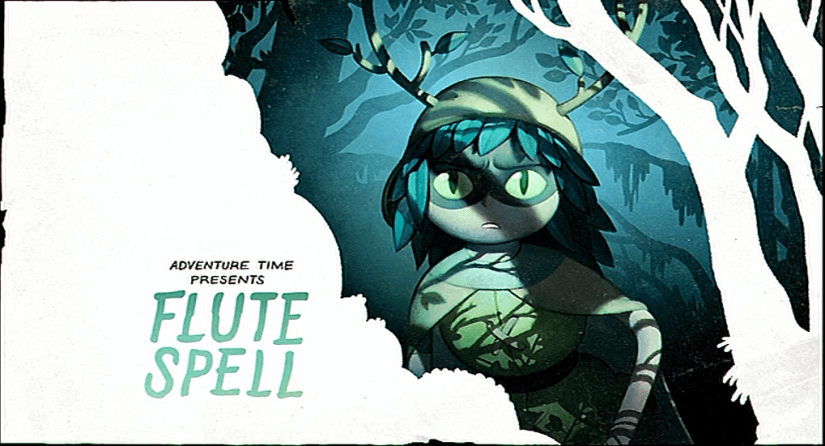
As I mentioned earlier, it’s no surprise that Jesse Moynihan loves inserting Huntress Wizard into episodes as often as he can, and that the fanbase in general has taken a particular liking to her ever since Reign of Gunters came along. Some might see it as pandering to the fanbase that this random, insignificant character is suddenly made into Finn’s love interest, but I dunno, I never minded it. Huntress Wizard is a cool and mysterious character with a competent VA at the helm (aka Jenny Slate; HW was previously voiced by Maria Bamford prior to this episode). A lot of the charm of HW’s character comes from that mystery element, though she acts this way for a purpose as revealed at the end of the episode. In general, a lot of the fun with HW comes from her stellar abilities and the way she interacts with the environment. From her ability to change into a tree or turn her clothes in leaves as she pleases, to her almost completely primitive living environment, she really is completely enigmatic from both a physical and psychological level.

FS 4.png

The chemistry between Finn and HW is a lot of fun as well. I love how their first interaction involves Huntress Wizard nearly impaling Finn’s nose with an arrow, and how Finn isn’t at all put off by that. Finn’s grass sword is used to its fullest abilities by having an active role in the story without it necessarily being about the grass sword, but just the thorn in general. That’s an idea that’s pretty unique to this episode, an adds an interesting element in how the grass sword operates outside of battle. Despite it being a curse, it does have mystical elements that really don’t give it proper defining traits, of which is what likely draws in Huntress Wizard so much. Also, the grass arm is apparently “really shreddy and busy.” Eyuck. The back-and-forth between HW and Finn is enjoyable, especially how it manages to make it obvious that Finn wants this way more than Huntress Wizard, but without making him overbearing or slimy. He has some really funny moments as he tries to look cool in front of Huntress Wizard, namely his denial that he smells bad during a high speed chase towards a vicious boar.

One aspect of this episode that does strike my curiosity is the identity of HW’s former mentor and possible love interest, the Spirit of the Forest, of whom looks and sounds exactly like the Dream Warrior from Who Would Win? It’s an… odd cameo to say the least, and one that has never had a ton of conclusive exposition aside from this episode, though I’m guessing each realm of the world has some sort of round, Matthew Broderick-like warrior that watches over a specific dominion. I don’t really have a problem with the Spirit of the Forest’s role in this episode, but I think it’s kind of weird that this is the only other Dream Warrior clone introduced in the series, because I feel like it makes things slightly confusing. Are there just two randomly identical beings that watch over entirely different facets of existence? Are they brothers? Are they the same person? I do wish this was elaborated on a bit more, and that there were more Broderick Warrior characters introduced for consistency, but as it stands, it’s just kind of a weird bit of lore that I’m not sure was completely necessary.

FS 5.png

His role, however, does add for some interesting developments in HW’s character, as it’s revealed that she’s just as afraid of being hurt by feelings as Finn is. HW and Finn, while dealing with similar problems, are very different. Finn went through some tough shit in the past, though he wants to learn how to move on from it and to regain physical love in his life. HW romanticizes with her own sadness, and believes in the idea that loving someone else is “becoming soft” and throwing away her own independence. Thus, she falls into the pit of MMS, because she believes that finding the solution to the very cause of what makes her sad and mad to begin with will erase her purpose and make her less significant in the world. Huntress Wizard admits to having feelings for Finn as well, though she acknowledges that “exceptional beasts like us cannot fall in love. That is the secret of ordinary people.” I’ve seen this viewpoint a lot from creatives, and admittedly feel the same way at times: that falling in love means sacrificing your skills of individuality and surrendering one’s self to the ordinary trials of life. It’s profound, but it’s made even better by Jake’s retort of, “uh, that’s real dumb.” The beginning of the episode showcases what an exciting and pleasurable life one can have when taking on the “normal” standards of life. Jake’s story certainly isn’t by the books in the case of social norms, but he’s able to live in a satisfactory way to his best abilities by meeting his own desires and contributing to his own well-being, as well as that of others. Jake can’t get behind HW’s mentality, because everything he’s ever loved and cared about has come from being a “normie.” Finn mentions he agrees, though it’s unclear who he’s even agreeing with. My money is definitely on HW, as Finn likely buys into HW’s same notions. It could also be the fact that Finn might acknowledge that he simply still isn’t ready to date yet. Even after all he’s been through, Finn still is afraid to love as carelessly as he once did, and though he wants to, it will take some time before he’s fully ready to move on from that fear of loss.

While girls come and go, Finn’s brother certainly does not, as he and Jake share a very sweet moment together at the end. Love how the game they play together alludes to the often tumultuous nature of pursuing romance – “it’s all about patience and treating each grueling, repetitive battle as if it were your first.” As the Spirit of the Forest mentioned before, infatuation is easily dismantled when it comes to the true intentions and desires of two individuals, in which the relationship practically fades into obscurity. Finn is bummed out, but mirrors the Spirit’s line of “attracting forces come and go,” as he chooses to acknowledge that the connection simply wasn’t worth moving forward with (for the time being) and realizes that the next attracting force isn’t far from the future.

FS 6.png

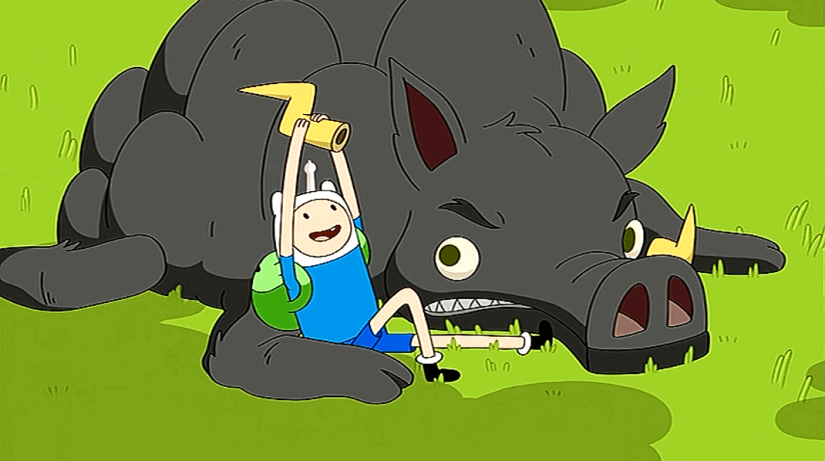
Tying in with the past couple entries, Flute Spell is really rad on a design aspect. The forest looks terrific in this episode, specifically Huntress Wizard’s house (essentially a cliff under a tree, wink wink) which is just awesome. It’s really well lit when it comes to the nighttime and morning scenes, and the sheer amount of detail inside is terrific. I also really love the design of that boar, who not only looks superb, but is animated in a really stellar way. I love how he’s essentially just a thunder cloud, and how his cloudy behind trails while he runs. It really just made me wonder why there’s never been a “thunder boar” Pokemon. And hey, Finn’s immune to electricity for the rest of the series now!

But yeah, Flute Spell is pretty great. It explores a pretty fascinating relationship that is made entirely fun through an interesting story, some enticing animation, and most of all, Jake’s thoroughly entertaining role. If I had to criticize one thing, it’d be that I feel as though there are too many cameos and references to past episodes. The ones I liked the most were essentially Easter eggs, like the Villagers and Jake’s bird form from Food Chain, but I felt that the Spirit of the Forest was a bit strange on some levels, and Science Cat really, really did not have to be in this episode. Aside from his somewhat funny bit of exposition about Sword Shark, who tragically passed away, he’s kind of just there for the sake of being an obscure cameo. But otherwise, Flute Spell is a ton of fun, and does well with a storyline that I would have typically only imagined being apart of someone’s fanfiction.

FS 7.png

Favorite line: “First off, I’m a great fighter. And I’m especially agile when I’m nude, so good luck.”

Adventure Time, Animation, Lifestyles

“Crossover” Review

C1.png

Original Airdate: January 28, 2016

Written & Storyboarded by: Jesse Moynihan & Sam Alden

The wish-world that Finn created in Finn the Human and Jake the Dog was a realm that I never expected to be revisited. I figured that the reality was instantly reversed when Jake wished for him and Finn to be back home safely in Ooo, so this plot point in particular was one that definitely flew far off of my radar. So, when I discovered that this episode would feature a return to the Farmworld dimension, I was cautiously optimistic. Optimistic, because the Farmworld bits in Jake the Dog were easily the strongest parts of the episode, but cautious because I wasn’t really sure I actually wanted a definitive resolution to this conflict. Luckily, Jesse Moynihan and Sam Alden manage to pull off exactly that while executing it in an absolutely stunning, tense, and hilarious way.

C2.png

I have very few criticisms of this one, but I’ll open up with what I think is possibly the most questionable aspect of Crossover: why did it begin in media res? I’m not necessarily saying that it’s a problem, or detracts from the quality of the episode in anyway, but I do kind of wonder what it actually adds to the episode. Granted, it’s a cool opening, and sets an ominous tone for the episode, as well as a sense of curiosity. But the episode returns to the exact same scene only a minute and a half later, and it doesn’t feel like the beginning was inserted to really save time on any aspect. It’s surely strange, but again, it’s not something I actively dislike, I just find it slightly distracting.

Though, that may just be do to the fact that the rest of the episode is mostly fantastic. This one truly has a star-studded cast, with Finn, Jake, Prismo, Ice Finn, and the Lich at the helm, along with side roles from BMO, Bil- er, Bobby, and Big Destiny. It feels like a big episode in just how crucial the main characters are in terms of their ranks in the universe: Jake and Finn are the epitome of good, the Lich is the epitome of evil, Prismo is the guardian/overseer, and Ice Finn is at the center of it all. It really helps to add to that sense of direness when some of the most powerful beings in the series are present, and their roles are certainly not wasted.

C3.png

Prismo returns once more (in Kumail Nanjiani’s LAST performance as the character; sad, ain’t it?) mostly to deliver much needed exposition, but also to act as the cautious “jedi master” type. His concern and wary nature that Finn and Jake must exterminate Ice Finn in his way and his way only once again adds to that tension on whether everything is going to end up alright in the end. And of course, his concerns actually do make sense. At first, I was kind of like, “why the fuck would Prismo care about this?” but he’s the one who technically created it to begin with. Thus, he’s responsible for the nature of said universe and how it directly affects the existence of other universes. It is curious, however, of who his boss truly is. Given that it’s never directly explained at any point in the series, I do wonder if Prismo’s boss was ever intended to be apart of the series, though the staff was never permitted the time to incorporate said storyline. My money’s on this guy, of whom Adam Muto created conceptual drawings for, but never actually made it into the series.

The way Finn views Ice Finn is certainly unique and interesting, and definitely ties into his development and growth over time. Call me out on it if you will, but I feel as if past Finn would simply go along with Prismo’s plan, and end up destroying what he would think is merely “an evil version of himself” in the process. Here, Finn is much more sympathetic and understanding. Not only has his view on evil beings changed over time, but he also likely empathizes with the Ice King more, since he realizes what little control he has over the crown. This also ties into Finn’s refusal to diss the Ice King as the series goes on, as he understands the pain he experiences and wants to do everything he can to minimize that pain as much as possible. Finn’s view of himself as well has adapted as well. In a way, Finn essentially “helps himself” in this episode using everything that he knows about his own character, including his pride, temperance, and his strong sense of morality. The days of Finn feeling sorely bad for himself are over, and he’s able to know himself better through self evaluation, and the evaluation of Ice Finn. Through this effective transformation of character, Finn helps validate his alternate self, and his own self in the process. Finn knows who he is, and that is unquestionably being a devoted hero.
C4.png

Of course, Jake’s along for the ride as well, and provides some great comic relief in response to some of the heavier, and headier, business going on within the actual story. While Finn has to deal with the inner workings of the mind of his alternate self, Jake is merely faced with a completely evil alternate version of himself that isn’t down to go through the same type of self evaluation. It wouldn’t be a completely terrific Jake appearance without his absolute devotion to his brother as well, which is fully emphasized here. Whether it be his cute “I love you,” to Finn as they almost bite it, or his courage to take on the fucking Lich for Christ’s sakes, is just great. Jake really will go the full mile for his brother, even when there’s opportunities for the two of them to safely go about finding a solution, as shown in the beginning. Jake has likely killed hundreds of baddies before, but none that looked as hauntingly similar to his own bro. And it’s the last thing that Jake would want to involve himself in.

After so many sporadic appearances in the series, I expected to kind of be nonplussed by the Lich, but Ron Perlman once again distills just the amount of solemn horror into his voice. It is hilarious to see how immune Finn and Jake are to the Lich by this point in the series. Of course, the Lich is still the big bad, and could kill any character he wants at any point, but there’s something so distinctly hilarious about Finn looking death right in the face and saying, “oh boy, here we go…” Of course, they’re terrified by him, but they’re pretty much prepared for this kind of situation by this point. They’ve been through it a handful of times before, and by now, Finn probably realizes that, though it’ll be tough, they’ll get through it again. However, I’ll reinforce that this in no way undermines the Lich’s role as a threat in this one. Despite the ultra silly way his head is placed on Jake’s body (which actually makes him even MORE threatening) Perlman’s monologue about how everyone in every multiverse will die once again hits home. As Jake said to Ice Finn earlier, “come on dude, he’s not even trying to hide [his evil]!” the Lich doesn’t even try to mask his true intentions to Ice Finn after he gets what he wants. The Lich has no need for allies or partners: once he obtains the ability to cause death everywhere possible, he has all of the power in the world to do so. He’d even kill Jake, if it wasn’t for Finn’s handy-dandy thorn arm. Once again, the thorn arm returns, this time actually having a role in battle. As proven in episodes like Billy’s Bucket List, The Comet, and Checkmate, the grass curse only effectively activates when Finn is powerless and consumed by his inability to help a situation. I do wonder if some form of level of anxiety within Finn’s system is what triggers the grass sword to act upon itself. It’s probably not important, but it’d be rad to actually have an episode where Finn attempts to control the power of the grass arm. I’d be lying if I didn’t pan out the possibility of that entire episode in my head. Maybe I’ll write incorporate it into fanfiction someday. Hm.

C5.png

After the Lich’s arm is chopped off into multiple dimensions (of which will be explored later!) the episode dissolves into one big, frenzy-filled sequence where Jake helplessly tries to fight off the Lich, and Finn attempts to reasons with his counterpart. Again, the pacing in this one is terrific. It speeds up all of the action-packed sequences to make them feel more tense and relentless, while slowing down the more character driven moments, as I just mentioned. The interactions between Finn and Ice Finn are really touching and telling (apparently Finn has a birthmark of a “flaming sideways teardrop,” or essentially, a comet. Nice touch there, Alden). These interactions are ultimately what leads the boys to working together with “The Maid,” which is one of my absolute favorite weapons in the series. That little “housekeeping!” that goes off when activated is priceless.

That help that Finn begins to offer is unfortunately cut short, but luckily, Prismo’s an expert with Adobe Premiere and patches the whole thing up. Of course, it’s one big reference to the fact that the ice crown was accidentally shown to still be on Simon’s head in Jake the Dog, but I’ve seen a couple different complaints of people who thought this was somewhat of a deus ex machina and that Prismo shouldn’t really possess the power to interfere with other universes. Honestly, I didn’t mind it at all because 1. It’s funny. 2. It’s at the command of the wish bearer himself and the being that granted the wish. Prismo could theoretically just let Finn sit with the wish that he made, but he isn’t a dick. Prismo would rather help the dude who saved his life than to let someone endlessly suffer for the rest of eternity. Though Finn helps his alternate self, the only thing that’s possibly more painful for Finn than Ice Finn suffering is the fact that he has a really good family life outside of everything. Finn has never met his mom, and had previously spent an entire year dealing with the fact that his dad is a legitimately shitty person. Though Finn has a home with Jake and BMO and the other treehouse boys, he’s still stuck with the sad reminder that he has no caring birth parents to rely on. It’s the perfect quiet ending to cap off an otherwise intense episode, and one that opens up Finn’s longing for more possibilities in the future.

C6.png

On a visual aspect, this episode is just gorgeous. Aside from Evergreen, this may be the best looking episode to date. The subdued blues and whites of the iced-up Farmworld are pleasant and somewhat calming, so when the brighter yellows and greens arise during the Lich’s arrival, it really adds a dark and foreboding feeling, even if the contrasting colors are saying the opposite. The landscape in general is really awesome, feeling like an even bleaker and less welcoming Ice Kingdom. In addition to that, Finn and Jake looking fucking rad in those snow jackets. No kidding, I would pay good money for a vinyl figure of Finn in that jacket with his Finn Sword. Get on it, Kidrobot!

Other small things I liked about this one: hearing Lou Ferrigno’s one final time in the series as Bobby, the return of the Enchiridion and the fact that it actually has a unique, different design on the cover, the boys’ random Tree Fort activities at the beginning of the episode, the return of the talking Finn Sword, and the allusions to Finn getting better at playing the flute ACTUALLY having a role in future episodes. It’s always been a headcanon of mine that Finn subconsciously picked up the last name “Mertens” from his experiences within the Farmworld.

Crossover is just an overall delight. Sam Alden and Jesse Moynihan make for terrific boarding team this season; Moynihan is still able to pull off some crazy, off-the-walls stories like this, but is more grounded with Alden’s guidance. It’s a fast-paced, fun, exhilarating journey that really kicks off a series of terrific episodes spanning across the entire rest of the season. In particular, my favorite of season seven is coming up next.

C7

Favorite line: “Are you bein’ stupid on purpose?”


Adventure Time, Animation, Lifestyles

“President Porpoise is Missing!” Review

PPIM 1.png

Original Airdate: January 12, 2016

Written & Storyboarded by: Kent Osborne & Sam Alden

I feel like a large amount of season seven episodes attempt to recreate the magic of the early seasons by being lighter and goofier entries that separate themselves from the more intense “fluff” episodes from season six, such as The Diary or Friends Forever. It is easy to see, however, how these episodes differ from early season one entries. As my buddy Stuped mentioned over on the Reddit, a lot of these episodes capture the zany dialogue and lightheartedness of those early entries quite nicely, but what they lack is the energy and non-stop pacing of an episode like Evicted! or Loyalty to the King. In return, President Porpoise is Missing seems like a bit of a facsimile, as it imitates the silliness and story, but doesn’t really stand as what feels like a totally coherent entry. Granted, it’s not a complete stinker, but a lot of it feels like a series of set pieces with no real substance in the actual story.

PPIM 2.png

Of course, the concept for the episode in general derives loosely from a throwaway gag in Burning Low, and while I usually think these little continuity nods are enjoyable, this is one I’m pretty indifferent to. I didn’t really think the President Porpoise gag in Burning Low was that remarkable to begin with, so I wasn’t particularly ecstatic for an episode dedicated in his honor. But, it is a silly premise, with an equally silly introduction that features a whole gang of Tree Fort creepers. I absolutely loved the reveal of just how many people hide out within the Tree Fort, with not a single character feeling out of place. Banana Man and Ice King are lonely stalkers, Marceline loves to spy on the boys, Princess Bubblegum loves to spy in general, and Starchy and the Gumdrop Lass probably just have nothing else to do with their day. Definitely my favorite part of the episode, and I especially love how cool Finn and Jake are with a bunch of people randomly hanging out in their house. Even the Ice King, of whom the boys would’ve scolded in the past, is greeted with mostly positive reception. I’ve said it before, but Kent Osborne is really great with writing earnest and kind depictions of the main cast during these later seasons, where a lot of Finn and Jake’s interactions with other characters (and each other) are as non-condescending as possible.

A lot of that lack of condescension continues forth in all aspects of the episode, as Finn and Jake take on a political mission and use their skills in problem solving (and pun cracking) to collaborate with each other, BMO and Ice King have their own imaginary sea exploration (featuring another nice callback to All the Little People; Finn was right about those two!), and Banana Man finding love with a nice sea lady. I’ll briefly go over each of these subplots.

PPIM 3.png

Finn and Jake’s mission to the sea metropolis is great on a visual perspective. The sea world itself is awesome, and kind of surprises me that it’s taken Adventure Time this long to explore an underwater village that is this expansive. It all looks great, and the colors really pop within the expansive blue filter that surrounds each character and landscape. The story itself, however, is pretty unremarkable. I’m not really invested in what actually happened to President Porpoise, the character himself, or the other various sea creatures involved. Vice President Blowfish has a competent VA at the helm, though his motivation and character are barely elaborated on, and he also isn’t particularly interesting or funny in any way necessary. There’s a couple solid gags through these sequences, such as Finn and Jake’s high-five that causes Finn to fall over completely, or the little shrimp who is consistently taking notes, but other than that, the story itself isn’t really given any time to develop, and there aren’t many humorous moments to come from it. It also kinda rubs me the wrong way that Finn and Jake end up beating the shit out of V.P. Blowfish, when he’s clearly proven innocent. I mean, he doesn’t seem like the coolest or nicest fish in the sea, but his issues were mostly from a political standpoint, which they really shouldn’t have any part in to begin with.

Speaking of politics, Banana Man ends up finding love with a girl involved in said panel. While I do like Banana Man’s inferiority towards Finn and Jake within the submarine, I feel as though his actual love story is equally uninteresting. Part of the charm of Banana Man was his hardship of connecting with other people because of his own social anxiety, so watching him embark on his own mission for love is sweet, but particularly unchallenging. He initially mentions his struggles with the great line of, “it’s like there’s this instruction manual that explains how to talk to people, and everyone in the world got a copy except me,” but other than that one instance, his struggle of connecting with other people romantically isn’t really emphasized, so his actual accomplishment of finding love feels relatively hollow. His song is pretty bad and unmemorable; it kind of shocks me that they continuously have Weird Al sing songs within the series but never actually have him write or compose his own tunes for the series. It feels slightly like wasted potential. And I’m not sure I even get Cybil’s character in the slightest; she’s a representative and part of the Fish Parliament, but says that national politics aren’t her thing? I suppose she’s a state politician, but I dunno, it just struck me as a weird bit of character building that kind of makes her seem impossible to read.

PPIM 4.png

BMO and Ice King’s moments were actually pretty awesome. I loved to see these two work off of each other and to genuinely enjoy spending time together. It actually surprises me how open BMO is to hanging out with Ice King, but it does make me think that BMO probably treats Ice King with more respect because he is a grown adult figure that he can hangout with, unlike NEPTR. Ice King just so happens to have a similar imagination and ability to go along with anything that he makes for a perfect companion to BMO. I similarly love how Ice King’s wizard eyes come back into play, as he imagines a brightly-colored submarine for BMO and himself to operate. Their friendship was really sweet, as Ice King can likely breathe easy and feel validated that BMO allows him to explore his more weird and imaginative side, and I enjoyed seeing another subsequent episode based on their friendship in the future.

So yeah, not a ton that sticks out about this one for me, but in a similar fashion to Angel Face, this one is nice and inoffensive. It’s hard to pick on it completely because it really does prove to be a fun waste of time that leaves you with a good feeling in the end. There’s some nice moments between the brothers in this episode, such as when Jake shrinks to an unimaginably small size and continues to fall into cracks, as well as their brief moment towards the end. There’s a nice message of companionship that connects the three stories throughout President Porpoise is Missing!, but aside from that aspect, the individual set pieces aren’t really entertaining. It’s a hodgepodge of ideas that never really get a chance to develop on their own, and while they have a nice motif that carries through them, I can’t really get behind anything that’s going on within the plot.

PPIM 5.png

Favorite line: “Dying with you sucks way less than dying alone!”

Adventure Time, Animation, Lifestyles

“The Mountain” Review

TM 1.png

Original Airdate: February 12, 2015

Written & Storyboarded by: Sam Alden & Jesse Moynihan

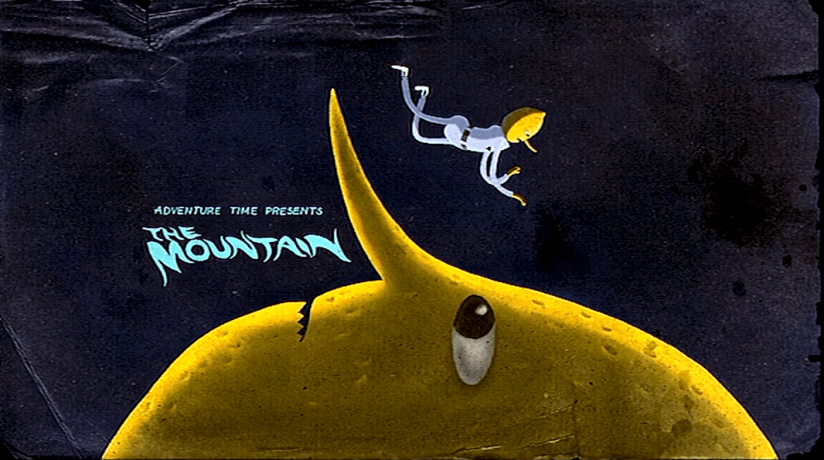
The Mountain is possibly Adventure Time’s most ambiguous episode to date, and it’s definitely difficult to understand. I wasn’t really excited for more Lemongrab when the premise for this one was released; I had kind of thought Lemongrab’s arc was finished by the time Lemonhope aired, and didn’t really want the character to be milked any further if there wasn’t a legitimate new direction to take him in. And apparently, Jesse Moynihan thought so too. On his blog, he detailed how he thought of the story for this one right as he was falling asleep, and he actually have a great sum-up on emotionally ambiguity in television in general. I’ll leave some of it below for reference:

“In my mind, the thing I really wanted to get away from, was the complete narrative handholding that embodies not only kids television, but almost all television: The ideology that demands we understand at all times what the character feels, what the conflict is, how exactly the audience should feel, and maybe the moral message. Even on shows I really dig like Game of Thrones, or True Detective, there’s very little ambiguity when it comes to how the audience is being manipulated to feel. Often times, in lesser TV shows, the writing acts as a rote, step by step instructional guide for how we should emotionally proceed as an audience. What’s funny is how well it works, despite its fake hackiness. Someone on screen yelling “I am mad at you! You killed my father! But I need your help!” or “I feel X because of Y, so you should Z” in the dumbest way possible can still have an impact on me. If I give in to the scenario, I guess part of me gives up an aspect of emotional control or something. It’s passive engagement with archetypes and familiar emotional cues. I’m willing to participate in passive engagement, but I greatly prefer the idea that entertainment may reflect the poetry and ambiguity of life.”

It’s a pretty neat mindset, and kind of addresses the experimental nature of season six, and the anxieties that went along with its production. During this season, Adventure Time has churned out some of the most different and unique eleven minute stories that television has ever seen, but again, as Moynihan touched on in his post, it’s hard to say that this is actually what people want to see. In fact, it isn’t! So many people left the AT bandwagon for Steven Universe at this point in time, and not to say that this is a bad thing, but SU is much, much more open about the issues each character is facing and how it affects themselves, while Adventure Time, or at least Moynihan, was trying to get away from that method of writing all together. Thus, The Mountain aims at tackling the complexities of both Finn and Lemongrab’s own insecurities, without making anything apparent. While it’s chock full of Moynihanisms, it’s also the storyboarding debut of Sam Alden, who is one of my favorite storyboard artists and writers on the show.

TM 2.png

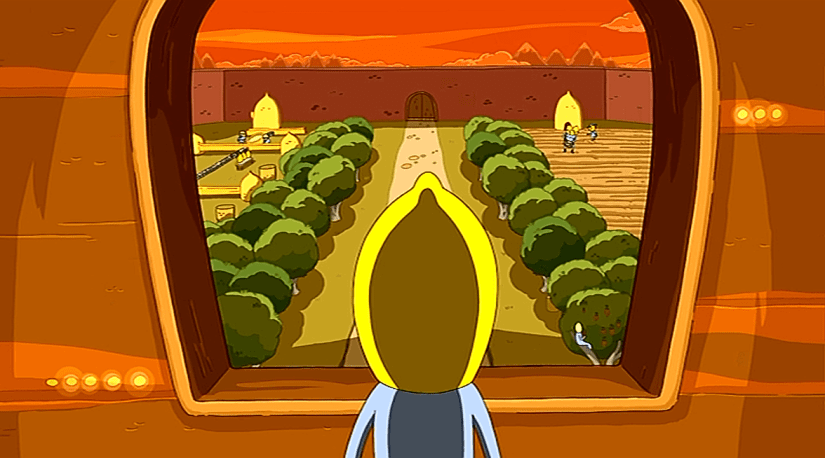
The opening provides some nice insight into what Castle Lemongrab has been up to recently, and it seems like all of the Lemon People are being treated relatively well. Granted, Lemongrab still receives the “royal treatment” and keeps everyone on a strict schedule, though nobody in the kingdom seems opposed to it, as they seem to be at utter peace. That is, except for Lemongrab of course, whose failure to be content in his own skin is represented by the crack in the mural on his ceiling. We saw those who struggle with their own disappointing lives back in Astral Plane, but here, Lemongrab is outright refusing his own being. It’s an existential crisis that has him searching for more than just self-satisfaction, but a search for something deeper and greater for his own being.

On the other side of things, Finn and Jake enjoy yet another campfire bonding session together, as they prepare to watch the “Dap of the Heavens,” which just feels like Adventure Time in its most classic form. Those fun times end when Finn discovers Flame Princess and Cinnamon Bun working out nearby, which once more reinforces that Finn isn’t really over her entirely. I absolutely love the show’s commitment to Finn’s inability to completely move on from his ex-girlfriend. A lot of break-ups in television are glanced over after the course of a couple of episodes, but here, even an entire season later, Finn is still struggling. It’s painted refreshingly in a different way here, however, as Finn seems more anxious than anything. After a period of growth, Finn likely realizes just how embarrassing his actions were towards FP in the past, and is haunted by his own mistakes. This is why I really like his statement of, “I need to distract myself with work.” After a period of depression, Finn realizes that he can’t accomplish anything by merely allowing himself to feel bad, and that he must shift his focus onto something more productive. It’s really sweet to see how proactive he’s become.

TM 3.png

Though not above all issues, it seems, as the guardian of the Mountain of Matthew acknowledges that Finn is filled with “way cray beeswax.” This likely is addressing the onset of problems that Finn began to experience following his break-up with Flame Princess, and how all of those negative, raw feelings are being brought back at the sight of her.

The inside of the Mountain of Matthew is pretty nicely designed, though nothing I would call especially remarkable. I actually felt its interior was a bit too reminiscent of the tree domain in Little Brother, though they aren’t entirely identical. It’s here where Lemongrab experiences the door trial which propels him forward. Since he and Finn both share a similar experience, I’ll quickly jot down what I think each door represents and then elaborate on it:

  1. Desire.
  2. Fear.
  3. Empathy.

Through the first gateway, Lemongrab sees PB with a catcher’s mitt, and asks Lemongrab to play with her. The use of a catcher’s mitt to represent Lemongrab’s loneliness is first utilized in You Made and is referenced again at the beginning of the episode. What Lemongrab wants most of all is to bond with his mother unconditionally in the strongest way possible, which is, in his lemon-y mind, playing a game of catch. The second door features Lemonhope in a successful place as the ruler of Castle Lemongrab, which shows Lemongrab’s absolute inadequate feelings towards his own status. Aside from having a relationship with Princess Bubblegum, Lemongrab has always wanted to feel successful in his own skin, and successful as a ruler of his own kingdom. Watching someone who strayed away from his sour ways be able to actually run the earldom better than his own self is deeply stressful for Lemongrab, and interferes with his own view of his place in the universe. The empathy card with the last one is definitely the most questionable, but Lemongrab’s caring feelings for his china doll, and the possible remaining feelings he may share for his brother, propel him to act unselfishly and do something for the greater good, which allows him to move forward.

TM 4.png

As for Finn’s experience with the doors, things go quite comparably. Through the first door, Finn has the opportunity to take Cinnamon Bun’s place, both physically and metaphorically, to “be with” Flame Princess. The second door has Jake and BMO about to feast on Finn cakes, without the company of Finn, which could simply represent Finn’s simplistic desire to possess his special cupcakes, or it could picture Finn feeling like he is ultimately left out of something. Finn can be a bit clingy and possessive, so it would make sense that his fear is something that reflects his underlying need of support and love. The last door doesn’t show much, aside from a giant butterfly (Finn’s spirit animal), though the screams of Lemongrab can be heard in the background. Finn, like Lemongrab, chooses the path to empathy, rather than something that will directly benefit himself.

During a retrospective trial where both Finn and Lemongrab are met with massive versions of themselves, things start to get really trippy. Lemongrab’s experience while walking on his own body has him come to terms with the fact that he is coated in grease, and that to be a lemon is inherently to be “greasy.” Lemongrab was referred to as “Lemongrease” by the Pup Gang in You Made Me, though he strictly denied being such an entity. Here, after spending time on his own body, Lemongrab finally realizes that he is “grease.” Whether this means he’s a buzzkill, a dickhead, or a real out loud flim flammer, Lemongrab verbally acknowledges that he himself is a troubled being, though he also rejects this aspect of his life. As he chooses to progress forward to meet Matthew, Lemongrab bids farewell to his current self, in the hopes that he’ll find serenity and peace once he leaves behind all of his flaws and imperfections.

TM 6.png

While Finn’s experience through this portal isn’t nearly as reflective, there are some cool thing to point out. Finn continuously runs on his arm, which is missing in the vision. I believe this is in reference to the reinforced message that, even though a part of Finn’s self returned when his arm did, he still is not fully “whole.” This is shown in Is That You? with Finn’s thorn, and is displayed here as a means of showing that, while Finn’s arm is back, it isn’t fully there. Finn’s childlike happiness has returned to him, but it will never be the way it used to be entirely.

All of this boils down to the climax, with Finn and Lemongrab meeting up with Matthew. It’s both the coolest part of the episode, and the most confusing. But I’ve pieced it together as much as one can, and after years of reading what others have said, and as well as what I myself interpreted, it seems more apparent. Matthew states:

“The meat-bodies who have journeyed to this mountain have distilled themselves to their original source materials, and now exist in oneness.”

Matthew is essentially a cult leader or a false prophet of some sort, offering peace and restoration when the second end of the world comes, and for anyone who can no longer find peace and meaning in their own lives. Essentially, Matthew boils people down into being thoughtless, desireless beings who merely follow in the path of one ultimate sense of power that gives them meaning. It is cool how Matthew isn’t necessarily presented as a villain; like everything else in this episode, his state of being is ambiguous. There’s nothing that suggests he’s downright malicious, though his ultimate downfall is the fact that he destroys the free will and identities of other beings, but only at the expense of their original choice to sacrifice themselves to become something greater. This is why Lemongrab came; Finn states, “I know ya got issues,” and that’s exactly what propelled Lemongrab to choose a new path of being: to surrender his worldly and inner problems, and to become part of something bigger than himself, as many do with any kind of religion. Though, Lemongrab’s ultimate ego is what leaves him unable to surrender himself to Matthew. As he pulls out the remaining Lemonjons (or lemon candies) he gathered from his dinner, he realizes that the Lemonjons, being greasy and “flawed” could break Matthew. Lemongrab exclaims, “if you are the head that floats atop the ziggurat, then the stairs that lead to you must be infinite. Infinite stairs are UNACCEPTABLE!” Lemongrab knows that, to actually be something or someone as great as Matthew, the path to become undoubtedly perfect offers an impossible destination. Lemongrab came to the Mountain of Matthew to find peace in his state of being, but as it has been enforced time and time again, in Lemongrab’s mind it’s “his way or the highway.” Lemongrab fails to understand why he should give himself up to be like everyone else, because even though he isn’t fully happy with his life, he knows that he doesn’t want to lose his lemon-y essence in the end. The imperfect nature and utter “grease” of the Lemonjons causes Matthew “perfect” nature to erupt, and to show the true face of his followers, who are all identical and unremarkable, showing that his followers truly did sacrifice every sense of their being. It’s complicated to know if what Lemongrab did was right; these people are clearly upset with his actions, and while I don’t think the nature of Matthew was truly authentic, some people would much rather be apart of something that helps them feel more special and unique, even if it does stifle their own individuality and characteristics.

TM 5.png

But, the important part story-wise is that Lemongrab did successfully achieve solace through his experience in the cave. As he returns home, he spits the remaining gunk of the Lemonjon he was chewing into the cracked mural, and utters, “yo, yo, it’s grease!” It shows that even grease, something that Lemongrab once revolted against, could be something that’s filling and purposeful. Lemongrab is “grease,” but his overall acceptance of himself and his way of life is exactly what he needed to feel more comfortable in his own skin. Lemongrab does as he will, and his acceptance of how he does things, and the reassurance that they do embody something meaningful, gives him a reason to chill out and let things be.

Woof. This one is a doozy, y’all. And honestly, it’s hard to put into words exactly how I feel about it. It’s certainly interesting, and there’s no denying that. The themes and metaphors it presents are often difficult to read into, but provide this episode with a ton to work with when it comes to those deeper, analytical expeditions, as this review was. So it’s definitely intriguing, but does it work on a surface level? Well… I think it depends on the person. This is one that took several viewings for me to get fully invested in; there’s so much going on that it takes a lot of reading into to fully understand what’s going on in the story, which can certainly be frustrating. There’s other things holding it up: the environment, atmosphere, and trippy visuals are certainly a treat. Some of the trials that Finn and Lemongrab go through aren’t entirely difficult to understand, and Lemongrab himself is, as always, hilarious. My favorite bit is the running gag in which he simply utters “bye” before abruptly doing something extreme. Also, the scene where he kills the guardian, as Finn responds, “dude, I was gonna ask him to move,” had me in stitches. Granted, I still think the ability to get behind the actual themes and story of the episode is a big aspect, and I can totally understand if people weren’t able to enjoy this one as it is. It almost leaves too much up to the viewer where it feels like you HAVE to look deeper in order to have a pleasurable experience with it. But, as for myself, I do quite enjoy it, though that’s a personal preference and I don’t know how much of a gem it is on its own and how much I could truly recommend this to someone is. It’s an acquired taste, and one I get behind, but it surely isn’t for everyone.

TM 7.png

Favorite line: “You will be served in a pitcher by a little child!”