Adventure Time, Animation, Lifestyles

“King’s Ransom” Review

KR 1.png

Original Airdate: January 15, 2016

Written & Storyboarded by: Hanna K. Nyström & Andres Salaff

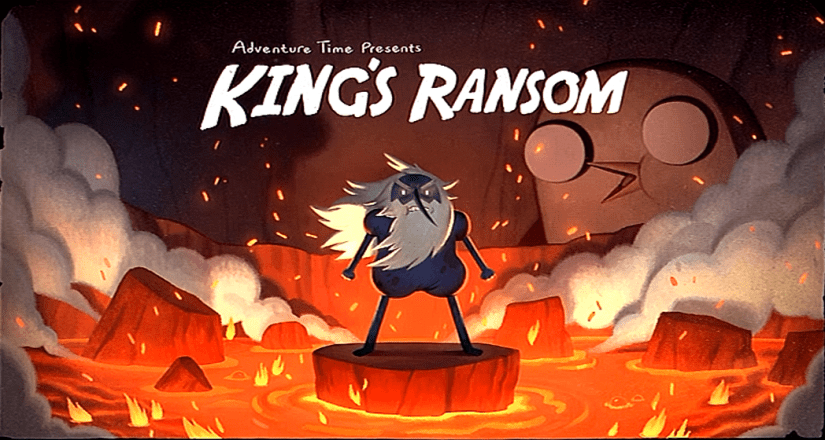
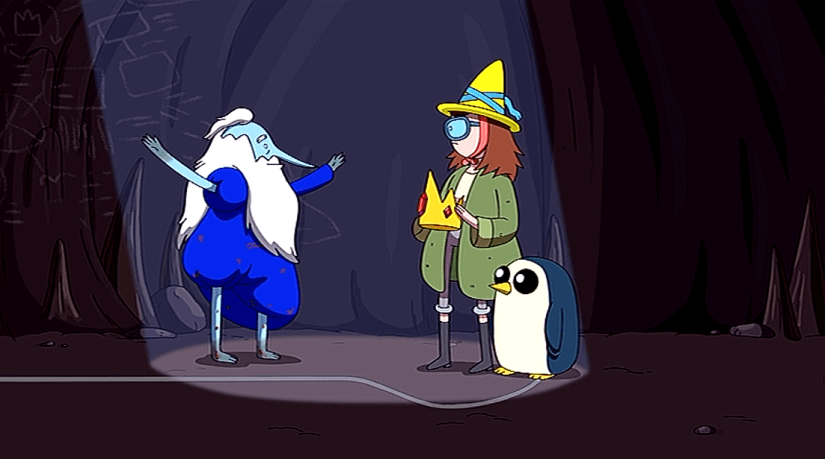
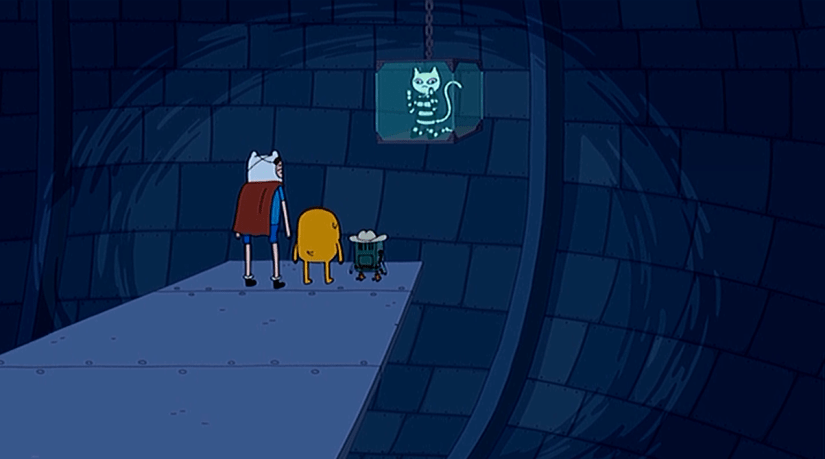
The oddest thing about King’s Ransom to me is that it centers around Ice King’s journey into finding the missing Gunter, which is the exact same plot of the Ice King comic miniseries that was released FIVE DAYS after this episode had aired. I mean, it’s likely a coincidence, but just strikes me as especially odd considering that storyboard artist Emily Partridge ended up being the head writer for said miniseries, and whether or not it’s canon, I can imagine that anyone who picked up Ice King Issue #1 that week suffered from a serious case of deja-vu. But, regardless, the episode itself proves to be a lot of fun, and one that works mostly on simplicity as a means of success. And who better than to capture the charming, lovely simplicity of the main cast than Hanna K. Nyström?

KR 2.png

Nyström only just began as a storyboard artist in season seven, but her ability to empathize and understand these characters, as well as her strong efforts in storytelling, have truly led her to be one of my favorite board artists in the latter half of the series. Like Kent Osborne, Nyström has a way of depicting the cast in such a non-cynical and loving way that is just absolutely irresistible. It’s a method that may have been a bit too sweet early on in the series, but as our main characters begin to change and evolve, it’s more than welcomed as an accurate form of development. Joining her at the helm of this one is Andres Salaff, who doesn’t have a very big portfolio in the storyboarding realm aside from this episode and The Music Hole, but his efforts in those two do reinforce his equal ability to understand the characters on a personal level. Hell, he was a supervising director for two seasons, after all!

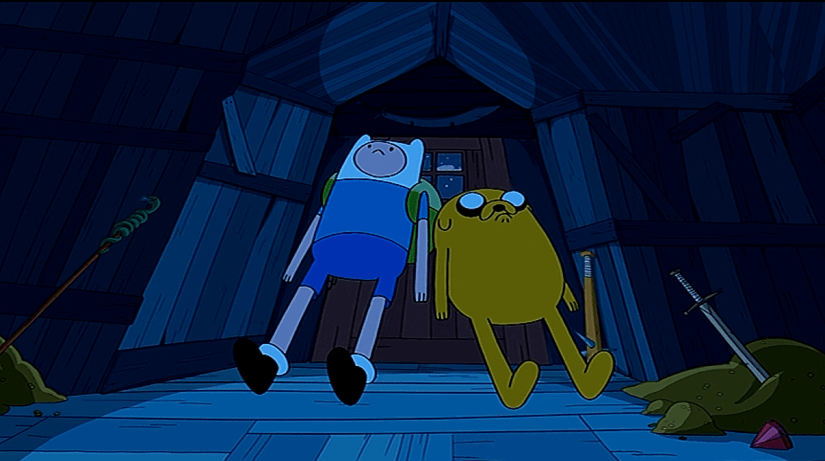
Following up from that whole ramble, a lot of the enjoyment from this episode comes from the absolutely delightful interactions between Finn, Jake, and Ice King. I certainly view King’s Ransom as a big turning point in the relationship between the boys and Ice King. By this point in time, Finn has almost fully warmed up to the IK. In fact, he shows absolutely no sign of being angry or frustrated by Ice King, even when he’s directly inconveniencing the brothers. Of course, Jake still hasn’t fully warmed up to Ice King’s often manic behavior, and is noticeably upset with him, at least at first. Jake slowly begins to sympathize with Ice King as the episode progresses, mostly in a way that goes back to Ice King’s previously sentiment that Gunter is comparable to being Finn’s Jake (or vice-versa). Jake likely identifies in the sweetness behind Ice King and Gunter’s relationship, in the same way that Jake would do anything to save his little bro in his time of need (humorously, Ice King might actually be even more dedicated in his efforts than Jake would. We all remember Power Animal, right?) so he’s able to look at the IK from a more sympathetic outlook. It would still take a bit more time for Jake to fully treat the guy as an equal, but this is a HUGE step for him in his behavior.

KR 3.png

While I don’t mean to undermine some terrific conflict episodes between the brothers and their overly clingy compadre, it is really cool to see a straightforward adventure-themed episode with all three boys working together in harmony. A lot of the fun with this one does derives from all of the back-and-forth interactions between the boys, and the circumstances that befall them. This is also an episode that is particularly silly in its execution of particular elements; the literal fox chase that involves Jake multiplying into several identical (non-sentient) Jakes, Mr. Fox’s disturbance in his own lonely bedroom, the added bit of lore to Ice King that he begins to look more like Simon whenever his crown is miles away from him, and various other visual gags that are just delightful (the return of the Jake car got me particularly giddy). The concept in general, while treated in a genuine way, is equally kind of hilarious when you start to think about it. Ice King is searching specifically for “Gunter”, while there are hundreds of other penguins that take refuge in his own kingdom. I didn’t even think he could tell the difference half of the time.

Though it’s silly, a lot of the episode does work off of your emotional investment in the situation, which again, I believe to be genuine. You really get the feeling that Ice King does care about Gunter, beyond being just the archetypal sidekick for his muse. It’s probably one of his most heroic displays to date, and he constantly puts himself in dire situations, just for the sake of saving his little buddy. While Ice King’s entire existence is based around the life of a man who cared very little for his pupil, IK proves to be an improvement just by showing that he does care in one way, shape or form. Of course, some of this did read to me as a bit schmaltzy at first, but it was quickly negated when we get to the end.

KR 4.png

I probably sound redundant getting to this next point, but I once again think it’s SO IMPORTANT that Ice King willingly almost gives up Gunter at the sight of a beautiful woman. While I’m totally for getting bits and hints of Ice King being able to develop over a period of time, it is once again an important reminder that Ice King will never fully change as long as the crown holds power over him. And that’s alright! Ice King’s apathy and failure to understand social connections are what made him great to begin with, and while I love the connections of understanding and love that he develops throughout the series, it great that the show is still dedicated to showing off his insanity and selfishness despite it all. As for the reveal of Betty, it was pretty fine. It leaves a bit of intrigue for Broke His Crown, but doesn’t really do much for me here. I think the reveal in general was pretty obvious for anyone watching, and the Herpich-styled tin can voice just kind of felt like an excuse for how Lena Dunham couldn’t make it into the booth at the time. I do love the fakeout, however, where Ice King begins to stutter and finally calls her “be-autiful” instead of “Betty.” Once again, it’s important to remember this guy has lost his mind, and there’s very few things that can change that at this point in time.

But overall, King’s Ransom is a lot of fun. Definitely not one of the stronger season seven episodes, but one that’s delightful regardless. It’s so weird to think that the last episode based around Finn, Jake, and Ice King’s relationship was Play Date, so it’s exceptionally rewarding that this episode simultaneously gets back to the basics, while also showing clear signs of evolution. This attitude surrounding the Ice King would only continue to shift as time went on, especially within this season in general.

KR 5

Favorite line: “The last time I saw Gunter, I was yelling at him for pooting. But it wasn’t Gunter who pooted. It was me!”


Adventure Time, Animation, Lifestyles

“Bad Jubies” Review

BJ 1.png

Original Airdate: January 14, 2016

Written & Storyboarded by: Kirsten Lepore

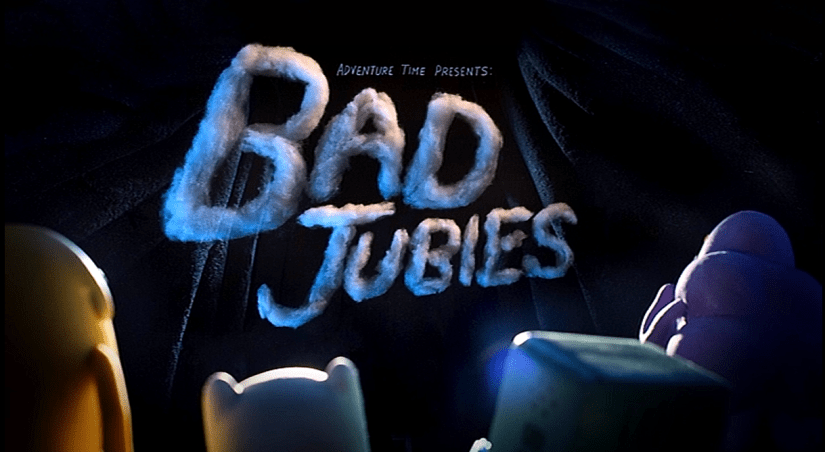
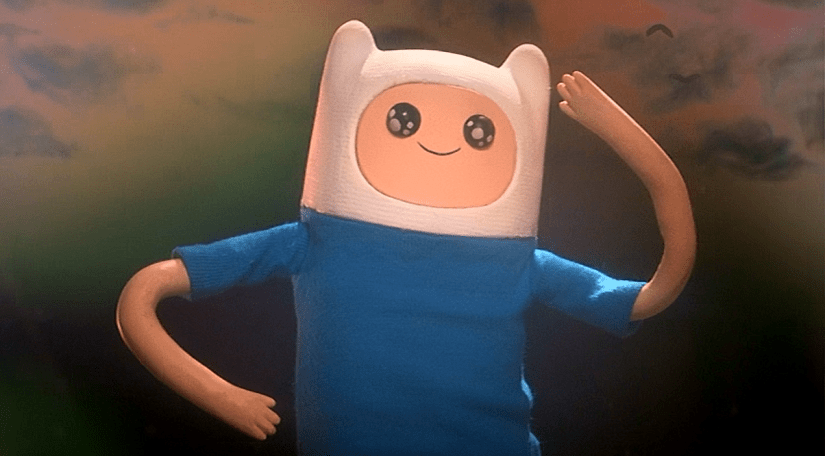
Bad Jubies is the fourth installment in Adventure Time‘s guest animator series, and it might be the best looking entry to date. I’m a sucker for stop motion; whether it be truly gorgeous pieces of cinema, such as Anomalisa or Isle of Dogs, or even some of the sillier examples, like Gumby or those corny Rankin-Bass holiday specials, there’s something undeniably charming about the art form that draws me in, even when the material isn’t particularly good. There is a clear sense of effort put into this episode, which took over a year to make. In fact, it actually started production before Water Park Prank, the previous guest animated episode, had even been conceived. And that effort really pays off; the characters look true to their 2-D counterparts, the backgrounds and scenery are absolutely gorgeous, and the animation feels thoroughly expressive and fluid throughout the run of the episode. The episode was directed entirely by Kirsten Lepore, an animator who specializes in stop motion. I actually had not known of Lepore’s work before this episode, but I did check out her stuff afterwards and quickly fell in love with it (with Bottle and Hi Stranger being my favorites). She’s also provided animation for Yo Gabba Gabba and recently has taken on the role of being a storyboard artist for Summer Camp Island. But, while I love the look of this episode, how does it fare when it comes to story and writing aspects? Well, it’s… alright.

BJ 2.png

I really feel bad saying that, and I really wanted to like this one, but just as I’ve said with the past three episodes, it comes across being “just good enough.” There’s nothing particularly bad about it, so to speak, and I think it actually gets down the portrayal of the main characters much better than most of the other guest animated episodes were able to. Granted, some of the portrayals may have been a bit too exaggerated, but I’ll get into that in a bit. Ironically, however, Lepore’s attention to the characters and environment actually somewhat backfires in a way. Typically, guest animated episodes are a chance for the animator to blend their style with AT in a way that sets it apart, while still feeling as though its capturing the show’s essence. Lepore does so well, but in a way that feels like it’s playing it a bit too safe.

Elaborating on what I mean by this, Food Chain was obviously set apart by the detailed Flash animation and surreal stories it could tell through its medium. Bad Jubies is the opposite. It presents a pretty subpar story and doesn’t really do anything particularly creative or interesting with the use of its stop motion that sets it apart from any other episode. Really, if you take away the element of stop motion, this is just your average Adventure Time episode. With a genre as sophisticated and unique as stop motion, I wish a lot more could’ve been played with in terms of fun and surreal animation – imagine the possibilities with Jake’s stretchiness! Again, I hate talking shit on that aspect, because stop motion in general is really expensive and time-consuming, but it fails to get me invested on the story in general, and the animation doesn’t really benefit for any little added bonuses that help carry it through.

BJ 3.png

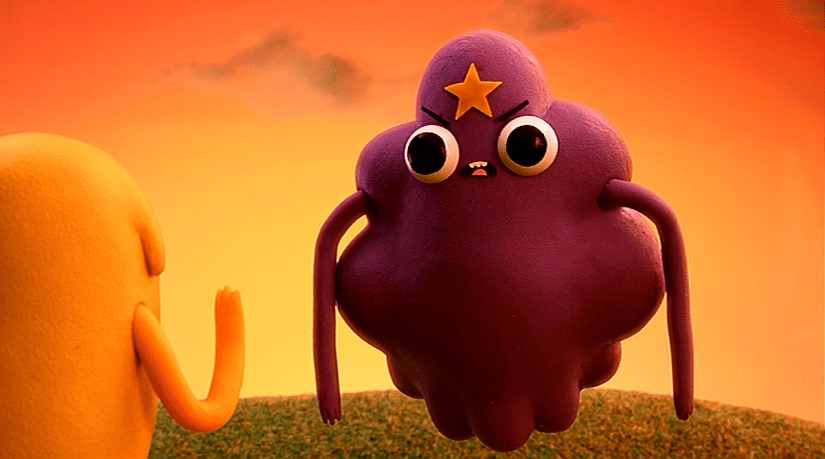
Aside from the story being rather generic and bland, the episode isn’t really on the more humorous side either. In fact, I fail to remember a moment where I had even laughed once. A lot of the attempts at jokes in this one revolve around Lumpy Space Princess being really loud and selfish, and all of you longtime readers probably know how I feel about that by now. She’s obnoxious, intolerant, and unfortunately takes up half of the episode. This is around the last point in time where LSP significantly weighs down an episode with her own vanity, and thank God for that. I’m all for giving the girl a chance, because she has episodes like Bad Timing and Be Sweet under her belt, but I had grown exceedingly tired of her character by this episode. She’s Adventure Time‘s Eric Cartman without any of the charisma or subtle brilliance, and is merely there to be the loud valley girl and nothing more. Luckily, she has a nice breakout role in Elements down the line, which gave me a full season break from her character that I truly needed.

In addition to that exaggerated character portrayal, I thought Jake might have been a bit too zen for my own liking. I dunno, I might be nitpicking here, because I don’t think it was totally out of line with his character, but some parts felt a bit contrived to me. Jake’s spiel about people being way too locked into their technology just didn’t seem like Jake. He’s a cool guy and real spiritual, but he spent an entire episode dedicated to beating his high score on his favorite video game, so I feel as though Bad Jubies tries to showcase him in a bit too much of a Buddha light. He almost seems too unconcerned by the events of the storm that he doesn’t even care if anything happens to himself or his friends in the process. Granted, I do like his role overall, and I think it was a unique decision for Lepore to make Jake the star of the episode over everyone else. While Finn and Jake have had somewhat of an equal role in the past three guest animated episodes, this one is clearly leaning more towards Jake. I just think it would’ve been a lot cooler if Jake had some sort of grapple with his mortality, or something. That stuff is always fun.

BJ 4.png

Finn and BMO are portrayed well, but as I mentioned, the story is what mostly suffers from this one. Again, it’s not particularly interesting, and I feeling like it’s trying to have a message at the end, but it really isn’t cohesive. It feels as if the episode is attempting to portray Jake in a better light than everyone else, because he’s managing to find peace and serenity while everyone else stresses out… but isn’t it kind of perfectly reasonable for them to do so? I mean, it’s a deadly storm, and the set up of the episode makes it pretty certain that this is not something that they can get around. If the episode had perhaps centered around insecurities and fears that seemed irrational, Jake’s zen behavior may have provided for a better light of positivity. I get that Jake ends up saving the day by being level-headed and peaceful, but I dunno, it kind of just reminds me of the people in disaster stories who put all of their faith in the church, and then end being swept up by a tornado. I feel like stress is a genuine necessity when it comes to dealing with crisis situations.

So, what do I like about this episode? Well, as I had mentioned before, the look of it is gorgeous. The backgrounds and models are great, and the music really sets the ambiance (which was composed by diasterpeace, whose work in this one sounds a lot like Tim Kiefer’s). That gag at the beginning with BMO’s super-detailed weather forecast face was pretty humorous, but that’s kind of it. Not to say that I hated the rest of the episode, but very little actually stuck out to me. I could see this concept working as a 3-5 minute short, but I don’t think it really makes for an entirely satisfying 11 minute segment. I still want to commend Lepore and her team for their work on this episode, as this is easily the most impressively constructed guest animator episode thus far. There’s actually a short 12 minute documentary about the making of this episode, entitled Good Jubies: The Making of Bad Jubies, which you can watch on Cartoon Network’s YouTube here, and you can also check out all of Lepore’s other wonderful animations here.

BJ 5.png

Favorite line: “How bout some o’ dem bean-beans?” (It’s the inflections that really make this one)


Adventure Time, Animation, Lifestyles

“Blank-Eyed Girl” Review

BEG 1.png

Original Airdate: January 13, 2016

Written & Storyboarded by: Somvilay Xayaphone & Seo Kim

Blank-Eyed Girl is a horror-themed episode that mainly deals with the ideas and concepts of the horror genre. A lot of the discussions between Finn, Jake, and Starchy aim to analyze fear and frightening objects of our perception and to conclude with where the source of said fear comes from. Each of the boys ends up coming up with their own separate points, but result in mostly confused by the conclusion. And while this episode isn’t particularly strong in its story, humor, or visuals, it does manage to get me invested in the allusions to horror in general.

BEG 2.png

Each character follows a pretty interesting archetype, so I’ll briefly chat about each depiction. Jake obviously plays the part of the skeptic: someone who is close-minded when it comes to the existence of the unknown and is unable to accept it as anything more than “bologna.” It is shown, however, that Jake actually ends up being the most frightened when it comes to dealing with the existence of the blank-eyed girls. It’s an interesting analogy; those who reject the harsh truths or the unknown aspects of reality are the ones who are likely the most afraid of those possibilities of said truths. After all, Jake has a ton of life experience under his belt and likely rests easy knowing that he probably feels as though he has the world itself figured out on his own. But, there will always be that scary aspect of the unknown, and life experience itself is what really cripples Jake. It’s the reason older people in general are more likely to be close-minded: while the world changes, adapts, and unravels with new secrets nearly everyday, an aged person is more likely to dismiss such, as it’s not something they have been trained to adapt to.

Finn, on the other hand, is young and malleable. He’s able to become more accepting towards the unknown because he hasn’t gotten to a point where it has separated itself from his grasp on reality. Thus, Finn is still scared, but he’s able to look upon the blank-eyed girls with acceptance and an analysis on creepy stuff in general. As the boy eloquently states, “Creepy is just another label we use to distance ourselves from stuff we don’t understand. Or reminds us of something within ourselves we’re not comfortable with. It just ain’t an actual thing, unless you choose to believe it.” That’s actually some pretty truthful shit, and while I think there are definitely things that can accurately be determined as creepy, (as in things that are also illegal) it is easy for social norms to be a deciding factor in what is viewed as creepy or beyond one’s understanding. As an avid collector of Powerpuff Girls merchandise, I can assure you that I am a victim of the former theory! I also think it’s cute that Finn genuinely has an interest in Starchy’s radio show and doesn’t dismiss it as Jake does. While the boys never really felt one-dimensional as a unit, it’s still cool to watch Finn grow and to see that he does have interests that differ from Jake’s own itinerary, especially when remembering the age gap between the two.

BEG 3.png

Starchy plays the part of the conspiracy theorist, and the show does a good job of portraying him as both a complete fabricator, and also somewhat competent in his position. It’s easy to dismiss him as a crazy conspirator, but half of the time, he’s usually right in his hypotheses. He was right about Princess Bubblegum being impersonated by a lizard, her own shady behavior, and the existence of the blank-eyed girls. Starchy may be a nut, but he also plays a part in showing how we also often dismiss people like himself for being insane, though it’s difficult to completely disprove his conjectures. He was also a million times more likable in this episode than he was in Cherry Cream Soda, so that on its own is a plus.

The blank-eyed girls prove to be beyond anyone’s comprehension, however. It’s a good reminder that, though we can try however we want to cope with fear and the unknown, we never know exactly what it will bring. The blank-eyed girls remain as an enigma and an example of how bizarre reality can be in its own right. As BMO also remarks in response to their transformation, “I think it was… beautiful!” there’s beauty to find in even the most horrific things perceivable to mankind, as it proves for most horror movies fanatics.

BEG 4.png
I mean… did you expect me not to put this screenshot in here?

This episode is scattered with funny and/or likable moments: Finn and Jake deciding to hold hands on their walk home was adorable, the fact that they spent $200 on pizza was a great throwaway gag, John DiMaggio’s voice acting is usually on point, and that end sequence is pretty great. The episode in general is nothing particularly remarkable, however, because I don’t really think the story is that strong. While the roles that Finn, Jake, and Starchy take on are certainly interesting, I find a lot of the episode to be lacking substance. Most of it is just Finn and Jake being freaked out by the concept of blank-eyed girls, who are really uninteresting in their own right. I do like how they’re somewhat of a satirical look at society’s genuine fear of creepy, little girls, but otherwise, they don’t do much and aren’t particularly frightening either. I think the title card for this episode is way creepier than anything within Blank-Eyed Girl. This is also the fourth or fifth strictly horror-themed episode of the series, and it feels like it’s treading on similar grounds by this point in time. Hell, a lot of this episode feels as if it’s borrowing from Ghost Fly, which similarly felt unremarkable.

So, it ends up being a fairly passable episode that’s mostly inoffensive. I do find it strange that Angel FacePresident Porpoise is Missing!Blank-Eyed GirlBad Jubies, and A King’s Ransom all aired in bomb-format, as most of these entries fall under the “just good enough” category. Perhaps it was a method to further progress the season, and I think it actually works quite nicely, as it allows for a group of breather episodes to pass by pleasantly throughout the week. While none of these episodes stand out as great for myself, this bomb did resonate for me as just a genuinely nice waste of time.

BEG 5.png

And as I sit here chatting about wasting time, we have only a mere few hours until the series finale finally airs. It has been so delightful to do these reviews over the past two years (the show’s cancellation had already been announced for three months when I started this blog, and now we’re more than halfway through the series!) and I look forward to continue to do so even after the series is finished. This is such a special show for myself, as well as for you readers and the AT fandom in general. I sincerely hope that all of you enjoy and cherish this final 44 minutes of content, and whether you enjoy it or not, it’s hard to deny that it was well worth the ride. As a final sentiment before the finale, I share with you all some fanart I drew up of my favorite boys. I’ll miss the Tree Fort family more than anything.

treefort boys.png

Favorite line: “I took up rock climbing! … My wife left me… and all new conspiracies!”

Adventure Time, Animation, Lifestyles

“President Porpoise is Missing!” Review

PPIM 1.png

Original Airdate: January 12, 2016

Written & Storyboarded by: Kent Osborne & Sam Alden

I feel like a large amount of season seven episodes attempt to recreate the magic of the early seasons by being lighter and goofier entries that separate themselves from the more intense “fluff” episodes from season six, such as The Diary or Friends Forever. It is easy to see, however, how these episodes differ from early season one entries. As my buddy Stuped mentioned over on the Reddit, a lot of these episodes capture the zany dialogue and lightheartedness of those early entries quite nicely, but what they lack is the energy and non-stop pacing of an episode like Evicted! or Loyalty to the King. In return, President Porpoise is Missing seems like a bit of a facsimile, as it imitates the silliness and story, but doesn’t really stand as what feels like a totally coherent entry. Granted, it’s not a complete stinker, but a lot of it feels like a series of set pieces with no real substance in the actual story.

PPIM 2.png

Of course, the concept for the episode in general derives loosely from a throwaway gag in Burning Low, and while I usually think these little continuity nods are enjoyable, this is one I’m pretty indifferent to. I didn’t really think the President Porpoise gag in Burning Low was that remarkable to begin with, so I wasn’t particularly ecstatic for an episode dedicated in his honor. But, it is a silly premise, with an equally silly introduction that features a whole gang of Tree Fort creepers. I absolutely loved the reveal of just how many people hide out within the Tree Fort, with not a single character feeling out of place. Banana Man and Ice King are lonely stalkers, Marceline loves to spy on the boys, Princess Bubblegum loves to spy in general, and Starchy and the Gumdrop Lass probably just have nothing else to do with their day. Definitely my favorite part of the episode, and I especially love how cool Finn and Jake are with a bunch of people randomly hanging out in their house. Even the Ice King, of whom the boys would’ve scolded in the past, is greeted with mostly positive reception. I’ve said it before, but Kent Osborne is really great with writing earnest and kind depictions of the main cast during these later seasons, where a lot of Finn and Jake’s interactions with other characters (and each other) are as non-condescending as possible.

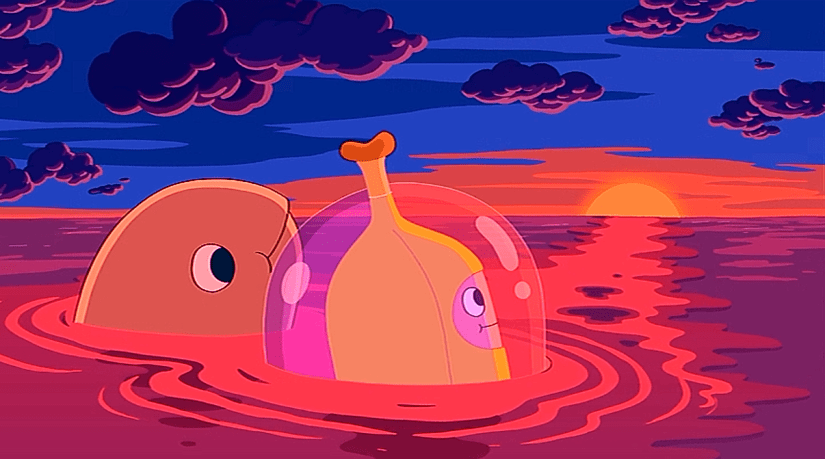
A lot of that lack of condescension continues forth in all aspects of the episode, as Finn and Jake take on a political mission and use their skills in problem solving (and pun cracking) to collaborate with each other, BMO and Ice King have their own imaginary sea exploration (featuring another nice callback to All the Little People; Finn was right about those two!), and Banana Man finding love with a nice sea lady. I’ll briefly go over each of these subplots.

PPIM 3.png

Finn and Jake’s mission to the sea metropolis is great on a visual perspective. The sea world itself is awesome, and kind of surprises me that it’s taken Adventure Time this long to explore an underwater village that is this expansive. It all looks great, and the colors really pop within the expansive blue filter that surrounds each character and landscape. The story itself, however, is pretty unremarkable. I’m not really invested in what actually happened to President Porpoise, the character himself, or the other various sea creatures involved. Vice President Blowfish has a competent VA at the helm, though his motivation and character are barely elaborated on, and he also isn’t particularly interesting or funny in any way necessary. There’s a couple solid gags through these sequences, such as Finn and Jake’s high-five that causes Finn to fall over completely, or the little shrimp who is consistently taking notes, but other than that, the story itself isn’t really given any time to develop, and there aren’t many humorous moments to come from it. It also kinda rubs me the wrong way that Finn and Jake end up beating the shit out of V.P. Blowfish, when he’s clearly proven innocent. I mean, he doesn’t seem like the coolest or nicest fish in the sea, but his issues were mostly from a political standpoint, which they really shouldn’t have any part in to begin with.

Speaking of politics, Banana Man ends up finding love with a girl involved in said panel. While I do like Banana Man’s inferiority towards Finn and Jake within the submarine, I feel as though his actual love story is equally uninteresting. Part of the charm of Banana Man was his hardship of connecting with other people because of his own social anxiety, so watching him embark on his own mission for love is sweet, but particularly unchallenging. He initially mentions his struggles with the great line of, “it’s like there’s this instruction manual that explains how to talk to people, and everyone in the world got a copy except me,” but other than that one instance, his struggle of connecting with other people romantically isn’t really emphasized, so his actual accomplishment of finding love feels relatively hollow. His song is pretty bad and unmemorable; it kind of shocks me that they continuously have Weird Al sing songs within the series but never actually have him write or compose his own tunes for the series. It feels slightly like wasted potential. And I’m not sure I even get Cybil’s character in the slightest; she’s a representative and part of the Fish Parliament, but says that national politics aren’t her thing? I suppose she’s a state politician, but I dunno, it just struck me as a weird bit of character building that kind of makes her seem impossible to read.

PPIM 4.png

BMO and Ice King’s moments were actually pretty awesome. I loved to see these two work off of each other and to genuinely enjoy spending time together. It actually surprises me how open BMO is to hanging out with Ice King, but it does make me think that BMO probably treats Ice King with more respect because he is a grown adult figure that he can hangout with, unlike NEPTR. Ice King just so happens to have a similar imagination and ability to go along with anything that he makes for a perfect companion to BMO. I similarly love how Ice King’s wizard eyes come back into play, as he imagines a brightly-colored submarine for BMO and himself to operate. Their friendship was really sweet, as Ice King can likely breathe easy and feel validated that BMO allows him to explore his more weird and imaginative side, and I enjoyed seeing another subsequent episode based on their friendship in the future.

So yeah, not a ton that sticks out about this one for me, but in a similar fashion to Angel Face, this one is nice and inoffensive. It’s hard to pick on it completely because it really does prove to be a fun waste of time that leaves you with a good feeling in the end. There’s some nice moments between the brothers in this episode, such as when Jake shrinks to an unimaginably small size and continues to fall into cracks, as well as their brief moment towards the end. There’s a nice message of companionship that connects the three stories throughout President Porpoise is Missing!, but aside from that aspect, the individual set pieces aren’t really entertaining. It’s a hodgepodge of ideas that never really get a chance to develop on their own, and while they have a nice motif that carries through them, I can’t really get behind anything that’s going on within the plot.

PPIM 5.png

Favorite line: “Dying with you sucks way less than dying alone!”

Adventure Time, Animation, Lifestyles

“Angel Face” Review

af 1.png

Original Airdate: January 11, 2016

Written & Storyboarded by: Somvilay Xayaphone & Seo Kim

We’ve gotten a few great BMO episodes from this season alone, as both Football and The More You Moe, The Moe You Know really set the bar for what could be done with the character. Thus, it’s kind of a given that the mostly silly Angel Face pales in comparison, though it’s kind of unfair to be hard on this one, which is clearly trying to do it’s own thing. Angel Face doesn’t break any ground, but it’s a light romp that isn’t especially funny or intriguing, but is enjoyable regardless.

af 2.png

I’m actually glad we do have something less stressful for BMO’s character to engage in. After a psychological breakdown and some traumatizing life experiences, it’s nice that the little guy can return to something that makes him genuinely happy, and that is playing with his imagination. The beginning of the episode is bizarrely fucked up, as BMO cooks up some “special sentient sandwiches” which involves killing almost every sentient ingredient involved. This also highlights one of the stronger points of BMO’s character: his ability to be completely adorable and simultaneously a giant sadist at the same time. It’s just as delightful here, and continues throughout the course of the episode. Jake is the perfect comedic foil to go along with BMO’s shtick for this story. While Finn likely would (and did) simply follow BMO’s every command, as would NEPTR, Jake is much more reluctant and deprived of energy to actually be interested in said juvenile games. Though, when it means he’s getting rewarded in some way or another (especially when sandwiches are on the line), he’ll comedically half-ass his way through it, which shows when he shapeshifts into a poor impersonation of a horse. As BMO humorously states, “aw, come on man, you didn’t even try.”

In the risk of sounding redundant, this episode is slightly plagued by the usual pacing problems in Somvilay-Seo episodes. The actual roleplaying adventure doesn’t get started until about three minutes in, so it feels like the beginning moves quite slowly. A lot of extra effort is put into animating things that aren’t really remarkable or amusing in any way, like BMO putting all of the sandwiches within his bag, or Jake taking his good old time to chow down on one of the sandwiches while waiting for BMO. It’s stuff like this that really just feels like it’s trying to span out the course of eleven minutes. Though, none of it is truly painful and the first act does have some decently funny moments. I’ll never get tired of BMO continuously mounting Jake, and how Jake spontaneously ends up looking more like a horse in the aftermath.

af 3.png

This episode actually provides for some really nice backgrounds and scenery that help connect to its western theme. I love any episode that explores the Badlands; its such a neat little barren wasteland that can often provide for a lot of opportunities in various different genres and tones, to which complements this episode nicely. I actually really love BMO’s song as well. While the show typically provides BMO with some small tunes that usually aren’t very long lasting, this one lasts a decent amount of time, and is thoroughly adorable throughout. It’s really hard not to get behind Niki Yang’s sweet and innocent singing.

And what would a BMO-centric episode be without a little shitting on NEPTR? While these moments of treating NEPTR like garbage usually make me laugh, I think it does come at a point where it feels like the show is being a bit too needlessly harsh on the little guy consistently. While a lot of the humor surrounding NEPTR revolves around his borderline uselessness, I really didn’t want to see him becoming the Meg Griffin of the Adventure Time world, because he is a genuinely cute and likable character who always means well. That’s part of the charm of his abuse, I suppose, but I think after this instance it just slightly started to strike a nerve with me. Not enough that I wasn’t in on the laughs (as Jake once again doesn’t notice that he was gone for months on end), but I am glad that he does get a moment of victory later on in the series.

af 4.png

As for the return of Me-Mow, it was definitely kind of weird to see her back after being absent from the series for so long. I used to be really excited about a possible Me-Mow return, but by the time this episode came along, it seemed just a tad too late for my liking. And I’m really not into the big, normal-sized version of her design. Pretty much the defining trait of Me-Mow in her previous episode was that she was really tiny, but still entirely threatening. Granted, she still does provide for a pretty solid return here, and the battle between her and BMO is a ton of fun. Not only does it provide for some all-around nice animation and nighttime shots, but it’s riddled with some really great lines. I love Me-Mow’s internal monologue and her desire for vengeance against Finn and Jake, as well as her overall ignorance when even recognizing Finn in a pretty obvious costume. And the fact that BMO was carrying around an actual firearm the whole time is just icing on the cake. The episode ends with probably one of my favorite gags in the series, as Me-Mow states “this cell’s not going to hold me…” and then is immediately placed in a more advanced confinement cel. Ya should’ve kept your mouth shut there, Me-Mow.

So yeah, not a ton I have to say about this one besides the fact that it’s cute. I’ve never really wanted Adventure Time to take on a western theme to begin with, but this one plays with the genre with a decent amount of fun. Far from the best BMO episode this season, but a light and amusing one at that.

af 5.png

Favorite line: “I am old enough to vote!”

Adventure Time, Animation, Lifestyles

“Summer Showers” Review

SS 1.png

Original Airdate: January 7, 2016

Written & Storyboarded by: Graham Falk

Just as a heads up for all you blog readers, this will be the last week where reviews are posted semi-daily. As my schedule begins to get busy, I’ll resume posting at least once or twice a week (with the exception of breaks) which should lead up to the beginning of summer 2019, where this blog will begin to come to an end. Though, there’s no need to worry about that now, as there’s still tons of other episodes coming up that I couldn’t be more excited to cover.

SS 2.png

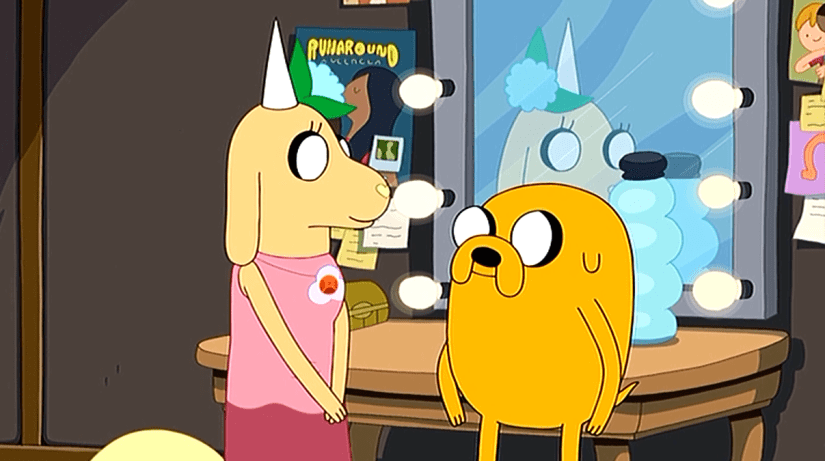
For now, we have Summer Showers. Viola is one of my favorites of the pups, and it’s a shame that this is only star role to date. She’s actually the pup who gets the least amount of flack and screentime, and is often sidelined by her siblings Kim Kil Whan and T.V. (who are, ironically, my least favorite of Jake’s children). Regardless, she makes a lasting impression in her first prominent role, not particularly because her personality is exaggerated like her other siblings, but because she’s down to Earth and easily relatable, and represents the anxieties of a young adult quite nicely.

I probably have said this an endless amount of times by now about various different characters, but Viola’s character is carried a lot by the talent of her voice actor, Paget Brewster. It’s actually funny, because I could’ve swore Viola was voiced by Maria Bamford at first, as Brewster hits on all of those same notes of sensuality and commitment. In addition to her voice, Viola’s role in the episode itself is really what helps to define the struggles of her character and to make her a thoroughly captivating protagonist. While it can easily be drawn to a matter of how the world of theatre works (and as a former theatre kid myself, I can confirm this as realism), it also shows the issue of being caught in a job or position that isn’t exactly something to brag about or even to be proud of.

SS 3.png

Of course, one can learn to accept their duties as simply a start-up position that they can gradually work their way up from, but one of the bigger burdening pressures (that I can relate to especially as someone who is soon going be graduating from college) is the belief that your parental figure will be disappointed and let down. This is exactly what Viola experiences when meeting with Jake at a local coffee shop. I think Jake’s relationship with Viola is definitely the sweetest out of any of his kids, and it’s so delightful to see him as genuinely proud and full of joy over Viola’s successes. Of course, this probably only stresses Viola out more, though it wasn’t Jake’s intention. His brief moment of doubt and guilt within his own parental skills is definitely sad, but it’s reassuring that he does experience immense pride in the success of his kids, and sweet to see that he is actively trying to see them more. Also a nice touch: he’s wearing Joshua’s hat again!

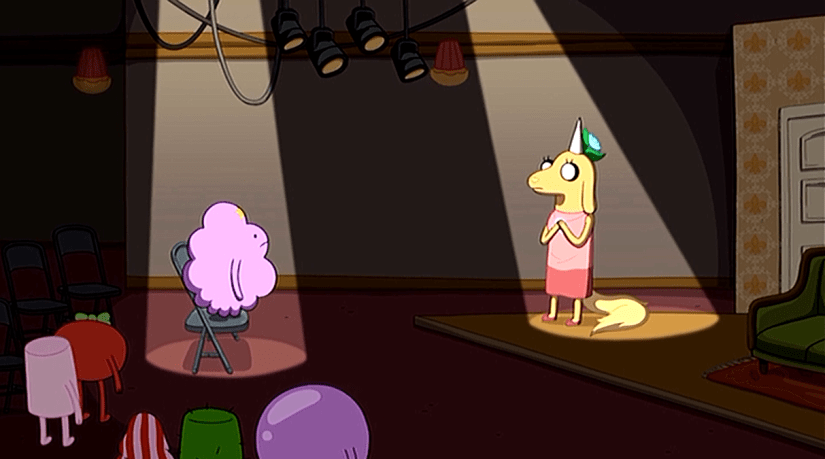
Initially, I was somewhat bothered by Lumpy Space Princess’s harsh portrayal throughout the entirety of the episode, but I’ve really warmed up to her in subsequent appearances. It doesn’t feel like she’s being an asshole just for the sake of being an asshole; LSP truly feels like a passionate director who isn’t particularly nice or fair to her cast, but is set on having her vision fulfilled as much as possible. And while it’s somewhat dull, the Summer Showers play seems to be actually good. It isn’t materialistic or an attempt to play off of LSP’s vanity, like The Prince Who Wanted Everything was, and seems like Lumpy Space Princess put legitimate work into making it coherent and engaging. It’s a surprising feat for herself, and no matter how aggressive she gets during said production (in somewhat humorous notions; I love how she consistently treats Viola like an actual dog), it all contributes to the internal stress that overpowers her. While LSP views Viola as a mere lackey, the two are more alike than she could have expected. LSP too suffers from anxieties regarding the fact that she may not be able to create a successful life for herself, and instead of venting her own issues out in retaliation, Viola is charismatic and listens to LSP’s every word, trying to please her by getting the raindrops just right.

SS 4.png

The middle part of the episode can get a bit dull, as it’s mostly just a completely straightforward depiction of the summer showers play, which isn’t inherently interesting on its own, though not particularly painful to watch in any means necessary. Tree Trunks, Crunchy, and Mr. Cupcake get nice side roles, and something that always strikes me as especially funny is Mr. Pig’s over-the-top reaction to Tree Trunks having a kissing scene. The guy already has to deal with a demonic child in his house, but he also has to juggle Tree Trunks’ bullshit on top of all that. He may be the most stress-ridden person in Ooo.

That charisma carries through in Viola’s every step, as she takes it upon herself to learn all of the lines to the actual play, and commits to being the best stagehand possible. She’s truly shown to be dedicated to her work in every way necessary, which only helps to show her breaking point when LSP selfishly casts herself in the role after everything that Viola has accomplished. It’s a nice to see that, even if she is mild-mannered and a bit of a pushover, Viola does have her limits. It does provide for her to have her moment of victory, and to even still commit to the role that she was intended to play.

SS 5

And even though LSP was duped, she still gets her moment of victory when the play proves to be a success (with a cute multi-handed clap from Jake), and Viola experiences her own euphoria in more than one way. While Jake is supportive of her role within the play, he’s even more enthralled by the fact that she ran the “special effects” department. While not everyone can say that their parents are supportive of them in any endeavor, Summer Showers does show off the benefit of having supportive parents by your side, no matter what endeavor you take up. It’s truly sweet to see how affectionate Jake is toward his daughter’s passion, even if it isn’t exactly what she is engaged in herself, and to see that she’s able to breathe easy, knowing she has the approval of her family. Except for that dick Kim Kil Whan, who didn’t even show up to his sister’s play!

Summer Showers is definitely one that’s “nice,” and I think that’s the best word I can use to describe it. It has nice character portrayals, a nice story, and nice individual moments. Certainly not mindblowingly dramatic or even exceptionally funny, but an entirely pleasurable experience regardless, mostly because of Viola’s terrific presence. Some moments are a bit dull throughput, but they’re completely justified by Finn’s hilarious reaction to the play itself. I think we’ve all been there at one point or another, buddy.

SS 6.png

Favorite line: “DON’T INTERRUPT ME WHEN I’M BERATING YOU!”

Adventure Time, Animation, Lifestyles

“The More You Moe, The Moe You Know” Review

TMYM 1.png

Original Airdate: December 3, 2015

Written & Storyboarded by: Tom Herpich & Steve Wolfhard

This promo comic really sums up all of the heartwrenching material I’ve experienced through this one.

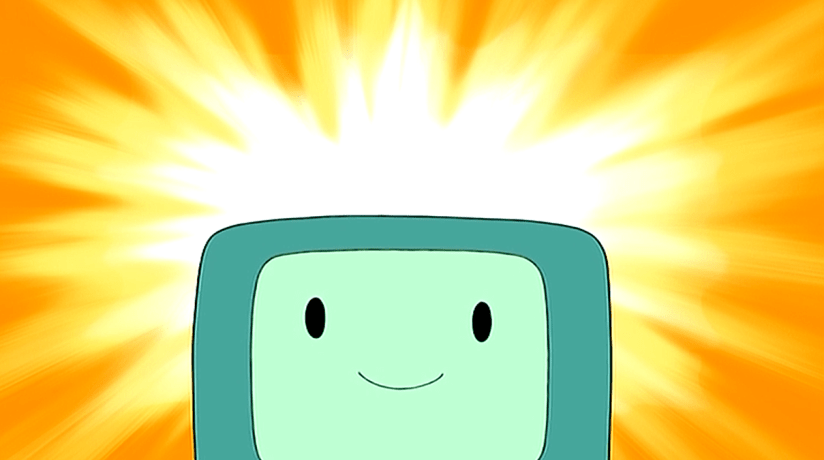
The More You Moe, The Moe You Know was an episode that was announced a few months before its initial airdate at New York Comic-Con, and I always assumed that a “BMO themed holiday special” would merely be a light (but delightful) Christmas-themed episode to take the edge off of how dark I had theorized Stakes to be. But, keeping in the tradition of what Holly Jolly Secrets started, Adventure Time continues to churn out the most dark and devastating holiday specials known to man. And honestly, this is another one of my favorites. Top 3 of all-time, without a question. I’ve always had a soft spot for BMO in general, but so much of this episode represents – at least, in my eyes – what makes Adventure Time so profound and special. Essentially, AT is one big coming of age story, and The More You Moe, The Moe You Know feels like a super-compressed version of that featuring the show’s most innocently naive character.
TMYM 2.png

It is a sweet idea that we’ve finally gotten an episode dedicated to the birthday of each of the Tree Fort boys. I do wonder how exactly BMO’s birthday was decided, however: was it the day BMO was actually built? Was it the anniversary of the day he met Finn and Jake? Or was it simply a random day BMO chose for the sake of following social norms? I like to think it was the latter, but I think any one of those options is appropriate. It’s also cute to once again witness BMO’s absolute affinity for his creator. Going back to my notion regarding social norms, I think BMO’s adoration towards Moe mostly derives from the fact that he, like the friends that he surrounds himself with, has some sort of parent of whom he can owe his life to. Finn and Jake have Joshua and Margaret, and NEPTR has Finn, so BMO is able to feel more “human” through having a legitimate maker that directly has an impact on BMO’s identity as a whole. This is something that also ties in as important later on, during BMO’s reflections.

Of course, the Moe we do get treated to isn’t the Moe we were expecting, and his mission for BMO is certainly ambiguous. What really makes BMO himself is his demeanor and mindset that unarguably represents that of a small child. BMO is programmed with knowledge and abilities beyond comprehension, but when it comes down to it, he’s really just like any other child. Thus, the scariest thing to BMO, along with pretty much any child and people of any age in general, is the unknown. Growing up is obviously something that Adventure Time has touched on consistently; whether it be Finn and Jake’s entire individual arcs, some passing lines in Another Five More Short Graybles from Jake Jr., Nurse Poundcake’s humorous backstory in The Diary, or even the entirety of the Stakes miniseries, it goes without staying that this is a big thematic element within the world of Adventure Time. Though, everyone deals with it in a very unique way, with BMO included. While each character seems to deal with specific issues that arise throughout their period of growth, BMO’s hang-up deals with something much, much more complex: the concept of growing up in general. I certainly don’t mean to downplay the complexity non-vague issues, like Finn coming to terms with the fact that his father doesn’t care for him, or that Marceline feels as though she is physically and mentally incapable of moving on from her past, but there is something so specifically threatening about being completely unsure of what you’re getting into. And I can’t think about a single issue that represents those feelings of uncertainty rather than the idea of growing up, of which is presented tremendously through BMO’s little monologue.

TMYM 3.png

One of the most sorrowful moments from this episode is complete absence of Air during BMO’s attempted conversation. While it could have been an attempt to excuse LeVar Burton’s inability to return to the recording booth, it feels much more like a poignant method of having BMO release his feelings to a close confidant, even if it’s more to get his thoughts out than anything. BMO’s vision of being an adult is delightfully silly, but made somewhat atmospheric by the grainy filter surrounding it. This episode really succeeds in attention to color and diversifying different shots. Considering that there are a ton of different flashbacks and imaginations sequences throughout, the visual appeal of the episode experiments with several color schemes that really helps each excerpt pop. What really strikes me as moving during BMO’s dialogue, however, is his worrisome expression of, “but then, if I change, will Finn and Jake still love me? Will I still love them?” It’s made pretty clear by this statement that BMO isn’t necessarily scared of the trials he will face when he grows up, but rather if he will even be the same person that he currently is. This is a scary part of change that everyone deals, and BMO’s vision of the distorted versions of Finn and Jake further emphasize this anxious feeling of the two becoming unrecognizable to himself. Which leads him to the prompt of, “does growing up just change your body, or also your soul?” BMO has built up so much happiness for himself through the people who surrounds himself with and his daily imaginative activities in general, and doesn’t recognize that he has the ability to grow while also keeping his loved ones near and dear to him. Thus, the concept of growing up instead gets conflicted with his anxiety of growing into a completely different person, and BMO would much rather stay the same forever than to face those consequences. His turmoil feels very profound, real, and convincing. Even if we know that it’s irrational to think that Finn and Jake would never stop loving BMO, it is hard to know what will derive from any sort of big life change, and growing up is a significant event that often brings about significant life changes. Though, growing is only a state of mind, and BMO has yet to realize that it’s a gradual part of his life, rather than one big epiphany.

After going through that big, analytical spiel, I might as well mention the nice little side roles that Finn and Jake have in this episode, which are great! Wolfhard covers most of the F&J scenes, and really carries forth his sharpest sense of humor. Jake hiding himself from Moe is both hilarious and kind of fitting for Jake’s character. Somewhat tying into the central theme of the episode, Jake is just as scared of becoming a different person as he grows old as BMO is. Though, Jake’s fears are a bit more materialistic, as he worries he’ll simply be an old coot that listens to the world decaying in the process. The way the boys quickly warm up to “Moe” is cute, and the show does a pretty good job at keeping his identity convincing, for the most part, until the near end of the episode.

TMYM 4.png

In general, this one does a really good job of keeping its audience on edge by constantly playing around with who the true “villain” is. At first, it seems like DMO is randomly supposed to be the antagonist (who is sadly not voiced by Aziz Ansari) and then the later appearance of All-MO is seemingly foreboding as well, though BMO never sits around to consider the actual possibility of there being one true “villain” to oppose him. He instead continues to ponder about his life and begins to humor the idea of never knowing if everything is okay or totally haywire, which seems like a concept that is entirely normalized by anyone who is actually grown. It’s another visual interesting sequence, and it makes me realize more and more how similar this one is to Lemonhope in exploring interesting thought processes through really unique and experimental visualizations. Of course, a lot of that can likely be contributed to the fact that Tom Herpich and Wolfhard worked on both, but this one really shines through in being the better example of AT being at its most unique in its visuals and storytelling. And while Lemonhope seemed to prioritize its title character’s inner struggles over the actual content of the story in some parts, The More You Moe is very committed to telling an engaging story, while also sprinkling in a delightful bit of soul-searching. In addition to being equally as funny most of the time, which really shines through in All-MO’s explanation of what happened within the MO factory. The expository dialogue has some great gems, such as, “if you wanted a free hug, all you had to do was ask! No one could say no, it was a rule,” and “until one fateful day… yesterday.” Herpich and Wolfhard seem to be particularly good at incorporating humor in moments that really shouldn’t be funny, but are made funny in execution regardless. Thus, All-MO ends up being a pretty enjoyably off-kilter character, despite the fact that his creation essentially means that we won’t ever see the other MOs again. Definitely a bummer, though this character did remain thoroughly enjoyable throughout.

As we transition into the second part of this one, it begins to become apparent that Finn and Jake are pretty fed up with Moe’s shit, after he cries during their “classic” imitation of Prisoners of Love and offers some of the most boring consoling experiences imaginable. The “hangman” sequences are really great, and it’s hilarious to me how much Finn and Jake get into the concept of it. To be fair, it is an awesome name for a game, but their reactions to the true nature of the game itself are priceless. It doesn’t help that the game only comes with one solvable puzzle, and that being “Bur-guess Mere-dithe.” And this is where “Moe”‘s facade begins to gradually fall, and the true identity of AMO starts to unravel.

TMYM 5.png

AMO is easily designed to be equivalent to that of a spoiled toddler, but his delusions of the properties of love and his desire to destroy anything and everything that gets in his way of being admired is what makes him truly standout as one of my favorite AT baddies. The initial reveal of the appearance of his room is straight out of a horror movie, and does a great job at visually describing what kind of a character AMO is: a ripped doll with the words “love me” written above it in the vents and the skeleton of a once existent hamster shows how willingly AMO is to get violent towards anything that cannot directly show him love, and how he is unable to care for and to feel loving feelings because of the way he was programmed. As All-MO eloquently states, “such is the cruel physics of love, that those who crave it most will repel it,” it seems apparent that AMO was, more than any other MO that followed, a failed experiment. Moe likely wanted to build a robot that would act and behave like BMO, but did not truly understand that building a robot that could only receive love would actively work against his intended programming. Moe’s intention was to build a robot that could be in-sync with human emotions, but without fully understanding those underlying physics of love, he ended up, in turn, creating a sociopath.

And that sociopathic nature really shows when he knocks out poor ol’ NEPTR (who has been the victim of many sadistic beatings this season!) and tries to get him out of the picture so he can exclusively covet Finn and Jake’s love for himself. Aside from AMO’s misunderstanding of love, he truly does not understand BMO’s relationship with Finn and Jake. His only understanding is that F&J love BMO, but truly does not comprehend how exactly BMO reciprocates that love. In AMO’s head, he honestly believes that love can only be expressed by one devoting their entire life to another person. AMO thinks that F&J spend their days showing relentless affection towards BMO, but does not realize why the boys love BMO to begin with. And of course, when AMO has failed to receive the “love” that he thinks he deserves, he in turn decides to reject it and to get rid of Finn and Jake all together. AMO’s cannon phaser is executed in an excruciatingly painful way. They really pack a punch every single time AMO utilizes said weaponry, and it never feels as though the cannonballs are wasted. Each shot appears to be legitimately painful and threatening to our protagonists, especially when BMO is continuously shot later on. Wolfhard did leave a note within the storyboard that states, “the ball noises should be distinct & memorable,” and it seems he got his wish in that regard. AMO is voiced by Thu Tran, and Tran does a terrific job of capturing the same quirkiness and childlike nature that Niki Yang captures with BMO. While channeling that same energy, Tran manages to also give AMO a bit of an off-kilter feel to his voice, and really pulls off that equally threatening nature.

TMYM 6.png

While I truly admire the flashback sequence for just how fucked up and depressing it is – I mean, God damn, the show has never pulled off a death scene in this grim of an execution – my one criticism for the episode is that AMO’s impersonation of Moe can be a bit too silly and somewhat tasteless at times. I really don’t know what department to blame for this, as Wolfhard very clearly seems to repetitively jot down within the storyboard that the voiceover within this sequence is supposed to stay completely serious throughout its run. I dunno if it was a decision by the network to downplay the more somber implications of the sequence, but I think it really works against it by making AMO’s goofy inflections quite unfitting with the tone of the rest of the flashback. Granted, I still love everything else. AMO starts off said story by mentioning terrible truths that he discovered about himself, and I think it’s really neat that those discoveries are left completely unknown. It kind of makes AMO a much more sophisticated and less one-dimensional character to know that he has some sort of self-awareness about the troubles that lies inside his heart and within his programming. Perhaps he isn’t exactly cognizant of his own desires to repel any love that is given to him, but it is clear that he knows something about his uncanny nature that startles him to some degree, even if he doesn’t try to fix said issues. And even though his voiceover is distractingly out of place, the contents of said scene are still left as somber as possible. Even AMO’s small utterance of “he was dying…” is really effective. Going back to what I had mentioned earlier, this is somewhat shockingly ballsy for AT to cover, as deaths within the series are usually off-screen, retconned, or left to be humorous. Even using the words “dead” or “die” are typically substituted for “skronked up” or “murdle-urdled” or something more kid friendly of the sorts. But here, we’re treated to the actual, on-screen, (for the most part) serious death of a secondary character. It’s even more heart-wrenching to see that Moe did show some form of care and affection for AMO as he refers to him as his “dear child.” Even with AMO’s dysfunctions, Moe still loved all of his children dearly and equally, enough to trust AMO with his last possession. Though, AMO’s selfishness continues to shine through when he lets his own insecurities get in the way of what seems to be a genuine final moment between father and son.

Which leads into a final battle between brother and brother. Another gem from the storyboard that was cut is AMO’s master plan to get rid of everyone, until only one family remains and has no other choice but to love him. It was probably cut for time reasons, though I think the implication of said scene still remains. As AMO continuously fails to find a loving family, it seems apparent that he’ll continue to embark upon his pursuits, and willingly place himself in a neverending loop of failed attempts. That is, if he survived his battle with BMO, which ends just as violently as BMO pulls a Wile E. Coyote tactic and launches AMO off a cliff. Though it’s shown that AMO was built with a golden heart, just as his brother, his heart is left sad and and unresponsive, as those who only want love and cannot give it will never achieve true happiness.

TMYM 7

This leaves BMO as a hero, but in possibly the worst possible place he’s ever been in. Not only has he just killed his brother of whom he recently met, but he’s left knowing that his father is dead and will never be coming back. This comes as a starling and upsetting revelation when BMO softly responds “no,” to Finn, who asks if he’s alright. BMO expected growing up to be full of challenges that that were beyond his grasp or control, and in some aspects, he was right. His solo mission brought about some of the most traumatizing events he could have ever experienced, and troubles that were clearly out of his control, as life seems to consistently offer. In addition to that, he’s also left with the sad knowledge that his entire “growing up” mission was a lie, and that he may not even have an attempt to grow up because of how Moe designed him to be, in a spectacularly beautiful sequence that features multi-colored BMO’s representing his inner thoughts. Though, BMO’s stress is not long lasting. As we already learned in Be More, to which this episode is keen to reuse footage of, BMO was built simply to “be more.” AMO was intended to be one specific thing upon his inception: a robot that can receive love, while BMO was built to be whatever he chose to be. There’s the intrinsic fear within anyone that their lives are predetermined by their birthright, or whatever uncontrollable conditions have been created within their lives, though there is always the existing truth that free will will always reign above everything. Though BMO is faced with the scary truth that he could theoretically end up like his brother, he’s reassured by the fact that he knows who he is and he knows he has the power to be anything he wishes to be. While BMO started out raving about how Moe was some sort of God-like person who could do or fix anything inside of him, BMO is now left with the knowledge that though he is unable to rely on Moe to help guide him through his life, he is able to trust in himself and the creativity that so powerfully defines him. Without changing himself or his lifestyle in any way possible, BMO was able to grow up a bit by realizing who he is and what he wants, and not transforming into an entirely different entity in the process. It showed him that, while growing up brings about some scary obstacles, the true bit of comforting bliss comes from knowing who you are and being able to trust in yourself to guide you forward.

It is not, however, an attempt to discredit the type of person Moe was or all that he did for BMO, as BMO still saves for one sorrowful goodbye to his creator during his hectic day. As BMO falls asleep, an unintentional Moe flashback is triggered as he leaves his son the same message, and a cute, tired BMO falls into a deep sleep of his own. You better believe this ending left me misty-eyed. It is also a curious spectacle to see within the flashback that Moe had some form of role in creating the Sleeping Fire Giants (which later comes into play in one of the Beginning of the End comics) as to show that he does have a role in helping build on society and technological advances in Ooo, aside from his own personal splendors. It adds a bit of remaining mystery to his character, as we say a tearful goodbye to his pleasant, grandpa-ish nature. It’s also equally sad watching it now, only months after Moe’s voice actor Chuck McCann passed away. Rest in peace to a legend.

But yeah, with all that I’ve written up for this one, you can easily see that this is one of my favorites. Adventure Time has attempted these types of compressed coming of age stories before with Lemonhope and Stakes, and while both of those examples had their strong points, no such story comes across as successful as The More You Moe, The Moe You Know. This one is so amazing in its story, visuals, dialogue, thematic elements, characters, tone, and so on, and I really cannot think of a better character to use for this type of story than BMO. He’s a character that can easily be pushed aside as mere comic relief, but he really embodies the child within every living person, and those childlike fears that plague even the oldest and wisest of people. The More You Moe, The Moe You Know uses this aspect of BMO’s character to its best ability, and tells a story that is just as heartbreaking and tragic as it is uplifting. Growing up is certainly scary, because there really is no guarantee that everything is going to be alright. While most of these stories would usually leave off their central hero reassured by the reality that nothing is as bad as it seems, BMO experiences some of the most horrifying truths of life in the process. But, it’s experiencing those truths that help him to realize one of the most important part aspects of life: knowing himself and feeling in control. And, as Adventure Time has proved time and time again, that just might be enough in even the toughest of times.

TMYM 8

Favorite line: “I think I just killed someone”


Adventure Time, Animation, Lifestyles

“Stakes” Miniseries Review

STAKES 1.png

Stakes is the first of the Adventure Time miniseries, and it was certainly a risky move for the series in general. While the show has been experimenting more and more with serialization as it has gone on, this was the first set of episodes that are exclusively built to have an interconnected story, and after the failure of the AT TV movie, it was hard to imagine this concept working out as an entirely coherent bundle. In addition to that, AT‘s ratings dropped somewhat dramatically with the beginning of the seventh season, so if this ended up tanking, I’m not sure if there’d actually be more miniseries to come. Granted, the show had already been renewed for an eighth season by this point, so I’m speaking entirely theoretically when discussing the commercial success of Stakes. But, working off of what really drew people into Adventure Time to begin with, and following the successful programming practice that Over the Garden Wall laid the groundwork for, Stakes ended up being a big hit and worked particularly well with the format offered to it. Personally, however, it’s my least favorite of the three Adventure Time miniseries. I wouldn’t say it’s bad, by any means necessary, but it definitely has a decent hodgepodge of lackluster moments that weigh it down in particular.

I’ll start first by talking about the custom opening for Stakes, which is all-around pretty awesome. The way Marceline jams through that classic opening tune sounds great, and the foreboding instrumental that leads up to it is perfectly fitting for this ominous miniseries. There’s also plenty of great smaller details throughout, such as the King of Ooo finally flying on a giant mushroom (wonder who got him this one?) and Toronto appropriately taking the place of Gingerbread Muto. This opening sequence was boarded by Tom Herpich, and was animated by Science SARU, Masaaki Yuasa’s animation company. While Yuasa’s work looked lovely in Food Chain, it was pretty clear to the eye that it was animated in Flash and looked just a bit distracting from what we’re typically used to in the world of Adventure Time (though, many might argue that it was the point). The animation within the Stakes intro isn’t noticeable in the slightest, and still utilizes Yuasa’s expertise skills with Flash to make every movement executed in the most fluid way possible. Stakes also comes equipped with a custom outro, which has a nice little instrumental version of “Everything Stays.”

The overarching story of Stakes was actually pretty well-executed. I felt as though it stayed compelling throughout its eight episode run, and only ever lost focus in its final episode, but still held onto its thematic tone throughout. The Dark Cloud was a pretty solid episode in its own right, but when comparing it to everything else within the miniseries, it’s pretty dumb to think that this miniseries started on as a big, tense vampire hunt that battled with the ideas of good vs. evil, and all ended with Marceline and the gang fighting a cloud monster that has virtually no role other than to be an exceedingly difficult foe to beat. Thus, I still wouldn’t say the last episode is bad, but the miniseries itself really loses steam by the time Checkmate comes around. So, the story manages to be compelling for at least six episodes, and then ends up losing me by the last two. But the convincing message and theme of “everything stays, but it still changes” is something that was properly handled in a linear pathway from beginning to end. Marceline’s desire to grow up and change her identity is a heavy focus of Marceline the Vampire Queen, while her acknowledgement of her growth and her acceptance of herself is a major part of The Dark Cloud.

STAKES 2.png

I’ve mentioned it before, but the vampires are easily my favorite part of this miniseries. With the exception of the Vampire King, of whom I thought was merely wasted potential, I thought the vampires were some of the most fun and charismatic characters we’ve been treated to in a long time, and I’d even argue that some of them would rank relatively high on my list of favorite tertiary characters. Even episodes that felt clunky in some ways, like The Empress Eyes and Take Her Back, were entirely more enjoyable with the presence of these vamps. They all had very unique designs, abilities, personalities, and motivations that made every star appearance just an absolute blast.

The only other character I felt this positive about within the miniseries was, you guessed it, Peppermint Butler. Stakes really provides for some of his best appearances to date, showing off his ability to serve and protect the gang, as well as more insight into his deep and mysterious ways. And on top of that, he’s just freakin’ hilarious, providing for some of the funniest moments that Stakes had to offer. Stakes in general utilizes AT‘s side characters really well. King of Ooo, Lumpy Space Princess, and Crunchy all get their individual moments to shine, the latter two of which are usually only ever around to be dimwitted or annoying, but they actually provide for some legitimately great character moments that do assist in progressing the overarching story.

Of course, I wish I could say the same for our major characters. I’ve gone on and on about how much I disliked Finn’s portrayal in this miniseries, and I’m gonna link those individual reviews below for anyone who hasn’t seen ’em, but if you have, you already pretty much know my feelings. It’s sad to see our main hero be so entirely pointless in the grand spectrum of things. I mean, he’s the only human after all, and his presence as a coveted target in this miniseries could’ve been emphasized a lot more than it was. The only episode that actually revolves around this idea is The Empress Eyes, but even then, it pretty much becomes an afterthought by the second half of the episode. So, even though Finn doesn’t have a specific role like the other major players, I’d forgive this aspect if he actually had an active role in helping his friends, but he’s so deeply sidelined by everything else going on that characters like Crunchy and LSP end up being more of a help than he is. He sadly ends up being carried across as goofy comic relief that usually isn’t even that funny, and a pretty embarrassing excuse for what the character is supposed to be. I’d say the same for Jake, but he at least had his nice ongoing phobia subplot that really made May I Come In? a complete success.

STAKES 3.png

Princess Bubblegum’s role in this miniseries was a nice surprise, as Stakes proves to be just as much about her as it is about Marceline. I think it was really cool how subtle her development and growth was throughout the course of eight episodes, as she continues to acknowledge her flaws and tries to correct them by looking outside of her own ego to help out her friend in her time of need. I found it quite fitting as a point in time where she could finally move back into her kingdom, continuing to develop on the concept that everything remains how PB left it, aside from her recent behavioral shifts.

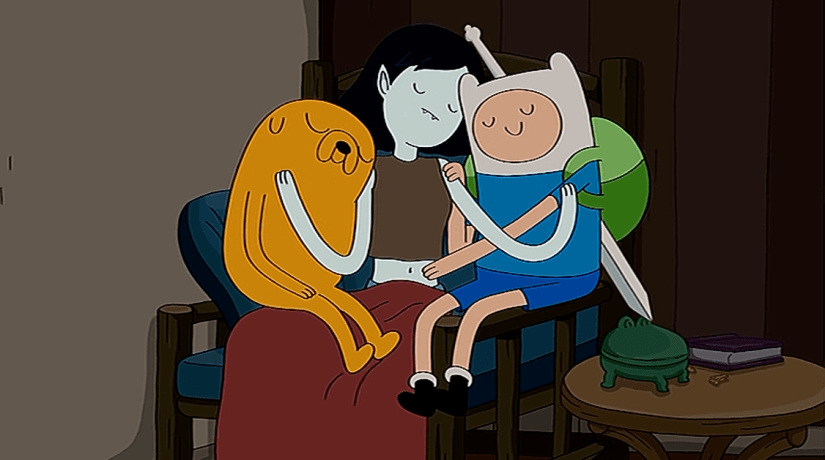
And, as for Marceline herself… I can honestly say, I thought her portrayal and arc was merely “alright.” It’s something that’s difficult to completely put my finger on… it’s not that I actively disliked her role in particular, but I guess I always felt like there was something more interesting going on within the story aside from her own personal dilemmas, with the exception of Everything Stays. For example,  Vamps About had those great interactions between the vampires, The Empress Eyes had the thoroughly fun back-and-forth between Empress and Ice King, May I Come In? had a lot of great focus on Hierophant and individual character moments, and Take Her Back had the ambiguity surrounding The Moon. This is somewhat of a criticism and a compliment, as Stakes managed to find something really compelling within almost every episode, it just so happened to make me less interested in what actually happened to Marceline. It is somewhat of a shame, because this miniseries is supposed to be her big, shining moment within the series, though I’m always drawn into Stakes for different reasons, and I find that there are far better examples of great Marceline episodes outside of this miniseries. I still feel as though her statement in The Dark Cloud regarding the growth that she has experienced always feels a bit hollow and unconvincing to me, mostly because I just was never that invested in what was going on with her personally. I felt that her talks with the Vampire King in Checkmate and Ice King in The Dark Cloud were relatively insightful, though that’s the only moment where I did feel that she had learned and progressed a bit throughout the span of the miniseries, and even then, those moments felt slim.

One thing Stakes really gets right is its combination between its ominous tone and its wild sense of fun. Stakes creates a very tense feeling throughout its run, but is never afraid to execute each story with a feeling of excitement and adventure. This really felt like a nice return to the more straightforward adventures that season six was somewhat lacking of, and stayed consistently entertaining throughout. I had mentioned that the humor had suffered from often feeling forced, awkward, or too desperate to appeal to longtime and/or casual viewers. It’s still a major problem I find with the miniseries, though again, I feel like I’ve talked about this long enough in my individual reviews to where it would simply be redundant by this point.

There weren’t many consistent teams throughout this miniseries, though Ako Castuera and Jesse Moynihan somehow managed to snag the spotlight by storyboarding a whopping three episodes. This always struck me as particularly odd, because it always was somewhat apparent to me that Castuera and Moynihan struggled with writing for Marceline’s character the most. Though, that surprisingly is not their biggest downfall. Moynihan had recently gotten off of his season six high and wanted to get back to the basics, though again, it feels like he’s trying too hard to emulate classic Adventure Time to the point where it becomes a pretty pale representation of what the show strives to accomplish. Tom Herpich and Steve Wolfhard dished out their usual mix between fun and insight between two episodes, while elsewhere, new and old teams got their chance to submit their own one-shots.

Best to Worst Episodes

  1. May I Come In?
  2. Everything Stays
  3. Vamps About
  4. Take Her Back
  5. The Dark Cloud
  6. The Empress Eyes
  7. Marceline the Vampire Queen
  8. Checkmate

Final Consensus

Stakes is flawed in a plethora of different ways, but honestly, for the first time experimenting with this type of arc, the writers and board artists at least made it fun and genuinely compelling from beginning to end. As a whole, I wouldn’t say I loved Stakes – hell, sometimes I wonder how much I actually liked it – but it really shows through how much fun the staff had while working on this project, and it’s difficult not to get in on it from time to time. It’s certainly my least favorite of the three miniseries, and it actually seems to hold up less in subsequent viewings, but the atmosphere and tone of Stakes is what really carries it through. Even if I’m not really an avid supporter of it, I’d definitely recommend it for anyone looking for a thoroughly captivating adventure that doubles both as a successful Halloween special, and somewhat of an Adventure Time movie.

Adventure Time, Animation, Lifestyles

“The Dark Cloud” Review

TDC 1.png

Original Airdate: November 19, 2015

Written & Storyboarded by: Tom Herpich & Steve Wolfhard

With the exception of Marceline’s arc, it’s interesting how The Dark Cloud ends being a story that is almost entirely distant from what the last batch of Stakes episodes aimed to accomplish. That’s not to say it’s a bad thing; it is refreshing to get a bit of a plot shift after so much of the focus in the last few episodes has been strictly on staking the various different vamps that face our heroes’ path. But does this one wrap up the Stakes miniseries in a satisfying way, and is it successful standing on its own? Well, let’s check ‘er out.

TDC 2.png

First off, wasn’t really buying into Marcy’s ho-hum speech about how she ruined everything. Personally, I thought it was a little selfish that she goes on about how all of it was her own fault, and then decides to do nothing in the process. Her insecurity of making things worse feels real, but c’mon, if you’re going to go on spiel about how you directly caused a giant cloud monster to invade the Candy Kingdom and destroy all of your friends, you should at least lend a helping hand, chica. I’m also just kind of down on these moments in general, because we obviously know that Marceline is going turn her viewpoint around and help out in saving the day by the end. These bits are frustrating just because they don’t really add anything to the story or character overall. Marceline’s belief that she’s the cause of all of the problems currently occurring in Ooo doesn’t really help her to come to a big revelation or even an ongoing solution to that insecurity. Unless, of course, you count her connection with Simon.

Marcy and Ice King hanging out together and having a rational discussion was really nice. I’m not a big fan of Marcy’s song in this episode, but Ice King singing the final line and acknowledging that it was a tune that he actually taught Marceline was somewhat profound. I’m guessing it was something that Simon sang to Marceline during the Mushroom War, and a morsel of it was lodged deep within Ice King’s cranium. Such a sweet moment. It was also really cool to have Ice King talk about how he and Marceline are “survivors,” likely referencing that they have existed in Ooo practically longer than anyone, and that he believes that’s the destiny they were meant to fit for the rest of eternity. Of course, this somewhat ties back into the Vampire King’s method in the very last episode, where he ultimately decided to choose a new path for himself, as well as the world around him. Ice King’s speech partially reminds Marceline of that possibility: that she can watch the world fall to shreds for the umpteenth time in her lifespan, or that she can actively have a role in creating a new path for herself, and the people around her. Ice King also refers to her as a “cockroach,” pretty much implying that she’s a being who continues to get squashed over and over again, but never dies or gives up on her mission regardless. Again, it doesn’t really connect to her turmoil earlier in the episode, but it makes for a really nice interaction that hits home with the overarching theme of the past few episodes, as well as appropriately characterizing Marceline’s identity as a whole.

TDC 3.png

Probably my favorite part from this episode was the usurping of King of Ooo. It’s so sad to see the demise of the lovable moneygrubbing jerk, but it provides for a pretty epic sequence featuring every citizen of the Candy Kingdom standing up to their so-called princess, as well as the return of Princess Crunchy, the unforgiving. Crunchy has really worked his way into my heart after the entirety of this miniseries.

A good portion of the episode does revolve around the people of the Candy Kingdom attempting to vanquish the cloud beast in general, and it’s mostly good fun. I actually think it’s a somewhat hilarious subversion of how the “everyone gangs up against one big bad” trope is used, and it fails miserably in every way possible. The cameos were pretty terrific; Flambo returns after an 112 episode absence to let Flame Princess and Cinnamon Bun know of the the dangers lurking in the Candy Kingdom, to which the two lend a helping hand, showing that they remain as allies to Princess Bubblegum. The Hot Dog knights also get a triumphant return, only to show that haven’t gotten anymore competent over the course of a couple years.

TDC 4.png

But even with everything going against them, things changes when Marceline slides into battle (with a priceless delayed reaction from Jake) and really takes charge. While I think it’s well-animated and presented, I’m not really a huge fan of Marceline’s demon heart opening up and sucking in the essence of the cloud for a few different reasons. First off, this is like, the third or fourth Sailor Moon-esque transformation sequence in the series, so I think the presentation, while cool, is somewhat of an overly done concept by this point in time. Second, I’m not really sure I understand how Marceline is able to do this? I guess it ties into her soul-sucking abilities as a demon, and is a power she doesn’t really have the chance to channel very often, but it just came off as something that felt a lot more like a random deus ex machina than an actual fitting solution to the issue. And if Marceline had this ability all along, then why didn’t she just do it from the beginning?? I mean, I guess she couldn’t have known what results it would bring, and she was also being pouty, but regardless, it felt like a pretty silly conclusion to the battle.

This is strictly a personal preference, but I actually do like Marceline being converted back into a vampire. Yeah, I get that it seems like another desperate attempt to hang onto the status quo, but I felt that it was a sad, yet equally uplifting reminder of what this miniseries as a whole set out to accomplish: that everything stays, but it still changes. It’s a terrific representation of the series in general, and Marceline’s arc as a character. For the series, no matter how things are restricted to staying exactly the same, the characters and environments still grow and mature every-so-slightly with each passing episode. As with Marceline, a character who has been around for a thousand years, is still able to grow and evolve, despite being inclined to feeling like the same person she was 1,000 years ago. Even though she’s left with those feelings, she’s still growing, learning, and understanding. And even in her long-winded lifespan, it’s cool to see that it’s still very possible. Take Bubblegum as well, who goes back to ruling over the Candy Kingdom, but this time with a more relaxed and caring demeanor. Though her situation remains the same, she chooses to go about her role in a new light that will positively benefit herself and the sanctity of her kingdom.

TDC 5.png

The last few scenes are nice, as Finn, Jake, and PB welcome Marcy back in her home. I’ve given Finn a lot of shit throughout this miniseries, but he does manage to provide my all-time favorite line from Stakes: “Are you, uh… Do you feel bad? I don’t want to say, like, ‘I’m sorry about who you are’ or anything if you’re feeling okay, but I don’t know how bad news all of this is… Right?” Such an eloquently put and mature sentiment from our little buddy. It really emphasizes Finn’s absolute desire to empathize with anyone he comes across, especially when it comes to his friends, and knowing exactly how to phrase things even when he’s struck with complete confusion. Finn understands that this form of apology is hollow and potentially inappropriate, so it’s sweet to get such an outward sentiment of how he truly feels, and how he truly cares about what Marceline is feeling. Marceline’s half-and-half reassurance is nice, as we’re left with the ambiguous notion that the Vampire King now lies within Marceline’s psyche. I don’t think this is ever going to be something that’s resolved or addressed in the finale (though it may surprise me), but it is interesting to assess the implications surrounding it. No matter how much pain the VK put Marcy through, she’ll always have a part of him within her (both figuratively and literally) and the reminder that she has her own destiny to shape. The episode caps off in a nice, heartfelt fashion, as Marceline strums on her guitar, the lion finds a new home, PB rebuilds her butler buddy, Toronto runs off with the Candy Kingdom’s entire stock of gold, and Stakes comes to a quiet conclusion.

This episode was certainly not the big ending to Stakes I was expecting, but it’s mostly nice. It takes a bit of a turn by focusing more on thematic elements, rather than story, which I think is both satisfying and unsatisfying, depending on how you look at it. It’s unsatisfying in a way that, to most, likely feels like not much was actually accomplished on Marceline’s side of things within the actual Stakes arc. Though, to me, it’s satisfying in a way that connects to what the miniseries has been trying to establish since the beginning, and this episode encapsulates that in a relatively successful way. Definitely has its pros and cons, but I left this one feeling mostly good about the closure that was offered.

And that’s Stakes, gang! I’m a bit burned out by discussing the miniseries in general, so I’m glad to be moving on to other episodes, but there will be one mega-review regarding my assessment on Stakes as a whole tomorrow, so stay tuned for that! Otherwise, I’ll be digging into The More You Moe, The Moe You Know on Sunday.

TDC 6.png

Favorite line: That dope Finn quote I mentioned above.

Adventure Time, Animation, Lifestyles

“Checkmate” Review

CM 1.png

Original Airdate: November 19, 2015

Written & Storyboarded by: Ako Castuera & Jesse Moynihan

Checkmate is likely my least favorite episode of the Stakes miniseries. I don’t think the story behind it is completely awful; I actually like the Vampire King’s decision to de-vamp himself because he strictly wants to change up the status quo of the world and alter the destiny that has been predetermined for him. He even gives a neat little speech about it, which reeks of Moynihan headiness. But by God, so much of Checkmate feels like mere plodding. About 3/4ths of the episode revolves around the main characters deciding on whether or not they should stake the Vampire King, even though he is clearly surrendering himself and does not want to fight. It would be alright if this was presented as an actual thought-provoking dilemma: whether or not a person can change, or if they should even be allowed to change. But Checkmate would rather focus on the gang being as goofy and comically useless as possible.

CM 2.png

My criticisms and compliments towards each episode in this miniseries are becoming a bit redundant by this point, so I’ll sum up what I’ve already talked about in the past couple reviews relatively quickly and then get into the newer stuff:

Peppermint Butler continues to be the best aspect of these episodes, as his absolute adoration for the Vampire King is both kind of cute and also hilariously disturbing. I love his little back-and-forth with himself on whether or not he should actually be so excited to see a person of the Vampire King’s nature, and his absolute psychological freakout when he finally does encounter the VK is priceless. I’ve said it before and I’ll say it again, I will never get tired of Steve Little’s up-pitched voice.

Finn and Jake continue to be useless in this episode, and this is probably the worst example thus far. Finn getting in the middle of Marceline and Vampire King’s fight was more random and goofy than anything. Because, ya know, that book that Finn mentions that he never even read must have come in handy for advice a good three years after it was demolished completely. Also, this is likely the boys at their most incompetent. I enjoyed Finn thinking that his grass thorn would activate by a simple battle cry (though, the thorn senses that he isn’t actually in any danger), but him really thinking that lightly kicking VK in the groin would hurt him and shouting “stake you!” makes him seem like he’s not even really trying. You had the past two episodes, where the threats felt legitimate and taxing on the main characters involved, and here it feels like there aren’t any stakes at all. No pun intended. In addition to that, we had the painfully unfunny “fart code” sequence which once again feels like a half-assed attempt at understanding the silliness between Finn and Jake’s relationship between each other, but fails pretty badly. Moynihan went from writing Finn at his most mature to being the writer that portrays him at his absolute most childish. And hey, since you kids at home loved the “bacon pancakes” song so much a few years back, Finn sings his own version “makin’ stake-a’s” in this episode!! Seriously, I hate any instances that feel as though the show is directly pandering to the AT audience of whom only know or care about “bacon pancakes”, the buff baby song, or Bubbline.
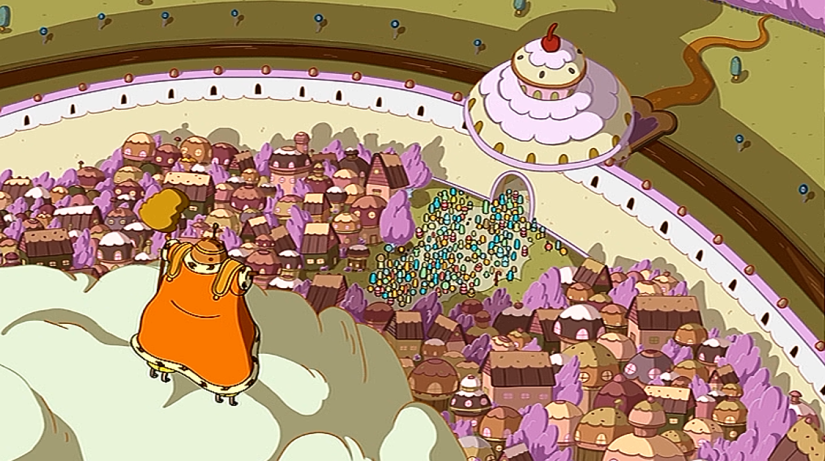
CM 3

Going back to my earlier complaints, I think the VK’s issue could have been way more well-represented if he wasn’t interrupted by people trying to stake him every five seconds. Nearly every attempt at humor in this episode is just the various wacky ways the characters are trying to stake the VK while he remains completely unwilling to fight. It gets old really fast and puts me in a mood where I just want everyone to shut the fuck up and to hear the guy out. He has legitimately insightful stuff to throw down, but he’s only able to get a word in after everyone around him stops trying to attack or stake him. I mean, PB’s technology was able to resist Empress from moving in the previous episode, couldn’t she have just restrained the VK and then interrogated him that way? I don’t think the characters are necessarily wrong for not trusting him, but it gets frustrating when it’s pretty obvious to the audience that he’s being truthful, while the typically rational characters that we love come off as bigger annoyances than the guy who is supposed to be the villain. And even then, VK suffers from his own quirky moments that seem completely out of place. I was really getting into his speech, and then he loses entirely me when he’s portrayed to be a complete baby who pouts in his underwear, and is left to be nothing but a comedic foil for the rest of the episode. It’s a shame, because I feel like the Vampire King ends up being my least favorite of the vampires, simply because he ends up being the most complex, yet the most shallow vamp at the same time. This episode elaborates on his desire to change the world around him and the pathway that is presented to him… but that’s kind of it. He’s supposed to be presented as this big important figure, but they kind of neglected to give me a reason to actually be interested or invested in him as a person. All of the other vamps are equipped with strong personalities and charisma, while Vampire King exhibits practically none of that in his one star episode.

CM 4.png

Annnd, after everything that happens with the Vampire King, we’re left with a mere transition into the next episode, as the “vamp juice” explodes into epic proportions and forms into a cloud monster seeking destruction. VK turning into a lion was… interesting, I suppose? It’s an idea that I still kind of struggle to wrap my head around completely… like, how did the vampire essence within him cause himself to mutate and become humanized so intensely? It doesn’t really make sense to me, but I usually just end up brushing it off.

But yeah, Checkmate is a pretty low point for me in this miniseries. It really emphasizes a lot of overarching issues, and introduces some new ones as well. A concept and character that should have been really interesting and significant ends up feeling like an unfunny slump. It isn’t entirely without its moments; I liked Jake’s brief exchange with Pepbut at the beginning and Marcy’s first meal in forever was a nice little bit. And, as I said, parts of Vampire King’s speech were really neat. But other than that, Checkmate is mostly just frustrating.

CM 5.png

Favorite line: “I am a king, not a hamster. My path runs straight into the void, on a sick, flaming chariot!”