Adventure Time, Animation, Lifestyles

“Do No Harm” Review

DNH 1.png

Original Airdate: January 23, 2017

Written & Storyboarded by: Emily Partridge & Laura Knetzger

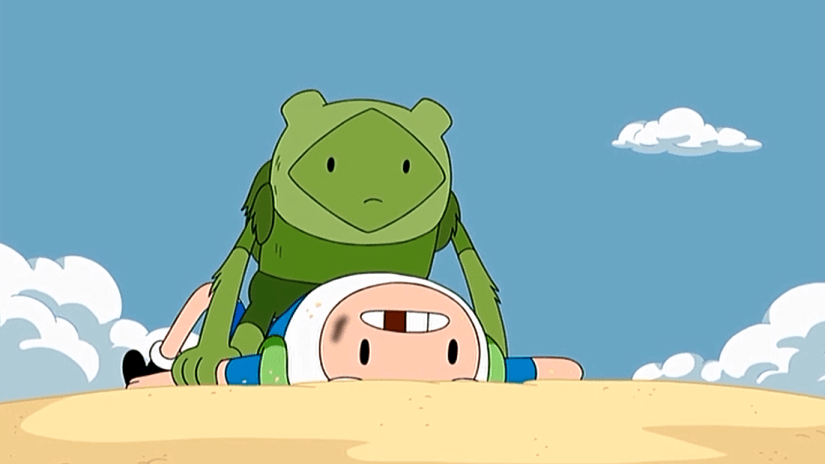
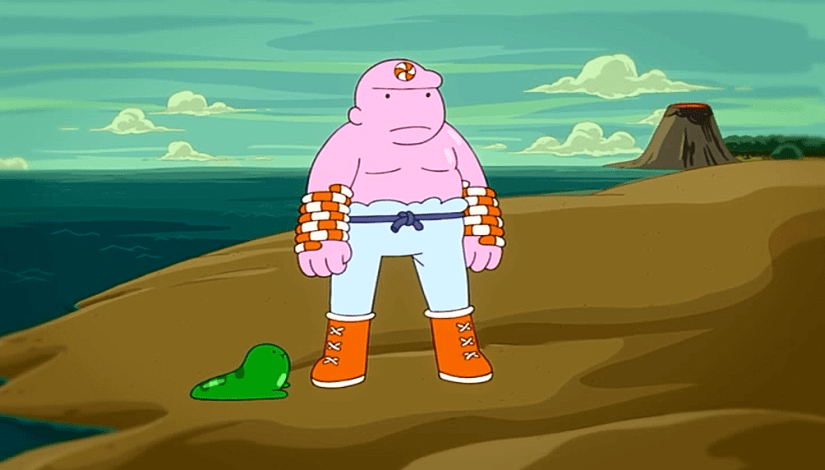
Two Swords was a great introduction to grass Finn’s character, or Fern as he’s finally christened in this episode, though it left me wanting even more from his character. Do No Harm quickly delivers, and cleverly chooses to separate both Finn and Fern in order to expand on their characters individually. What makes this episode so great, however, is the strong parallels that are ingeniously tied together between the two boys.

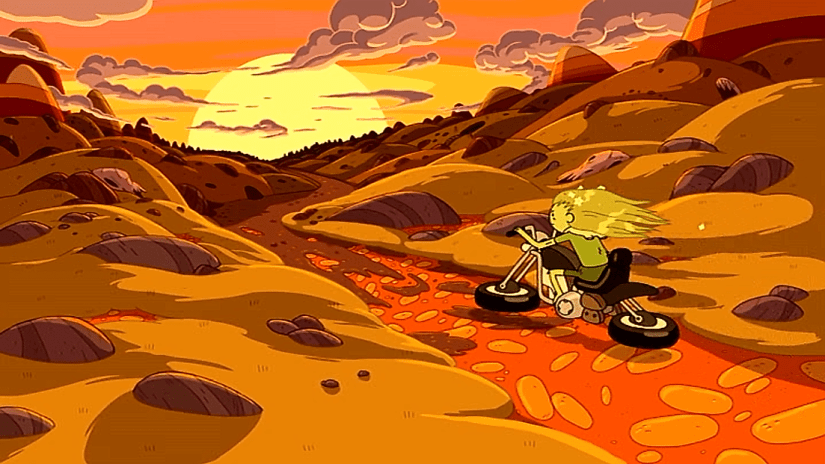
Aside from All the Little People, this is one of my favorite episodes that Tim Kiefer has ever scored. The ambient harp used throughout this one’s duration gives it both a hint of whimsy and a slight unnerving feel, which really hits home during Fern’s mini tantrums. Part of why I enjoy Do No Harm so much is 1. because of how nice it looks. 2. because of how nice it sounds. The slow transition from Finn to Fern as the sunset rises in Ooo and Kiefer’s score plays gently in the background is already one of my favorite scenes and it’s in the first five seconds! With an added killer story, this one really has a lot going for it.

DNH 2

It’s nice how this episode continues to paint a picture of how much Finn and Jake differ when it comes to strangers/people who they aren’t necessarily close with. While Finn is generally more kind and accepting (as he grew to be with Ice King and how he was with “Moe” in The More You Moe), Jake is a bit more judgmental and awkward. Finn is more times than most the awkward one of the duo, though Jake experiences such social crutches when he fails to fully understand people. Jake is inclined to better click with those who fit his type and lifestyle, so he tends to struggle with those who need special accommodations because he isn’t really able to put himself in their feet. Finn advises Jake that Fern is just another version of himself, but even so, Jake previously had trouble empathizing and understanding Finn’s own emotional trauma a year earlier. From its inception, it’s certainly a recipe for discomfort!

Despite discovering some aspects of his true identity in the previous episode, Fern is still somewhat under the impression that he’s Finn. I’m not sure if its denial, or if another part of his brain is operating during these periods, but I’m glad they kept this aspect going to really hammer in his inability to conform. Even when faced with his favorite meal of meatloaf (I love how this is a recurring trait of Finn’s character), he’s unable to consume it. This could easily be seen as a moment that simply seeks to explain how the grass bod works, but it’s also a key indicator of Fern continually losing more and more aspects of his former self that he once found pleasurable. Again, it really paints a depressing picture. How is Fern supposed to be happy when he can’t even enjoy his favorite meal properly?
DNH 3

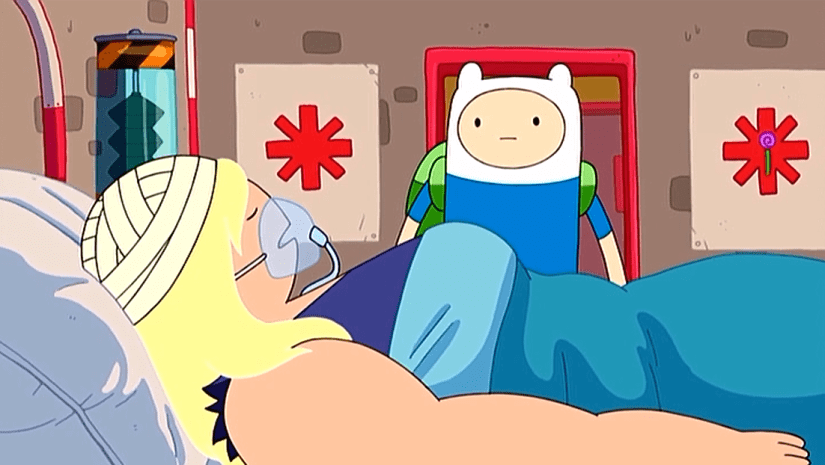
Though it’s unnecessary for him to have to explain himself, Finn still goes out of his way to apologize to an unconscious Susan for what happened with his grass sword. It’s a touching moment, but ultimately, I think our little guy is too hard on himself. He mentions not being strong enough to stop himself from hurting her, but it was a situation that was out of his control. The main purpose of his apology, however, is to draw on similarities between he and Fern. Fern is constantly mentioning how he can’t do anything right, even though most of his shortcomings are circumstantial at best. In a similar fashion, Finn blames himself for his own shortcomings that he really doesn’t have any control over. This brief emotional interlude is cut short when Doctor Princess enters Susan’s room and immediately appoints Finn as a physician. In what has to be one of the funniest Adventure Time moments in the past few seasons, Doctor Princess reveals to Finn in confidentiality that she isn’t actually a doctor, and it just happens to be her surname. The Doctor Princess is neither a doctor nor a princess. Her character is essentially one big, mysterious dead-end. Regardless, Finn chooses to take on the position and learns some new aspects about himself in the process.

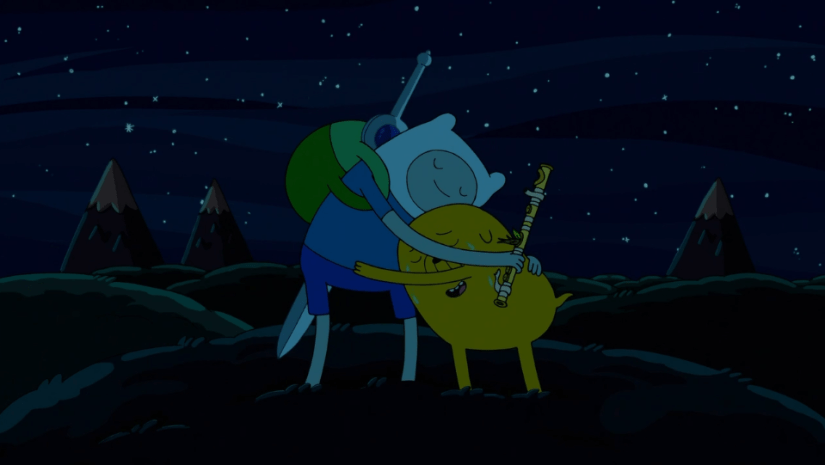
Meanwhile, over on Fern and Jake’s side of things, the two boys get wrapped up in finding something for Fern to get involved with. Fern is unable to play flute, another one of Finn’s favorite hobbies as of recent, as he begins to go through yet another breakdown. Again, it might be seen as a cool aspect of Fern’s character that he doesn’t even need to breathe, but when its something as simple, given, and humanistic as that, it really sets out to hammer in how abnormal Fern’s entire existence is. Jake does manage to pull through in a pretty heartwarming way, as he reminds Fern of what his (and Finn’s) true favorite activity to embark on is: adventuring and slaying evil. They head to a grassy maze, in what feels like a fun return to AT‘s video game-esque dungeon scenarios. Much like Blade of GrassDo No Harm is heavily reliant on the color green, but in the best, least nauseating type of way. As we soon find, this is just one of many similarities that this episode shares with Blade of Grass. But, I’m getting ahead of myself. As Fern battles off grass demons, he begins to feel good about doing good in general.

DNH 4

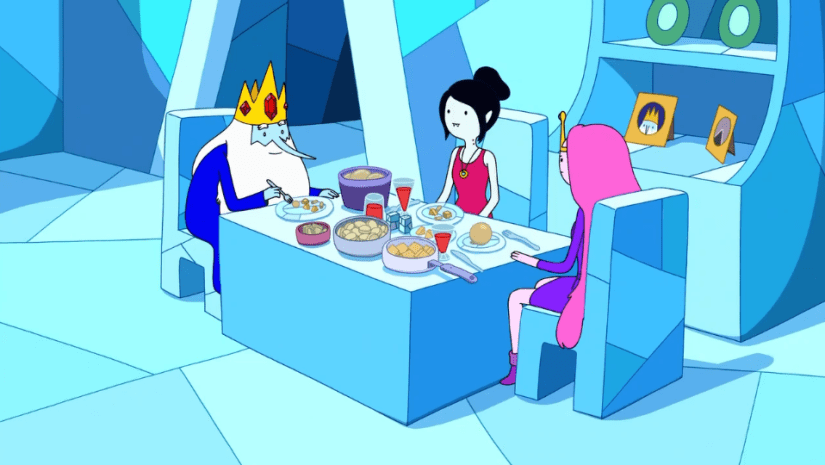
Finn, similarly, feels great being able to help others out. Whether it be a splintered Mr. Fox or a back-broken Ice King (whose toes also taste like jam, for whatever reason), Finn simply seeks pleasure from being able to treat others, of which later ties into another aspect of his past, and also kind of channels in to Finn’s maturity by this point in the series. While Finn loves adventuring and beating up bad guys, his main goal and desire in life at this point in time is to simply help others and make it so that their lives thrive. It’s a really sweet sentiment from our big, baby boy.

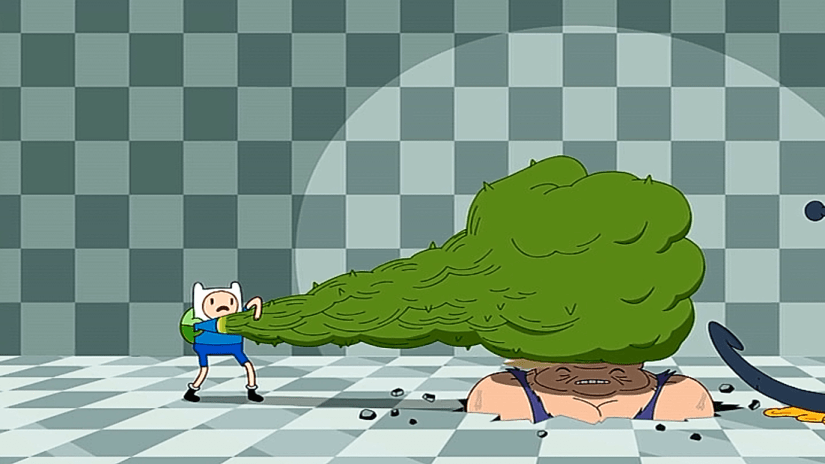
While Fern continues to sweep through lower-tier enemies, he finally ends up on the other side of the maze, of where the boys convene with the Grassy Wizard. I totally didn’t expect the Grassy Wizard to ever appear again, but damn, I’m glad that he did. He plays a much bigger part in the series than the staff likely thought when first introducing the grass sword, and it makes sense to revisit his character as a potential source for answers and closure. Those two elements are exactly what Fern is looking for, as he begins to question Grassy Wizard on his current state and what his birthright truly is. It is interesting how, here, Fern refers to Finn as a separate person from himself, contrary to how he was acting earlier in the episode. By this point in time, to the remainder of the series, Fern has pretty much realized that, no matter how much he feels as though he is, he simply isn’t Finn and has to move on from that idea. Though, despite not being the same person as Finn, their similarities are practically uncanny, and that goes beyond the two sharing the same anatomy and memories. Grassy Wizard plays the part of Fern’s shitty, neglectful father, as he basically admits that he only created Fern as somewhat of a joke and because he thought it would be “cool.” Grassy Wizard reeks of Martinisms, failing to understand even the slightest bits of empathy, but gets his comeuppance as Fern wallops him in a punch that’s nearly identical to the way Finn punched “Martin” in The Tower. Fern has now experienced yet another moment that places him in the same place that Finn was once at, though, while Finn learned to accept Martin and move on from his hatred, Fern nearly beats Grassy Wizard to a pulp, thinking that’s what he’s supposed to do. Jake quickly informs Fern that it isn’t exactly natural or healthy to go about defeating evil this way, as Fern finally realizes that he simply isn’t Finn. No matter how good it feels to do things that Finn would want to do, he isn’t able to take on those tasks with the exact same flair, further alienating him from what he believes to be right and true.

DNH 5

Finn begins to experience this same form of dissonance as he realizes that his efforts to help others essentially failed. Finn and Fern are essentially on the exact same wavelength: they want to do something that they know is good and helps others, though they aren’t exactly sure that they are cut out for the job. These two stories come to a culmination when the two reconvene at the hospital, and Fern realizes that, despite doing things “as Finn would,” he just isn’t Finn, and he has to find his own path in life, via a beautiful departure on Starchy’s new motorcycle. One thing I also love about this ending is it recycles the same music from the ending of Blade of Grass, when Finn learns to accept the grass sword as a part of him. Here, this score is used as Fern accepts himself for something that he is realistically not and chooses to take on a new journey to truly figure out who he is in the process.

Also capping this episode off is the revelation that Susan is alive and well, proving that Finn’s medical advice was indeed correct, and further leading us into the Islands miniseries.

I really love Do No Harm. It’s a terrific character study of two boys faced with hopes and desires, but ultimately coming face-to-face with their own shortcomings and insecurities by the end of it. Fern worries that he isn’t anything like Finn, though if the events of this episode prove anything, the two are more alike than he could possibly know. My only issue with this one is that I feel as though Jake’s concern wasn’t entirely believable within the grass maze. We’re supposed to believe that Fern is going too far in his efforts to defeat tertiary bad guys, but I dunno, haven’t Finn and Jake involved themselves in similar carnage in episodes like Dad’s DungeonDungeon Train, or even Memory of a Memory? Finn evens mentions in Puhoy that he “kills stuff lots of times,” so I feel as though this aspect of the episode didn’t necessarily hit home in painting Fern in a poor light. But overall, it’s another really strong episode to flesh out Fern’s character, and a sweet episode for Finn in the wake of the eight part miniseries based around himself and his past.
DNH 6.png

Favorite line: “I don’t even have a medical degree. I just came in here one day for an X-ray, and my first name is Doctor, so, well, one thing led to another…”

 

Adventure Time, Animation, Lifestyles

“Two Swords” Review

TS 1.png

Original Airdate: January 23, 2017

Written & Storyboarded by: Tom Herpich & Steve Wolfhard

Two Swords takes a step back from the frenzied ambiguity that the previous two episodes had consisted of and takes a moment to add clarity to the current situations at hand. I was initially under the impression that Reboot would bring us straight into the Islands miniseries in the following episode, though this episode interestingly has very little to do with the fallout of Preboot and more so with the fallout of Reboot. Much damage was done to our main and supporting cast, and an entire new entity was unveiled in the process. Thus, Two Swords seeks to sit us down and explain some much, much needed information that isn’t even exactly clear by the end of it, but the show knows just as much. Bubblegum’s confusion is directly identical to our own confusion, as we try and piece together who and what exactly the mysterious grass guy is.

TS 2.png

Right away, this episode starts off with a glorious, triumphant moment that everyone has been very patiently waiting for: Finn FINALLY has a bionic arm! Good Lord, it’s happened! I remember being super stoked by this news when promo images first arrived, though I was equally on edge regarding this concept. I was never as furious as others were regarding Finn getting his arm back in Breezy, but had he gotten an identical arm following the events of Reboot, I’d likely be consumed by my own frustration at this point. I even remember seeing a storyboard promo for the future episode High Strangeness, where Finn was drawn with a normal arm, and being absolutely disdained by that concept. Though, luckily for myself and the sanity of others, the bionic arm was added in the animation process, and Finn remains being arm-less throughout the course of the series. I really enjoy how Finn mentions his numbness to losing his arm a second time, in a way that connects to his tolerance of pain and tragedy. The original loss of Finn’s arm signified his grapple with abandonment and the absence of his former self, though here, Finn seems to spin that loss around into something more positive and exciting overall. He’s learned to live and move on with that loss in his life, so once the arm itself is finally gone, he’s adapted and doesn’t really notice said absence. Really nice motif there.

The contents of this episode really boil down to two informational backstories: Finn’s first encounter with grass Finn, as well as the backstory of grass Finn in general. The first is told in a way that immediately follows the events of Reboot, as grass Finn quickly shifts from his rounded, bushy form into a figure that is more closely identical to Finn’s. I will say this: Grass Finn, as he’s referred to in this episode, is one of my favorite characters in the series. Not only do I love his design, voice work from the talented Hayden Ezzy, and his general demeanor, but he likely has one of the most intriguing and haunting backstories in the entire show, and they never really stray away from such. This is a character who could have so easily been just a copy of Finn (I’m so glad they didn’t just have Jeremy Shada voice him, by the way), but they chose to take him in such a unique direction to the point where he also becomes one of the show’s most sympathetic characters.

TS 3.png

In a way, grass Finn is behaviorally identical to Finn – he’s goofy, true to his friends, and good-natured. I even like how his behavior also brings out a side of Finn we don’t often get to see; while addressing Finn when they first meet, grass Finn is awfully smug about Finn being dressed exactly like him. I don’t think that Finn is generally smug as a person, but I’m not really surprised at the fact that he would have somewhat of an ego regarding his state as one of the most prominent heroes in Ooo. After all, one of Finn’s biggest character flaws that has been present even in his tween days is his more judgmental side, so it’s likely that he does acknowledge his legacy and status to a degree.

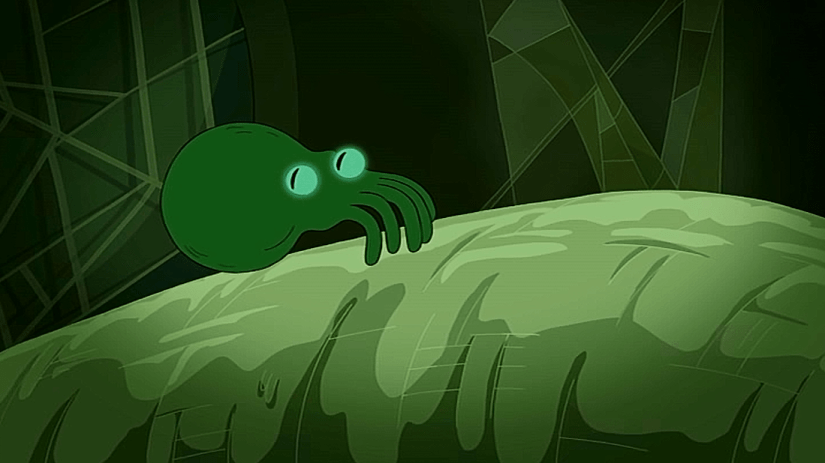
The thing that is somewhat terrifying about grass Finn’s existence is that none of what he believes to be real is actually real. Everything he knows about himself and those close to him is essentially a lie, so I really don’t blame him for going off the handle in the second half of the episode. I mean, honestly, who wouldn’t with this potential reality at hand? Granted, he’s also being partially possessed by a cursed squid demon from the remnants of the grass sword, so that’s a factor as well, and accurately represent the “inner demons” that exist within him. The scenes between the grass sword demon and Finn Sword are particularly eerie. As I previously mentioned, I think Hayden Ezzy is really talented. Not only does he add a lot of charm and emotion to grass Finn’s character, but also manages to pull off a truly intimidating performance as the grass squid. I feel like the grass squid’s role within grass Finn’s mind could easily be labeled as a justified reason for his volatile behavior, but I think it goes much deeper than just a curse. In general, grass Finn’s darker side only comes out when facing the turmoil of his own existence, so I do believe it’s more of an inability to cope with his own circumstantial state of being, rather than some kind of possession from the grass demon. Just the like the grass sword itself, it only arises in certain states of emotion. For Finn, it was somewhat of a fight-or-flight response, whereas with grass Finn, it channels into his negative emotions of inferiority.

TS 4.png

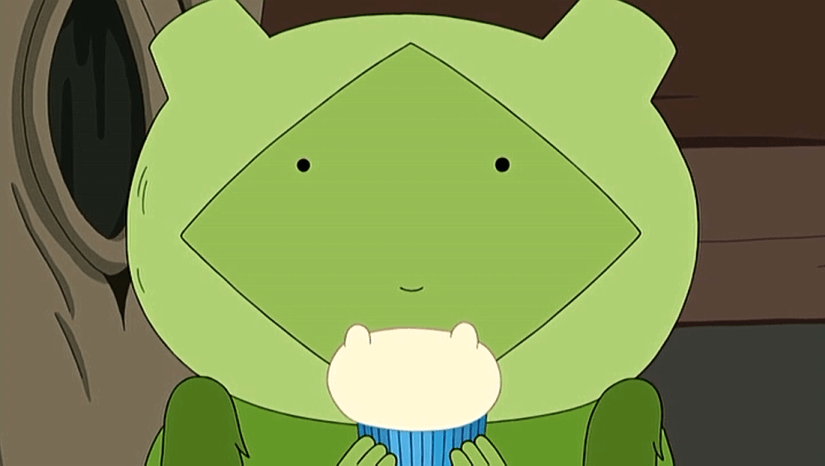
I also wonder if part of grass Finn’s inferiority comes from the idea that, whenever the grass sword would attempt to help Finn in his time of need, it often lead to more harm than good. The grass sword cost Finn his arm in Escape from the Citadel, refused to cooperate with him in Checkmate, nearly harmed Farmworld Finn in Crossover, and smashed through the Finn Sword in I Am a Sword. Perhaps grass Finn feels somewhat subconsciously responsible for consistently failing to properly get things done, and that guilt continuously plagues to the point of an identity crisis when he begins smashing up the Tree Fort. Upon interrogation, Finn does reflect on what he and PB had chatted about and concluded within the Candy Kingdom hospital. Finn begins to realize that grass Finn likely is the same Finn that once existed within a sword and, essentially, is his own being. This is where Finn decides to give grass Finn a Finn Cake – a symbolic display of respect that places grass Finn on the same level as Finn himself. Grass Finn is reminded of who he is: a “good boy” who enjoys embarking in heroic endeavors. While he doesn’t have himself fully figured out, he’s at least left with the knowledge that he has an idea of who he wants to be. However, Two Swords closes out with a chilling reminder that the turmoil within grass Finn remains very much alive through the existence of the grass demon, simply waiting to be unleashed.

Aside from being an interesting episode of exploration, Two Swords is also filled with many funny moments. I love Jake’s sudden and destructive awakening when he finds out BMO’s in trouble, BMO’s call to Finn about him wrecking the kitchen was hilarious, and the general interactions between grass Finn and Finn upon meeting are great. This one’s also filled with some great storyboarding feats, especially on Wolfhard’s part; Jake following grass Finn around in a circle repeatedly was great, and I’m not entirely sure why, but I love Finn nearly falling on his ass while trying to retrieve a Finn Cake. Dunno, that moment just felt so human and realistic to me.

Overall, Two Swords is a pretty great introductory to grass Finn. It’s funny, dark, and does a solid job of introducing his character in the most interesting way possible. While this episode establishes a lot of grass Finn’s character, I think the next episode does an even better job of working with his character’s strengths and weaknesses.

TS 5.png

Favorite line: “I have a crush on Jake.”

Adventure Time, Animation, Lifestyles

“Frog Seasons” Review

While I’m somewhat certain that Graybles Allsorts was always intended to be a series of shorts, Frog Seasons was intended to be a full-length episode in its inception. Not sure what change occurred to demote Frog Seasons to shorts status, and it’s not like the channel was advantaged or disadvantaged by this in any way. They just stuck these 3-minute shorts at the end of episodes during the “Regular Time Adventure Show” block (otherwise known as the “Adventure Time/Regular Show Purgatory Block”) that no kids even ended up watching anyway. So I dunno, it’s a mystery to me, not that it matters much. For the most part, Frog Seasons is a delightful array of shorts that’s kind of improvement over Graybles Allsorts, mainly due to the atmosphere that each minisode possesses. Interestingly enough, the plot for the Frog Seasons shorts is borrowed from the beginning of The Witch’s Garden, a moment that I initially had completely forgotten by the time these minisodes came out.

Spring

FS 2.png

Original Airdate: April 2, 2016

Written & Storyboarded by: Hanna K. Nyström

Frog Seasons: Spring is unique in being the one time (along with its sister minisode) that Breezy reappears. It’s delightful to see her once more, and I do enjoy how she and Finn are able to have a casual interaction with each other after everything that happened in Breezy. Not to say anything ended awfully between the two, but certainly… awkward. And it’s equally fitting that, in her one reappearance, Breezy breaks out yet another sexual innuendo. That girl’s got all levels of hypersexuality. Also loved how Jake rushes Finn as Breezy begins talking about pollinating. Good brother.

This minisode isn’t especially entertaining and suffers from being a bit slow-paced, though I really appreciate its laidback tone. The backdrops and skies in Spring look terrific and I love the brief moments where Finn and Jake are cheerfully swimming through the pond and engaging in small talk with each other. I’m a huge sucker for the Spring season as a whole, so the atmosphere in this one fills me with nothing but good vibes all around, and it also helps that this short initially aired in April. Made its presence feel even more appropriate. Though, like I said, it’s far from the most interesting of the shorts. When entering the frog’s kingdom, we’re treated to a very drawn out sequence with the frog inside of his room until Finn and Jake are finally kicked out. It’s a little slow, but I think the colors and atmosphere are more than enough to justify Spring‘s existence.

Summer

FS 4.png

Original Airdate: April 9, 2016

Written & Storyboarded by: Adam Muto

Definitely one of the funnier shorts. One thing I appreciate about Summer is how it plays with the boys’ personalities to its best abilities. I like how Finn is simply into following the frog around for the sake of his diehard curiosity, similar to how he doesn’t mind a boring dungeon crawl in Vault of Bones because he enrolls himself in activities that are strictly for the experience. Jake, on the other hand, isn’t into the idea of pseudo-mysticism and just wants to relax with the Water Nymphs, in what is arguably a more worthwhile experience overall. ‘Specially since Finn mentions wanting to get with babes.

Temperamental Jake is always a ton of fun to watch and Summer is no exception. I love the sudden shift in his attitude when the frog finally does put on the crown (in what is a pretty spectacularly animated sequence) and even in his state of frustration, I do enjoy how he sticks with Finn no matter what. Even though he does have the opportunity to ditch his bro to chill with Water Nymphs, he still stands by Finn’s side, and even ends up getting consumed by the frog because of it. But hey, at least it’s cooler in there, right?

Autumn

FS 6.png

Original Airdate: April 16, 2016

Written & Storyboarded by: Hanna K. Nyström

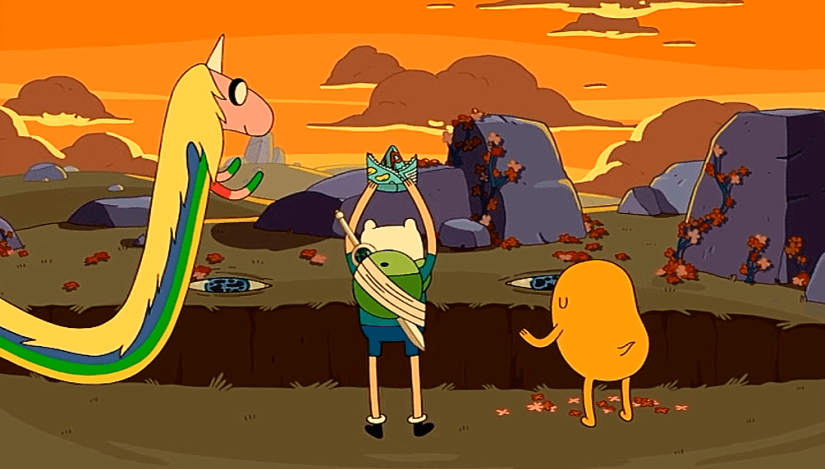
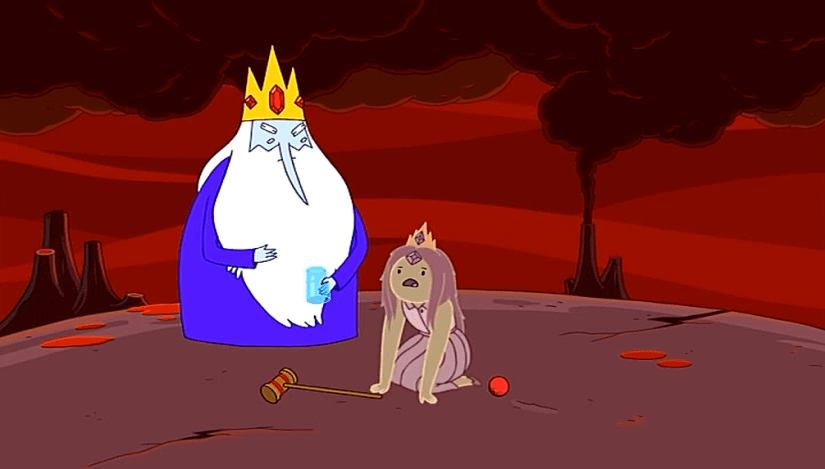
While I probably would’ve preferred Fall scenery akin to the paintings in Over the Garden Wall, I do appreciate Autumn‘s mid-November-ish approach to show a more colorless display, with wilted trees and muddy landscapes. I guess it’s technically more realistic to the season than the expectations we usually have for it. It’s definitely not complete eye candy for that reason, but I do dig parts of the story of this one. I truly sympathize with Raggedy Princess in Autumn; up to this point, Raggedy Princess was just sort of a gag character that other characters would shit on from time to time. This is her first real moment in the limelight, and I actually really get into her character. Her voice certainly isn’t the most pleasant, but it is sad to see that, even with her incredibly sweet demeanor, no one will stay to hear her poems that she clearly worked hard on. Even nice dudes like Finn and Jake don’t set the time aside from her. I think her character works great to emphasize those feels of isolation that typically set in this time of year.

The close of this one is alright, with Jake once again choosing his own route to go about the crown situation. The parts with RG were definitely a lot stronger… while the ending to this minisode kind of loses me.

Winter

FS 7.png

Original Airdate: April 23, 2016

Written & Storyboarded by: Adam Muto

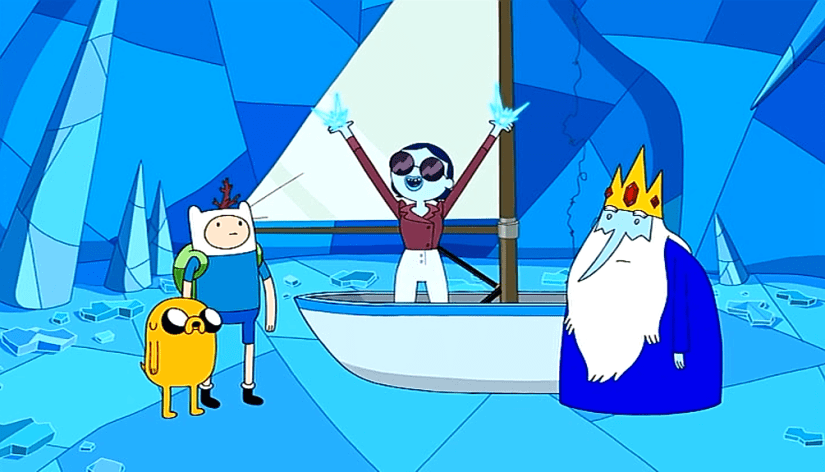
Right up there with SummerWinter is pretty damn funny. Ice King, as always, is hilarious in his desperate efforts to hang out with Finn and Jake (he even calls back to when he used to hate them back in season one) as the boys are resistant as ever. Aside from how blatantly they ignore him, Winter also features Jake’s pretty hilarious walk cycle of how he simply bobs up and down the mountain as Ice King follows him.

This one is also kind of neat on an introspective level. I like how Jake mentions that “life is short.” In their endeavors following the frog, Finn and Jake have missed out on catching up with Breezy, hanging out with Water Nymphs, and even hearing Raggedy Princess’s dope poetry. It begs the question, is one potentially unfulfilling experience more important than three individual ones? Finn mentions that it’s important to finish what you start, but at what cost? If the result is truly disappointing, then is the experience really worth the trip? Finn ends up giving up on his journey but ultimately does miss out on a sweet experience when the Frog transforms into Life and clears the snow straight off of a mountain. I guess Winter is really poking at the idea that every journey has its pros and cons, and that there’s no guarantee things will ultimately work out with any one experience. It could ultimately be fulfilling, but it’s really all about whether the trip there is actually worth it. Good on Ice King, though. Even if he got dissed by his two bros, he still ended up having the best experience in the end. Hooray for underdogs!

Spring (Again)

FS 9.png

Original Airdate: September 2, 2016

Written & Storyboarded by: Hanna K. Nyström

Spring (Again) easily feels like the most unnecessary addition to the Frog Seasons series. Aside from it lacking the nice visuals or the humor of the previous shorts, it also aired several months after the initial shorts did. Hell, I kind of didn’t even realize this one existed at first. I always thought the “(Again)” meant that they would be reairing Spring a second time on television.

Not really into the script of this one at all. Jeremy Shada doing his impression of LSP is always kind of cringe-worthy to me, and Breezy doesn’t really offer the same amount of charm and compassion that she did in the original Spring short. Honey Man’s dance is certainly cute, with nice musical accompaniment from Tim Kiefer, though it’s hardly as whimsical or beautiful as it was likely intended to be. I guess the real reason Spring (Again) exists is to tie into season seven’s main theme of how “everything stays, but it still changes” in the sense that Finn and Jake continue to follow the frog even after everything they’ve been through (I’m starting to think the frog does cause some sort of time paradox) but otherwise, I thought Winter did a fine job of wrapping of this series of minisodes.

Consensus

Frog Seasons is definitely an improvement over Graybles Allsorts. Frog Seasons really works well with its visual elements, and I genuinely enjoy the idea of a series of interconnected shorts that really don’t have a consistent continuity between each other. It really adds to the anticipation of not knowing what will happen upon each segment. It’s interesting to see how each short differs according to its designated board artist; Adam Muto worked on Summer and Winter, while Hanna K. Nyström boarded SpringFall, and Spring (Again). Ultimately, I felt that Muto’s episodes were a bit weaker in the visual department (aside from some nice boarding efforts), but they were much funnier and more entertaining than Nyström’s overall. Nyström had the nice visuals and atmosphere, but her portions were a bit weighed down by their slow and somewhat dry pacing.

Best to Worst

  1. Summer
  2. Spring
  3. Winter
  4. Fall
  5. Spring (Again)

Favorite line: “Following frogs is like, one of my top 20 favorite pastimes.” (Frog Seasons: Winter)

Adventure Time, Animation, Lifestyles

Season Seven Review

S71.png

Although I’ve established it before, when I refer to season seven, I’m referring to everything from Bonnie & Neddy up to Reboot, whereas Cartoon Network, and most other streaming platforms, refer to Bonnie & Neddy through The Thin Yellow Line as the official seventh season. The AT staff had intended for the former order to be executed this way, so it only makes sense that I address it in the fashion that it was intended. Though, it does bring up an interesting argument that I would like to briefly discuss before I dive into this review: do the season rebrands actually matter?

The short and sweet answer, from my perspective, is no. The only reason I go by the staff order rather than the rebrand is that it is the way I initially viewed it and I’ve kind of conditioned myself to think about these episodes in a certain way. It’s like when ABC Family went through a revamp and became Freeform – despite the name change, everyone still calls the channel ABC Family. In addition to that, I kind of respect the staff’s choices more than the network’s choices as a whole, so eh, I feel somewhat inclined to follow along with their thought processes. Otherwise, it truly doesn’t matter to me. I know a lot of people are bummed because it messes up the fluidity of some other seasons; while season eight initially started with Two Swords and ended with Three Buckets, it now starts with Broke His Crown and closes out with The Light Cloud which… really aren’t connected in any way necessary. But, then again, neither are Bonnie & Neddy or Reboot. In fact, the span from Bonnie & Neddy to The Thin Yellow Line has a much clearer arc regarding PB’s rise back into her former position as ruler, so the rebrand actually adds clarity from that standpoint. Overall though, it’s an issue that doesn’t really bother me at all, just one that, at worse, seems somewhat unnecessary.

It does interest me in seeing how people react to the rebranded season seven, however, because for the most part, the first half of season seven is kind of dull. Aside from Stakes which is pretty universally loved (by everyone who isn’t a miserly cynic like myself), I think a lot of people were just as turned off by those first 20 or so episodes as they were with season six. Alright, maybe that’s a bit of a stretch, but I don’t think season seven was drawing fans back in from its inception. A lot of the stories told in this first half are mainly inconsequential tales that attempt to emulate a “classic AT” feel, with episodes like Mama Said, Angel Face, President Porpoise is Missing!, Blank-Eyed Girl, and Scamps. While none of these episodes stuck out to me as awful, a lot of them were plagued by having paper-thin ideas that don’t really have much to work with outside of being light and silly. Buuuut, season one and two were like that in a lot of ways and still managed to pull off those stories with success, so what’s lacking here? I think there’s definitely an apparent decrease of energy in these entries. Around the time season four came along, Adventure Time became a lot slower and quieter in its approach to storytelling. That’s not to say it lost its sense of humor, episodes just became a lot more character driven than situation driven, hence the decreased wackiness that’s even noticeable by the time season two came along. So, in execution, episodes like Angel Face and President Porpoise are weighed down simply because it feels like they want to be something that they’re clearly not. I think the thought process behind this shift to lighter episodes was in response to the harsh tone of a lot of season six entries. Though, by this point in time, I really don’t think people were looking for a trip down memory lane. I think they were more so searching for answers to longterm questions outside of the strange allegories that season six had to offer, which is why the second half of season seven, as well as Stakes, are more popular with most audiences. While I’m generally not crazy about these episodes either, I think there are a couple of gems in the first half of this season that deserve more recognition, namely Football, The More You Moe, The Moe You Know, and King’s Ransom. They’re three great episodes that I rarely ever see anyone talking about. In general, I really never see people talking about BMO-centric episodes to begin with. I wonder why?

S72.png

The second half of season seven picks up A LOT, with pretty much every episode after Crossover (save for Five Short Tables) hitting its mark in one way or another. While season six was primarily about Finn’s journey through uncertainty, the one thing that the sixth season lacked was, well, Finn. Season seven makes up for our main character’s past absences by making his growth and evolution the forefront of several episodes, including The Hall of Egress, Don’t Look, I Am a Sword, Bun Bun, and The Music Hole. A handful of these stand out as some of the greatest episodes the show has ever put out, and all have a heavy emphasis on the periodic changes that Finn is going through. In general, the theme of season seven can be boiled down to the idea of change and what change means to individual characters. Will it change them internally and externally? Is change even a real concept? Will others accept those who do change? This is also the forefront of several other episodes like the Stakes miniseries, The More You Moe, The Moe You Know and Normal Man.

While season six was very much about Finn learning to understand his issues, season seven is mostly about Finn learning to work past his issues. I’m really glad the staff didn’t decide to leave season six as a “happily ever after” for Finn and chose to explore the deeper complexities of his strides to better himself. I love how Finn actually fears becoming a bad or immoral person in this season and does whatever he can to prove to others that he is a hero and wants nothing more but to help others. This especially shows when he makes amends with Flame Princess, which arguably weighed heavier on his soul than anything else he had experienced so far. Princess Bubblegum probably goes through the most character development thus far, as she begins to put aside her more controlling ways and actively wants to become a better person in the process. I was always worried that “nice PB’ would end up making her entirely less interesting in the long run, but kudos to the staff for still making her character entertaining and delightful amidst all of these changes. I like how, though she does end up on top in the end, we still get episodes that deal with her inability to consistently know what is morally right. We get a lot more of those in the next few seasons, and they’re often some of my favorite episodes. While season six pushed a ton of main characters to the side in favor of several new characters and one-offs, characters like Marceline, Ice King, and BMO make big comebacks in season seven, each having at least three major episodes dedicated in their honor. I pretty much discussed Marceline’s individual arc as much as I could in my Stakes review, so if you’re interested in what I have to say about her depiction in this season, you can check it out there. Ice King not only gets a good amount of screen time in this season, but the idea of him returning to his former state as Simon Petrikov is hinted at a lot more, which was the first real indication for myself that we were getting pretty close to the end of the series. Per usual, it’s always nice to see more of BMO, and I’ll always have a soft spot for the little guy. It is interesting to me how the main characters who got a lot more of a central focus in season six were somewhat demoted in season seven. Jake’s only true star episode without Finn was Daddy-Daughter Card Wars, and Lumpy Space Princess only has one major appearance in the entirety of the season. I was starting to become under the impression that the show didn’t really know what to do with her character anymore, but the staff surprised me in the following season by incorporating her into more of the action.

Coming hot off of the heels of season six, Jesse Moynihan surprisingly wanted to take an entirely different approach in his boarding efforts, as he began to stray away from his typical psychedelic roots. Equally as surprising is the fact that his more humorous entries really paid off, as him and Sam Alden really made for the best board team this entire season. The episodes they worked on struck a perfect balance between comedy and story, which especially shows in Crossover, Flute Spell, I Am a Sword, and Normal Man, which are… actually every episode they worked on this season. They managed to produce straight gold without skipping a beat. I’m glad Jesse and Sam were paired together because the throwback duo of Jesse and Ako Castuera clearly wasn’t working out during Stakes. Seo Kim and Somvilay Xayaphone actually managed to step up quite a bit this season. While they had some more middling entries, such as Angel Face and Blank-Eyed Girl, they still managed to churn out some of this season’s best entries, like Bun Bun and Don’t Look. Kudos to them for managing to tackle topics that I never knew they’d be capable of. Tom Herpich and Steve Wolfhard were mostly absent outside of their work in the Stakes miniseries, and weren’t exactly up to par with the usual quality I expect from them. Granted, Herpich wrote and boarded my favorite episode of the series The Hall of Egress, and the duo also boarded another one of my favorites The More You Moe, The Moe You Know, but their other entries (Vamps About, The Dark Cloud, Bonnie & Neddy) were middling at best. Even Reboot, an episode that I’m personally very fond of, is riddled with various different issues. Other board artists, like Hanna K. Nyström, Adam Muto, and Kent Osborne all hopped around from episode to episode without having set partners and did pretty well no matter where they went. Season seven also welcomed guest artists, like Kris Mukai and KC Green, while it welcomed back various different AT alumni members, like Luke Pearson, Emily Partridge, and Ako Castuera. Hell, Emily Partridge and Luke Pearson might actually be my favorite team from this season and they only worked on two episodes together (Football and May I Come In?)! Definitely a good amount of diversity this season that is surely embraced. I actually think that the weakest link this season was Graham Falk. He was faced with several different episodes that were more somber and quiet in tone (Cherry Cream Soda and Summer Showers) in which his style really did not match with.

S73.png

Similar to last season, since there are so many darn season seven episodes, I’m going to once again extend the top 5 best episodes into a top 10 list. Keep in mind, this is including Stakes.

Top 10 Best Episodes

Honorable MentionsEverything StaysFlute Spell

10. Football – A psychological horror disguised within an expectedly cutesy BMO episode, and one that really brings out the best in BMO’s messed up lil’ mind.

9. Reboot – Once more, not an episode I can really call great, but one that I thoroughly find entertaining and invigorating regardless.

8. Don’t Look – A really neat exploration of how Finn views others, as well as how he views himself.

7. Normal Man – A nice semi-conclusion to Magic Man’s character and Jesse Moynihan’s time on the show; one that is pure fun from beginning to end.

6. May I Come In? – The best episode in the Stakes miniseries, and one that manages to be just as fun as it is foreboding.

5. Bun Bun – Great developmental episode featuring the various changes that Finn, Cinnamon Bun, and Flame King have undergone in the past year.

4. Crossover – An episode that looks absolutely gorgeous all around, and one that is just as entertaining as it is off-the-walls crazy. God, won’t someone please make me a vinyl figure of Finn in his winter coat!?

3. The Music Hole – An episode revolved around the connection between creativity and sadness, and one that is just as sweet as it is poignant.

2. The More You Moe, The Moe You Know – The best BMO episode to date, and one that always strikes me in how profound and ballsy it is in exploring the fears and tragedies within BMO’s life.

1. The Hall of Egress – Likely my favorite episode to date, and one that pretty much encapsulates everything I love so much about Adventure Time.

Top 5 Worst Episodes

5. Blank-Eyed Girl – I was ultimately torn between placing this episode, Bad Jubies, or Marceline the Vampire Queen at this spot, but ultimately felt as if Blank-Eyed Girl was most appropriate. It isn’t a terrible episode, and it likely has fewer problems than the aforementioned episodes, but it’s so bland. It doesn’t really do anything interesting with its story, and sort of just meanders for 11 minutes.

4. Scamps – Again, not one that’s terrible, but it is terribly forgettable. There’s really nothing that draws me back into watching this one aside from the fact that it’s inoffensive. It’s likely as disposable an AT episode can get.

3. Five Short Tables – Another uninteresting F&C episode with nothing new to bring to the table. See what I did there??

2. Checkmate – Haha, probably gonna get flack for this one, but man, I do not like this episode. It really breaks any sort of dramatic tension that the Stakes miniseries was trying to accomplish by making really terrible jokes every other second. It also kills any form of remaining fondness I had for the Vampire King by this point in time.

1. Cherry Cream Soda – An episode that had potential in its first few minutes, and then just turns into an utterly pointless display of absurdity that feels both tasteless and confusing.

Final Consensus

Season seven started out admittedly slow but gradually picked up in quality as it went along. I used to think this was a big improvement over season six, but looking back now, I think season six is the stronger season. While season six is messy in a lot of places, it was often times churning out big episode after big episode. So even if it had one or two bad episodes in a row, it was almost guaranteed to deliver on the third episode. Season seven is quite the opposite, where it doesn’t really gauge my interest until the latter half. Granted, when comparing the two, season six definitely has more bad episodes, while season seven only really has a few. Though, in general, season seven only starts delivering consistently when Crossover comes along, which is about halfway through the season. So yeah, I’m overall positive about season seven, albeit it takes a while to get going. I think the downside to the bigger AT seasons is that there are more inconsequential episodes that likely get overlooked, simply because there are so many bigger episodes down the line. Inconsequential isn’t really a bad thing, but episodes like Scamps and Blank-Eyed Girl certainly don’t feel like passion projects by any means necessary. Season eight ends up having a lot fewer episodes than the past couple of seasons, which I really think shows in the overall quality of each individual episode.

Tune into tomorrow for a special bonus review: the Frog Seasons shorts!


Adventure Time, Animation, Lifestyles

“Reboot” Review

R 1.png

Original Airdate: November 19, 2016

Written & Storyboarded by: Tom Herpich & Steve Wolfhard 

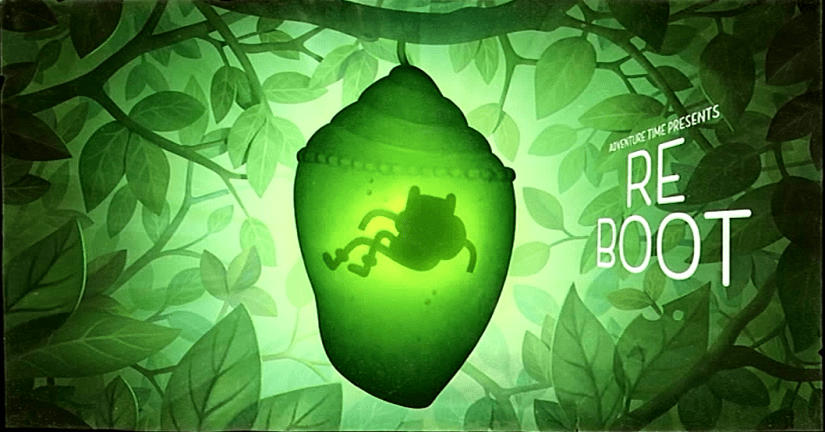
Preboot alone had already raised several questions and opened new doors for the series in general, so it’s surprising that its sequel episode, Reboot, seeks to answer zero questions and instead manages to be even more ambiguous. Reboot, in many ways, is one big mess. There’s hardly any resemblance of a story, the humor falls flat a majority of the time, and the animation is often underwhelming. Yet, I find myself strangely captivated by this one. Out of every episode in the series, I think I can say with utter certainty that I don’t think I’ve ever been on the edge of my seat more than I was with Reboot. It’s a high-speed, stressful rush that, once started, never really lets up until the very end of the episode when things just… end. It’s likely the most abrupt that an episode of AT has ever closed out, and I think it’s somewhat ingeniously executed. Right when the episode is at the peak of its intensity, things suddenly stop, leaving the viewer (at least, from my personal perspective) wanting even more. AT has always been good at teasing its fanbase for what’s ahead, but with the end in sight, I think everyone was much more optimistic about the unraveling of said mysteries rather than feeling cheated.

R 2.png

There isn’t a whole lot to analyze or go over for this one, aside from simply emphasizing my points from the intro paragraph. From the moment Susan’s implant goes haywire, the episode transitions into a frenzied, anxiety-ridden sequence, and anxiety-ridden is a pretty decent description to how every character reacts in this episode: Finn must resist the impulse of allowing his grass sword to take over, PB must find a way to save everyone without causing harm to anyone, and Jake is faced with his failure to resist protecting his brother at all costs, even if that means hurting those around him. Of all of these introspective character moments, I think I especially like Finn’s mini-arc. With all of the power literally in the palm of his hand, Finn can so easily allow himself to be saved if he just simply gives into those urges. Though, in his eyes, it doesn’t seem like a viable option. After everything that happened with Finn Sword, I think Finn is afraid to even allow the grass sword any kind of power, in fear of hurting anyone like he previously did. Finn’s fear of hurting others and his inability to properly fight and defend himself in the process progressively becomes a more consistent part of his character as the series continues, and he only continues to struggle with similar circumstances from this point on.

When I appeared on the RE-Cast podcast back in September, I joked that the episode title From Bad to Worse could easily apply to any episode in the series. If I had to pick a more appropriate episode for that title, it would certainly be Reboot. I really love how much the episode plays around with just how strong Susan is, and any attempt to actually stop her only makes things exceedingly more dangerous. I think it’s a little bit contrived that Susan’s chip absorbed the Gumball Guardian’s blast, but even then, I do think it’s fun to watch all of these really strong and not-so-strong characters go against Susan with relatively no chance of succeeding. It becomes a bit repetitive after a while, but I really think it adds to the tension that Susan is absolutely unstoppable, and it really makes you wonder just how exactly she’s going to be stopped.

R 3.png

AT is a cartoon, so more often than not, pain feels and is executed in a very temporary fashion. For the most part, however, everything presented in Reboot feels kind of gruesome. Rattleballs is smashed to bits, Finn and Susan suffer long-lasting injuries following this episode, and even Jake gets royally fucked up to the point that a ton of fans actually thought he was dead. Like, no kidding. There was a point in time when fans thought that Jake had died 40 episodes before the series finale. While it’s easy to dismiss this theory as ridiculous, it really goes to show how well this episode presents pain and injury. It’s kept mostly light at first with the absurd catchphrase “yubba dubba dubba,” but by the time Jake utters it, it feels more concerning than comedic. Even though Jake is one of our main characters, the stakes within this episode feel so real that you can’t really help but question his well being yourself.

But before he does end up biting the dust, Jake assists his brother in fighting off Susan. The scene in which Finn slides up Jake’s body and transforms into the Jake Suit is legitimately one of my favorite moments in the entire series. The momentum, timing, camera angle, and music are so Goddamn pitch-perfect that it legitimately took my breath away the first time I had seen it, and still does to this day! The fight sequence that follows is less remarkable for its lack in fluidity, but I do somewhat admire it for being a uniquely choreographed battle. The camera pretty much stays in one spot as Jake Suit and Susan perform a number of different wrestling moves on each other, and it’s neat, despite the middling animation. The most tense moment in the episode is easily when Finn’s grass sword does go berserk and begins to crush Susan with all of its might. Again, tying back to what I was saying earlier, we should know that no lasting damages are actually going to happen to Susan, but execution is everything with Reboot and it feels quite stressful and unpreventable. If that wasn’t enough, however, the episode leaves us with one of the biggest “what the fuck” moments in the series, as Finn’s grass sword leaves his body, merges with the Finn Sword, and becomes an entire being in the course of a few seconds. Finn is once again left armless (permanently, this time!) and an entirely separate story arc has now emerged itself into the main story. Once again, in typical Adventure Time fashion, things only continue to get exceptionally crazier and lore heavy down the line.

R 4.png

So, I really can’t defend Reboot on all levels. Besides its somewhat sloppy pacing and forced jokes, there are some minor to major inconsistencies that this episode presents. I appreciated that they brought back Finn’s immunity to electricity, but what was the point if they have him getting shocked by Susan’s headpiece only a few seconds later? And, in a more pressing issue, Susan’s lab name from Dr. Gross appears to be “Strong,” which is a bit of an unbelievable coincidence. In the episode Susan Strong, Finn simply gave Susan that name because of her physical appearance. Now we’re supposed to believe that it was also her code name all along? Yeaaaah, I don’t buy that at all. It’s right up there with Gunter riding a “G” labeled boat in Orgalorg. However, plot holes and story issues aside, I still have to commend this episode for being as thrilling and entertaining as an Adventure Time episode can be. It’s kind of like how I feel with Star Wars: The Force Awakens… it has its major and minor issues, but it’s such a damn fun ride that I really don’t mind. Reboot is far from a perfect episode, but it’s almost as if it makes up for it by being a perfect experience: a fun, invigorating journey that leaves me wanting more. And I think that’s a pretty fair compromise, especially considering that it is season seven’s grand finale.

So yeah, that’s it for season seven y’all! As always, I want to thank all of you for tuning in and making this such a fun side gig. This year alone, AT Reviewed has racked up almost 45,000 views, which is amazing! You guys rock, and I’m so glad to be sharing this experience with you. Per usual, the review and bonus review will be coming shortly (likely on Sunday or Monday), and I’m excited to announce that I’m back to posting semi-daily reviews and plan on covering at least half of season eight throughout the next month. Stay tuned, y’all! Some of the series’ best entries lie ahead.

R 5

Favorite line: “We need a finger, not a thumb. Finesse, boi!”

Adventure Time, Animation, Lifestyles

“Preboot” Review

P 1.png

Original Airdate: November 19, 2016

Written & Storyboarded by: Aleks Sennwald & Adam Muto

Before diving into this review, I think it’s important to discuss a little bit of this episode’s history and how it actually plays into the rest of the series. A preview (aka, the first five minutes) of this episode initially aired at San Diego Comic Con back in 2016, and I remember being a bit taken back by what I had seen. After the course of season seven, it really seemed like the show was beginning to slowly wrap up, with many ongoing arcs closing up (PB’s morality, Finn’s aging and resolution with Flame Princess) and many others that are consistently hinted to be wrapping up (Ice King being “cured,” the possibility of another huge war at the hands of Patience St. Pim). The five minutes shown seemed to open up yet another door for exploration when there was already so much on the table that needed closure, and with the additional revelation around the same week that there would be a ninth season of AT, I was really starting to become under the impression that the series was never going to end and that it would eventually lose the luster that made it so special to begin with. I had spoken too soon, apparently, as it was revealed under two months later that Adventure Time had been canceled by Cartoon Network. This was news that was certainly bittersweet for myself, as I was confronted with the idea that my favorite show would be ending, but also that it meant that things would be wrapping up before I had lost interest or investment in the series. As a few more months passed by without any news regarding new episodes, Preboot and Reboot were slated for a November airdate, and Tom Herpich had posted on tumblr in reference to the remaining episodes. He mentioned that, after Preboot and its sister episode, “everything starts rolling into one big snowball that rolls and rolls all the way to the end.” I was struck with curiosity by this statement, but cautiously optimistic. I remember hearing reports back during season six that Escape From the Citadel was stated by the staff to break the status quo entirely when that simply was not true. Though, looking back now, Herpich’s statement really did deliver! I won’t say that everything ties together perfectly, but for the most part, Preboot and Reboot really are a turning point for the series. AT’s relationship with the status quo was the one thing that was holding it back from telling all of the stories that it wanted to tell, and I feel as though the transition into (almost) full serialization is the best possible move and reward for fans at this point in the series. Really feels like a treat for everyone who has been paying attention up to this point. So, without further ado, we have yet another episode that changes Adventure Time as a show forever: Preboot.

P 2.png

The beginning of this episode is always weird for me. Like, I had always assumed that the Comic Con preview started a minute into the episode or something, but it’s actually the start and jumps immediately into the situation. I usually enjoy when AT throws us into weird situations with no exposition, but it kind of feels like a part of the episode is missing in this case. Was it at PB’s command? Was it a request from the Hyoomans? Definitely could have used some more context clues. I do enjoy their brief excavation, however. Jake genuinely wanting to be cursed is just classic Jake, and Finn thinking that horses used to have poles in their spines before the Mushroom War is classic, dumb Finn.

Things take a very abrupt turn when the assumed to be dead Tiffany pops out of the ground in a narwhal shaped shuttle. Not only did he get a sick new bionic arm, but he’s also going through puberty! Good on him. This is one of Tiffany’s better appearances, though Colin Dean’s voice shift does weigh it down a bit. It’s not like it’s his fault or anything, but it’s really hard for a child voice actor to capture the same charm that they once did before their balls dropped. Of course, it’s different for a character like Finn, who’s actively aging and evolving with each passing episode. This shift reminds me more of Chowder’s shift in Chowder, or Jeff’s shift in Clarence, it feels like some kind of whimsical magic was lost during the change that just can’t be recaptured anymore.

P 3.png

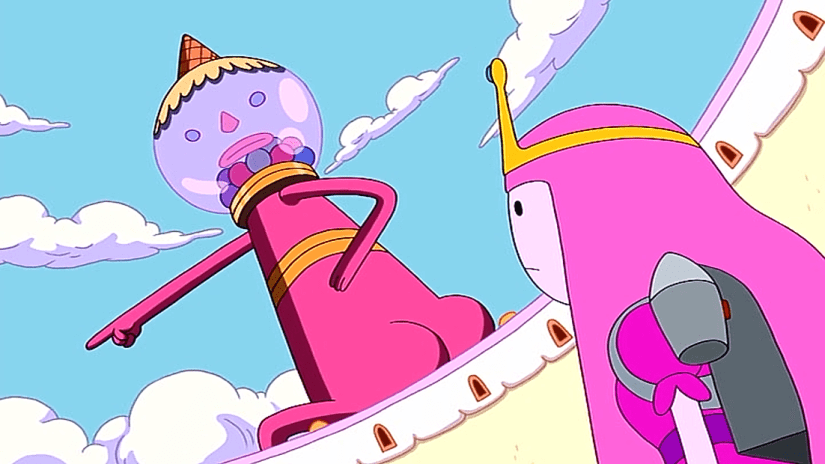
Aside from Tiffany though, we’re also introduced to Dr. Gross, a character that is pretty cool in her general design (both initially and post-suit removal) and ultimately decent in her motivation. I feel as though her presentation is a little too obvious in this episode, in the sense that it becomes pretty obvious early on that she will be an antagonist towards Finn and Jake. Hell, the episode doesn’t even really try to hide it – Susan is adamantly opposed to Dr. Gross’s behavior and surroundings from the start. As a villain, she’s alright. I think her motivation becomes more clear and somewhat twisted in subsequent appearances, though here, it’s pretty base level stuff. She wants to utilize Finn in order to help to bring himself (and others) into a new golden age of humanity, featuring various different mods and altercations. But after they (very quickly) escape, she kind of just decides that she wants to kill the gang and use them for spare parts instead. I guess it’s supposed to paint her as crazy, but it kind of weakens her character if she’s not given consistency with her motivation. I mean, Finn and Jake were never into the idea of being operated on to begin with, how would their attempt to escape change literally anything? It really seems like her presence in this episode is to merely set up her backstory for future episodes down the line.

Though, her dystopian lair and menagerie are pretty terrific, albeit the song sequence, which is just okay. A lot of the lyrics feel forced and hardly catchy, though I do dig the electro-funk tempo in the background. The animal hybrids are too a lot of fun, with my favorite being the Wolf Lards, who have the “high endurance of a sea lard combined with the bloodthirsty killer instincts of a sea lard.” That was just priceless to me. There are a few other nice editions; I love the scorpmunk that can talk and instead uses dancing to warn others of danger, the return of Clockbear after his debut in Hoots, and the apple with a humanistic face, of which I’m preeeetty sure was based off a child’s drawing for the Make-A-Wish Foundation, but I couldn’t find the information when looking for that fact, so hey, you guys can confirm that for me!

P 4.png
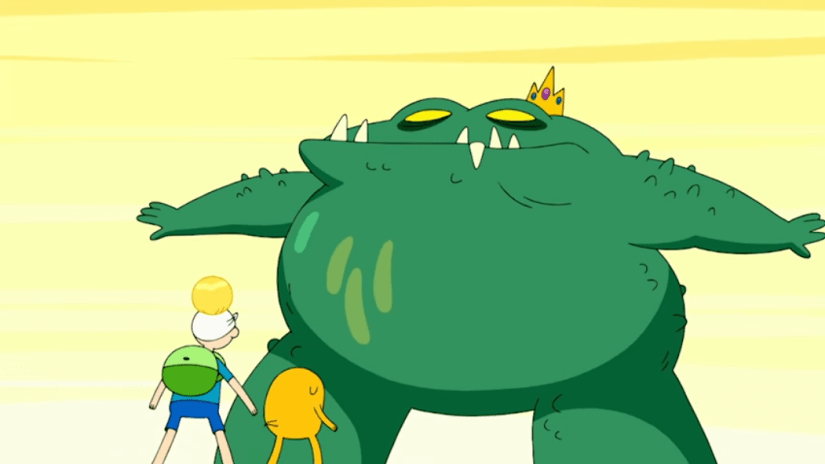
This scene always weirds me out. Finn and Jake are fucking huge compared to Dr. Gross!

I mentioned this episode setting up for Dr. Gross’s eventual subsequent role, and that’s pretty much Preboot in a nutshell. Not only is it set up for the following episode, but also for future episodes involving Finn’s destination to find other humans. It was admittedly funny to see Finn’s shock about the existence of other human beings, only to contradict himself by mentioning just how many humans he’s actually met over the course of the series. Though, I do have to bring up that it’s a bit contrived that Finn doesn’t mention Susan. He declares in the following episode that he didn’t know she was part cyborg, so wouldn’t his assumption be that she truly is human after the events of Beautopia? I get that they had to play around with the mystery elements for the sake of the story, but I feel as though this is info that he should downright know by now.

And as a whole, Preboot essentially is one big mystery element. It plays around with a lot of ideas and concepts that haven’t yet been answered, and also adds even more questions than we had before. In fact, Preboot alone probably contains the most amount of questions in a single Adventure Time episode yet, of which are answered shortly after, thankfully. Though, it’s kind of hard to go back into this one knowing everything that I know now. It’s got some funny jokes, fun action sequences, and sweet locations, but its ultimate goal is to build on exposition and facts about the past and future of the series that mostly tease viewers into wanting to see more. So when I find did get more, I was satisfied, but there isn’t a ton that draws me back into this one aside from those scattered fun moments throughout. The main goal of this episode is to set up a mask of ambiguity to once again pique the interests of AT audiences, but ultimately sacrifices a portion of entertainment in the aftermath. I truthfully ended up enjoying the second part of this episode, Reboot, more for various different reasons. You kids can read all about it here!

P 5.png

Favorite line: Crisis Another critical life juncture in the ongoing saga that is Tiffany.”

Adventure Time, Animation, Lifestyles

“Daddy-Daughter Card Wars” Review

ddcw 1.png

Original Airdate: July 7, 2016

Written & Storyboarded by: Steve Wolfhard & Adam Muto

One of the more common complaints I see being thrown at Daddy-Daughter Card Wars is that Card Wars gameplay is generally glanced over in favor of a story that has practically nothing to do with Card Wars. But honestly, that’s one of this episode’s perks. I mean, did people really just want to see straightforward gameplay for a second time? We already saw that in the original Card Wars, and even then, the game wasn’t really the main focus. It was more about Jake’s unhealthy obsession with the game itself, and how an opposing side of his typically calm and charismatic demeanor was unraveled. That being said, I’m glad Daddy-Daughter Card Wars is what it is. It works semi-successfully to wrap up Jake’s regretful past history, while also giving us more insight into where this turmoil comes from. It’s also essentially Charlie’s debut episode, of whom may just be my favorite of the pups.

ddcw 2.png

Charlie’s simply delightful. It’s interesting to me that it took her this long to be given a speaking role within the series, as she’s easily the most interesting and unique of her siblings. Aside from having obscure interests, a rad pyramid to hangout in, and intriguing psychedelic connections, she possesses the coolest abilities out of all of the pups. While most of the pups’ powers seem to be relatively basic, Charlie is able to grow to a size so big to the point where she’s literally able to walk across the Earth. That is awesome. In general, she’s really charming and enjoyable in her demeanor as well. She’s quite snarky to Jake throughout the entirety of the episode, and it’s a ton of fun to watch. It mostly comes off as loving and sweet, in contrast to the harsh and detached ways T.V. and Kim Kil Whan can often act towards their father.

I feel like the real thing that makes their relationship fun to watch is that they’re essentially both using each other. I’m often disheartened when the show either has entire episodes focused on Jake being a shitty dad or one of his pups being a shitty kid, but I think this episode has it balanced by showing off both of their shitty sides: Jake merely wants to resolve his past issues (without realizing that he’s adding fuel to that turmoil) and unknowingly recruits Charlie’s help to do so, while Charlie will only help her “poppa” out under the condition that he provides her with something (which is a scene that still freaks me the fuck out to this day. There’s something unnerving about Jake so easily pulling off a piece of his fingerbone).

ddcw 3.png

Though, it undoubtedly gets a bit muddled at times… about halfway through, Charlie realizes that she regrets not helping out Jake in the past, and it seems like the episode is attempting to paint Charlie as the bad guy in this situation… buuut, shouldn’t Jake also deal with some kind of repercussion regarding his treatment of Charlie? It’s a lot of fun seeing Jake as an absolute, boiling mess in Daddy-Daughter Card Wars, but I guess a tiny complaint I do have is that I feel like he’s a little bit too much of an asshole at times. Adam Muto and Steve Wolfhard do their best to make up for it, like when he literally offers Charlie every bone in his body if she would just simply spend an hour of her day helping him out, but there were certain scenes that rubbed me the wrong way. I don’t care how much Jake cares about Card Wars, I hate that he doesn’t save BMO in the beginning. I mean, my God, that’s your son dude! Granted, BMO jumping off the boat was hilarious, and I’m glad it was left it, but I thought the execution was a bit too harsh for my liking and it kind of leaves a sour taste in my mouth for the remainder of the episode.

That aside, Jake is mostly enjoyable throughout the remainder of the episode. I’ll reiterate, I love seeing him so violently passionate about something. Jake’s mortality has nearly been as prominent of an arc as Finn’s aging process has, and it was really melancholic to see how wary he is for the near future. It is neat that Jake does have some form of self-acknowledgement about his regrets, and wants to at least move forward, even if he doesn’t really know how. In Jake’s head, becoming “dignified” means being able to achieve the victory against Grand Prix that he presumably never had, though it’s made clear by the episode of this episode that becoming dignified means accepting and becoming content with his shortcomings. I like how Jake’s conflict with Grand Prix also goes beyond that fact that he’s simply better at playing Card Wars, but that he also ended up with Moniker, Jake’s ex-girlfriend, which symbolically places him on a higher pedestal in Jake’s eyes. The connection between Moniker and Jake is also delightfully tense, complete with Jake being as awkward as he’s ever been. I like to think that Moniker was likely Jake’s first real significant other, which presumably fuels Jake’s anger and jealousy even more. It feels relatable in the sense that there’s always people from your past that you either hate or are simply envious of, and one has to constantly prove to themselves that they’re better than those people for some kind of unauthentic gratification. The scenes that emphasize Jake’s turmoil are really well done, and I love that the flowing, vigorous stream is a consistent audio cue to signify Jake’s feelings. I also enjoy how his relationship and battling within himself comes into play frequently. After Charlie leaves, Jake first adopts some of his old tactics and behaviors (by creating a duplicate of his past self) and then eventually becomes his old self (by morphing into his devilish, angered form). It’s a really nice touch in the visual department, and that goes for all of Jake’s facial expressions in general. Wolfhard and Muto clearly had a lot of fun with this one, and it helps that these dramatic expressions makes the episode feel like a true sequel to Card Wars.

ddcw 4

The most interesting bit in this episode is easily Charlie’s psychic visions of the future, which paints a bleak, yet deeply poignant vision of what lies ahead. I do like how Charlie’s foreseeable future contrasts with how Jake views each decade; while Jake assumes that he’s supposed to be a certain thing by a specific time in his life, Charlie’s look into the future proves that she really isn’t going to have things figured out until the very end of her life, and that’s pretty much life in a nutshell. While it seems that Charlie does live a fulfilling life, and ends up having a child of her own (none other than Gibbon!), it’s apparent that she also deals with the natural tragedies of existence as well: fearing what lies ahead, feeling intrinsically alone, and losing those close to her as she continues to age. While Jake assumes that he’s supposed to be dignified by this point in his life, he’s adding stress and turmoil to his life by not realizing the vast complexities that life offers. It isn’t until Charlie adopts the demeanor and lifestyle of her 90-year-old self that Jake is able to be “content” in his life, both in his regrets and his future. Though, to be honest, I thought that this was a pretty lazy conclusion. It feels like Jake didn’t really learn anything, and that he was simply altered by Charlie’s ability to give him this knowledge. I feel like it kind of tarnishes what the episode was trying to accomplish if he doesn’t go through the actual process of understanding his wrongdoings, and merely just adopts this knowledge regardless. What if in Don’t Look, instead of hearing what his friends have to say about him to help him to shape his self-view, Jake simply just walked up to Finn, touched him, and shouted “self-acceptance,” and that was that? It’s pretty uninspired and feels cheap. Though, I still do like Jake’s casual acceptance of his loss, and his official burial of his 20’s. Haha, okay.

I think Daddy-Daughter Card Wars is ultimately decent. Its stronger points are definitely with Charlie, but of course, I’m biased. I think it does have some flaws in the execution of its story and Jake’s character arc as a whole, but nothing that’s especially detrimental to the quality of the episode, aside from the resolution itself. It’s still funny, thoughtful, and has a lot of nice backgrounds/drawings that translate well into the animation process. Two last notes: I do love how everyone within Jake’s contact list in My Two Favorite People is now accounted for thanks to this episode! So cool how they all have somewhat of an active role in this world, even if they’re only on-screen for like, two seconds. Also, Wolfhard drew up a prequel comic for this episode over on the AT tumblr. Check it out here! It’s tons o’ fun, and ties into the central theme of the episode quite nicely.

Semi-daily reviews return in two weeks! Until then, stay tuned for the double review release of Preboot/Reboot next week!

ddcw 5.png

Favorite line: Hey, you two been kissing?”

Adventure Time, Animation, Lifestyles

“The Music Hole” Review

TMH 1.png

Original Airdate: June 23, 2016

Written & Storyboarded by: Polly Guo & Andres Salaff

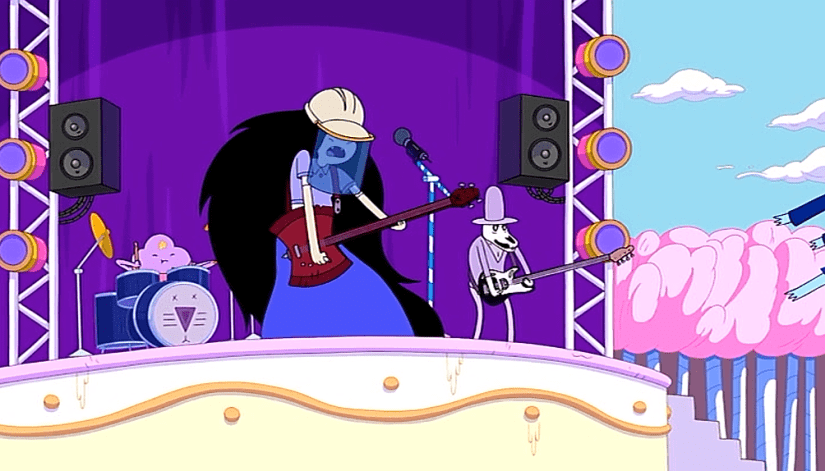
It was really only a matter of time before Adventure Time took on a “Battle of the Bands” themed episode. Music, for the most part, has been a crucial part of AT’s identity. I know people who have never seen a single episode of the series, yet are able to sing “Bacon Pancakes” in full. Adventure Time is far from the first animated series to heavily incorporate music into its content; hell, musical cartoons date back to the beginning of animation as an art form, with the early renditions of Silly Symphonies and Merrie Melodies marketing their brand specifically around the combination of animation and music. I will say, however, that AT is perhaps the first mainstream cartoon to rely on the plot device of utilizing music in order for characters to let their emotions loose. This is shown most prominently between seasons two and four; we get to see Finn serenade his new friend in Susan Strong, Marceline unravel her true feelings towards Bubblegum in What Was Missing?, Gumball croon about his passion for Fionna in Fionna & Cake, and so on. I overall disagree with the notion that Adventure Time hit any form of seasonal rot within the past two seasons, but I will say that, if any aspect derailed, it would have to be that musical element. Rebecca Sugar was pretty much the key-driver of this musical movement, and once she departed, Steven Universe became the flagship series for emotional and well-written song sequences. That’s not to say that Adventure Time hasn’t had any catchy melodies in the past few years – “Food Chain” from the episode of the same name remains one of the best tunes that the show has ever put out, and I really loved the soft medley that Breezy had to offer. But overall, there were more misses than hits, and it really felt as though the show was lacking in what was once one of its most prominent trademarks. The Music Hole is somewhat of a return to those old trademarks, by not only basing an entire episode around music, but also the notion of channeling the sadness and heartache within one’s self into something creative and beautiful as a means of coping. In typical AT fashion, that something is music.

TMH 2.png

It’d be one thing if this episode was just jam-packed with songs for the sake of it, but hey, the songs in Music Hole are actually pretty good! Of course, that’s also keeping in mind that a lot of the songs that are featured in this episode aren’t original, but that’s actually kind of cooler to me. It feels like a real, authentic Battle of the Bands in that way, and I think it’s kind of nice that some indie artists and bands like Mitski and Lake probably got a lot more attention from outside audiences because of this episode. This isn’t the first time that an AT episode has included somewhat of product placement for LAKE, and I honestly think it’s a really sweet love letter to the band that they continue to give them publicity because of their role in creating AT’s outro. The original songs are pretty decent as well. I actually really dug the small portion of Susan’s song that we got to hear (leave it to Susan Strong to come back after a 130 episode absence, and then disappear for another 50 episodes) and NEPTR and Flame Princess’s rap was cute and fun as far as FP raps go, which usually aren’t very good or entertaining. At the very least, it’s an appropriate place for her to dish such a tune. The licensed songs also work greatly with the characters that present them. “Francis Forever” might be one of my favorite Marceline songs to date, and I think it’s also because it’s one of the few more recent Marcy songs to not have super obvious subtext behind it. Like, I can listen to this song without hearing the screams of dozens of Bubbline fans that the lyrics are referring entirely to her feelings for PB. That’s always a plus. Also can’t help but join the fun of Ice King interrupting the event by singing “Do The Boogaloo” while dancing along with Gunter. I’m usually not a fan when the series uses well-known licensed songs just for the hell of it, but this example is one that only Ice King could pull off so well.

This episode isn’t only jam-packed with songs, however. It’s also filled to the brim with as many main and secondary characters as possible, and it really just leaves me in awe! Is there a single episode that features all of the main cast and most of the secondary characters in one area together? It’s somewhat of a solo feat for this episode that is only matched by the series finale itself. In general, it opens up for a lot of fun interactions. I thought the LSP, Marceline, and Death trio was awesome, not only because it shows that LSP and Marcy are still close friends, but because LSP is actually a competent drummer, and has no problem taking on a secondary part in the band! The girl’s come a long way. Even just the implication that Ice King was likely asked by Princess Bubblegum to be a bouncer for the Battle of the Bands is an extremely sweet sentiment.

TMH 3.png

But I’m getting ahead of myself a lot, because the main focus of this episode is clearly not the Battle of the Bands. Instead, the episode revolves mostly around Finn in a deep state of depression after the breaking of his Finn sword. It is a bit of a strange continuity burp that Finn seemed pretty much fine in Bun Bun, Normal Man, and Elemental and now he’s in such a sudden area of despair that he can’t even move from one place to another. I’ve seen two theories about Finn’s behavior from episode to episode: one is that the production number of The Music Hole indicates that it was supposed to be aired directly after I Am a Sword, before Bun Bun and Normal Man. While I’m truthfully not entirely educated on how production numbers actually translate into the airing process, I’m gonna go ahead and guess that this theory is wrong, because Flame Princess’s role in The Music Hole doesn’t really make much sense without Bun Bun coming before it. The second theory is that Finn was repressing his feelings in the three episodes that preceded The Music Hole, but truthfully, I think that’s too far of a stretch. I think the real answer is just simply that the staff wanted to tell different stories in the meantime in which Finn was required to be a confident hero. So it’s definitely a bit unusual to go into this one accepting it as a direct follow-up of I Am a Sword when there was nothing to suggest that Finn was actually affected by the issue prior, but despite this, it’s still easy to get fully emerged in Finn’s depression once the episode gets going.

Despite everything the lad has been through, he still finds himself unable to cope with heavy bouts of depression. He’s been able to gather ideas about how to effectively use other activities to divert from the stressors surrounding himself, but when it comes to dealing with issues head on, it takes a bit of time for him to realize that he can’t just simply sit in his own swamp of raw emotions. That’s why I think it’s so sweet that he has guardians like PB and Jake to watch over him. PB and Jake aren’t exactly the most efficient when dealing with Finn’s emotional problems; The Tower featured both Bonnie and Jake coming up with methods of alleviating the pain that Finn was experiencing, and while their support is apparent, the execution of their methods was slightly ineffective, or at worst, more damaging in the long run. Thus, they aren’t really sure how to deal with the situation. Hell, how could anyone? It’s easy to feel the weight and urgency of Finn’s pain, but as I mentioned in my review of I Am a Sword, it’s impossible to understand what he’s going through because it’s a situation that’s strictly personal. But, with any feelings of negativity, often any kind of distraction can be a positive one, which is what PB and Jake realize when they decide to execute “Plan C”: a Battle of the Bands starring the citizens of Ooo. Again, it’s something small and by no means psychological, but it is something positive and light that can help divert Finn’s attention onto something outside of his rut. And it does work, for the most part! While the bags that are drawn under Finn’s eyes indicate that he is still experiencing negative feelings and hasn’t solved his issue completely, he is genuinely enjoying himself and having a good time.

TMH 4.png

Though, often with emotional problems, you can never distract yourself completely from said problems. Distractions can do wonders when helping one cope and live a healthy lifestyle, but they aren’t necessarily dealing with the issue. Finn ultimately still has the loss of his Finn Sword to deal with, and while he doesn’t identify with that at first, he makes this discovery upon meeting the Music Hole. In another sweet love letter, Music Hole is voiced by Ashley Eriksson, the founder of LAKE. Music Hole is an delightful and intriguing specimen that helps to teach Finn a valuable lesson. She’s a very sympathetic and tragic character, left to an eternity of being a bystander with no chance of activism. Though, it seems that she does have a deep understanding of morality, the inner feelings of people, and the acceptance of status regardless. While being essentially doomed, Music Hole accepts her role in the world the best way that she can: by channeling her sadness and isolation into her music. It’s also unique that Finn is the type of person who cannot see her through childlike eyes; while he retains the spirit and goofiness of his younger days, Finn simply can’t view life in an innocent fashion, because he’s been through far too much. Thus, his loss and regret are what shape his perspective, and he’s able to not only acknowledge this sadness rather than putting it off (as he did in Too Old and Breezy) but also uses it as an opportunity to connect with another being who is also suffering from personal issues as well. Finn has all of the support he could ask for, but not many people who can relate to the turmoil within himself.

He’s able to not only talk over his feelings with Music Hole, but to also realize how lucky he is for what he has. Even the company of his brother and (sort of, kind of) sister-in-law is something that’s enough to make Finn feel grateful and more privileged than someone like Music Hole. But the most important lesson Finn gathers from Music Hole is that it’s important to allow sadness to run its course, but not to be consumed by it, and there are many, many creative outlets to channel all of his negative energy into. The most prominent one featured in this episode is song, and Finn allows himself time to properly grieve and express his emotions with the tune “I Look Up to You” that he sings along with Music Hole. The connection between Finn and Music Hole is nothing short from endearing and poignant, and I’d be lying if I said this wasn’t one of those episodes that left me misty-eyed by the end of it. I really love these types of episodes that don’t feel as though they need to end happy or on some sort of a silly note to balance out the drama of the episode. While the ending of The Music Hole isn’t depressing by any means, it’s certainly bittersweet. Finn still possesses great sadness within him, but has learned to accept it and to find new ways to deal with it. The same goes for Music Hole. She’s accepted her sadness and has learned how to utilize her own creativity to cope with it, but she left this episode having something that she’s never had before: a true friend. It’s a truly beautiful connection of two people who are utterly lost in life, yet use their own feelings within them to create something wonderful from it.

TMH 5

And that’s pretty much what The Music Hole sets out to do: to show the beauty in sadness by displaying all of the wonderful things that can come from it, and can also work to help one move on from it. Adventure Time has set out to prove this with so many other musical moments in the past, but The Music Hole really feels like a culmination of everything that the show has been trying to accomplish by this point in time with this art form. This episode is also deeply fun and humorous; I didn’t expect to actually enjoy the Battle of the Bands sequences, but they’re kept really lively with priceless character moments. I especially love when things go absolutely haywire, as Gunters swarm the audience and start breaking the fuck out of the Banana Guards’ legs. That looked excruciatingly painful. This episode is also a visual treat, not only utilizing gorgeous color schemes, but there’s also several instances where Finn’s face or torso is shaded throughout The Music Hole, adding a lot of depth and volume to his figure. I only have one possible criticism for the episode… well, two actually, if you include the slightly out-of-nowhere rut that Finn is in starting with this episode: I don’t really get if Jake and Lady can hear Music Hole talking or not. I mean, the way this episode plays out, it doesn’t seem like they can. They don’t interact with Music Hole at all aside from looking at her while she chats with Finn. Yet, when Music Hole reappears later on (without giving too much away for y’all who might be reading along with the series) Jake seems to be able to interact with her. I guess I just don’t really understand the rules with Music Hole? Like, can people only hear her when she talks, and isn’t singing? I guess that’s something I can chat more about down the line.  With everything this episode sets out to accomplish and does so successfully, it’s really up there with my other favorite episodes of season seven, and one of my top 20 favorites from the show as a whole. The Music Hole is masterful in helping Finn to continue to understand the parts of himself that he’s less comfortable with, and uses music to accompany these changing feelings in the best way necessary.

If you like the songs that you heard in this episode, please by all means show them some love and support! Follow the links down below for more information about the artists and songs featured in this episode.

LAKE’s website: https://laketheband.bandcamp.com/track/i-look-up-to-you

Where to purchase “I Look Up to You”: https://laketheband.bandcamp.com/track/i-look-up-to-you

Mitski’s website: https://mitski.com/

Where to purchase “Francis Forever”: https://www.amazon.com/Francis-Forever/dp/B019QTSA5C

Favorite line: “He’s all jefferied up in the dome piece.”

Adventure Time, Animation, Lifestyles

“Elemental” Review

E 1.png

Original Airdate: May 19, 2016

Written & Storyboarded by: Kent Osborne

After the events of Evergreen, a bit of a hunger arose inside of me to see more into the backstory of the elementals and their role in the state of Ooo and the world in general. Only a season later, Elemental comes around and interestingly brings back said storyline, drops a bomb by revealing information about some of our central characters, and opens up for a lot in future entries. With that in mind, Elemental is mostly just set up for future episodes down the line, in typical Adventure Time fashion. So, we don’t get too far into said lore or story before the episode shuts down completely, but it does have a decent amount of fun along the way. This is a Kent Osborne solo-board, which is still kind of surprising to me. Aside from being a regular board artist on Ice King-centric episodes, I never pictured Osborne being especially into to the underlying lore of the series. Though, he is one of the head story editors, after all, and had a hefty part is crafting Elemental’s plot.

E 2.png

Osborne’s silliness really permeates throughout those first few minutes: we’re treated to Starchy’s sad entrance into his house as he once again remembers that his wife left him, the initial driving conflict of there being no hangers in Ooo, and Jake gassing out Finn during a stakeout. I do enjoy how this episode continuously references Ice King’s behavior as “classic Ice King,” and yeah, that’s exactly how it feels. Osborne has had a big part in creating some of Ice King’s greatest entries in the past, such as Loyalty to the King, Still, Holly Jolly Secrets, and so on, and this episode really feels like a return to form in the wacky adventures of IK, Finn, and Jake. Though again, it feels classic while also feeling current, because it really shows in just how the boys treat him. While they still reprimand Ice King for attempting to steal, they talk to him more like a little brother than they do an actual enemy. Even upon being confronted, Ice King just mutters, “oh, hey guys.” They have a pretty established understanding of each other by this point in time.

The ball doesn’t really start rolling until Patience St. Pim is introduced a few minutes in, who might be one of the most fun villains this show has ever put out. I say might, because this episode is really her one, true moment of stardom, and it’s a ton of fun. I really love how (literally) animated she is as a character, with nearly every sentence she utters being followed by some form of dance move. I also really enjoy the way she interacts with others. The episode has a lot of fun with how much Patience doesn’t understand about current society, as she treats Jake like an actual dog and asks which year it is (which apparently isn’t recorded anymore. Ah, lore!). Going back to what I was saying about the dynamic between IK and F&J, it’s sweet that the boys are quick to defend Ice King as semi-reformed, referencing once again that he hasn’t even attempted to kidnap a princess since The Party’s Over, Isla de Senorita, a whole two seasons ago. But, for every step forward with Ice King is always two steps back, as he continues to be easily influenced by the power of a pretty lady.

E 3.png

Ice King’s methods of capturing the princesses are hilariously cruel, especially Flame Princess’s. I can only imagine how she feels around him after previously destroying his entire kingdom in Frost & Fire. It’s also interesting to note production-wise that Slime Princess was not voiced by Maria Bamford in this episode. Instead, her brief line was provided by Melissa Villasenor, who voiced Grob in the previous episode. It’s always kind of funny to me that the show persistently utilizes Villasenor’s talents, but only for her to provide a line or two. Her previous credentials include Rainy in Another Way, a Fruit Witch in Dad’s Dungeon, and Sveinn in Broke His Crown. It’s a silly concept to me; does she just happen to stumble by the recording booth every so often and they ask, “hey, could you read these three words for us? Okay, thanks.”

It’s also a lot of fun to see Patience interact with all of the other elementals. I truly love how PB deductively tries to get information out of Patience simply by playing good cop. It’s rare that PB ever resists the urge for absolute rampage, but here, she’s actually using logic in a situation where her hands are essentially tied. Once Patience gets into discussing elemental history, things really get interesting. It’s thoroughly cool to see these various flashes of different incarnations of the elementals, as well as how they persisted within the human world. It’s pretty neat to hear the notion, “it was a non-magic world back then.” With that in mind, I wonder what truly sets apart this era of humanity from everything that came before it and everything that came after it. Does it have something to do with radioactive fallout? The catalyst comets? The Lich? Whatever it is, it’s cool to see that there were essences of magic even then, and that those who were affected by it chose to keep it secretive, and intrinsically knew the weight of the power that they possessed. The parallels between Patience and her former incarnation, Urgence, are very much apparent. Aside from the two having correlations in their names alone, both resist the idea of ending their legacy and choose to defy those that are closest to them. Within the AT lore, ice is easily represented by lonely and solemn behavior, and I think it’s pretty clear that both Patience and Urgence fear death and demise more than anything. Their resistance comes from the fact that they can’t accept the idea of being condemned to an eternity of nothingness over being alive and in power. I also commend this episode for showing the literal apocalypse on screen for a split second. Never thought I’d see that through the course of the series.

E 4.png

The final leg of the episode is mostly dedicated to a highly energetic confrontation with Patience, in which PB initially tries to defeat her using her elemental powers (though fails, because PB isn’t exactly a firm believer in magic), only for Slime Princess to be the true hero when she channels into her own abilities. The episode ends on a really… odd note, as PB states that “she isn’t going anywhere for awhile.” Uh, but won’t she just get out immediately after the slime is scraped off of her? Is PB really just going to let this potentially dangerous criminal go because she was contained by a temporary setback? It’s a pretty stupid ending that feels like it doesn’t have a real way to successfully wrap things up, while also leaving possibilities open for the future, and makes other characters seem a lot dumber in the process.

But regardless, I do think this one has a lot of fun moments, some interesting lore, and nice subtle moments to top off. I do wish the episode didn’t feel so tightly packed together, as it feels like it strives for a lot in the course of 11 minutes and can barely even wrap it up in that time, but I’ll reinstate that I at least had a good time along the way thanks so some solid writing from Osborne. Interestingly enough, I’m not a huge fan of this one on a storyboarding perspective. I usually like the super cute, squishy designs that Osborne provides for the characters, but here, I think it’s a little too much. Half of the episode features Jake right eye almost entirely off of his face, and his mouth closer to his legs than his body. It was definitely more distracting than charming for me this time around. Regardless, I think the story of the elements eventually leads to some really entertaining and intriguing entries, and Elemental is a mostly solid starting point.

E 5.png

Favorite line: “You’re like, a beautiful Ice King.” “Oh boy, here we go!”

Adventure Time, Animation, Lifestyles

“Normal Man” Review

NM 1.png

Original Airdate: May 12, 2016

Written & Storyboarded by: Jesse Moynihan & Sam Alden

I guess it’s only appropriate the essential conclusion to Magic Man’s character arc corresponds with Jesse Moynihan’s final storyboarding effort in the series. While not Magic Man’s creator, Jesse paved the way for MM’s character by fleshing him out well beyond his initial archetype and in turn ended up creating one of AT’s most complex characters. Moynihan’s love and passion for the character really shines through in episodes like Sons of Mars and You Forgot Your Floaties, of which are two of my favorite episodes primarily because of how much Moynihan’s heart and soul was placed into them. While Normal Man lacks the headiness of those episodes (though, legend has it that this was supposed to be a much, much darker episode), it makes up for it by being both hilarious and deeply introspective. Normal Man works off of what Bun Bun set up in a lot of ways: the idea and theme of change. While Bun Bun dealt primarily with changes happening over time and within relationships, Normal Man mostly deals with a deeply interesting question: can shitty people truly change? And if so, does it make up for all of the horrible things they’ve done in the past? Normal Man argues both yes and no; a person is able to change their ways and start a new life, but only after gaining the respect and trust of others, which can often be just as difficult a journey.

NM 2.png

While not as experimental, the initial opening of the episode is about as Moynihan-y as it gets: Tiny Manticore, at the command of Normal Man, sets out to rescue his brother Glob from space, after his dissemination in Astral Plane. It’s all good fun, well-animated, and sets a very tense mood once Tiny Manticore decides to take control, but it all sets up for one huge problem I have with the premise of this episode. Now, I do really enjoy Normal Man overall, but there’s one recurring issue that really just rubs me the exact wrong way every time I watch it, and I’m surprised that no one ever talks about it. Normal Man and all other characters in the episode refer to the GGGG head as “Glob,” but… that’s not Glob. Glob was voiced by Tom Gammill in both Sons of Mars and Astral Plane, while Tom Kenny typically voices Gob. So… what is Kenny doing voicing Glob in this one? Well, my money’s on the fact that they simply couldn’t get Gammill to provide his voice for the episode, and considering that Kenny already provides his voice for two other characters in this episode, it was the easiest option at hand. On top of that, they likely thought nobody would notice due to the fact that Kenny does provide the voice for one of the four heads. Well, I NOTICED ADVENTURE TIME. YOU THINK YOU CAN FOOL ME?

Ahem. To be honest, I know this probably seems like a really overblown nitpick, but it still bugs the hell out of me. If the show wants to establish this really convincing overarching lore, then they really can’t expect me to look over this as a simple mistake. It’s actually something that also happens in You Forgot Your Floaties, when MM refers to GGGG as his sibling “Glob” followed by Tom Kenny’s lines. I do wonder if Glob is just generally the universal nickname for the “G” man, because I’m pretty sure everyone tends to neglect to remember the other G’s to begin with. When keeping that in mind, I guess it’s somewhat justified, though I overall think there needs to be stricter rules for writing the character in general, because I feel as though Glob is handled waaay too loosely to the point where the staff forgets that he’s essentially four entities in one body. Thank you for coming to my TED Talk.

NM 3.png

Anyways, the scenes to follow this convergence are a lot of fun. This is actually the second time this season that Finn has treated Jake like a straight-up dog (the first was Don’t Look when Finn utters, “what is it, boy?”) and I’m wondering if Finn subtlely picks up on these traditional behaviors whenever he enters the Farmworld. It’s funny to see him essentially wanting to adopt more humanistic behaviors, as Jake is pretty resentful to the idea.

It’s also funny to see how the boys truly resent Normal Man, and even nearly kill him. You don’t really blame them for being this way either, because the last time they even saw the guy, he turned them into food products and practically left them for dead. It’s cool how Finn takes on the responsibility likely due to the sole fact that Glob is involved. Besides being a very important figure overall, I have a feeling that Finn feels as though he almost owes it to Glob for having a part in his sacrifice back in Astral Plane. Also, Finn’s dad was the reason Glob was demolished. That probably had some moralistic factor in it as well. One of the nice smaller details in this episode is that Finn begins using his Root Sword again! It only comes back for this episode and the next, but it’s really cool that the show remembered that it even existed, while also remembering that it was one of Finn’s only swords to not get busted or altered in one way or another. It’s a nice little Easter egg for longtime viewers, of which are pretty much AT’s main audience by this point in time.

NM 4.png

What follows is classic Adventure Time; Wild Trap Mountain is about as fun a location can get. The mountain is jam-packed with tons of terrific foes, like the “Weekend Survivalists,” that one dude that NOBODY messes with (his description on the wiki reads “simply a dude that no one messes with.” It kills me), Waking Dream Demons, and of course, the Squirrel that hates Jake. I’m usually not a fan of the Squirrel outside of his debut episode in The Duke of Nuts, but man, the joke somehow manages to be way funnier the third time than it was the second time. Even after Normal Man explains who he is, Jake is equally surprised when the Squirrel reintroduces himself. It’s just priceless–that poor Squirrel only wants the satisfaction of attention. The Wild Trap Mountain journey in general is executed just perfectly. I love how it slowly builds from a tense, quiet crawl into a frantic, energetic speed-run to the top. Everything goes unimaginably wrong in the span of seconds and everything is resolved in the matter of seconds, in a way where the episode really doesn’t compensate for whether you’re even comprehending every moment or not. It’s just great. It’s also worth noting that Finn nearly stabs himself when being possessed by a parasite, which is the third time this is alluded this season, and the third time alluded to in a Jesse and Sam episode! It certainly wasn’t a coincidence that those instances were included.

Upon reaching the top of the mountain, the episode goes from energetic and thrilling to just plain hilarious. The back-and-forths between Finn, Jake, Normal Man, Glob, and Tiny are just great; from Tiny Manticore noting Normal Man’s naturally insincere sounding voice, to “two boomerangs,” to “hang on like hot snot!” this is one episode that’s relentless with jokes and one-liners happening one after the other, in the best possible way necessary. The episode does save for one soft, genuine moment as Normal Man apologizes to his brother for being a “bean show” for hundreds of years. It’s a unique situation because, while Normal Man can’t really be blamed entirely for his behavior, because magic had a huge effect on his general cognition, but he isn’t really free of blame either. He is the person who nearly killed our main heroes, threw everyone in Mars under the bus (a hilarious gag, by the way), and betrayed his brother. It does show, however, that Normal Man truly is a normal man, and like any human (or humanoid, in this case), he does express remorse over his past behavior and acknowledges his faults, rather than trying to ignore that they ever happened. The way the brothers reconcile is sweet, and shows the optimistic viewpoint that, yes, people can change and repent if they truly make an effort to better themselves in the process. While the citizens of Mars aren’t as impressed, Normal Man’s at least left with the confidence that, if he truly proves himself to be the nice, reformed person that he wants to be seen as, he’ll have no problem adjusting to his current lifestyle.

NM 5.png

Normal Man isn’t quite the deep, analytical expedition I would expect from Moynihan’s AT finale, but it does possess many elements of some of his greatest entries: mythological aspects, character development, and bizarre side character cameos, with a hint of hilarity. This really is a nice wrap-up for Normal Man’s character (even though this isn’t the last we see of him) and I’m truly glad that Moynihan essentially got to see his hard work come full circle. I really did love the guy as a writer; while he was often controversial in both his writing style and his general demeanor, there was never a doubt in my mind that Jesse wasn’t putting every single bit of his blood, sweat, and tears into each individual episode that he worked on. While I’m pretty fond of Tom Herpich as a writer overall, I don’t think there’s a single artist or writer on Adventure Time, or any animated series in general, quite as ambitious and personalized as Moynihan. I actually interviewed him a few years back after he left the show, and while he has a reputation for being pretentious among AT fans and non-fans alike, he really seemed like a humble, thoughtful dude in his responses. To end this blog with a quick tribute, I leave with you an interesting take on why Jesse thinks AT is special and different in general, per our interview.

“I don’t know really. Sometimes I felt like we were working on something very special and different, based on critical feedback. But other times I couldn’t figure out how to measure that against other shows and the feedback they were getting. I came to realize that this specialness was arbitrary and couldn’t really be gauged by any reliable standard. The only thing I could rely on was my own internal experience of working on the show, and my feeling of growing as a writer during my time there. So yeah, for me it felt very special and different. For the rest of the world of individual tastes, I really have no idea. A fan could come up to me and say how great Adventure Time is, and in the same sentence tell me how great something else is that I don’t value so much.”

Also, can we take a brief moment to appreciate that LSP and Lemongrab went on a date together? It’s a crack-pairing from heaven, I tell’s ya!

NM 6.png

Favorite line: “You turned me into a giant starfish!” “You turned me into a flaming pile of garbage!”