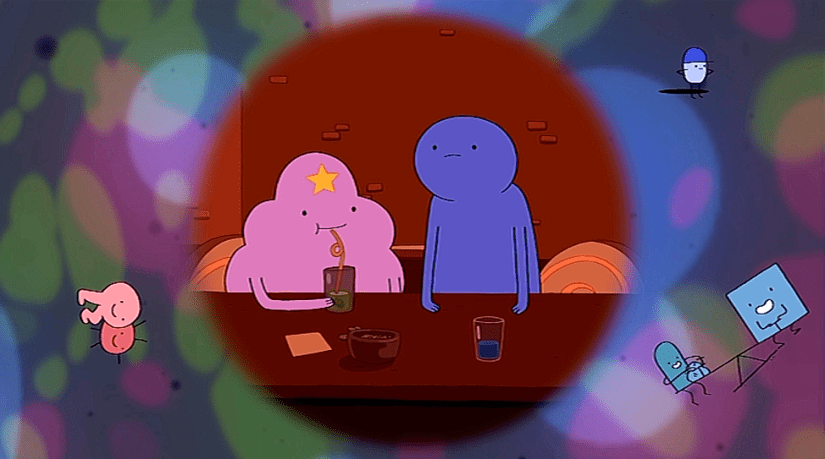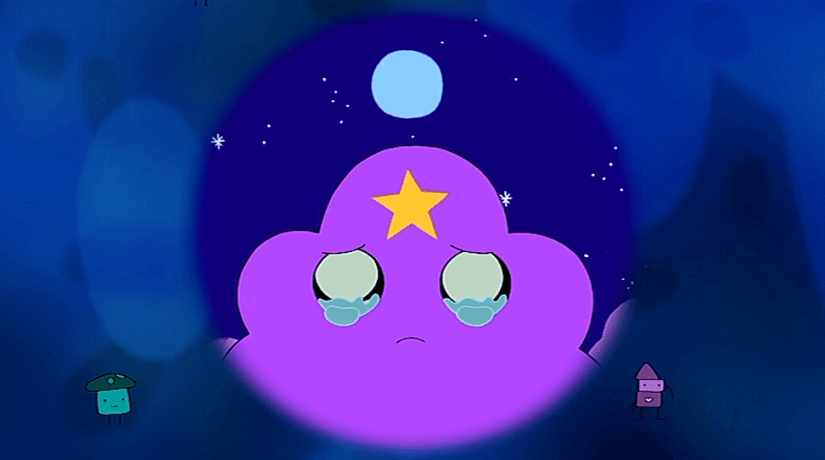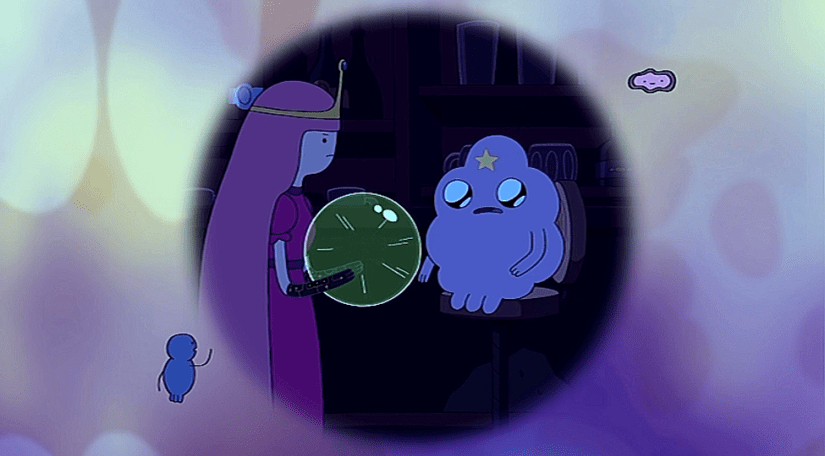
Adventure Time, Animation, Lifestyles

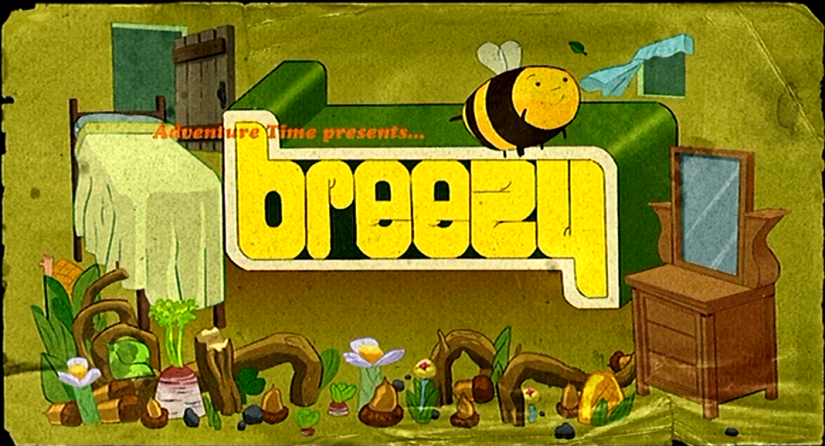
“Breezy” Review

B 1.png

Original Airdate: June 4, 2014

Written & Storyboarded by: Jesse Moynihan & Derek Ballard

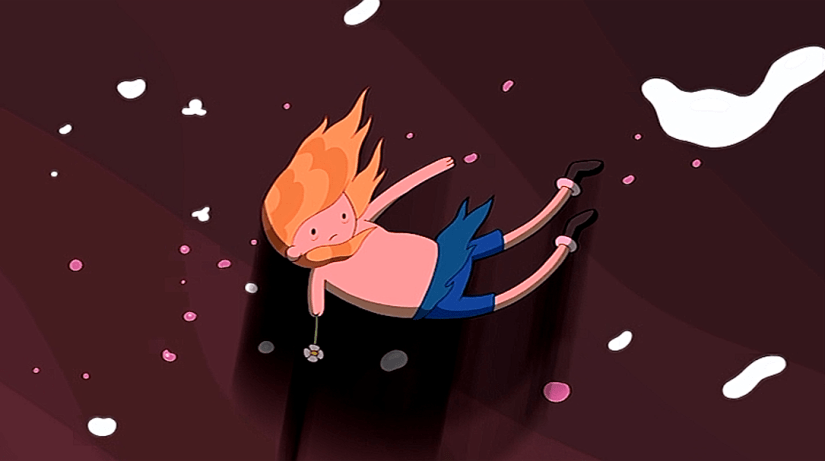
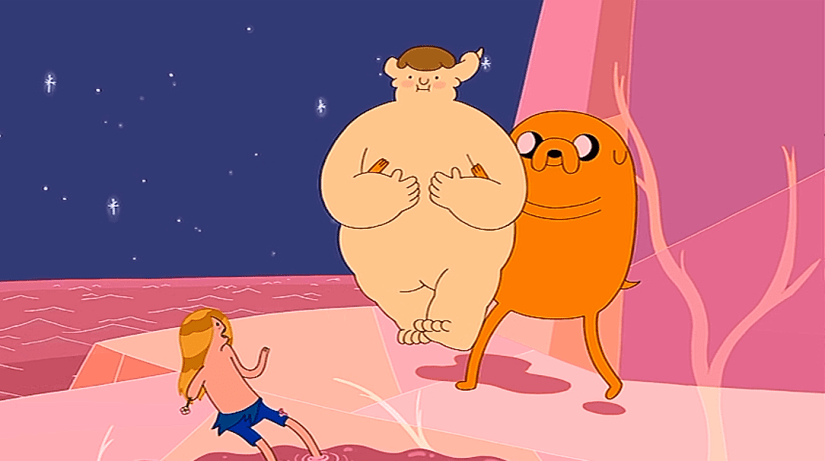
Breezy is the episode that completely broke Adventure Time’s audience, and the show’s fandom was never the same again. Many fans have viewed this episode as a turning point for its failure to break the status quo, its somewhat pretentious nature, and its implications of horrible circumstances happening on Finn’s behalf. It only makes sense that an episode stirring up this much controversy would be written and storyboarded by Jesse Moynihan himself (with assistance from Derek Ballard, who would later assist Jesse with Nemesis). On his own Twitter, Moynihan described Breezy as “a deeply personal episode, based on things that have happened to me in my life. I hope people find transcendence and beauty in it.” Given that he practically had a visible mental breakdown on his account following the criticism directed at this episode, it can be concluded that Moynihan dug deep and threw all of his emotional scars into this one. And, after years of rewatching this episode countless times, I can’t say I don’t understand why people don’t like Breezy. It is uncomfortable and at times, creepy. And the years of build up that surrounded Finn losing his arm, only for it to regenerate a couple episodes after he lost it, is admittedly a major bummer. Yet, this is a very special episode to me, and one of my all-time favorites at that. When it originally aired, I had been at a very fragile state of mind after suffering from depression for almost an entire year. I was at a point in my life where I didn’t really know where my life was headed or what was in store for me ahead. Then Breezy came along, and I resonated with it entirely. By its end, this episode left me with a beautiful and empowering message that effectively propelled my life forward. I don’t want to say something as ridiculous as “an eleven minute episode of a cartoon cured my depression,” because mental illnesses are much more complicated than that, yet Breezy at the very least showed me something so personal and so beautiful, and unlike anything that I had ever seen on television, that it really helped shaped my view on life as a whole and helped lead me to a much brighter path. Adventure Time in general was an absolute savior during this period of time in my life, and I attribute Breezy as being the breaking point of that period. Yet, I’m not gonna lie, putting this episode into context and talking about it is gonna get pretty fucking weird. Strap yourselves in for this, I ain’t holding back.
B 2

Where The Tower dealt mostly with Finn’s anger and aggression, Breezy focuses almost entirely on Finn’s sadness and lack of feeling. And while the previously couple episodes dealt with the trauma that followed Finn getting his arm torn off by his father, this one throws in the added bonus that he’s still not completely over his break-up with Flame Princess. Finn has lost a lot throughout the past few months, and it seems like he has finally come to a point where he can no longer cope with it. This is Finn’s absolute breaking point, and instead of being defined by a complete mental breakdown, it’s treated much, much sadder. Finn is simply numb to everything occurring around him. He no longer has the motivation and willpower to go about his day normally because he’s lost so many things that brought him joy, and is left only with sad truths about his present self. It seemed as though he was likely to reach this point from his break-up alone, though the dad and arm aspects only added to his pit of despair. A constant reminder of Finn’s sadness and deteriorating lifestyle is his wilting flower, yet Finn doesn’t even have the mental strength to keep it alive any longer. Finn has cared about so many things and people that have left him, so why should he care about this flower any longer? That’s his mindset, at least, and it doesn’t help that Dr. Princess offers nothing but nonsense in in return.

Instead of giving Finn legitimately helpful advice to cope with his unending sadness, she simply orders him to have fun, which shows how dangerous a message like that is. So often, people who suffer with depression will be told to “look on the bright side” or to “not be so serious,” yet these instructions only result in an increase of depressive feelings, as the sufferer is left only with false expectations and a feeling as if they can indeed control their feelings, and just simply are not trying hard enough.

B 3.png

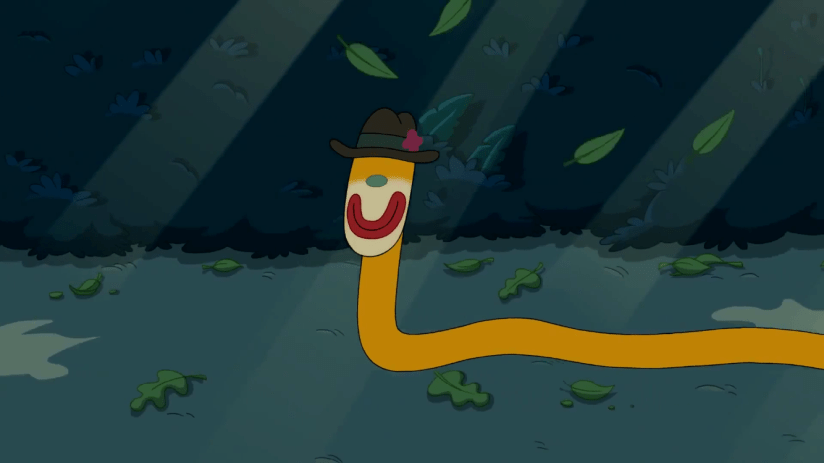
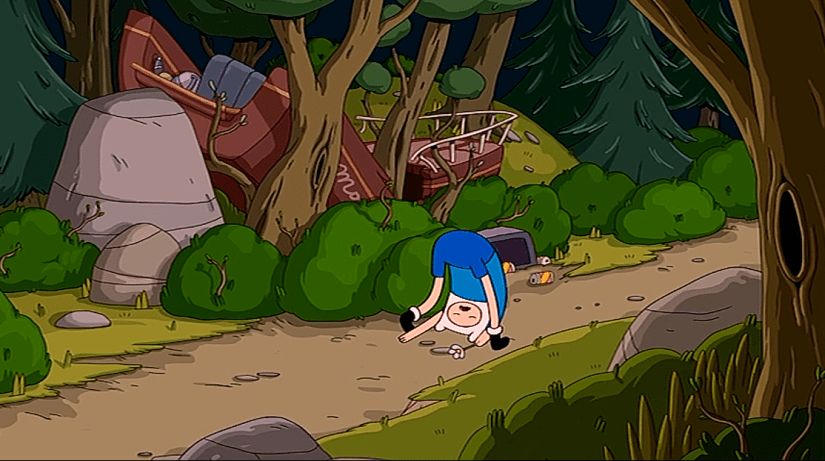
This transitions into a sad, yet simultaneously humorous music sequence where Finn sluggishly drags his body across a forest. “Lost in the Darkness” is one of my favorite songs in the series; it’s a melody quite beautifully carried across by Jeremy Shada’s vocalization, and that of Ashly Burch, who voices Breezy. Breezy is one of my favorite one-off characters; being an adorable creep, Breezy is given life through Burch’s terrific voice acting. Ashly Burch herself joined the story writing team of Adventure Time during the show’s seventh season, and this was a terrific introduction to her presence in the series. Anywho, Breezy’s attraction to Finn’s flower comes across as often obsessive and somewhat disturbed, though I think it can easily be connected to Finn’s previous infatuation for Princess Bubblegum, which also had its darker elements involved. Breezy’s hypersexual behavior comes from her ultimate desires as, well, a bee, though with any desires that a being may possess, there’s often attachment that comes along with it, and Breezy experiences first hand what that means.

As a result of his former break-up, Finn does not want to deal with the emotional weight of a relationship in the slightest, and simply wants to makeout with princesses (a kidified version of having sex with multiple women) and wants nothing to do with them afterward. As Finn acknowledges that he didn’t feel much from making out with Crab Princess, he then concludes that making out with many different princesses must be the solution to his lack of emotion. This is where Breezy assists in Finn’s pursuits: as a wingman (or woman) who helps to set up these makeouts. The connection between Finn and Breezy is certainly dysfunctional. Breezy does not know Finn’s current state of mind, nor does she understand his emotional fragility, so she simply helps him as best as she can to try and get closer to the thing she desires most, to deflower him of sorts. And though her motivations are undeniably manipulative, she is helping Finn in his endeavors, in a misconception that if she helps Finn, he in return will meet her needs. Breezy feels entitled to Finn, or at least his flower, and puts herself in a self-destructive position because of it. Where Breezy’s affection for Finn generally grows throughout the episode’s run, Finn remains entirely centered on fixing his own issues at hand. As he should, as he really isn’t obligated to respond to Breezy’s feelings that he probably isn’t even fully aware of. Finn continuously attempts to fulfill his own needs by kissing other princesses, including Lizard Princess, Muscle Princess, and eventually Frozen Yogurt Princess.

B 4.png

Though, Finn’s efforts are a failure. He masks his feelings of overarching sadness by using random one night stands (I’m just gonna go all out with the sexual metaphors here; we all know what Jesse and Derek’s intentions were) as a means of getting over his old love interests, but this backfires when FYP comes into the mix, and Jake notes that her appearance is reminiscent of Flame Princess and Princess Bubblegum. Though Finn’s hang-up on FP is obviously, I think it’s really interesting that they still went the extra mile to display that Finn isn’t over his original crush either. Infatuation for someone rarely ever goes away completely, especially someone you’re in regular contact with everyday. Finn’s love for Flame Princess was enough to alleviate his feelings for Princess Bubblegum during his relationship, but once that relationship ended, his former feelings began resurfacing. It’s likely that Jake still doesn’t know the full extent to Finn’s pain. Finn is able to talk about his issues to Jake, but likely knows that he won’t fully understand his depression, or even is afraid to tell Jake that he’s experiencing such feelings. Thus, Finn blows up at Jake for bringing up his own insecurities, a rarity in terms of Finn’s behavior. It’s nice that the show was able to squeeze some “teen angst” in down the line, and even nicer that it’s only a smaller moment in the grand scheme of things.

Still in denial about his feelings, Finn looks for validation and advice from Breezy. As the two bond, Finn contemplates letting his flower die after his prior failures. Finn declares that he’s only trying to have fun, probably implying that he sees relationships only as more opportunities for drama and heartache, and that casual, meaningless sexual relationships are the only means to a prosperous life. Breezy combats this by mentioning her status as a virgin queen bee (I still can’t believe Cartoon Network allowed this without some form of alternative) and that once she drinks of her royal jelly to become a queen bee, she will essentially “lose her virginity” and her life as a free spirit will finally be over. Finn views this as a “bummer,” and that Breezy should stay as she is so she can be with as many different people she wants instead of settling for the responsibility of adulthood and maturity. Take the royal jelly metaphor for what you want, but I’m pretty positive that drinking it just translates to finding a mate in bee logic (which is why this behavior is frowned upon later on). Breezy’s one fatal flaw is that, in her casual behavior in simply trying to acquire her desires through Finn’s flower, she in turn begins to have feelings for Finn. The strength of these feelings is questionable; I’m not entirely sure that Breezy actually loves Finn, though she’s certainly convinced herself of it. Often times sexual feelings can be confused with emotional connections, and it could be concluded that, during Breezy’s time with Finn, this confliction became stronger and less decipherable.

B 6

The budding friendship between Breezy and Finn comes to a halt when a gang of hillbilly bumblebees discover the two and describe their relationship as “disgusting.” Once again, I believe that Finn is mistaken to be Breezy’s mate, which is a nice bigoted viewpoint to throw into this episode that’s already full of misconstrued views on relationships. During Finn’s pummeling, Breezy drinks a bottle of royal jelly, committing to the idea that Finn (or at least, his flower) is the one that she wants to mate with for the rest of her lifespan. Breezy was lost in her desires and came to a conclusion without even ever speaking to the other party about it. Breezy simply bases her decisions off of her emotions and feelings, which is another red flag within the budding of sexuality that can often be lost in translation. During a terrific Sailor Moon-esque transformation, Breezy officially becomes a queen bee, and offers a life of commitment and love to Finn. Finn, however, is understandably taken back by the offer. Finn was not looking for love, he was looking for gratification of his own needs, which he believed to be Breezy’s thought process as well. While Breezy thought she was looking for that same gratification, she found infatuation in the process, and ultimately squandered her own potential in doing so. As she sadly remarks, “but I royal jellied for you…” it’s easy to conclude that Breezy essentially gave up her virginity for Finn, and was expecting more in return, where Finn saw this as a casual relationship in contrast. This moment cleverly avoids making Finn look like an absolute asshole, because he technically didn’t do anything to Breezy to blow her off. Breezy simply gave herself up to Finn, even without his input or approval. Regardless, Breezy leaves heartbroken, knowing that she gave up everything for someone who doesn’t even feel any love for her. As she flies off, Finn quietly remarks, “I’m lost in the darkness, Breezy,” mirroring his tune earlier, and showing the extent to which Finn’s sadness is affecting him. Finn wants to feel love and affection as he believes that Breezy felt for him, but is simply unable to do so because of everything he’s been through. He doesn’t want to go around casually having sexual experiences, but feels as though he has no other choice as a result of his circumstances. Breezy leaving was only another blow to Finn’s confidence and enthusiasm: yet another person left him, and he once again feels as though it was his undeniable fault. Finn feels as though he has very little left at this point.

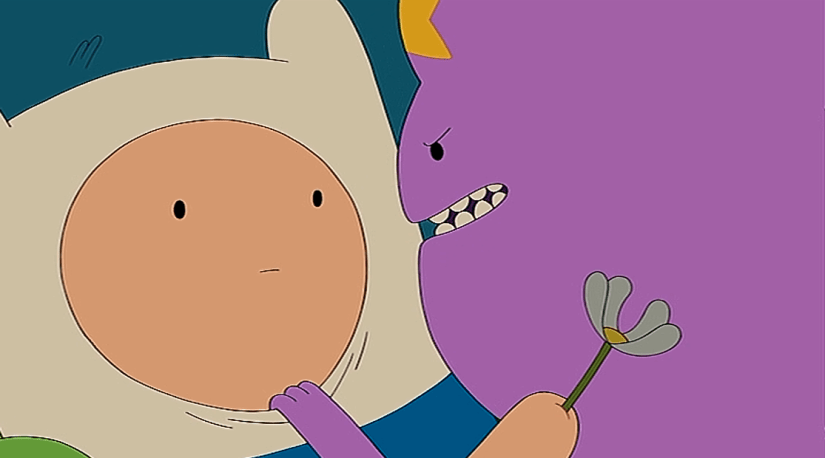
And, in his ultimate lowest point of existence, Finn travels into the woods to spend the night with Lumpy Space Princess. Given how heavily this topic of conversation has been elaborated on, I’m going to try and be as respectful and diligent in talking about it, since I disagree almost entirely with what was implied. After a brief makeout session, Finn is ready to back out, yet LSP pulls him in, claiming that she didn’t involve herself in such an activity to simply kiss and leave, and leans back in before a quick fade-to-black. Many, many people have called this moment out as being an implication that Lumpy Space Princess raped Finn, and while I can totally see that and sympathize with anyone who was negatively affected or triggered by the scene itself, I really don’t think that’s what they wanted people to get out of this moment. To me, it was, again, supposed to show Finn at his absolute lowest. The scene that follows shows that Finn’s flower wilts a bit more (another allegory that people have compared to Finn being “deflowered”, which I can somewhat buy, though kissing is already an allegory for sex as it is, so that theory doesn’t really hold up for myself) as he immediately places the thought in his vault. I don’t think that Finn felt as though he was violated or attacked by the scenario. Granted, he isn’t in the greatest state of mind as it is, but I think if the pressure was actually there, he would deny such favors from LSP. But, given his situation, he’s willing to go through with it in an attempt to make himself feel better. Only, it fails. Did LSP pressure him into doing something he didn’t want to do? Possibly, it’s up for debate. I totally get the mindset behind this, and understand why people are upset, but I really just don’t think such a dark implication is something Jesse and the staff wanted to get across. It was just as a means of showing Finn’s debilitating mental health, not to antagonize LSP more than she already has been throughout the past six seasons.
B 7.png

The climax of this episode is really where we find the most audience criticisms. Lumpy Space Princess’s naughty deed is the first one, though the next scene is certainly the one that takes the controversial cake. In a sequence I’d describe as absolutely stunning, Breezy shows up in the forest and she declares her loves to Finn and his flower through song, as Finn begins to imagine her as Princess Bubblegum in his sleepy state. Breezy’s connection to Finn has reminded himself of his past love for Princess Bubblegum. Finn recalls what it feels like to be absolutely head over heels for someone and to literally feel high in a lover’s presence. Through Finn understanding Breezy’s feelings for him, he identifies that his feelings for Bubblegum, and presumably Flame Princess in a sense, saw him at his absolute happiest. This is where dream Bubblegum’s line comes in, as she holds the never-before-seen Finn sword in her hands: “My hero arise, let love be your guide.” Finn now recalls what it is to love, and realizes that casual hooking up does not involve any of those feelings. Finn has been cheating himself by cutting off his strongest emotion: his ability to love and to care for others. Finn thought that shutting off his feelings of love would only lead to more beneficial results in the long run, though he now realizes that he’s only forbidding himself to be, well, himself. And Finn acknowledges that loving and caring for others, as well as himself, helps him gain a part of himself that he lost after being betrayed by his dad in the Citadel. That part of himself that Finn gains back is represented by his arm. Cue the fandom of Adventure Time going into flames.

While I never found myself absolutely “mad” at this scene, I cannot lie, I understand completely why people can see this as a turning point for the series, but I look at it in a way that most people probably do not. I see Finn gaining his arm back in this episode as a flaw with the series as a whole, and not as a flaw of the episode. Because, the way it is presented in the episode works entirely for the metaphorical and allegorical purposes it set out to achieve. The entire arm arc itself was supposed to represent Finn’s feelings and emotions, not just as a means to give him a cool robotic arm. It’s supposed to represent Finn’s journey as a hero and his experience as a human being, and all throughout this season, we continue to get allusions to said journey through the state of his arm and its upholding.

B 8.png

Yet, from a series perspective, it was absolutely a mistake to promise something so dire through years of foreshadowing, only to return to the status quo episodes later. Whether this was a network decision, a crew decision, or merely a decision on Jesse Moynihan’s part is still unknown to this day, even though many feel as though they know the exact answer. Regardless, it really shows how uncommitted Adventure Time can be in carrying out its most promising plot points. I’m glad the staff realized the errors of their ways and committed to actually having Finn lose the arm entirely, and whether or not this was all planned down the line, it still does not change the levels of disappointment felt by everyone and the lack of excitement when he lost it a second time. I’m still happy with everything that happened following Finn’s re-limbing process; the grass arm arc that eventually leads to the creation of an entirely new character and Finn finally getting that coveted robot arm are both terrific directions that the show took that almost justify the arm returning. However, I, like everyone else, acknowledge that the arm growing back was ultimately a disappointing moment for the show as a whole, as it felt as though the show would never be able to leave its cherished comfort zone. I’m so glad all of us were wrong, but the bad taste still remains a bit to this day.

Back to the actual episode, the arm sequence itself is beautiful. With a large, lengthy tree growing out of Finn’s arm that bursts into a gooey, honey-ish substance. Yeah, yeah, you can make all the honey-jaculation jokes you want, but I still think this is a gorgeously executed scene in its visuals, music, and lush night-time colors. As we actually see the arm, there is a small thorn sticking out of it, reminding Finn that, while he gained a part of himself back, he still has a scar to remind him of all that he’s been through. Regardless, Finn happily celebrates this moment, and stands before Breezy in awe that through all of her help, whether it was intentional or not, she showed him the light. These last few moments are remarkable, as Finn utters “Breezy…” and watches his former flower float onto Breezy’s head. Breezy kisses the flower, and it’s a lasting humorous moment that further shows Breezy’s misconceptions. Once Breezy receives Finn’s flower, she’s able to realize that it’s all she’s ever wanted. She certainly cares about Finn and likes him, but once she is able to separate the flower from Finn (separating sex from the person) she’s able to have a more rounded perspective and realize that she didn’t lose her one, true mate. Now she’s able to take on her responsibilities, gratified with her desires that are met. And she can be thankful for the lasting impressions that she left Finn with, as he once again can return to living life a little bit happier.

B 9.png

Woof. There’s a ton to take in with this one, you guys. And I totally get why people are left so angered, or even just confused by the episode’s end. But really, this is one of Adventure Time’s most unique and personal endeavors. I love how unapologetic it is with showing some of the harsher and darker sides of sexuality, and some of the darker sides of humanity as a whole. Breezy and Finn are two flawed beings trying to get their needs met in one way or another, and fall into the common circumstances that so many others experience when trying to meet these same needs. It also shows the dangers of choosing certain paths in life as means of finding happiness, and how trying to protect one’s self from getting hurt is essentially a paradox. I know this one is certainly one that feels more aimed at adults, but I think there’s a good amount of decent lessons that the kiddies can follow along with this one too. I know they probably won’t follow each allegory completely through till the end, but they’ll at least acknowledge that Finn was trying to get with multiple girls to fix his sadness, which ultimately did not work. And of course, through its dark nature, this episode manages to give off a convincing beautiful message about the importance of love and affection. Again, it’s not enough to just force one’s self to love in order to effectively “cure” depression, but I think it’s pretty clear that the implication isn’t that love cures sadness, but that love is the way to finding one’s self. Through loving yourself and loving others, you’ll be able to make the most rational and beneficial decisions, and be able to find yourself in a much happier and rewarding place in the end, rather than trying to make it on your own and resist falling into a genuinely helpful emotion. Breezy may not have the greatest reception overall, but it’s one that I always find quite enlightening on a personal note, and I think that’s just the way that most AT episodes go. Of course, there’s the episodes created that everyone is capable of enjoying equally, but the more personal episodes will chime with some and won’t for others. And that’s the real beauty of this show: having it see you through in some of life’s toughest dilemmas. You didn’t know you wanted it, you didn’t know your were looking for it, but God damn, Adventure Time will always be there to drop the shit that you absolutely need. I love this weird, manic series.

Favorite line: “But I’ve been pounding pickle juice like I was preggos!”

Adventure Time, Animation, Lifestyles

“Sad Face” Review

IMG_1991.jpg

Original Airdate: May 12, 2014

Written & Storyboarded by: Graham Falk

Sad Face is one that most people strongly dislike, though I’m somewhat on the fence with it. On the one hand, I like how the general premise of “sacrificing your own art for the general public” is executed, and I think it’s done so in a genuinely poignant way that could even be looked at as an allegory for Adventure Time’s changing state as a whole. On the other hand, it stars Jake’s tail. And that’s pretty much the main problem with the episode.

IMG_1992.PNG

The idea of Jake’s tail, or “Blue Nose” as he’s referred to, being the star of his own episode seems like an idea that might be just bizarre enough to work… but it really doesn’t. Blue Nose is a bit too enigmatic for us to even understand what his mindset is throughout the episode’s duration, or even if he has a mindset at all. All we really know about him is that… I guess he feels as though his act is underappreciated and so he conforms to the audience’s standards and is unhappy in doing so. The circus leader favors Goralina, the giant squirrel (or normal-sized squirrel to anyone that isn’t a bug), as a performer, which angers Blue Nose to the point where he breaks Goralina out of her chains so the two can run off together and… start their own circus? Even though Blue Nose wanted Goralina dropped from the circus, and so starting his own circus would only continue said issue? Unless Blue Nose wants to release Goralina so she can experience life outside of her treatment as a circus act? I dunno, it’s too confusing and strange, and I don’t see how anyone could really grasp what this character’s actual motivation is. I don’t think it’s really supposed to be clear cut, as it is Jake’s tail, but the episode does as much as it can to view everything from Blue Nose’s perspective, and I think it would be objectively more interesting if Blue Nose was being viewed from the perspective of other characters as this really sophisticated performer. Not that these other characters are anything special either. The only other supporting player in this one is the Ringmaster, and he’s so… bleh. Not funny, not interesting, doesn’t really have any defining character traits… he’s every Ringmaster you’ve ever seen in any movie or TV show, and Sad Face doesn’t do much to expand on his character from that one-dimensional stance.

Aside from a character perspective, this one isn’t really that funny either. I know that’s weird to say, because humor isn’t the first thing I look to experience within an episode of AT, but this is a premise that’s so silly in its concept that’d you’d think that Graham Falk, who solo-boarded this episode, would try and incorporate some decent jokes down the line. Falk’s episodes are usually never filled with laugh-out-loud jokes, but his past two entries, Root Beer Guy and Shh!, had enough laughs to properly engage me throughout. Sad Face isn’t trying to be that funny, but it really only makes the experience duller. It’s a pretty straightforward carnie story, and it isn’t subversive enough (aside from the added surrealism) to actually have me invested in its plot. And also, there’s no real stakes in this one. Adventure Time manages to get through some episodes without a true conflict (Jake the Brick is a good example we’ll visit down the line) though, as I mentioned, there really isn’t much that’s keeping me invested as is, so the lack of stakes only adds to how dull the experience actually is.

IMG_1993.PNG

Yet, I don’t think this one is absolutely terrible. It’s not entirely entertaining, though I wouldn’t say it’s quite as boring as an episode like Box Prince. There’s a couple things I like about it; first off, NEPTR and BMO bonding more is adorable. I’m glad this is a friendship that is more commonplace within the rest of the series, as it makes for some terrific interactions between Adventure Time’s cutest main character and cutest side character. Aside from that element, the atmosphere can be quite nice in this one. I love the little bee marionette dance that Blue Nose performs during his first act, and it’s actually a quite poignant display. Granted, it doesn’t make much sense, but the soft music really helps to add a melancholic tone to the entire sequence. Graham Falk is often one of the less dialogue-heavy writers, so the music and visuals typically do the storytelling, and it sporadically is carried out well in this one. Also, as mentioned before, the whole sacrificing aesthetics bit is pretty cool when you look at how Adventure Time is viewed following this season. Many people wanted the show to return to its zany and adventurous roots after an entire season of what many called “pretentious garbage.” Blue Nose’s first act can certainly be looked at as how the fans responded to AT’s more experimental outings, while his second act can be interpreted as the fandom enjoying more of Adventure Time’s lighter and sillier material, much to the artist’s dismay. I don’t think this was the intention at all, as I don’t think that the writers actively predicted that season six would be viewed this way, but it’s still an interesting concept in hindsight.

Overall, this one doesn’t do much for me. I don’t think there’s anything actively terrible about it, but there’s nothing really actively “good” about it either, besides those few moments I mentioned previously. Sad Face is just kind of there… there’s nothing that makes it stand out aside from its wildly unique premise, but even then, I don’t think it’s even executed in a bizarre enough way to work. Sad Face has one strong benefit: it’s one I can chat about lightly before the epitome of polarity that follows after it. This is it everyone… next episode: Breezy.

IMG_1994.PNG

Favorite line: “Too much artsy. Not enough fartsy.”

Adventure Time, Animation, Lifestyles

“The Tower” Review

TT 1.png

Original Airdate: May 5, 2014

Written & Storyboarded by: Tom Herpich & Steve Wolfhard

James II was a bit of a farce in showing just how okay Finn is doing after his amputation and the fallout with his father. Yet, The Tower shows us in great detail that Finn isn’t really in a good state of mind since he left the Citadel. He still has unaddressed turmoil to deal with, and he attempts to do so in some arguably unconventional ways.

TT 2.png

After his previous heartbreak of losing his girlfriend, it makes sense that Finn still would not understand that things are not supposed to automatically return to normal after traumatic events. Finn tried everything he could to deflect the sadness that was brought on by his break up, as Finn still is under the impression that sadness isn’t relevant to him. As he mentioned all the way back in Dad’s Dungeon, Finn believes crying is really only healthy when people die (though he is seen crying in Sugar-boarded episodes, which is unarguably a product of her emotive writing style) and that he should be keeping his chin up no matter what life throws at him. Though it isn’t sadness he’s struggling with in this one, it’s primarily anger and frustration, which also fall under the five stages of grief. Finn isn’t seeking emotional validation this time around; the boy is out for revenge. Finn looks to the “eye for an eye” philosophy as a means of reaching a solution to his issues, though through his experience, Finn learns that this isn’t exactly the proper way to deal with his problems. In fact, I think the episode is very clever in terms of never siding completely with one of the three main characters featured; Finn, Jake, and Princess Bubblegum all have their separate idealistic views when it comes to figuring out how to help the situation, and while some lean in a more helpful way than others, no plan seems completely competent by the episode’s end. The issue is much too complex to receive a straightforward answer, and The Tower is challenging in all the right ways.

After blowing up the prosthetic arm made from candy that PB gave to him (which was pretty poorly constructed… definitely was just a temporary gift from Bubblegum until she was able to build a more superior one), Finn is lectured by Jake, who believes that the donation of arms are doing more harm than good for Finn’s psychological health. Once again, Jake and PB are at odds with their belief mechanisms. Jake thinks more emotionally, while PB thinks more logically. Jake is likely under the impression that Bubblegum gave Finn the arm so he could simply replace it and move on with his life, yet Jake knows Finn, and he knows that he needs time to deal with his issues and not just immediately move on from them. Jake tells Finn that he needs to move at his own pace, and not to let anyone make him feel like he has to feel better immediately, which is pretty solid advice. Finn is possibly the only person in existence who lost his arm and his father all in one day, so only he knows how he’s feeling and how he should take this time to grieve. Where Jake’s advice is misleading is the introduction of the “melon heart” concept. Like every character who tries to help Finn in this episode, Jake means well, though his implication that Finn should “trust what his heart tells him” is a somewhat dangerous misconception. People are more susceptible to think and make decisions based off of their emotions rather than logic, and often times those emotional decisions can be self-destructive and over-impulsive. Jake doesn’t really have to worry about this because he’s emotionally sound, meaning that most of his thoughts can be based off of a combination of his feelings and his life experience, while Finn is less mature emotionally and isn’t able to create rational decisions based on his own feelings. This is why Finn’s immediate thought process is that he should seek revenge, though Jake warns that the information being sent to Finn is incorrect, and that he should listen harder. This of course does not help in Finn’s thought process, and only makes him dwell on those thoughts of revenge even harder than before.

TT 3.png

As Finn ponders outside the Treehouse on what his feelings are telling him and how he should actually go about these feelings, he unexpectedly gains a telekinetic arm brought about by his emotional ambiguity. And as far as ambiguity goes, I appreciate the arm’s mysterious nature. This is the only episode is appears in, and likely is a product of Finn trying to tell himself something that he isn’t even aware of yet. Though Finn follows the arm’s alleged instructions by building on a tower leading him into space.

As Jake returns from the spaghetti store, he comes across PB and her squadron of Banana Guards, and the tower that Finn has begun to build. This provides for some really great disagreements into the PB and Jake dynamic, where the two argue what is best for Finn in his time of need. It really feels like two parents arguing, and as is in the present, Jake and PB are the closest thing to parental figures that Finn has. Jake continues to argue that Finn needs to work things out on his own, and that Bubblegum should T.M.L.O. (that means ‘lay off’) though PB is more under the impression that Finn is a danger to himself and the people around him in his current situation. PB’s belief system is definitely flawed for reasons we’ll explore later, though I think it’s clear that she’s in the right at the moment. Jake is thinking compassionately of his brother and wants him to figure out his own path, but when it involves extremes like traveling into space and building a giant, unending tower surrounding Ooo, it’s pretty obviously irrational and dangerous. This goes back to where Jake and PB’s belief systems contrast with each other: Jake is thinking based on emotions, while PB is thinking based on logic.

TT 4.png

The detail put into Finn’s tower is great, showing just how much of a variety of different materials is actually being put into said tower. There’s tons of stuff from the Candy Kingdom, and also an inclusion of flaming debris that obviously comes from the Fire Kingdom. Also the horrified deer that wants nothing more than to get off of the tower. The song that accompanies the building sequence is the ever-catchy “Baby’s Building a Tower Into Space.” It’s a pretty simple tune, but one that’s funny enough and almost nursery rhyme inspired that it easily embed itself into my head. It’s a song that constantly repeats itself throughout the episode, and also finds its way into the actual score, and it’s a nice running motif that helps show Finn’s desires of revenge in an almost cutesy sort of way.

This one is also pretty beautiful in its scenery, as well as its atmosphere. There’s that extended entrance into dawn sequence that quietly showcases the citizens and surroundings of Ooo, right before the sun rises and the beautiful morning sky backgrounds appear before the long-pan of the still developing tower. Love the extra detail added to the tower as well, where the contents have gone from simple bricks and debris to actual ice castles and even penguins.

TT 8.png

Another character aside from the main cast who offers her own inspiration and life experience is a cloud named Caroll: a very enjoyable shut-in who rejects her past history as a puddle of water. The advice that Caroll offers to Finn is possibly the most irrational, and I think Finn acknowledges that in a way. Caroll, at the very least, acknowledges that revenge is not healthy and Finn should not be so vengeful in his actions, yet she is still misguided by her own confusing principles. Caroll has never comes to terms with her former self, and is ironically unable to move on from her traumas because she is focused on never reliving them again. Thus, Caroll has caused her development to become stagnant, simply because she is too fixated on hating everything that came before her cloudy state. She’s become cold and cowardly because of her history, and is more inclined to run from her troubles rather than deal with them head on, to which she still suffers from some nasty anxiety-driven issues. This is shown in her debut scene, where she attacks Finn and angrily yells in him for trying to swim in her, when Finn was not even considering such an opportunity. Caroll is merely haunted by her past self so much that she pushes away everyone and everything because of it. Though I think Finn is smart enough to realize that this is not a healthy alternative either.

When Finn finally blacks out upon reaching the brink of space and is rescued by “Martin’s” ship, Finn cannot help acting like a kid on Christmas at the thought of extracting revenge against the man who hurt him so much. As Finn powerfully punches his father, he begins tugging at his arm until Martin pitifully utters “… my favorite arm,” mirroring Finn’s line earlier in the episode. It’s an obvious, but effective moment that has Finn realizing that he doesn’t want to inflict the same pain that that his dad inflicted on him. And in an ultimate twist: it turns out to be PB the entire time!

TT 5.png

While Bubblegum left Finn with the message that revenge isn’t the proper way to take care of his issues, I’m not completely sure she was in the right here either. She subdues Finn’s anger and makes him feel less vengeful, but she uses trickery and deceit to do so. Her exchange sums it up her misdoings real nicely.

“You were hallucinating like crazy so it was really easy to trick you. I figured you’d thank me later after learning your lesson.”

Once again, PB uses logic and deductive reasoning, rather than thinking about Finn’s emotional fragility in the situation. She automatically assumes her plan is the exact thing that will make Finn feel better, and while it arguably works to some degree, I think Finn leaves feeling more confused than anything. He learned a valuable lesson, but one of his closest friends tricked him to do so, and he never got any closure with the situation at all. Still, props to PB for taking a black eye and trying regardless, it just didn’t seem like using deceit was the “fix-all” to Finn’s issues. On a more critical aspect, how does Princess Bubblegum know what Finn’s dad looks like? I mean, I guess you could imply that Finn or Jake described what Martin looked like to PB at some point, and since it was dark in the room, Finn couldn’t really decipher between a fake or real Martin. Still, I think it’s a bit contrived with how she’s able to emulate Martin’s voice, but I’m willing to glance over it for now.

TT 6.png

Finn announces that he’s feeling neutral to Jake. He’s not exactly feeling better, but he at least let go of his anger and decided to put empathy first. He may still be struggling, but he no longer feels like he needs to put anyone else through shitty circumstances because of his own. That is, except for PB, who experiences a whopping arm injury after Finn knocks the tower onto the Candy Kingdom. Yikes.

Otherwise, this is a very well-executed episode. I like how different each point of view is presented, and how each perspective has its own list of pros and cons. In the end, the episode never feels completely one-sided, and we’re left with the idea that the means of a solution for this dilemma is just as confusing to Finn as it is to all of us. Finn is at least left accepting that this is going to be a tough period in his life, and that there really isn’t anything that is going to give him instant gratification. All he can hope to do is better himself a little bit at a time, and try to understand the situation a bit more in depth. These concepts, along with a good bit of humor, and some nice artistic attributes from Steve Wolfhard and Tom Herpich, really help to make this episode soar.

As an added bonus, here’s some arm-concepts that Steve Wolfhard whipped up for this episode!

TT 7.png
Finn’s two-armed shadow: continuity error or intentional? You decide.

Favorite line: “I just thought about my anxieties and it’s like my mind hand touched a hot memory stove.”

Adventure Time, Animation, Lifestyles

“James II” Review

JII 1.png

Original Airdate: April 28, 2014

Written & Storyboarded by: Somvilay Xayaphone & Seo Kim

For as dark and gritty as the episode James was, James II interestingly has little in common with its predecessor in terms of tone. James II is more focused on being as silly as possible, and while this humor bases itself primarily on juvenility, it does prove as a moderately successful entry, more so than the original James.

JII 2.png

On a random tangent, I like how the title can be interpreted two different ways: this is the sequel episode to James, and it focuses on the second incarnation of James. It’s also always interesting to me just how quickly this sequel episode came out. I mean, this is Adventure Time we’re talking about, the show that took nearly four years to include Susan Strong in another episode, yet James and James II only have a twelve episode gap between each other. Granted, it’s still a gap across two seasons, and I suppose they wanted to get this one out of the way early, considering that it didn’t have many lingering possibilities for drama or substance in the future.

Getting into the actual content of the episode, I do actually like how the premise is carried out. I talked about my feelings for James in his inception episode, and while I don’t really like him, I don’t necessarily despise him either. He’s annoying, but he’s not really “OG level Cinnamon Bun” annoying. And while this episode doesn’t really do anything to make me enjoy his character anymore than I already did, it does at least include him in some funny conceptual ideas. The notion that James keeps repeatedly killing himself, and convincing other Jameses to kill themselves, for the pure fact that he wants a medal out of it, is pretty funny. I also like Finn’s retort of “dude, I’ve been to your funeral like, 25 times,” implying that there were literally individual funerals for every James that died, and that they probably went the same exact way every time. I know Jake calls out PB for being “cold-hearty” at the beginning of the episode, but that momma really is caring if she brought her baby back to life 25 times AND treated him as if he were a hero each instance. Gotta give her props for her patience with the entire situation. Also, I LOVE her explorer attire and hairstyle at the beginning of the episode. Wish that was a look she sported more often.

JII 3.png

When it comes down to the actual story of the episode, it’s pretty bare. PB is trying to capture James and uses the Banana Guard’s help to do so, despite their failure to grasp the logic of the situation. I think Banana Guard humor is pretty hit-or-miss; they certainly have their moments, as demonstrated in this episode (like the Banana Guard that gets really emotional over wanting to have the same name as his fellow brethren) though I feel like the “stupid cop” shtick is so done to death in pretty much every show in existence that I would have liked something a bit more subversive from the Banana Guards’ behavior. They certainly aren’t characters I dislike or find annoying, but aren’t really characters I particularly love either. Some of the gags can go on for a bit too long in this episode especially, and really slow down the pacing of the episode as a whole. Though, the actual Benny Hill style chasing scene between the Banana Guards and the Jameses is a bit too silly for me to resist, and at the very least got a dumb smile out of me (the Jameses coming out disguised in nothing but gloves isn’t exactly a new joke, but one I found just wacky enough to work regardless).

My favorite part about these scenes in particular are the little interludes with Finn, Jake, and Bubblegum. I really like the fact that Finn and Jake don’t take the situation seriously at all, because they know there’s nothing actually dire going on and their assistance isn’t really needed. Also, I like how they kind of help Bubblegum to relax a little bit! It was sweet to see her laughing and enjoying the ludicrous nature of the situation with her closest friends. PB can take her kingdom and its inhabitants a bit too seriously at times, so it’s nice that she has friends like Finn and Jake who can show her how absolutely ridiculous his citizens act in hindsight.

JII 4.png

The episode as a whole picks up when the zombified James and his legion of Goo Monsters invade the kingdom, which provides for a handful of fun moments. It’s nice to see the Gumball Guardians actually get in on the action this time around! It somewhat surprises me that the Goo Monsters are deemed “evil” enough to warrant a response from the security bots, though regardless, they kicked a ton of ass and it’s always nice to see their involvement in Candy Kingdom affairs. My absolute favorite moment in the entire episode comes from when Finn discovers the vulnerable candy orphans, and then proceeds to punt one (equipped with a soccer ball sound effect) inside the walls. Such an abrupt and unexpected joke, and one that gets a big, hearty laugh from me every time I see it.

The ending is a fitting conclusion for Jameses “arc”, as they all pile onto the original James and morph with his body (while one of the smushed Goo Monsters continuously grabs for PB’s dress, a funny detail I only now just noticed). The decision that PB makes to basically ban the Jameses from her kingdom is certainly a cruel one, albeit pretty humorous. I like that she basically just didn’t want to deal with his antics anymore, so gave him incentive (a medal everyday) to get the fuck out of her kingdom and never come back. Yet, I still have faith that she kept her word and sent James a medal every single day. But how would she even know where to find him? Hmmmm…

JII 5.png

So yeah, this one isn’t anything special, but it’s nothing bad either. I think a lot of people were disappointed with how the Goo Monsters cliffhanger from James was executed in this episode, but for myself, I left that episode with very little positive lasting impressions, so I didn’t even really care what came from the story. This episode at least offers some mild entertainment, and while it’s not always exceptionally funny, it at least left me with a better feeling than its predecessor did. The Goo Monsters aren’t even really powerful enough to come across as an effective threat, and unless they caused some sort of zombie outbreak within Ooo (which has already been done twice) I couldn’t really see them working in any other scenario. Regardless of whether it’s high quality humor or not, James II at least allows some light after the heavy nature of the season premiere, and it uses its goofy nature in a relatively successful execution of the story.

Favorite line: “Dude, I’ve been to your funeral like twenty-five times.”

Adventure Time, Animation, Lifestyles

“Escape from the Citadel” Review

EFTC 1.png

Original Airdate: April 21, 2014

Written & Storyboarded by: Tom Herpich & Steve Wolfhard

Of all the trials and tribulations that Finn has experienced over the years, none compare to the sadness and disappointment that came along with meeting his human father. Though Finn had his bouts of skepticism and confliction in regards to meeting his father, nothing could have prepared him for just how shitty Martin Mertens really is.

EFTC 2.png

First off, let me just say that the presentation of this episode alone is incredible. The Citadel is likely one of the coolest locations in the entire series, with its heavily pink and purple color scheme, its lovely designs (of both the guardians and the monsters are are incarcerated), and just the overall background details of how the entire setting literally begins crumbling throughout the entirety of the episode. Man, it’s all so awesome! The attention to detail with how well this episode captures the collapse of a society entirely in the background, while the main focus is centered on the drama between Finn and his father, is executed masterfully.

And let’s get right into the pathetic piece of shit himself: Martin. Martin is the definition of a careless dick character that’s written exceptionally well, mainly because of how unforgiving Tom Herpich and Steve Wolfhard were when conceiving his dialogue. Martin doesn’t have any sympathetic or charismatic attributes: he’s purely an asshole because he doesn’t put any effort into caring for his son. His one-dimensional nature is refreshing, because I was so worried that, at any point in this episode, he was going to have some sudden moment of compassion or it would have been revealed he was in some form of trance the entire time, but that would have been way too obvious and would have ruined anything they were trying to carry across through this character. The main thing to gather from his character is to show how truly human Finn really is. While Finn has some interesting cosmic developments later on in this season, he was not born as some kind of prophecy or came from a long line of super righteous heroes; Finn grew up like any other human child: being conditioned by his surroundings and the people who cared for him. Finn is kind and caring because his true parents, Joshua and Margaret, raised him to be such a person. The idea of Martin and Finn being complete polar opposites is certainly upsetting, though entirely plausible. Heroism and kindness are not genetic traits, and Finn owes none of his positive characteristics to Martin. The promo for this episode incorporated the song “Cat’s in the Cradle” in the background, and I can’t think of a more fitting way to foreshadow the father-son relationship that develop between Martin and Finn.

EFTC 3.png

The relationship that the two share is certainly uncomfortable to watch, in all the right ways. It seems like with each passing conversation, Martin’s treatment of Finn only worsens as the episode progresses. Finn is nothing but property to Martin; a means of helping him out of trouble and helping him to “escape the citadel,” though Martin wants nothing to do with him otherwise, and does not want to build an emotional connection with his son by any means. Finn begins to acknowledge this little by little, but is not able to accept it by any means necessary. Though Finn realizes he has loved ones and people to care for him, he is still conflicted because he doesn’t know why he was abandoned and left alone in his own feces as a baby in the first place. He’s at the age where he wants to know about his existence and place in the world, and this is the next step into figuring out who he really is.

Yet, Martin offers no answers, and only puts a further hold on Finn’s developmental process. Martin even begins to warp Finn’s perspective by blaming him for the reason the two of them were separated in the first place. Again, Martin has no time to humor Finn’s emotional turmoil, and wants to rush through the interrogation as fast as possible in order for him to successfully escape. But, without answers, Finn isn’t able to fulfill the closure that he craves so severely. And without that closure, Finn feels as unloved and worthless as ever. The funny part about all this is, while Martin is a character that we’re all supposed to hate and despise, he still has qualities that make him somewhat entertaining. By just how much of an absolute douchebag he is and how hard he tries to avoid his responsibilities (“I’m going to the store!”) he comes off as just ridiculous enough to kind of laugh while shaking your head at his antics.

EFTC 4.png

On the other side of things, Jake is as caring and compassionate as possible. Despite the clear anxiety and stress he experiences throughout this entire endeavor, he never leaves Finn’s side and assists him every chance he gets. Though with all love also comes tough love, and Jake has no issue calling out Finn for attempting to help Martin after several moments showcasing Martin’s neglectful attitude. Jake goes as far as to call Martin a “loser,” which is an effectively touching move that shows just how much of a disdain Jake has for this guy that he met only minutes ago. In Jake’s eyes, anyone who fails to see how special and awesome a kid like Finn is, especially when it’s his biological father, is not worth Finn’s time and that he shouldn’t even attempt to pursue a relationship with him further. And as much as we feel bad for Finn throughout this episode’s run, we also can’t help but feel so sorry for all that Jake is put through as well. The Lich is on the loose, his surroundings are falling apart, there’s absolutely no clear way to get home, and his brother is experiencing absolute pain in what was supposed to be a rewarding endeavor. The weight of the situation is surely weighing on Jake, who not only has himself and Finn to worry about, but his girlfriend and children back home. And the inevitability of whether they’ll survive through all of the destruction, combined with the drama that is currently affecting them, is enough to send the usually laid back and calm Jake into a full-fledged stress attack.

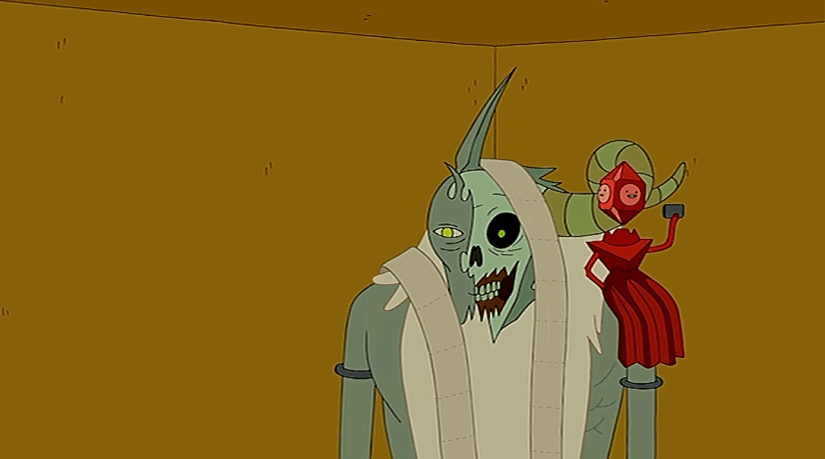
And then there’s the Lich… oh man, is he at his all-time best in this one. Seriously, his speech to Finn and Jake, as everything goes dark and Ron Perlman reads off those haunting words, is one of my all-time favorite moments in the entire series. Gonna quote this monologue to break it down a bit further:

FALL. You are alone, child. There is only darkness for you, and only death for your people. These Ancients are just the beginning. I will command a great and terrible army, and we will sail to a billion worlds. We will sail until every light has been extinguished. You are strong, child, but I am beyond strength. I am the end. And I have come for you, Finn.

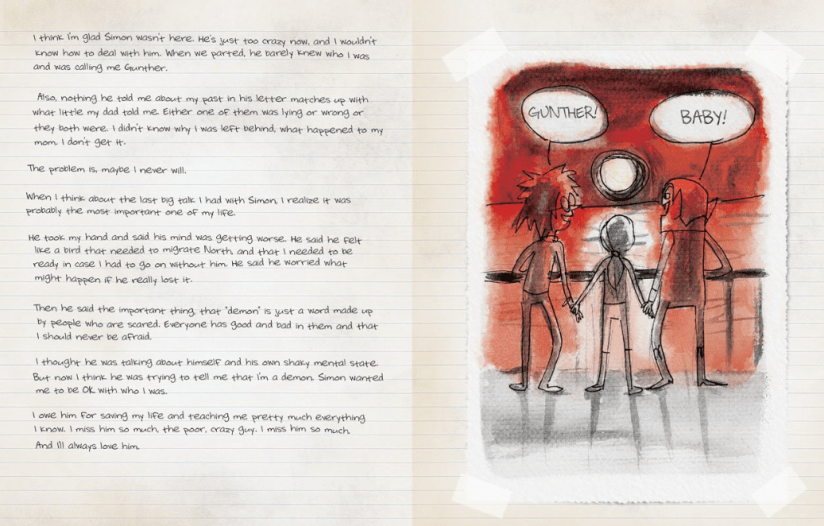
The Lich’s words are antagonistic, but also convincing. The Lich doesn’t know about Finn’s current state with his father, nor does he really even care to know. All that the Lich knows is that Finn is a lifeform, which means that he has no other fate aside from death. While the Lich has tried to destroy Finn’s life, and lives of all beings, several times, Finn has averted such a future through vigilance and his own heroic deeds. Yet, the Lich does not feel intimidated by heroism or the the greater good; he has his instinctive duties to destroy all life, because all that deserves to exist is destruction. The Lich addresses how strong Finn is; Finn managed to thwart the Lich’s plans twice during the course of the series. Yet, the Lich knows that, no matter what Finn does, he cannot be defeated. There is no end to the Lich, and as long as life exists, death exists as well. Everytime he is defeated, he will eventually be revived. Because anything that represents mass destruction also represents the Lich. Yet, through all that, Finn’s strength manages to subdue the Lich once more, in one of the more disturbing and demented moments in this episode. As the fleshy-white substance latches onto the Lich, he begins to grow flesh and blood, in a painful, convulsing experience. Jake’s reaction speaks words, as he briefly opens his eyes and watches the horror in front of him, only to soon close his eyes and avoid such terror all together.
EFTC 6

Though Finn’s duties are not done, as he still wants to reach out to his father in a demand for answers. Finn latches on to the severed stem that separates himself from Martin, in a desperate attempt to keep the connector together (tremendous symbolism, by the way) as Finn’s anger, fear, sadness, and stress take over his body in the form of his grass sword. As the engrossed grass arm tries to hold on as tight as it can, Martin effectively separates himself from Finn, and Finn separates from his right arm. Finn has not only lost his father, but a part of himself as well. The anxiety and intensity with which this past scene is executed, along with its transition into complete and utter silence, is some of the most “edge of your seat” material you’ll ever see in Adventure Time. Coupled with the fact that people had been waiting YEARS for Finn to lose his arm, thanks to heavy foreshadowing (and an upcoming episode that would simultaneously kill the dreams and aspirations of all of those who looked forward to it the most. Heh.) As the unending frustration of Finn’s dilemma increases to a point where you feel like your beating heart cannot stand anymore, the episode takes a moment to stop entirely to let everything sink in, and allow your heart to almost stop to a complete halt as we watch Finn sadly, and lifelessly float to the bottom of the crystallized fluid. In his downward floating, some of the growth goop gets onto Finn’s stubby arm, as a flower begins to grow. This shows two things: 1. That the eternal grass curse is very much still active within Finn’s body. 2. That beauty can exist in even the most tragic situations.

As Jake fishes Finn out, his behavior is incredibly nuanced and considerate. He doesn’t immediately start asking Finn if he’s okay or freak out for putting his own life in danger. Jake simply takes the time to silently check if Finn is alright, prop him up for comfort, and tells him “it’ll be okay, dude.” In just a few simple words, Jake really shows how much he does care for Finn and how much he understands Finn’s pain. Though he can’t relate to the parental neglect, Jake knows how much Finn must be suffering, and while he also understands that Finn isn’t going to be able to immediately feel better with his situation, Jake still wants Finn to know that everything is going to work out in the end. And even if that doesn’t get the water works going, Shelby, still in Jake’s ear, crawls out to lie on Finn’s lap like a puppy dog to comfort him.

EFTC 5.png

Even through all the heartache we just suffered, we get a bit of a happy ending with the Lich rebooted into the form of a baby. This is a decision I’m… kinda okay with? We get some decent episodes and concepts out of it, but I’ll discuss in further episodes how I feel about Sweet P as a character. I like the idea of birth being the factor that essentially “defeated death,” though I still am uncertain if this was a long term decision I liked for the Lich’s character. Regardless, I do enjoy the ending that reveals that Tree Trunks already wants a divorce after presumably only being with Mr. Pig for a month or so. A hilarious idea that shows how easily she feels stagnant in her relationships, and how the role of being a parent apparently (pun intended) changes everything. Somehow it even works out!

I have a few minor gripes with this episodes, one being the whole babified Lich concept, which again is more revolved around my uncollected thoughts with how this was executed over the course of many seasons, and the other being that some of Finn’s dialogue can be a bit too goofy at times in Herpich’s segments. It’s okay to keep him wacky to keep the heavier scenes lighter, but Finn screaming “UH OH” over and over when his dad basically loses his leg makes him feel dissonant to the entire situation at hand. Though, while that particular instance bothers me a lot, the other moments are brief and few. Otherwise, I think this one is pretty fantastic. It’s a really exciting episode that holds every bit of my investment everytime I watch it, and it’s equivalent to that of an emotional rollercoaster. It’s a terrific start to the season long arc of Finn’s inferiority complex regarding his relationship with his father, and one that leads to many, many interesting opportunities down the line.

EFTC 7.png

Favorite line: “The Lich is super cute now, and he smells real neat!”

Adventure Time, Animation, Lifestyles

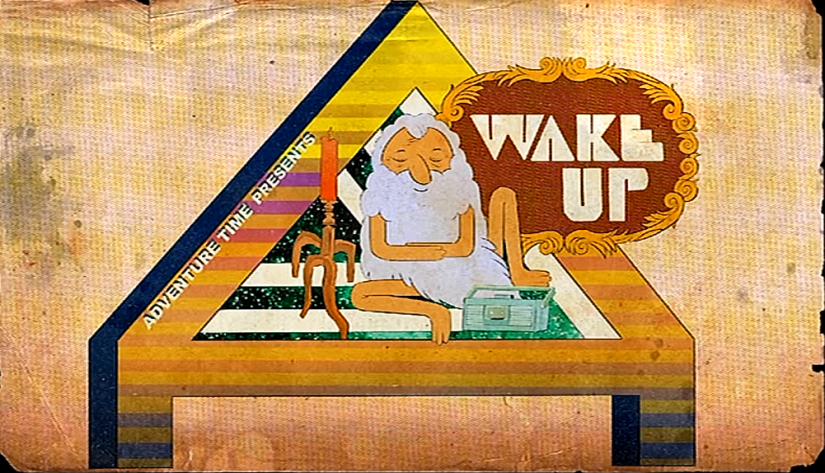
“Wake Up” Review

WU 1.png

Original Airdate: April 21, 2014

Written & Storyboarded by: Andy Ristaino & Cole Sanchez

After Finn was dramatically left with the information that his human father is still very much alive, I expected the next episode to get into visiting his dad almost immediately. And while it technically does, Wake Up primarily works as setup for the next episode, yet in the best possible way. It’s a funny, enjoyable, and energetic first parter to prepare for the drama and intensity ahead.

WU 2.png

The episode begins with yet another revelation surrounding one of our main characters… that character being Jake, and that his past absences have been attributed to his late night partying at Prismo’s place. The cosmic party is a ton of fun, and it’s a great opportunity to reintroduce us to all the deities that embody this world. Outside of their worldly duties, Glob, Cosmic Owl, Death, and Prismo are just a couple of bros trying to live life as anybody else would. It’s also nice to see the return of Prismo and Jake’s friendship. Prismo is such a sweet character, and I’m glad his lifespan as a character wasn’t limited only to Finn the Human and Jake the Dog.

Also returning for the first time since the season five premiere is the Lich, who is still as haunting and menacing as ever. I truly enjoy the way Prismo analyzes his presence within the timeroom, as he compares the Lich to a “machine without a purpose.” This concept makes the Lich even more one-dimensional, but even more frightening in that regard. The Lich really only exists to kill and destroy all life; he has no motivation and he has no deeper plan of ruling the world. He simply wants everything to die and is unable to function when he cannot do so. Quite unnerving really (aside from the fact that Glob is taking selfies on the Lich, of course. I really don’t know how I feel about the term “selfie” being used in an Adventure Time episode), as we, the audience, patiently awake for the Lich to suddenly strike over the course of this 11 minutes. We all knew it was coming, we just didn’t know when.

WU 3.png

But even more troubling is Finn’s solemn state as he reveals to Jake that his human dad is alive. The interactions that follow are very mature and heartwarming from the brothers’ perspectives. The two think out the possible cons of actually actually meeting Dad the Human, but acknowledge all the pros that come with it as well. Jake clearly identifies that it might be risky for Finn to do so, but it seems as though he also realizes that it’s important for Finn regardless. Doing so could lead to some positive closure for Finn’s abandonment issues, and help him develop out of any lingering insecurities regarding his place in the universe. Finn also responds with a facade, saying that he merely wants to meet his father to see what he would look like as an adult. This visit clearly means a lot to Finn, and though he’s terrified by the thought of meeting someone he literally has no knowledge about, it’s something that he feels as though he needs for the same reasons that Jake presumably wants him to do so.

The scenes that follow return to Prismo’s time room, where the Cosmic Owl is still shown to be as clingy as ever, and Prismo warns the boys of the Citadel’s nature. Love the montage of random monsters who do end up in the Citadel, one of which is a headless beast who sucks the heads off of other lifeforms, another zaps apart a planet in equal quadrants, and one simply stamps a form while emitting gross fluids. Finn naively remarks, “my dad must be the warden there,” showing how automatically he accepts that his father must be a hero or a guardian of some sorts. Jake later admits that the thought of Finn’s dad being a bad dude did cross his mind, though he refrains from mentioning this to Finn, likely to avoid tarnishing Finn’s optimism. Jake wants to do anything to help Finn accomplish his goals, even if it means bringing along the somewhat useless Shelby to get the boys to the Citadel, which may just be my favorite moment from this episode. I just love Shelby so damn much you guys, and I love the ludicrous idea that his apparent girlfriend has been hounding him for a pony. Is his girlfriend also a worm? If so, how would she even take care of a pony? The idea of it is so ridiculous, I love it.

WU 4.png

Though Prismo comes up with the idea of committing a cosmic crime, which sends Finn and Jake out on an epic space quest to rescue an old, sleeping man. The backgrounds throughout the outer realm of the time room are pretty simplistic in their color scheme and surroundings, though I do enjoy how everything in the background is constantly moving. It makes for a pretty swell visual treat, and once the boys actually enter the house on the duck-shaped rock (after the hilarious scene featuring Jake loudly knocking on the old man’s door) we’re treated to some sweet designs of the old man’s night terrors. They appear as a more menacing version of Prismo, though I also like their flattened, shadow-y nature and how they just generally shift across the background. It almost reminds me of something out of Samurai Jack in that regard. And the awesome way in which Finn and Jake actually defeat these beats, with the power of Jake’s supernova equipped flashlight, is terrific cap to the tense atmosphere surrounding the old man’s conscious state.

As Prismo reveals that the old man is actually the human incarnate of himself, it really is a moment that helps us grow even fonder of Prismo than before. Prismo is perhaps the most humble and courtesy character in the entire series, going as far as to sacrifice his own self for someone he doesn’t even know that well. Prismo realizes that being stuck in his time room all day probably doesn’t open up many opportunities for purpose beyond his state as a wishmaster, so it’s pretty cool that he’s actively trying to avoid being identical to the Lich. Prismo doesn’t want to only exist to be a functioning deity, but to go beyond his cosmic duties and to reach out to the people around him. So it only makes sense that he’d want to do something as noble as essentially killing himself for the (assumed) greater good.

WU 5.png

Only his plan backfires, and the Lich seizes the helm by waking Old Man Prismo up. This last minute is nothing but pure intensity, as the Lich threateningly stares down the old man, kills him with one menacing breath, and is taken to the Citadel.Aside from Jake being at his absolute most heartbroken and PISSED, Finn no longer only has to deal with the uncertainty of meeting his father, but also the power of the deadliest being in the entire universe.

Wake Up is a terrific first parter that sets up the next episode quite nicely, but also exists as its own entertaining episode. It’s a fun return to form as Finn and Jake embark on an entirely new adventure filled with laughs, awesome visuals, and an overall dire vibe. First parters in this show often end up being pale in comparison to their successors, like Holly Jolly Secrets – Part 1, Play Date, or Finn the Human, but Wake Up proves successful outside of just being connected to its sister episode, and properly prepares me for the intensity the next episode has to offer.

WU 6.png

Favorite line: “Man, I’ve gotten a lot hairier, but also balder? Tell me how that makes any sense!”

Adventure Time, Animation, Lifestyles

“The Enchiridion & Marcy’s Super Secret Scrapbook!!!” Review

MSSS 1.png

Release date: October 6, 2015

Created by: Martin & Olivia Olson

I’ve explored about half of Adventure Time’s expanded universe when it comes to literature. I’ve checked out a good chunk of the comics, Playing with Fire, Marceline Gone Adrift, Islands, The Art of Ooo, Adventure Time Encyclopaedia, The Official Adventure Time Cookbook, and so on. Many of these range in quality, with some really cool entries like The Art of Ooo and Islands, and some pretty lame additions like Encyclopaedia. There’s also the other graphic novels, which I haven’t check out yet, and then there’s also the Epic Tales From Adventure Time novel, which… well, has anyone actually read those? I’m really curious what their deal is.

But of all the AT literature I’ve checked out, nothing is as potent or lore heavy as The Enchiridion & Marcy’s Super Secret Scrapbook!!!, created by Martin Olson and Olivia Olson, the voice of Hunson Abadeer and Marceline respectively. Filled with actual excerpts from the show’s version of the Enchiridion, this book is practically a dream come true for most Adventure Time fans, including myself. And it’s the one piece of Adventure Time merch (aside from Art of Ooo) that feels like it’s specifically aimed at the teen/adult demographic, rather than children. To which I commend Martin Olson for his decision not to pander in the slightest.

The first part of the book is focused specifically on the Enchiridion side of things, with chapters like “Hero vs. Wizard: Which is Which?”, “Meet Your Sword”, and “How to Defeat Witches”. Most of these chapters are both elaborate and fun, touching on mythology with university level English skills, while also trying to be as silly and entertaining as possible. The book also manages to be as convoluted as possible. One thing I don’t really like about this portion of the book is that I think it ends up being a little too fanservice-y, as in there’s little nods to stuff going on within the show currently that really could have been left out all together (like the poster for Billy’s crack, or the inhabitants within Ooo). The book somewhat justifies itself by not really making any sense; it includes elements from the past, present, and future, and as a whole feels like one big paradoxical journey with no clear identifiers as to what time period it is actually deriving from, which adds to the fun, really. It truly feels like the book is real on its own, and the Olsons did their damndest to make it feel like a true hero’s handbook.

MSSS 2.png

The art all looks awesome, with fantasy renditions of wizards, heroes, Abraham Lincoln, fairies, swords, and so on. This book actually had twelve different illustrators: Tony Millionaire, Renee French, Mahendra Singh, Lily Nunenmacher, Emily Olson, Leah Tiscone, Anthony Vukojevish, Ricky Blanco, Celeste Moreno, Aisleen Romano, Dan Povenmire, and Sean Terjaratchi. I always feel somewhat mixed about different artists incorporating AT’s different style into their own style, but here it really works. The drawings are very reminiscent of renaissance artwork, and it looks really cool and overall fits the tone of the book.

There’s also commentary from the main cast throughout, which is… fine. It’s perfectly serviceable, I just feel as though I was always so engulfed by what was going on within the actual book that the commentary never struck me as being nearly as interesting and the content itself. But whatevs, it’s cute and has some decent back-and-forths between Finn, Jake, and the Ice King.

Surprisingly enough, while the Enchiridion stuff is great on its own, the scrapbook portion might be even better. I’m serious guys, this shit is some powerful stuff. I picked up this book expecting the scrapbook portion to be nothing but silly, lighthearted material to weigh out the Enchiridion portion, but by GOD is it dark. It’s a nearly complete history of Marceline’s time with Simon and her transition as a vampire after the Great Mushroom War, and while I think it gives us a little more than I needed to know about Marcy’s past history, it’s not canon, so you can kind of take everything with a grain of salt if you’d like. But some of the material is so unbelievably good that I wouldn’t mind adopting any of it into my belief system. The first half of the scrapbook is written by Simon, which is by far some of the most heartwrenching material in the entire universe of Adventure Time. We view Simon’s literal deterioration as the book goes on, as his handwriting and constructive thinking goes from professional and intelligent to messy and haywire in a short amount of time. It’s some of the most effective writing for Simon’s character I’ve ever seen, and while it touches on the Alzheimer’s allegories a bit, the way they characterize the crown in this book is closer to addiction than anything. The novel goes into great detail about how much Simon doesn’t want to put on the crown anymore, but he can’t resist the power and the energy it gives him to survive amongst the disasters occurring around him.

MSSS 3.png

Not only that, but Simon’s fears of losing Marcy are touched on in great detail. The book notes that Simon fears losing Marcy because she is all he has left after Betty departed, and Simon’s paranoia is shown in clear detail. I honestly think it’s pretty terrific how much of Simon and Marceline’s thoughts we get in this book. We get to see how some of their daily adventures play out, but it’s mostly a platform to show just how Simon and Marceline are feeling each day. It’s admittedly pretty emotional, and significantly less goofy than the Enchiridion portion, but justifiably so. It’s also filled with an equal amount of lore that still leaves me questioning its contents and analyzing how it fits into the world. For instance, Simon mentions “God” twice. I remember the first time I read the words “God help me” in this book; my mind was blown! What this implies about the world of AT as a whole could imply so many things; is there actually a God? Is he related to Glob? Was the concept of God generally lost in translation following the apocalypse? It really raises so many questions and I love how it’s never really touched on outside of a few mentionings.

The second half of the book is basically how Marceline learns to cope after Simon departs and how she transitions into a vampire hunter. It’s slightly less interesting than the Simon parts, but still pretty great. It touches on Marceline’s emotional vulnerability after Simon leaves, and just how alone in the world she truly feels. Again, I feel as though I would have no problem accepting any of this as canon, despite the fact that some bits contradict the actual show. For instance, Marceline details herself meeting Schwabl in her endeavors, and that Schwabl was originally a rust color. During Marceline’s transition into vampirism, she sucks the red from Schwabl’s fur and is deeply ashamed of herself for doing so. Yet, in the Stakes miniseries, Schwabl is white the entire time. I think I’m more disappointed because the idea of Marceline sucking the color from Schwabl’s fur is a pretty neat concept, especially because it touches on Marceline’s struggle as a vampire and how it affects the people around her. But regardless, it doesn’t put a damper on the intentions at all, the and the Marceline portions are still tremendously well done.

The artwork in Marcy’s Scrapbook ranges from cute to aesthetically pleasing doodles. It’s really cool how they touched on Marceline’s drawing and art skills developing more and more throughout her teen years.

So overall, this is a terrific read. It’s so rewarding for fans who really into the show that this book doesn’t talk down or pander to the audience. Martin and Olivia Olsen clearly understand what an impact Adventure Time has had on older audiences, and it’s nice that they created something almost entirely for that demographic. If you haven’t checked it out, yet please do. It’s a must read for any diehard AT fan out there.

See you all this upcoming week for the first of the Summer of Season Six reviews!


Adventure Time, Animation, Lifestyles

Season 5.2 Review

S52 1

Season 5.2 is arguably the most drastic shift in tone from previous seasons in the entire series. As I’ve mentioned before, and as most of your probably know, Adam Muto took over as showrunner beginning with this half season for the remainder of the series, and by comparing the first half of the series to the second half, you get a pretty clear sense of each showrunner’s attitude and influence on the show. Pendleton Ward is a quiet, yet silly guy who wanted a quiet, yet silly show. He always wanted the series to be kept light, with hints of darkness and beauty scattered throughout. The show was able to have moments of tragedy and heartache, but was always interlaced with lighter and sillier moments. While season 5.2 has similar attitudes in its execution, Adam Muto took a stance towards a darker, more controversial approach in terms of how the characters are written and how most of the stories are told.

Thus, Adventure Time became less about the individual adventures that Finn and Jake embark on and how their actions affect the people around them, and much more about Finn and Jake dealing with tougher and more realistic trials such as the loss of a loved one and the struggle to find out what place they truly have in the world. The scope of focus also became broader, and Finn and Jake are no longer the sole stars of the series. Inhabitants of the Land of Ooo all get their chance in the limelight, more so than ever in the following season.

S52 2

The show definitely lost a bit of its identity for this shift; no longer was this the series that was so goofy and weird that it spawned a cult following (and honestly, thank God for that on some accounts. Couldn’t tell you guys how much it bothers me when people address that AT is the best show to get high to). It’s now a series that is less focused on what made it work in the first place, and instead focused on evolving and developing on the world and characters it set up in the first place. And Muto chose some risky decisions to emphasize this direction.

This half season mostly focuses on Finn’s break-up with his loving girlfriend, Flame Princess. Though it doesn’t take up the entirety of the season, it is the main focus in episodes like Frost & Fire, Earth & Water, and The Red Throne, is an overarching theme in episodes such as Too Old, Love Games, and Dungeon Train, and is shown to still affect Finn deeply in The Pit and Rattleballs. And though we sympathize with Finn during his tough time, it’s almost as if the show intentionally placed him into unlikable territory and wanted the audience to turn against him in an attempt to show how much he has lost his way. Honestly, this is what makes this story arc so enticing for myself. Shifting Finn from a kind, caring hero to a slightly incompetent douchebag was a pretty ballsy decision, and while I think the writers went too far with his portrayal in some instances (i.e. The Red Throne), this display of Finn’s character was filled with ripe and interesting details. I’m glad that the series took time to show that, despite his identity as a hero and an overall do-gooder, Finn is still deeply flawed and is not immune to human insecurities. Finn is the human; this series is filled with so many (literally) colorful characters, that Finn is the one that we’re supposed to relate to and be able to empathize with the most. While I certainly don’t want him to embody all of the darker elements of humanity, it is refreshing to see that he is just as misguided and confused as the rest of us. I think that’s the best way to describe his behavior, “misguided.” I like that the show is still able to make him seem enjoyable and likable even during some of his less heroic moments. Regardless of his actions, you can just tell the little guy is confused and uncertain of his needs and desires as ever. In an episode like The Red Throne, where Finn’s behavior is exemplified to its own detriment, his portrayal fails because it touches less on making Finn seem human and flawed and just focuses on making him as cartoony and unrealistically incompetent as possible. The reason Finn’s character works so well is because of the honest, compassionate, and genuine storytelling that carries out his character. This season may not have showcased the Finn we all have come to love so dearly, but a different side of his personality that we can still accept and invest in, despite how unexpected it is. We care because we love Finn, and even in moments where we dislike how he’s acting, we understand his circumstances for what they are. It’s something this half-season really excels at.

S52 3.png

Aside from the Finn focused bits, this half-season also dabbles in some pretty experimental exercises. The Vault  cleverly uses a past life of Finn as a framing device to show a bit of depth into the creation of the Candy Kingdom, Root Beer Guy centers around the life of background citizen of Ooo, Lemonhope is an ambitious, visually interesting tale focusing on substance and allegories rather than all-out action, and Bad Timing features a very neat visual gag, while also managing to do the unthinkable by making Lumpy Space Princess a genuinely sympathetic character. Many episodes of this season also amped up Princess Bubblegum’s presence by showing her shadier and more questionable character traits, such as Frost & Fire, James, Apple Wedding, and Rattleballs. Again, it’s a bit of a controversial decision, but nonetheless an interesting route to take her character in, and one that really makes every one of her spotlight entries raise more intrigue and questions. Hell, Finn and PB steal the spotlight so much in this season that several other main characters take a bit of a step back from the limelight. Marceline had major appearances in Sky Witch, Red Starved, and Betty, yet of the three, only Sky Witch was truly telling and impactful for her character. Even Jake takes a bit of a step back and is absent for a total of four episodes toward the end of the season. Whether John DiMaggio was busy or not, I think it is somewhat appropriate that the series does not feel the need to shoehorn Jake in every time that Finn appears. Not that his presence isn’t welcomed, but it’s cool that the show is able to breathe with just having Finn on screen and leaving it at that.
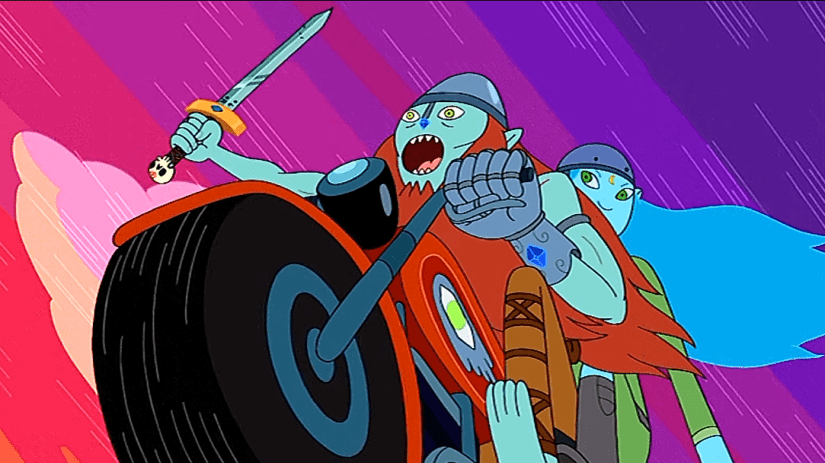
While I overall enjoyed 5.2 more than 5.1, I will say that this second half to the season did fluctuate in quality quite a bit, but for interesting reasons. Part of the reason is because some episodes were so unbelievably good, and some of the best that the show has ever put out, that others seemed weaker in comparison. Dungeon Train is a perfectly delightful episode that continues to show off Finn’s insecurities, though through Jake’s perspective, yet I gave it a lukewarm review because it was also coming directly after the epic The Vault and the ever-hilarious Love Games. And because some of these episodes were so good, the weight of the actual clunkers felt much more diminishing. An episode like Red Starved might have been well fitting a couple of seasons earlier, but with where the series is now, it doesn’t truly do anything that justifies its placement this late in the series. And I don’t say that because Red Starved is filler; one of the best episodes to come out of this entire season is Time Sandwich, and that’s practically the epitome of filler. What I mean is that the bar is set so high by this point that anything “average” comes closer to feeling like a misfire. Which means that episodes like Box Prince and The Red Throne really feel like the worst pieces of shit ever created, even though I’d probably still prefer to watch them over anything else on television. What a complicated series this is.

S52 4.png

This half-season benefited from some really solid teams. Cole Sanchez and Andy Ristaino were practically comedic geniuses when working together (which really helped divert from the somewhat unfitting Sugar-Sanchez pairing), Tom Herpich and Steve Wolfhard continued to create some of the most ambitious efforts that AT has ever put out, and occasional guest work from Pendleton Ward, Graham Falk, and Luke Pearson gave an extra boost of creativity to each of the episodes they worked on. Somvilay Xayaphone and Seo Kim were unfortunately the only dead weights this season; feel bad ripping on them, but of the five episodes they worked on during this half-season, only Blade of Grass stands out as a truly competent episode. Earth & Water had some storytelling flukes, Box Prince was incredibly banal, parts of Play Date were good, but the episode as a whole suffers from being disjointed, and The Red Throne features some of the worst writing for Finn in the entire series and awful pacing. Luckily, the two eventually find their feeting with each other as partners, though this season certainly is not one of them. If I had to pick the true shining stars in terms of boarding partners, I’d say that Jesse and Ako were all around a pretty superb pairing, per usual. In terms of quality episodes, I think Herpich and Wolfhard definitely churned out more gems, but Castuera and Moynihan felt the most competent and unique in their efforts. Even an episode like Betty, which could have so easily tanked due to its haphazard pacing, succeeded because the two artists have really mastered the practice of fitting as much substance as they possibly can in 11 minutes. And of course, Billy’s Bucket List works as a perfect swan song for the temporary end to this team.

Top 5 Best Episodes

Honorable Mention: Lemonhope – Threw in an honorable mention last time, so why not do it again? Lemonhope isn’t an absolute favorite of mine, but its terrific storytelling and out-of-the-box visuals give it a very unique and different presence from any other episode in the series.

5. Root Beer Guy – A terrific noir-themed episode that centers around one of AT’s best background characters.

4. Frost & Fire – Was really debating putting this one in the top five, but I think it really deserves it. It’s the direct turning point for AT as a whole, and capitalizes on Finn’s mistakes in all the right ways.

3. Bad Timing – The best LSP episode to date, and one that is fueled by enticing emotional turmoil.

2. Too Old – A really great tale about the dangers of recreating the past, and one that’s done using Lemongrab and Finn of all pairings.

1. Time SandwichAT at its all-time funniest; a pure romp of undeniable joy, cleverly featuring most of AT’s main cast in all the best ways.

Top 5 Worst Episodes

5. Earth & Water – A follow-up to the “Finn’s break-up arc” that showcases an interesting backstory for Flame Princess, but nevertheless offers nothing particularly insightful or challenging.

4. Red Starved – A mostly dull episode that doesn’t offer anything new between the Jake-Marceline relationship. (Also, that fucking colorblind joke still rubs me the wrong way)

3. James – One that feels extremely convoluted and contrived, and also pretty bad on the storyboarding and animation side as well.

2. Box Prince – Very little of substance or interest.

1. The Red Throne – One of Finn’s worst portrayals to date, and an abysmally disjointed story to go along with it.

Final Consensus

Season 5.2 definitely spent a lot of time testing the waters for the new direction the series was heading in, which is often apparent, but man, some of these entries are just so damn good. It was also nice to get a bit of serialization that gave this season a compelling arc that (mostly) carried all the way through. Season 5.1 had a handful of gems as well, but often times I felt that it was… directionless. Where 5.2 feels much more focused on telling a consistent story, with plenty of delicious fluff in between. Overall, I thought this half-season was great. It fully committed to telling some really ambitious stories, many of which would become even more unique and creative in the following season.

Adventure Time, Animation, Lifestyles

“Lemonhope (Part 1 & 2) Review

Screen Shot 2018-04-27 at 4.54.02 PMScreen Shot 2018-04-27 at 4.58.16 PM

Original Airdate: March 10, 2014

Written & Storyboarded by: Tom Herpich & Steve Wolfhard

This two parter brings Lemonhope back into the spotlight after his first appearance in Too Old. And, as anyone else, I was looking forward to, or at least interested in, how the eventual battle between Lemonhope and Lemongrab would come into fruition. This episode, in turn, gave me something I really wasn’t expecting in the slightest. Where I figured the conflict between Lemongrab and Lemonhope would be solved through a high stakes battle between the Candy Kingdom and Castle Lemongrab, it is instead a mostly experimental journey exploring Lemonhope’s character and how he differs from the traditional Adventure Time hero. But its unconventional nature only contributes to its success, and ultimately is a gateway for some of the trippier and more surrealistic AT episodes that would become more commonplace during the following season.

Screen Shot 2018-04-27 at 4.55.19 PM.png

Lemonhope is an interesting character… he is certainly on the more selfish side, and many people have attributed his behavior as negative character flaws. Yet, it’s his depiction that, in my eyes, makes him so interesting and unique as a protagonist. If you think about his circumstances and what he’s up against, it’s somewhat ludicrous that people are expecting such a prophetic and heroic method of saving “his people.” The beginning video demonstrates how deranged and oppressive the community of Castle Lemongrab has become following Lemonhope’s departure. Lemongrab has essentially become a tyrannical dictator where absolutely no one is allowed to stray from his vision or even attempt to leave Castle Lemongrab. It’s riddled with hauntingly humorous lines such as “morale has never been higher since we got rid of hope.” And it’s with this video that really shows how much Castle Lemongrab has fallen, and how everyone in the kingdom has almost completely lost hope. Yet, they all depend on the actions of one little boy to single handedly save an entire kingdom and to bring everyone into a more suitable living style. I don’t know, doesn’t that sound a little fucked up to anyone else? Apparently to Lemonhope, because he’s pretty much opposed to returning to his former lifestyle in every way possible.

Lemonhope’s selfishness is well-defined. He was abused, tortured, and born into cruelty at the hands of the Lemongrabs. His people allowed him to leave with the sole implication that he would in turn get stronger and return to save the entire Earldom. Yet, Lemonhope simply wants to be free. Free from his state of torture, free to do whatever he wants in life, and free to choose his own path beyond his original conditional living. He isn’t able to be free and move on, simply because he’s continuously pressured into believing that he is the sole savior over everyone. Lemonhope has a debt to pay for his people allowing him to leave, but he just simply does not want to be a Finn the Human-type hero that conquers adversaries each and everyday. He’s a kid, and he wants nothing more than to just have a lifestyle of freedom and a lack of worries.

Screen Shot 2018-04-27 at 4.56.37 PM.png

The issue with Lemonhope’s actions is that his duty to preserve Castle Lemongrab still troubles him subconsciously. Through his nightmares, Lemonhope is approached by his demons and worries. In his first dream, Lemonhope is awoken to an area that is surrounded by nothing but the color gray. This signifies Lemonhope’s morally skewed choices and how they define him as a character. Through his own endeavors, he experiences a knocking at his front door. The knocking represents the impatient urges that are calling him to act upon his duties. The second dream deals with his fears of his character being defined by him abandoning his people and ultimately being deemed as “unacceptable” as Lemongrab, as alluded to earlier by Princess Bubblegum. Lemonhope fears being controlled by anyone like his was controlled by Lemongrab, so the signs that Princess Bubblegum is too trying to control him in one way or another only further contributes to his decision to completely seclude himself from everything he’s ever known.

These dream sequences are really fantastic examples of Tom Herpich and Steve Wolfhard at their all-time most allegorical. Herpich in particular gets very cinematic and unique in his aesthetics from this point on, and it’s a turn in writing that really helps Herpich develop into an even better storyboard artist than he already was.

The first act ends with Lemonhope trying to make it on his own, but failing to do so. Lemonhope’s ultimate desire and goal was to be “free,” yet he’s arguably more lost than ever. Lemonhope believed that being free was to go out on his own and to do whatever he wanted, yet his foolhardy attitude has led him to be left with absolutely nothing but the memories of his past life and the nightmares that haunt him. It’s this realization that I wish came a bit more into play by the end of it, seeing as how Lemonhope’s failure to survive on his own is never really harped (no pun intended) upon again.

Screen Shot 2018-04-27 at 4.57.11 PM.png

However, his interactions with Phlannel Boxingday in the second half really show off some personal growth from the little lemon boy. He learns that being free doesn’t always mean being alone, though, of course, it doesn’t nearly solve all of his issues. Phlannel Boxingday’s identity is kept purposely vague for the audience to draw their own conclusions as to what/who he actually is. The only constant with viewer theories is that he has some form of relationship to Princess Bubblegum. He has a knowledge of zanoits, speaks German, and has the exact number of letters in his name as Princess Bubblegum (not to mention that their first and last names start with “P” and “B”). My thoughts definitely lean to the idea that Phlannel may be Princess Bubblegum in disguise, and we see that she’s capable of creating such a facade later in The Tower. I’d be willing to bet that she would do something like this to try and further persuade Lemonhope into returning to his people and also saving his kingdom. I think the much more interesting theory, however, is that Phlannel is a mirage that represents what Lemonhope wants Princess Bubblegum to be. Phlannel shares many of the same elements of Bubblegum’s character, though he never pressures Lemonhope into saving his people and allows him free will. Phlannel helps guide Lemonhope onto a path that Lemonhope himself chooses in order to relieve his own demons, not one that Phlannel is trying to force him to pursue against his will. Lemonhope’s desire to be free also revolved around his freedom to choose whatever he wanted to do, and while he never truly wanted to return to Castle Lemongrab, he chooses to do so on his own terms, not anyone else’s. This also is why Phlannel only appears to Lemonhope, and is not able to go with him to battle Lemongrab.

Lemonhope heeds Phlannel’s advice after experiencing yet another nightmare involving Lemongrab. In Lemonhope’s dream, he’s confronted by an overly obese Lemongrab munching onto a cow. As Lemonhope tries to escape, and is urged to escape by the cow, Lemonhope realizes that he’s being puppeteered by a larger version of himself. Lemonhope begins to realize at this point that only he is supposedly holding himself back from saving the Lemon People, and he’s haunted by the choices that he himself set out to pursue.

Screen Shot 2018-04-27 at 4.58.45 PM.png

As Lemonhope returns to the miserable looking Castle Lemongrab, he’s greeted by a surprise appearance of the obese dictator himself, Lemongrab. I really like how effectively the show has positioned Lemongrab as a villain. He went from being a somewhat psychotic, yet sympathetic character into a full-fledged autocrat. His antagonistic role in this one is definitely strong, and it’s easy to buy into the fact that this man single-handedly corrupted an entire kingdom. Yet, even with all that he has going for him, Lemonhope is able to easily defeat his opposer through the music from his harp. Or, in other words, ‘twas beauty, killed the beast.

In a dream he experiences during his unconscious state, Lemonhope is finally able to answer the knocking by climbing through his gray surroundings into a brighter, more comfortable spot. Lemonhope is able to escape his area of moral ambiguity into a more enlightening state of euphoria and peace of mind. Yet, even with all he has accomplished and achieved through his actions, Lemonhope later acknowledges to Princess Bubblegum that he only came back so he wouldn’t have to think of his people or PB ever again. It’s disheartening to some, but really shows that Lemonhope always stuck to his original desires and goals of simply being free to do whatever he wanted to do in life. Whether he did it for the right reasons or not, he still came back and saved his kingdom, so does it even really matter what the basis of his actions were to begin with? Lemonhope may have been selfish in pretty much everything he chose to do, but he still made heroic sacrifices for it regardless, which ultimately shaped his legacy among the views of the Candy People. By the end of it, were reminded once again that in this world, there are Finn the Humans and there are Lemonhopes: those who choose to be heroes, and those who do not. Often times in the world we want certain people to be these grand saviors and have so many expectations for them, but Lemonhope was one who simply didn’t want any of it, and sometimes that’s okay too.

Screen Shot 2018-04-27 at 4.59.26 PM.png

Princess Bubblegum has not forgotten his sacrifice, however, and even wrote a melancholic tune about it. As PB begins singing poignantly, a brief glimpse into the future of Ooo is shown. A somewhat demolished Candy Kingdom, an overly grown Treehouse, and the still in tact Castle Lemongrab are shown. It’s really a tearfully beautiful moment that truly emphasizes that nothing in the current Land of Ooo is forever, and that eventually, all of the lovely characters we’ve grown to appreciate so much will die off. It’s a sad but honest truth, and one that is explored through a beautiful melody, terrific landscapes, and an overall atmospheric tone that carries through powerfully to the end. It shows that even though Lemonhope never wanted to be a hero, he’ll be remembered as one regardless.

Lemonhope isn’t a personal favorite of mine, but I think it’s a pretty great example of Adventure Time at its most experimental. A new star character, some nice bits of surrealism, and an overall compelling main story that is filled with Adventure Time-y goodness throughout. I think what stops this one from being one of the all-time greats for myself is that I believe the first part is a little slow. Following Lemonhope’s escape from the Candy Kingdom, there’s many atmospheric bits of him attempting to live on his own and finding his own way of living, and while that’s all fine, I don’t really think it ties into the second part that greatly. As I mentioned earlier, Lemonhope’s main desire was to be free and on his own, but he quickly learns that it’s tough to be free and live life solo because he doesn’t have easy methods of providing for himself. This is mostly ignored in the second part, where it deals with his continual frustrations in regards to whether he should return to Castle Lemongrab or not. I feel like there’s a bit of a conflict with what exactly these two parts are trying to showcase, and while both of them are done well, I wish there was more of a coherent connection. Also, this is more of a nitpick, but there’s this really weird moment where Lemonhope’s voice isn’t filtered and he sounds exactly like Morty from Rick & Morty. It’s more of a funny little mishap than an actual problem, however. Otherwise, Lemonhope does everything it sets out to do quite well, and what was expected to be a big battle-heavy episode ended up being a very emotional tale revolving around inner conflict, and that’s exactly the kind of expectation-defying move I’d want from this show.

Screen Shot 2018-04-27 at 4.59.48 PM.png

Favorite line: “In conclusion, no one needs to come here ever, especially Lemonhope, and I ate my brother. Goodbye!”


Adventure Time, Animation, Lifestyles

“Bad Timing” Review

BT 1.png

Original Airdate: March 3, 2014

Written & Storyboarded by: Kent Osborne & Pendleton Ward

Lumpy Space Princess’s vanity and ego make her quite the difficult character to feel sympathy for. While all of the characters within Adventure Time have their fair share of flaws throughout the run of the series, all of them at least have something that gives me a reason as to why I should care for them, that is, all except for LSP. Bad Timing does the unthinkable. It manages to make me care for LSP’s character in a way I really never imagined. And this isn’t an episode that gives a cute or likable side to her character; the episode still does its damndest to show that LSP is crazy and arrogant in her own lumpy way, but it’s exactly that kind of attitude and behavior that directly contributes to the tragedy of her character as a whole. This is all tied together with a unique framing device that includes some delightfully silly creations from Pen Ward and Kent Osborne, and helps to all connect to Bad Timing’s piteous ending.

BT 2.png

The episode is introduced to Princess Bubblegum once again battling the logic behind anomalies and magic in contrast to her deep faith in her own scientific studies. Her method of time travel is also rather complex, but interesting. The back-to-back bickering between PB and Jake is quite enjoyable, as always; I really enjoy this playful conflict between the two. It’s pretty obvious that Jake is more captivated by presentation rather than the deep intervals of the space time continuum. He’d rather just see cool time portals and shit than a big presentation about the construct of time, which PB fails to understand, ultimately diminishing her faith in magic even more. It’s also nice to see one of the Mud Scamps from The Hard Easy back again! I love those quirky little critters.

As LSP enters the scene, it’s already clear what her current state of mind is. After literally sleeping in a gutter for the night (a terrific metaphor for her deranged mindset), she nearly tears PB apart for not allowing her to use the time device to visit her past boyfriend Brad. We haven’t seen a ton of LSP this past season and a half, as her only major appearances were in Candy Streets and Apple Wedding, where her deteriorating mental health is in clear view. And this one does not hold back when showing LSP at her absolute craziest and most desperate. It isn’t devoid of some of her funnier moments as well; Pen Ward gives his all with this performance, showcasing Lumpy Space Princess and her most loud and obnoxious, but also her most passionate.

BT 4.png

While LSP drowns her worries at the Candy Kingdom Tavern, as Tree Trunks softly sings “Slow Boat to China” (a referential moment I actually quite enjoy), she comes across Johnnie, or as she called him in high school: “Ugly Johnnie.” Johnnie is the perfect example of just a likable “nice guy” character. He’s certainly not the most interesting character that has ever starred on the show, but I don’t really think that was the point. He’s just supposed to be this really sweet guy who shows Lumpy Space Princess something that she has probably never received, or at least accepted: care and compassion. He’s also not without his funny moments, mostly stemming from his clear social awkwardness and quirky behavior. I like how corny and kind of stilted his interactions with LSP are. They laugh about using a vinyl record to stimulate a face, and then Johnnie immediately just tells Lumpy Space Princess to sleep on his couch. Talk about a confident and forward man! And honestly, Johnnie is the perfect representation of “that person from high school who went waaay under the radar.” I think all of us who have gone through high school know that one person you look at now and just wonder “damn, where were you three years earlier?” Is that rude? I don’t know.

But the utter tragedy of it all is seeing just how well LSP responds to all of this. She isn’t demeaning, she isn’t arrogant, and she isn’t being vain. She genuinely enjoys the company of Johnnie, and is much happier with herself and her life spending time with someone that not only benefits her own existence, but somebody that she can care and love for as well. Johnnie was able to build confidence and self-esteem through her own actions, and carried those skills over to get a job within the Candy Kingdom. Lumpy Space Princess most likely only dated guys who were physically attractive for a social status back in Lumpy Space, so this is definitely the first boyfriend she has had who isn’t completely materialistic. But of course, LSP’s desire for love is still a very self-centered desire. Though she’s able to give love to Johnnie, anything threatening the love that he gives her ultimately threatens the relationship as a whole. Lumpy Space Princess doesn’t know that love requires trust and flexibility; her only understanding of true love is that it feels good and that she doesn’t want the high to leave. Especially in this case, seeing as how Johnnie is a legitimately kind and loving guy, she does not want to lose him or the way he feels about her for anything.

BT 3.png

During Johnnie’s dinner with Princess Bubblegum, LSP sits sadly outside and utters a monologue that is so raw and passionate that I couldn’t help but include it in this review.

Oh, Johnnie… Ugly Johnnie, through my tender love you have metamorphed into Beautiful Johnnie Butterfly. Every relationship, I gamble with my heart. I go all in because the payoff is true love. I see you when I close my eyes, and thinking of you makes my mind feel light. All my problems fade away, and I can’t help smiling. To let someone you love go into the arms of another takes a big person. I don’t know… if I can be that big.

This is one of my favorite soliloquies in the show, and honestly the best representation about what Lumpy Space Princess as a character is all about. It’s easy to dismiss her as crazy, but even easier to empathize with her viewpoint on love and how important it can make one feel. Yet, it’s important to also realize that LSP isn’t in love… she has only known Johnnie for a day. However, the impact of the brief relationship and the effect it had on her is exactly what makes her feelings so validated. LSP is a person constantly looking for love, and one that struggles so hard to ever find it. For the first time in her life, she’s at least found a genuine person who she could actually see herself with. The thought of mutual love is enough to make her as high as could be, and the only thing that actually threatens her is the loss of that love. It’s a lot similar to Braco’s situation in The Suitor: if the two of these characters were patient and understanding with their alleged loved ones, they would have ended up having a much more positive resolution. Yet, LSP is left with only her paranoia and feelings of heartbreak, which continue to contribute to her own self-destructive behavior. She’s unable to look past her own insecurities because she is afraid of losing everything she has worked so hard to create, even though she’s actively destroying exactly what she wanted in the first place. In a very Lumpy Space Princess-y way, this is a very sad truth when it comes to love and infatuation.

BT 5.png

And of course, let’s not forget the tranch herself, Princess Bubblegum. I think PB is written pretty terrifically in this one, and it’s a nice balance to show her caring and compassionate side after sooo many episode of referencing her more shady and conniving nature (though he use of cyanide laced gum is quite questionable). Even though she initially threatens to declare war on Lumpy Space after a trivial fight between LSP (the chick can be petty sometimes!), her sympathy and understanding of Lumpy’s own self-doubt is exposed in all the right ways. Instead of reprimanding LSP for stealing her material, wrecking her castle, and sort of killing someone, she would much rather put a halt to Lumpy’s suffering, even if it means feeling the wrath of her own hostility. PB is a caring and understanding person when she realizes the emotional turmoil that is going on within other people, and after 800 years of trying to build a happy Utopian society, there’s still the underlying realism that some citizens do deal with deep emotional issues. And sometimes the only way to cope with the heavy issues of her citizens is to have a nice drink at the Candy Kingdom Tavern. Poor gal.

The ending is about as heartwrenching as it gets. Through the outer circle surrounding the episode, we see that these creatures are from an alternate dimension, and that the time machine sent Johnnie here instead of his past timeline. As LSP bawls over the loss of her love, we see that Johnnie can also see exactly what is going on within the Land of Ooo. As she angrily runs out, Johnnie sadly slouches himself, knowing that he’ll never be able to see his lover ever again. Johnnie perhaps receives the saddest fate out of any character in the entire show; he’s doomed to a dimension that he can presumably never escape from, and through everything, he really, really liked LSP. He never doubted his relationship or lost his feelings for his special someone, and Lumpy Space Princess’s failure to understand social cues is what ultimately led to the demise of their individual lives. It’s sad stuff.

BT 6.png

The outer circle is certainly an interesting gag within the episode, with many cute little characters and gags within it. I also think it was delightfully clever to tie the entire episode back to the actual visual gag. Though, I think this is definitely a feature that works much better on rewatches. When I initially viewed this episode, I was quite distracted by the actual circle and actually missed the emotional ending with Johnnie ending up in the circle. Thus, this is one that benefits from multiple viewings, so now I can either focus entirely on the circle, or the events going on within the episode. Each are equally interesting in their own right, and the cute little creatures have Pendleton Ward written all over them. Perhaps my favorite of these doodles are the peanut who splits into two individual nuts and the triangle and square happily see-sawing together.

This one is an emotional rollercoaster, and one that I’m quite fond of. This is the best Lumpy Space Princess episode to date, and it’s one that finds all the right ways for me to sympathize with her. By the end of the episode, she’s still entirely vain and insane, but Bad Timing finds just the right balance to still make her charismatic. One of Ooo’s most unsympathetic characters was able to also become one of the show’s most tragic, and I think that’s just another magical actual of great writing within the scope of Adventure Time.

Favorite line: “Boy, when this evening started, I was feeling so dump trucks, but now it’s like a hundred forklifts!”