Adventure Time, Animation, Lifestyles

“Friends Forever” Review

FF 1.png

Original Airdate: April 16, 2015

Written & Storyboarded by: Andy Ristaino & Cole Sanchez

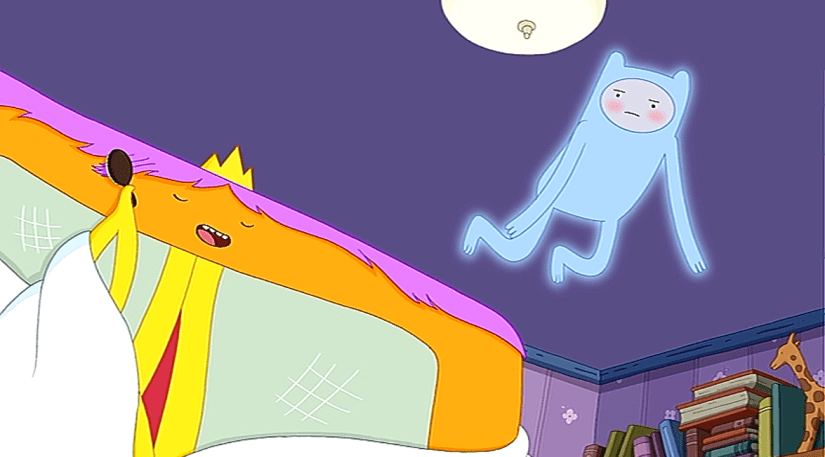
Friends Forever brings up an interesting question: is Ice King really worth saving? And I mean that in the sense that Ice King has become his own developed and lovable character over the course of six seasons that completely differs from Simon. Of course, Ice King is depressed and deeply troubled, and Simon lost his sanity to the crown, so for that reason, it almost makes sense to reverse the effects of the crown and thus to save Simon. Though, Ice King makes it very clear in this episode that he doesn’t want to be “fixed” and doesn’t want the help from the likes of others. Some parts of Simon’s personality and the personality of Urgence Evergreen that was embedded in the crown (there’s a nice little homage to Evergreen in this one when Ice King scolds, “Gunther, no!”) are what make up Ice King’s identity, and while he is far from the most conscientious being, he still has free will and is very much a conscious entity. So would bringing Simon back effectively destroy the Ice King as a person without his approval?

FF 2.png

The concept is presented in a challenging way, which is also appreciated. As Friends Forever continues to remind us, Ice King is still clearly insane. He manipulates the Life Giving Magus into bringing his furniture to life in the hopes that they can become his best friends, instead of simply reaching out to Magus to fill that void. In addition to that, it seems that Ice King’s comradery with Abracadaniel was only temporary, as Ice King quickly got sick of him and decided to keep him frozen within the ice cave. In a sense, this is a way to help reinforce his imperfect nature. This is the Ice King we know, and the episode doesn’t try manipulate the audience into feeling more sympathetic by making him seem completely innocent and totally naive. Though, the sympathy does come through in regards to his general demeanor.

Magus’s powers turn IK’s furniture into pretentious and stuffy beings, who want nothing to do with Ice King and his obscure personality. Ice King’s belongings merely want to berate him by bringing up his flaws and insecurities and deeming them as unorthodox. Even the lamp, who is likely the nicest out of all of Ice King’s newly found friends, only offers advice that urges Ice King to conform, rather than to continue to be his nutty self. There are some aspects about Ice King that certainly deserve some fine-tuning, such as his desire to kidnap princesses (of which he hasn’t even been seen doing since Betty) and his failure to be rational when things do not go his way, but the factors that Ice King’s belongings target him with are, at best, petty. Ice King crying into diapers and having burritos stuck in his beard are nothing that he even needs to have an explanation for, and again, his “friends” simply want to fix him because his unusual ways of living do no conform to their expectations. Ice King’s drum even says “we don’t like you, but we’re here for you!” Ice King has proven to be most successful when he has the right support by his side, as seen when he gets closer to other characters like Marceline, Princess Bubblegum, and BMO.

FF 3.png

It’s kind of a good analogy to show the dangers of keeping toxic friends in your life. Toxic friends are the ones who say they’re there for you and that they’re looking out for your best interests, but they merely want to shape you into what they think you should be like. Ice King identifies with this, and his choice to push away the help that lies in front of him shows that he doesn’t really want to be helped to begin with. I wouldn’t say Ice King is really happy, but he’s at least content with his being because he knows it’s the only way he understands how to live. That isn’t to say that Ice King might not need help at all, but if he does receive such support, it should be from people who genuinely care for him and those who are looking out for his best interests. This is the first of many episodes that got me thinking about Ice King’s nature in general and whether it actually makes sense for him to be reverted back into his natural form as Simon. This show has made me care so deeply for Ice King throughout the past six seasons and further that I think it would be a genuine bummer if the crown was altered in some sort of way to return Simon to “normal” when it comes to the endgame. Sure, it’d be nice to see Simon safe, sound, and happy again, but if that means killing Ice King, then I really don’t know. Friends Forever effectively separates the two entities in head scratching way that makes me very perplexed on how this arc could realistically end in a satisfying way. It would be sad if Simon was unable to regain his humanity, but even sadder if it meant getting rid of Ice King. He has just as much of a role in the lives of the main characters as Simon does, if not more so. And if Ice King doesn’t want to change himself or the way he lives, he should be entitled to his own state of free will and consciousness.

So with all those interesting ideologies, this must be a really good episode, right? Actually, I think it’s just decent. Sure, I can invest my time in analyzing all of the deeper elements of Ice King’s character and how his furniture treats him, but I don’t know how much I really enjoyed this one. This is an Ristaino-Sanchez duo episode that is surprisingly low on laughs. I only really laughed at the improv joke, the “Nihilistic Funnies”, and the random words lighting up gag. Besides that, it’s kind of dry regarding anything of entertainment value. Ice King’s belongings in general aren’t very likable or memorable, and aside from some funny designs, like the Hi-Hat on Ice King’s drums, every belonging is limited to the standard dotted eyes feature and aren’t really presented as unique in any way. The lamp I think has an especially hideous design that kills any kind of likability they were going for with her. There’s something especially unsettling about those wide eyes and that fat upper lip that just kind of rubs me the wrong way. In addition to that, the setting is relatively dull. Aside from some party lights that illuminate the setting in a pretty neat way, this episode takes place entirely in the Ice Castle, and it seems a lot more monotonous when so many previous episodes have had their own distinct setting. So yeah, this isn’t one I like a whole lot, but it does at least provide me with good material for discussions. It’s an interesting Ice King outing that does raise plenty of different questions regarding his state of being, but is a bit lacking on the entertainment value.

FF 4.png

Favorite line: “I like this guy, though. He’s a real ignoramus!”

Adventure Time, Animation, Lifestyles

“Walnuts & Rain” Review

war 1.png

Original Airdate: March 5, 2015

Written & Storyboarded by: Tom Herpich

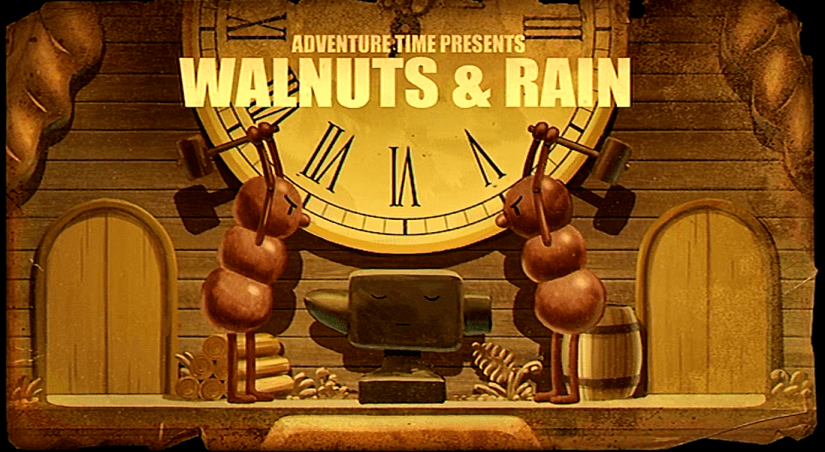
After a heavy dose of episodes that were either really poetic, heady, or continued the story of a recurring character, it’s nice to have a healthy dose of fluff. Walnuts & Rain isn’t spectacular in any sense of the word, but it’s a cute, little adventure that’s likable and energetic enough to leave a positive impact on me. In the spirit of season six, there’s also allegorical undertones sprinkled in to give the experience a stronger lasting impression.

war 2.png

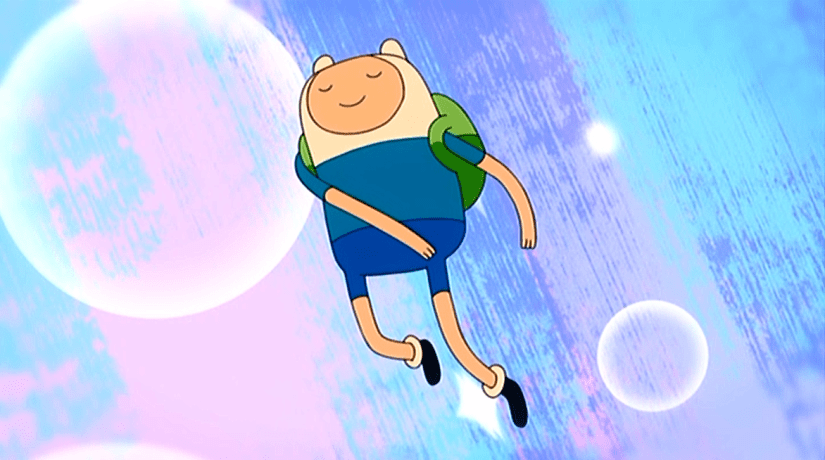
It’s once again nice to see Jake and Finn back together, just for the sake of a rowdy adventure. Finn even says “algebraic” after God knows how long. Ice King said it back in Another Five More Short Graybles, which was also boarded by Tom Herpich, but I’m pretty positive Finn hasn’t used the term since way back in Slumber Party Panic (feel free to correct me if I’m wrong). As always, the two boys bring a lot of joy and excitement to the screen, and it actually kind of works stronger than ever because of how little they are involved at this point in the season. As swell as most of these past episodes have been, it’s nice to see the two boys who made this series so special back in action. Though their time together is short and few, as they both get separated into different passages, and the main story, or stories are kickstarted by said separation.

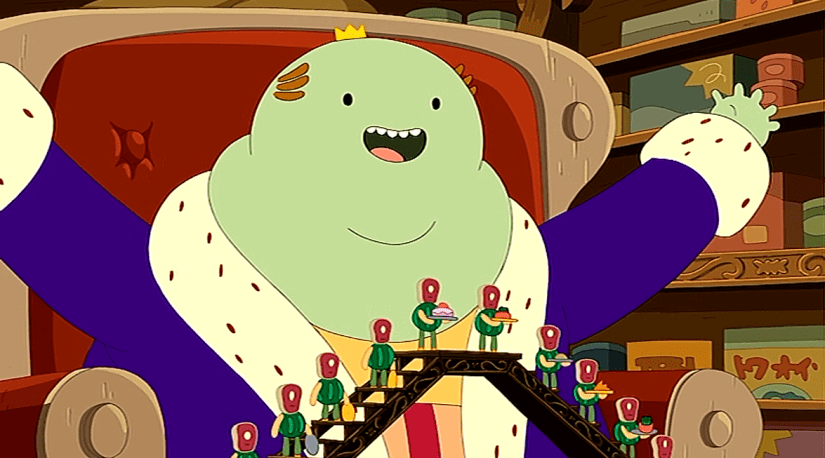
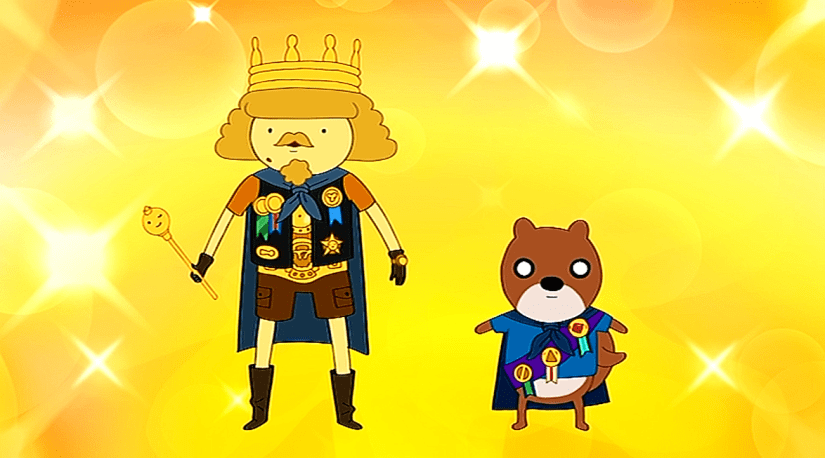
Most of the fun of Walnuts & Rain derives from the enjoyable characters and environments that Finn and Jake end up spending their time with. On Finn’s side, it’s nice to see the actual Huge Kingdom after we were introduced to Prince Huge in The Hard Easy. Though, said kingdom actually isn’t ruled by the prince, and is ruled by King Huge, a pretty humorous character who is carried mostly by his great voicework by Matthew L. Jones. King Huge isn’t really given a ton of funny lines or anything of the sorts, but Jones refusal to deliver such dialogue with an indoor voice is what makes his character a surprisingly pleasure. A lot of characters, namely Lemongrab, can often be weighed down by their necessity to shout, though King Huge’s prominent voice doesn’t really come off in an irritating notion, but in a method to display his dignified and important nature. King Huge’s castle, surrounded by sentient steak people and giant food, reminds me a lot of something that would come out of an early Silly Symphony cartoon. Not sure if it’s reminiscent of any short in particular, but the general approach to its environment seems very old-school animation in my book. The King himself actually reminds me a bit of Willie the Giant in Mickey’s Christmas Carol, but by size and initial behavior only. The King is actually a bit tyrannical, as his desire to force Finn to stay in his kingdom has practically no basis regarding anything, besides the fact that King Huge believes that doing nothing and being patient will bring Finn great fortune. King Huge’s tendency toward being patient derives from the fact that he has never had to lift a finger to get everything he has ever wanted. King Huge intrinsically believes that the same could be said from everyone else, even though his stance and position in the kingdom are clearly what drives his point forward.

war 3.png

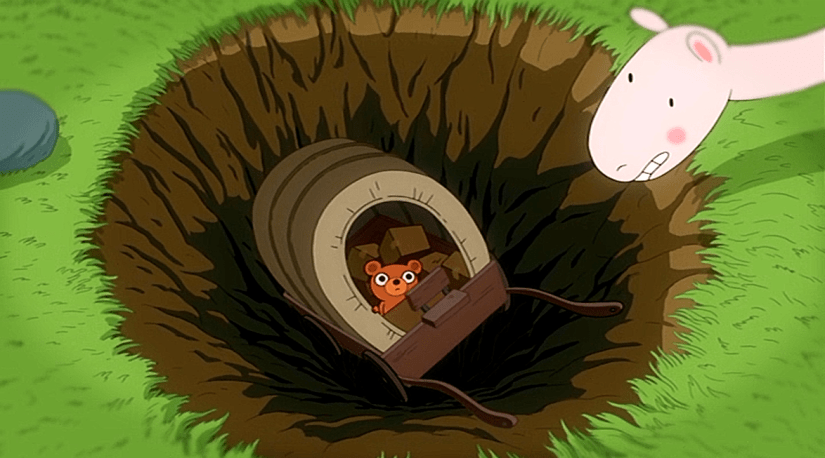
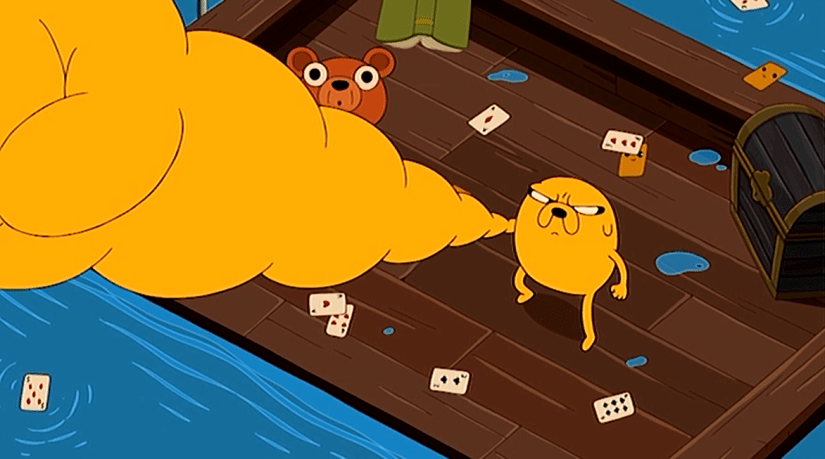
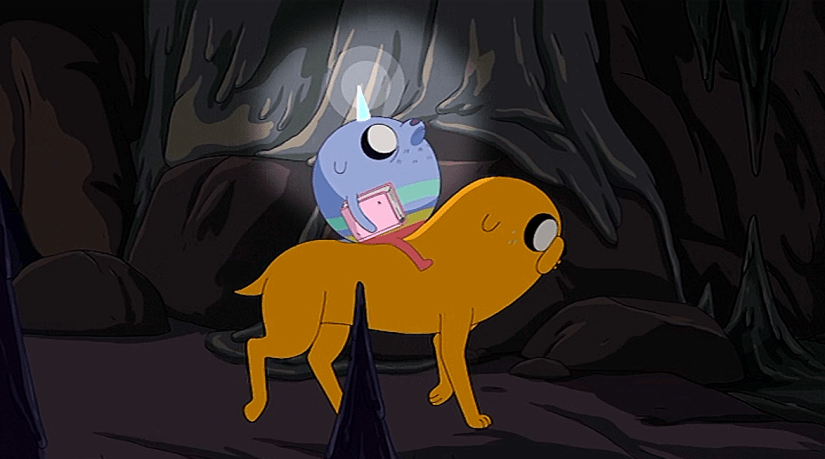
The same could not be said for 7718 – Seven, for short – the bear who is keeping Jake afloat after he falls into a hole. Seven is a pretty likable dude, whose voice I swore I recognized, but never bothered to look it up till now (he was Enoch from Over the Garden Wall!). Seven’s desire to keep Jake on his carriage may have been somewhat of a selfish desire to have some sort of company after being stuck for who knows how long, but it also likely comes from his desire to not stray from his own game plan. As he describes in his story to Jake regarding how he fell into the hole in the first place, Seven mentions that he had taken the same route nearly 200 times consecutively, until a bee stung his horse and something unexpected happened. Seven likely has anxious tendencies that make him stray away from changing his procedure in life. He believes in patience, simply for the reason that he thinks it’s the only way to properly survive. Jake likely has the right idea by trying to use his stretchy powers to get out, but Seven warns him that something dangerous could possibly happen if he does so, not realizing that the two are stuck in an almost unbearable purgatory regardless. Seven does at least have the right attitude of positivity, and is proven to be correct in his methods by the end of the episode. I also think the bond he shares with Jake is really sweet. Adventure Time has this way of showcasing really mundane and kind of dull characters in an interesting and likable way, and Seven is just one example at that. I also think it’s hilarious how his name is actually Bill, yet he interpreted the wrong way. AT absurdity at its best.

A good portion of the middle is dedicated to Finn’s completely convoluted plan to escape from the Huge Kingdom, which is both hilarious and honestly has exactly the kind of effort that Finn would put into an escape plan. Surprisingly enough, it almost works, only it’s quickly foiled by King Huge noticing exactly what’s going on, which still leads to an exciting chase where Finn gives the biggest “fuck you” in existence by choosing to destroy the clock, rather than to assure himself safety. This one is solo-boarded by Herpich, and I always gush over how well his drawings translate into the animation process. He shows great attention to “squash and stretch” when it comes to how the characters emote, or how action is portrayed in their environment, and it all looks great, mainly when Finn is running and when Seven recalls his backstory. This is one that also incorporates CG into the backgrounds a lot, as season six has been frequently doing, and it looks really nice as always.

war 4.png

Of course, it all comes to a satisfying conclusion when Jake and Seven finally do land into the Huge Kingdom, and Jake gives King Huge his comeuppance. This allows for the three to escape happily, and Seven can get his hands on a big flippin’ hot dog. Walnuts & Rain is nothing fantastic as I had mentioned, but it’s quite enjoyable in its simplicity and how it takes a step back from some of the heavier stuff that has been coming out recently. A lot of people have compared this to having a season one or two vibe to it, and while I could definitely see that in its focus on a simpler premise, but it still has those tendencies to lean towards a deeper meaning and its desire to be more quiet and atmospheric, rather than wild and hyperactive. Not to say these are bad things, it just shows how much the series has evolved since its beginning. And whether its a season one episode, a season two episode, or a season six episode, Adventure Time still knows how to delight us with likable and unique fluff.

Walnuts & Rain also snagged the Emmy for Outstanding Individual Achievement in Animation, specifically for Herpich’s work on the episode. This is the series third Emmy win, and not the last one at that!

war 5.png

Favorite line: “Man, I don’t give a toot!”

Adventure Time, Animation, Lifestyles

“The Diary” Review

TD 1.png

Original Airdate: February 26, 2015

Written & Storyboarded by: Jillian Tamaki

T.V. is likely my personal least favorite of the pups. I don’t have any personal gripes against him, I just think he’s the least interesting out of his four siblings. Even Kim Kil Whan, who was a bit of an asshole in his debut episode, at least has a thoroughly compelling connection to his father. T.V. has neither that nor a very diverse personality; he’s a lazy homebody, and even when done right, these characters are never truly fun to be around in my opinion. Jake is partially lazy, though his character isn’t limited to his laziness: he’s caring, compassionate, and funny. T.V., on the other hand, is mostly limited to his lack of enthusiasm about practically everything and his ultimate desire to be unproductive, which makes his character feel quite hollow and dull in comparison to all of these other well-fleshed out characters in the Land of Ooo. Now, that rant aside, I actually think that The Diary is a really good way to make use of his character. It uses his desire to get invested in whatever escapist fantasy is most convenient to him quite nicely, and makes for a decent character study on how much one should invest their time into the lives and drama of others. Also, this is one that’s straight up beautiful. It was solo-boarded by Jillian Tamaki, who assisted Jesse Moynihan with Astral Plane, and her emphasis on cinematic moments and serene artistry help to really make this episode shine on a visual perspective.

TD 2.png

My feelings in the first paragraph mostly represent how T.V. goes through little development following subsequent appearances after this episode, but I think his character, at least in this episode, is expanded on in somewhat interesting ways. The beginning sequence that features him playing video game clearly elaborates on his feelings and overall insecurities; his choice to “run away” from the dragon, rather than fighting it, could represent his own “fight or flight” response to dealing with his own anxieties and fears. It’s nice to see that Lady, despite being a caring and fair mother, knows her limitations when allowing T.V. to go about his adult life in an unconventional ways. It’s also crazy to think that this is Lady’s ONLY major appearance in season six, and it’s limited down to only a few scenes and lines of dialogue. Lady’s practically an afterthought by this point in time, but it at least makes sense since she is the only character the audience can’t directly understand. Quite a shame though, because I do like her character a lot, but her nature and being limits herself to only a few brief appearances per season. But I digress; Jake’s attitude towards his son is also quite fitting, seeing as how T.V. does embody a part of Jake’s self. And even though Jake’s view of his son isn’t necessarily responsible and he probably shouldn’t encourage such behavior, it is sweet to see him approve of his son regardless of his lack of productivity. I’m sure many people could jump on the fact that this support probably makes Jake an even worse father, but he does begin to recognize when things in T.V.’s life go awry later on, and does at least assist him along the way. It’s a good bonding experience for the two.

T.V. anti-social behavior is presented well in brief instances, such as his quick transportation away from the kind old man who merely wanted to say hello. T.V. doesn’t seek excitement or satisfaction in reality, as he would rather be consumed by his own intriguing fantasy worlds and realms that can help him to escape from his failure to connect to the real world. It isn’t until T.V. comes across the journal of “B.P.” (of whom I swore was going to be Breakfast Princess when this episode first aired) that he begins to get invested in the real-life struggles of an anonymous teenage, which eventually become twisted into more fantastical opportunities to place himself into and project imaginary realities. It’s cool to see just how enthralled T.V. is by the life of this one random Candy Person, and also how it likely strikes him as unique from any type of fantastical experience he has had in the past. This story is tied to real life people, relationships, and situations. It’s no wonder that T.V. does eventually get sucked in to the point where he begins to confuse his own reality with that of B.P.’s life. T.V. is all about playing different characters and taking on new identities, to the point where he doesn’t even have his own life experiences and characteristics to even know himself. His experience as B.P. is his way of living vicariously through others, as well as giving him a sense of purpose in life.

TD 3.png

As I mentioned, probably the strongest aspect of this episode is its use of visual storytelling. Not only is it chock full of different backgrounds, per usual, but it also utilizes great attention to detail that helps it to truly shine. I love those scenes right after T.V. finds the journal and begins to roam around in the changing environment. As the day goes from afternoon, to evening, to night, the shadings and colors the reflect T.V. are really quite beautiful. There’s also some terrific shots that feature nature just being nature as B.P.’s voice is heard reading the journal in a very poetic way, like the squirrel who attempts to get T.V.’s attention and the heart shaped rose petals that land on top of T.V. That’s Alia Shawkat voicing B.P., who later would go on to voice Jake’s daughter Charlie, and Shawkat does a great job of carrying out B.P.’s writings with complete sincerity and in a compelling, tense way. Also, the way her writings and drawings begin to materialize on screen as T.V. continues reading is also a visual treat, and helps to add energy to the actual backgrounds even when nothing particularly eye-catching is going on. Along with Evergreen and Jake the Brick, The Diary is yet another season six episode that makes use of its artistry in the best possible way. After all, if you’re gonna pull off these really deep, poetic themes and messages, why not make the episode look as great as possible to go along with said beauty? Aside from beauty, the episode does touch on surrealism in its visuals as well. T.V.’s roleplaying journey into B.P.’s life is the perfect visual representation of the literal existential rollercoaster that T.V. has gotten himself into, and his line “you don’t know me, nobody knows me!” could be his attempt to get into character, or he may be touching on his own real life issues as well. It’s tense, entertaining, and captivating.

While I think the scenery and the atmosphere are certainly the strongest aspects of this one, the episode does have a decent mystery that certainly kept my attention on the first viewing, and still has me generally intrigued even after knowing the ending. It kind of reminds me of the bunny plot from Jake the Brick; the identity and mystery behind B.P. isn’t really inherently interesting, but it’s made to feel like something that’s genuinely worth finding out because of how much the characters care about it. And it isn’t till Jake finds his son in utter deterioration that he begins to get behind the mystery as well. I thought it was quite sweet to actually see Jake try to help his son see the mystery through, though again, not sure how great of a parent this actually makes him. I think on a parental level, it’s summed up quite nicely by how Lady rolls her eyes and simply chooses to ignore the situation, rather than to invest her time in their dilemma. It’s both hilarious, and kind of paints a picture on their views of responsibilities. Though the show never fails at making Jake likable and caring, even when his role as a good dad is in question.

TD 4.png

The writing itself doesn’t provide for many jokes or funny gags, but like most episodes from this season, it seems like it’s more interested in telling an enticing story, rather than trying to completely amuse the audience. There’s subtle moments, like the grass guy from the flea market who narrates the backstory of his music box. It comes off as both kind of poignant and even quite funny, as he begins to recall literally everything about who bought the actual box.

It probably goes without saying that I think the character of B.P. herself is quite enjoyable and kind of cute. I like how she’s written to embody the life of a teenage girl, but without being completely stuck up and egotistical. Her quirks are emphasized more than anything, and she parallels T.V.’s obsessions quite nicely. She too begins to center her life around the entire identity of a single person, that being Justin, and shuts herself off from society because of him (also, I like the fact that T.V. and B.P. both share names based on acronyms). It’s a simple, but neat little tale about teenage infatuation, and leads to her final monologue, which is once again presented with great visual flare and some solid voice work.

You know when you’re little and the future feels really far away? You don’t know what it looks like, you just hope you’ll have stuff figured out by then. You’ll know exactly how to act, and feel. You’ll have conquered all your fears, and you’ll never feel dumb or uncomfortable. You don’t think about how you’ll actually get there. The middle parts, between now and then, the middle parts suck. Which is why I split, I guess. Okay, so riding out your teen years in a cave is pretty dramatic, but do you know how much reading you get done in a cave? I even figured out a cure for my crab hand! Oh Justin, I hope you’re not too upset. And I hope you didn’t spend too much money on that birthday present. It wouldn’t have worked out between us anyway. You’re kind of clingy.”

The ending of her speech is a hilarious subversion of what we already know about B.P.’s character, but the rest of it comes off as some insightful stuff. And it comes as a notion that nobody is really prepared for the issues that face them in the real world. Growing into those teen and early adult years pose as the most confusing, because nobody wants to accept exactly how difficult life truly is. That’s why T.V. refuses to live his own life at least, and finds joy and solace through masking his struggles with the power of fantasy. Facing the real world means facing issues that often times don’t have solutions, and some that truly do suck, but T.V., like B.P., has his own unique way of struggling through said problems. Whether or not these methods are actually orthodox and reasonable is certainly in question, and the episode doesn’t stray away from such queries. Though B.P. proves to move on to live a successful life, powering through those sucky middle parts the only way she knew how to.

TD 5.png

And I never in a million years thought we would’ve gotten an episode dedicated to the backstory of Nurse Poundcake, but here we are! It’s amazing how resilient Adventure Time is in adding depth to some of the most unimportant and obscure characters in the Land of Ooo, and how it actually kind of works. Nurse Poundcake’s story is one of success and triumph after long periods of fear and doubt, proving that all those struggles as a young adult are generally meaningless, as life continues to progress forward. T.V. may not be able to live his life through B.P.’s eyes anymore, though he’s hopefully left with the idea that even through his sucky young adult life, there’s still an opportunity for him to progress forward and have an impact on the world. Or maybe he’ll just continue to mooch off of his mom forever, as he’s later seen doing. Ah well!

The Diary makes for a decent story and character study, but I think it’s really just another great example of Adventure Time using the art form of animation to its strongest extent. It doesn’t skip a single beat in trying to create spectacular visuals to surround an overtly poetic story. Granted, I think there’s a lot of other season six episodes with better stories, but this one is really solid based on its atmosphere and tone alone. That’s not to say the plot isn’t good, as it still stands as relatively intriguing from beginning to end. I think the mystery element is a bit squandered in subsequent viewings, considering that it can’t really surprise me anymore, but it isn’t really supposed to be the big draw of the episode to begin with. The Diary is a somewhat stressful tale about the act of living through others, but one that is carried out with an enlightening message on life and supported through sheer eye-candy. No pun intended.

TD 6.png

Favorite line: “Son?” “Mom?” “Close enough.”

Adventure Time, Animation, Lifestyles

“Dark Purple” Review

DP 1.png

Original Airdate: February 19, 2015

Written & Storyboarded by: Sloane Leong & Adam Muto

Out of all the recurring characters in Adventure Time, I don’t know a single character who disappeared for a longer period of time than Susan Strong did (not counting original one-shots like Me-Mow and Science Cat). The gap of 119 episodes between Beautopia and Dark Purple made it feel as though she was never going to appear again, but this episode returns her to the spotlight. Unfortunately, her first episode in three years is largely unremarkable, and while I don’t know if I would call it awful by any means, I think it kind of comes off as uninteresting on almost every level.

DP 2.png

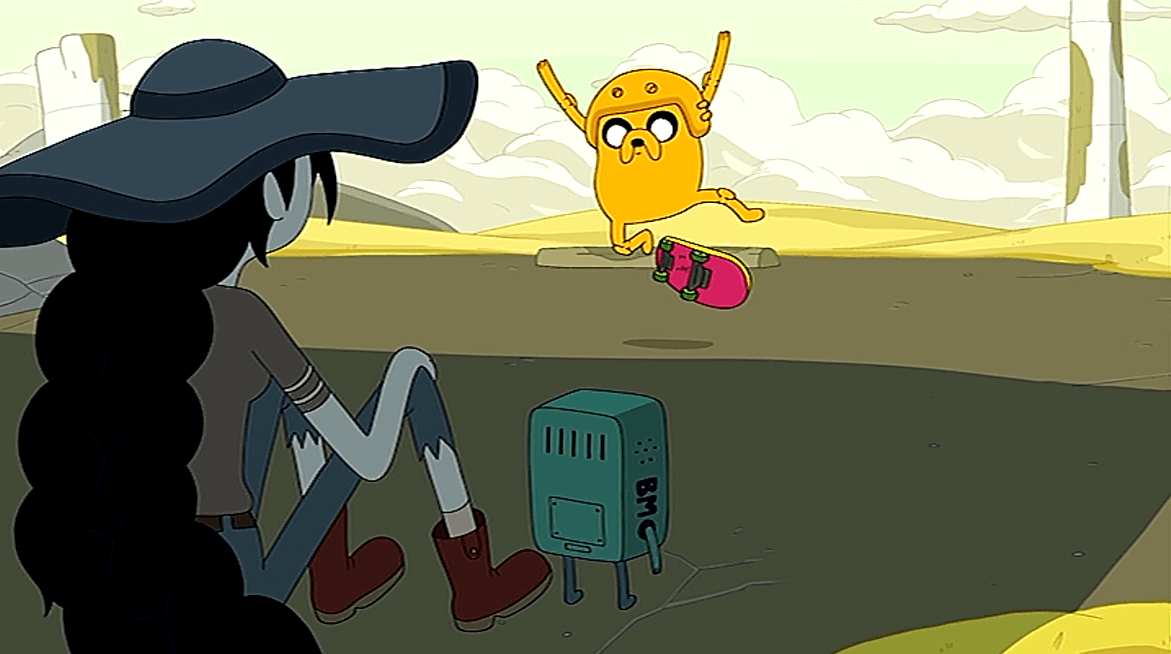
The beginning scene is the best of the episode, and genuinely enjoyable at that. I loved seeing Finn, Jake, BMO, and Marcy hang out after how long it’s been since we’ve seen this group of characters together. Even though Marcy had a brief moment of screentime in Astral Plane, it’s really rewarding to see her again here, especially when it means she gets to just kick back with her boys. Hell, it even feels like forever since we’ve seen BMO! Seeing him all giddy over Jake’s skateboard tricks made me realize just how much I missed his presence. And Jake’s skateboarding was also pretty gnarly; love how this becomes and actual trait and interest of his character. The way Jake and Finn get excited over the Super Porp delivery into the vending machine just felt like classic Adventure Time, and something only the bros could get into to. It’s somewhat clever to me how Super Porp has been seen in the background of a ton of different episodes, and even in Simon & Marcy, which helps drive forth the point that the soda has been around for 1,000 years. Again, another classic AT move that picks up on details that most wouldn’t even notice. Jake’s explanation for not wanting to explore the Super Porp factory is an obvious segue, but one that feels totally in line with his character, as Jake would likely prefer enjoying the simpler things in life in complete ignorance, rather than ruining those simple things by investigating further.

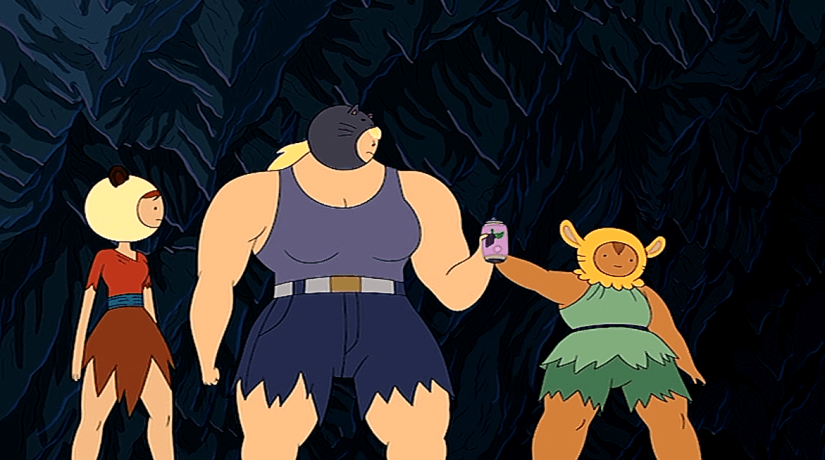
And that segue takes us right into Beautopia, where we spend the rest of the episode with Susan Strong and her new squadron of sidekicks! Yay, I guess? Look, I’m not one to complain about season six’s method of taking obscure side characters and giving them their own episode; for the most part it works, with episodes like Little Brother, Nemesis, Thanks for the Crabapples, Giuseppe!, and Evergreen, but other times it doesn’t, as seen in Sad Face and Gold Stars. I think the biggest thing that weighs this one down is actually its strongest element, which is that beginning scene. An episode featuring Marcy, Finn, Jake, and BMO exploring an underground factory sounds entirely more interesting than what we actually got. It’s not that I don’t like Susan Strong, but I think all of the interesting bits of her character practically relate back to Finn. Not saying she can’t work on her own, as we see later with the Islands arc, but otherwise, I really enjoy her unique connection to Finn more than anything, while I think she’s just okay on her own. And it doesn’t help that we haven’t seen her in over a hundred episodes… any investment I did have in her character was kind of bogged down by the fact that we literally never see her, and I would have wanted something a bit more interesting to chew on than to watch her try to stop a corrupted soda factory. It really feels like this was mostly just an opportunity to reveal the metal implant on the side of her head, which didn’t even really phase me much at all. Again, I think this was a necessary development down the line that becomes way more interesting once it’s explored, but again, it feels like nothing more than a teaser for what’s ahead, rather than a natural part of the episode. Granted, I think it was obligatory that SOME new development for her character was included in this episode, given how long its been since she has appeared, but it’s still frustrating that every Susan Strong episode so far feels like it’s just blue-balling fans who want to know about her true nature. It isn’t for a whole season later until we begin to get some legitimate answers.

DP 3.png

The story itself is pretty unremarkable as well. I like the environment of the factory, and the purples in this one really pop, but I feel like the conspiracy is something I could care less about. I dunno, maybe it just wasn’t funny or interesting enough, or maybe it’s the fact that this one kind of ripped off Futurama’s slurm episode, but I just find myself utterly bored by the plot. It has its moments throughout, even though they are few and short. Some of the workers are funny, namely the one that keeps muttering “uh-oh!” over and over again, and that porp beast was pretty sick. There’s hints of good animation here and there during the action sequences, even though the action itself is nothing spectacular. I actually get into the smaller moments more than anything; I like how Susan’s one friend, Sally, speaks in sign language as opposed to English. I can’t think of a single other character that comes to mind who does so, so it’s nice to get this bit of diversity in the Land of Ooo. Also, Susan’s English itself seems to have gotten better, even if she still speaks in the third person and through broken sentences. It helps that gap in time to at least feel beneficial to her character, and to allow her to grow up a bit.

The climax is pretty bleh. I like the concept of Super Porp spanning multiple generations, but the way it’s executed with Cheryl is pretty lame. I guess it could have been some kind of cool allusion to slave labor, but it’s once again muddled by the fact that it isn’t given any time to develop. A majority of the episode is Susan traveling through the factory, and about ten seconds are actually dedicated to Cheryl and her plan. The dilemma is barely given any time to develop, and is resolved in the matter of seconds. Also, Susan’s disdain for Super Porp as a brand is kind of odd to me. I mean, does the entire factory really deserve to be destroyed just because it was headed by a corrupt ruler? Couldn’t Super Porp just continue to exist under new management? I just find it weird that Susan continuously points out how bad the soda is when it isn’t having any negative effect on other people. Dunno if this was just a result of her ignorance, or if it was a result of clunky writing.

DP 4.png

But yeah, this one is kind of a snoozefest otherwise. I can’t really think of a single thing that sticks out to me during Susan’s story, and it feels entirely unremarkable in nature. While the timespan between Beautopia and this episode has something to do with Dark Purple’s failure, I don’t think it would fare much better even if it did air earlier. It isn’t very funny, it isn’t very interesting, and Susan Strong isn’t very compelling outside of the reveal that she has some sort of attachment on her head. Even when one of the “obscure character spotlight” episodes do fail, they are at least is somewhat unique or interesting. Sad Face is pretty bland, but I would have never expected an episode to be focused solely on Jake’s tail. Dark Purple just proves to be pretty unremarkable in every way possible, and provides for one of the dullest episodes of the season.

Favorite line: “Alright, well, it’s one month later.” (Because I say that every time a month has passed too, Jake.)

Adventure Time, Animation, Lifestyles

“The Mountain” Review

TM 1.png

Original Airdate: February 12, 2015

Written & Storyboarded by: Sam Alden & Jesse Moynihan

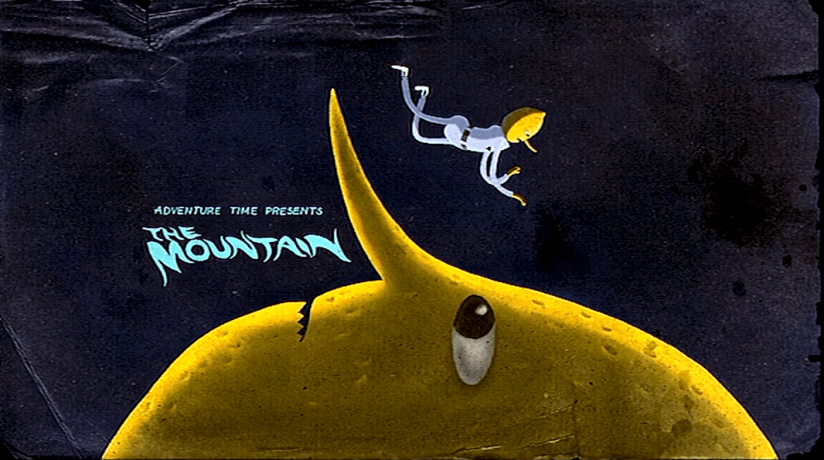
The Mountain is possibly Adventure Time’s most ambiguous episode to date, and it’s definitely difficult to understand. I wasn’t really excited for more Lemongrab when the premise for this one was released; I had kind of thought Lemongrab’s arc was finished by the time Lemonhope aired, and didn’t really want the character to be milked any further if there wasn’t a legitimate new direction to take him in. And apparently, Jesse Moynihan thought so too. On his blog, he detailed how he thought of the story for this one right as he was falling asleep, and he actually have a great sum-up on emotionally ambiguity in television in general. I’ll leave some of it below for reference:

“In my mind, the thing I really wanted to get away from, was the complete narrative handholding that embodies not only kids television, but almost all television: The ideology that demands we understand at all times what the character feels, what the conflict is, how exactly the audience should feel, and maybe the moral message. Even on shows I really dig like Game of Thrones, or True Detective, there’s very little ambiguity when it comes to how the audience is being manipulated to feel. Often times, in lesser TV shows, the writing acts as a rote, step by step instructional guide for how we should emotionally proceed as an audience. What’s funny is how well it works, despite its fake hackiness. Someone on screen yelling “I am mad at you! You killed my father! But I need your help!” or “I feel X because of Y, so you should Z” in the dumbest way possible can still have an impact on me. If I give in to the scenario, I guess part of me gives up an aspect of emotional control or something. It’s passive engagement with archetypes and familiar emotional cues. I’m willing to participate in passive engagement, but I greatly prefer the idea that entertainment may reflect the poetry and ambiguity of life.”

It’s a pretty neat mindset, and kind of addresses the experimental nature of season six, and the anxieties that went along with its production. During this season, Adventure Time has churned out some of the most different and unique eleven minute stories that television has ever seen, but again, as Moynihan touched on in his post, it’s hard to say that this is actually what people want to see. In fact, it isn’t! So many people left the AT bandwagon for Steven Universe at this point in time, and not to say that this is a bad thing, but SU is much, much more open about the issues each character is facing and how it affects themselves, while Adventure Time, or at least Moynihan, was trying to get away from that method of writing all together. Thus, The Mountain aims at tackling the complexities of both Finn and Lemongrab’s own insecurities, without making anything apparent. While it’s chock full of Moynihanisms, it’s also the storyboarding debut of Sam Alden, who is one of my favorite storyboard artists and writers on the show.
TM 2.png

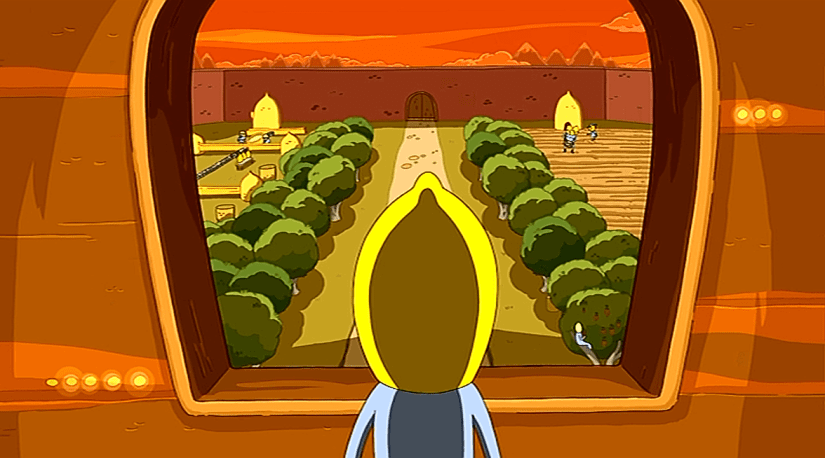
The opening provides some nice insight into what Castle Lemongrab has been up to recently, and it seems like all of the Lemon People are being treated relatively well. Granted, Lemongrab still receives the “royal treatment” and keeps everyone on a strict schedule, though nobody in the kingdom seems opposed to it, as they seem to be at utter peace. That is, except for Lemongrab of course, whose failure to be content in his own skin is represented by the crack in the mural on his ceiling. We saw those who struggle with their own disappointing lives back in Astral Plane, but here, Lemongrab is outright refusing his own being. It’s an existential crisis that has him searching for more than just self-satisfaction, but a search for something deeper and greater for his own being.

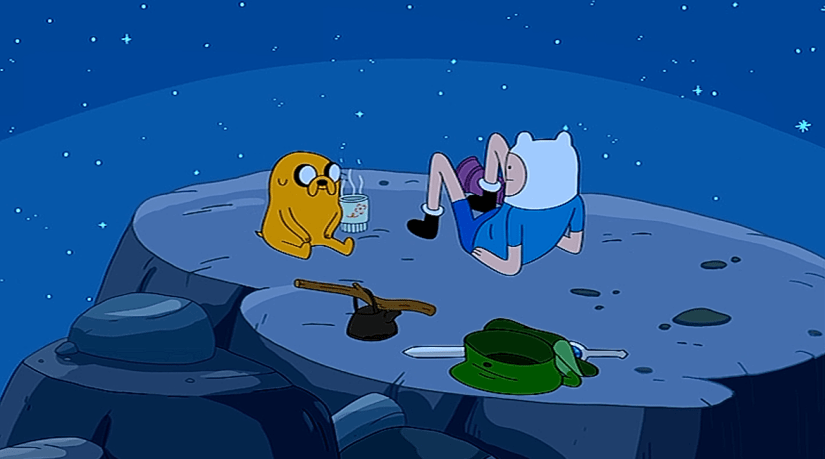
On the other side of things, Finn and Jake enjoy yet another campfire bonding session together, as they prepare to watch the “Dap of the Heavens,” which just feels like Adventure Time in its most classic form. Those fun times end when Finn discovers Flame Princess and Cinnamon Bun working out nearby, which once more reinforces that Finn isn’t really over her entirely. I absolutely love the show’s commitment to Finn’s inability to completely move on from his ex-girlfriend. A lot of break-ups in television are glanced over after the course of a couple of episodes, but here, even an entire season later, Finn is still struggling. It’s painted refreshingly in a different way here, however, as Finn seems more anxious than anything. After a period of growth, Finn likely realizes just how embarrassing his actions were towards FP in the past, and is haunted by his own mistakes. This is why I really like his statement of, “I need to distract myself with work.” After a period of depression, Finn realizes that he can’t accomplish anything by merely allowing himself to feel bad, and that he must shift his focus onto something more productive. It’s really sweet to see how proactive he’s become.
TM 3.png

Though not above all issues, it seems, as the guardian of the Mountain of Matthew acknowledges that Finn is filled with “way cray beeswax.” This likely is addressing the onset of problems that Finn began to experience following his break-up with Flame Princess, and how all of those negative, raw feelings are being brought back at the sight of her.

The inside of the Mountain of Matthew is pretty nicely designed, though nothing I would call especially remarkable. I actually felt its interior was a bit too reminiscent of the tree domain in Little Brother, though they aren’t entirely identical. It’s here where Lemongrab experiences the door trial which propels him forward. Since he and Finn both share a similar experience, I’ll quickly jot down what I think each door represents and then elaborate on it:

  1. Desire.
  2. Fear.
  3. Empathy.

Through the first gateway, Lemongrab sees PB with a catcher’s mitt, and asks Lemongrab to play with her. The use of a catcher’s mitt to represent Lemongrab’s loneliness is first utilized in You Made and is referenced again at the beginning of the episode. What Lemongrab wants most of all is to bond with his mother unconditionally in the strongest way possible, which is, in his lemon-y mind, playing a game of catch. The second door features Lemonhope in a successful place as the ruler of Castle Lemongrab, which shows Lemongrab’s absolute inadequate feelings towards his own status. Aside from having a relationship with Princess Bubblegum, Lemongrab has always wanted to feel successful in his own skin, and successful as a ruler of his own kingdom. Watching someone who strayed away from his sour ways be able to actually run the earldom better than his own self is deeply stressful for Lemongrab, and interferes with his own view of his place in the universe. The empathy card with the last one is definitely the most questionable, but Lemongrab’s caring feelings for his china doll, and the possible remaining feelings he may share for his brother, propel him to act unselfishly and do something for the greater good, which allows him to move forward.

TM 4.png

As for Finn’s experience with the doors, things go quite comparably. Through the first door, Finn has the opportunity to take Cinnamon Bun’s place, both physically and metaphorically, to “be with” Flame Princess. The second door has Jake and BMO about to feast on Finn cakes, without the company of Finn, which could simply represent Finn’s simplistic desire to possess his special cupcakes, or it could picture Finn feeling like he is ultimately left out of something. Finn can be a bit clingy and possessive, so it would make sense that his fear is something that reflects his underlying need of support and love. The last door doesn’t show much, aside from a giant butterfly (Finn’s spirit animal), though the screams of Lemongrab can be heard in the background. Finn, like Lemongrab, chooses the path to empathy, rather than something that will directly benefit himself.

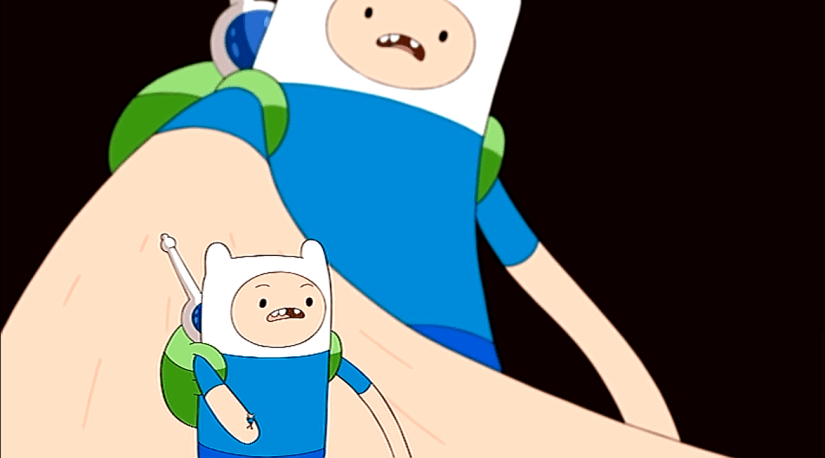
During a retrospective trial where both Finn and Lemongrab are met with massive versions of themselves, things start to get really trippy. Lemongrab’s experience while walking on his own body has him come to terms with the fact that he is coated in grease, and that to be a lemon is inherently to be “greasy.” Lemongrab was referred to as “Lemongrease” by the Pup Gang in You Made Me, though he strictly denied being such an entity. Here, after spending time on his own body, Lemongrab finally realizes that he is “grease.” Whether this means he’s a buzzkill, a dickhead, or a real out loud flim flammer, Lemongrab verbally acknowledges that he himself is a troubled being, though he also rejects this aspect of his life. As he chooses to progress forward to meet Matthew, Lemongrab bids farewell to his current self, in the hopes that he’ll find serenity and peace once he leaves behind all of his flaws and imperfections.
TM 6.png

While Finn’s experience through this portal isn’t nearly as reflective, there are some cool thing to point out. Finn continuously runs on his arm, which is missing in the vision. I believe this is in reference to the reinforced message that, even though a part of Finn’s self returned when his arm did, he still is not fully “whole.” This is shown in Is That You? with Finn’s thorn, and is displayed here as a means of showing that, while Finn’s arm is back, it isn’t fully there. Finn’s childlike happiness has returned to him, but it will never be the way it used to be entirely.

All of this boils down to the climax, with Finn and Lemongrab meeting up with Matthew. It’s both the coolest part of the episode, and the most confusing. But I’ve pieced it together as much as one can, and after years of reading what others have said, and as well as what I myself interpreted, it seems more apparent. Matthew states:

“The meat-bodies who have journeyed to this mountain have distilled themselves to their original source materials, and now exist in oneness.”

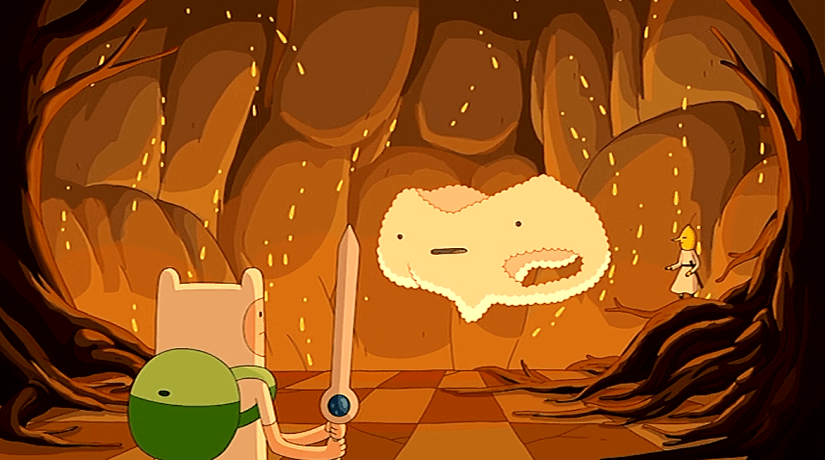
Matthew is essentially a cult leader or a false prophet of some sort, offering peace and restoration when the second end of the world comes, and for anyone who can no longer find peace and meaning in their own lives. Essentially, Matthew boils people down into being thoughtless, desireless beings who merely follow in the path of one ultimate sense of power that gives them meaning. It is cool how Matthew isn’t necessarily presented as a villain; like everything else in this episode, his state of being is ambiguous. There’s nothing that suggests he’s downright malicious, though his ultimate downfall is the fact that he destroys the free will and identities of other beings, but only at the expense of their original choice to sacrifice themselves to become something greater. This is why Lemongrab came; Finn states, “I know ya got issues,” and that’s exactly what propelled Lemongrab to choose a new path of being: to surrender his worldly and inner problems, and to become part of something bigger than himself, as many do with any kind of religion. Though, Lemongrab’s ultimate ego is what leaves him unable to surrender himself to Matthew. As he pulls out the remaining Lemonjons (or lemon candies) he gathered from his dinner, he realizes that the Lemonjons, being greasy and “flawed” could break Matthew. Lemongrab exclaims, “if you are the head that floats atop the ziggurat, then the stairs that lead to you must be infinite. Infinite stairs are UNACCEPTABLE!” Lemongrab knows that, to actually be something or someone as great as Matthew, the path to become undoubtedly perfect offers an impossible destination. Lemongrab came to the Mountain of Matthew to find peace in his state of being, but as it has been enforced time and time again, in Lemongrab’s mind it’s “his way or the highway.” Lemongrab fails to understand why he should give himself up to be like everyone else, because even though he isn’t fully happy with his life, he knows that he doesn’t want to lose his lemon-y essence in the end. The imperfect nature and utter “grease” of the Lemonjons causes Matthew “perfect” nature to erupt, and to show the true face of his followers, who are all identical and unremarkable, showing that his followers truly did sacrifice every sense of their being. It’s complicated to know if what Lemongrab did was right; these people are clearly upset with his actions, and while I don’t think the nature of Matthew was truly authentic, some people would much rather be apart of something that helps them feel more special and unique, even if it does stifle their own individuality and characteristics.
TM 5.png

But, the important part story-wise is that Lemongrab did successfully achieve solace through his experience in the cave. As he returns home, he spits the remaining gunk of the Lemonjon he was chewing into the cracked mural, and utters, “yo, yo, it’s grease!” It shows that even grease, something that Lemongrab once revolted against, could be something that’s filling and purposeful. Lemongrab is “grease,” but his overall acceptance of himself and his way of life is exactly what he needed to feel more comfortable in his own skin. Lemongrab does as he will, and his acceptance of how he does things, and the reassurance that they do embody something meaningful, gives him a reason to chill out and let things be.

Woof. This one is a doozy, y’all. And honestly, it’s hard to put into words exactly how I feel about it. It’s certainly interesting, and there’s no denying that. The themes and metaphors it presents are often difficult to read into, but provide this episode with a ton to work with when it comes to those deeper, analytical expeditions, as this review was. So it’s definitely intriguing, but does it work on a surface level? Well… I think it depends on the person. This is one that took several viewings for me to get fully invested in; there’s so much going on that it takes a lot of reading into to fully understand what’s going on in the story, which can certainly be frustrating. There’s other things holding it up: the environment, atmosphere, and trippy visuals are certainly a treat. Some of the trials that Finn and Lemongrab go through aren’t entirely difficult to understand, and Lemongrab himself is, as always, hilarious. My favorite bit is the running gag in which he simply utters “bye” before abruptly doing something extreme. Also, the scene where he kills the guardian, as Finn responds, “dude, I was gonna ask him to move,” had me in stitches. Granted, I still think the ability to get behind the actual themes and story of the episode is a big aspect, and I can totally understand if people weren’t able to enjoy this one as it is. It almost leaves too much up to the viewer where it feels like you HAVE to look deeper in order to have a pleasurable experience with it. But, as for myself, I do quite enjoy it, though that’s a personal preference and I don’t know how much of a gem it is on its own and how much I could truly recommend this to someone is. It’s an acquired taste, and one I get behind, but it surely isn’t for everyone.

TM 7.png

Favorite line: “You will be served in a pitcher by a little child!”

Adventure Time, Animation, Lifestyles

“The Visitor” Review

TV 1.png

Original Airdate: February 5, 2015

Written & Storyboarded by: Tom Herpich & Steve Wolfhard

A lot of people were disappointed by The Visitor, either because it wasn’t raw and emotional enough (this was aired side-by-side with Steven Universe‘s On the Run after all, which was a terrific episode) or because many felt we didn’t learn anything particularly new about Martin. While it’s true that Martin is pretty much still just an irredeemable asshole, it does at least show how much Finn’s attitude towards him has changed over time. Finn no longer simply wants to force his dad to be in his life, nor does he want to extract revenge, but Finn still seems, at the very least, confused. He still doesn’t completely understand why Martin is such an utter piece of shit and why his father abandoned him, and Finn doesn’t have any idea about the truth behind his origins. This episode answers some of those questions… with mostly unsatisfying answers… but I’ll defend The Visitor in that I think it’s a very intriguing interactive episode between Finn and his father.

TV 2.png

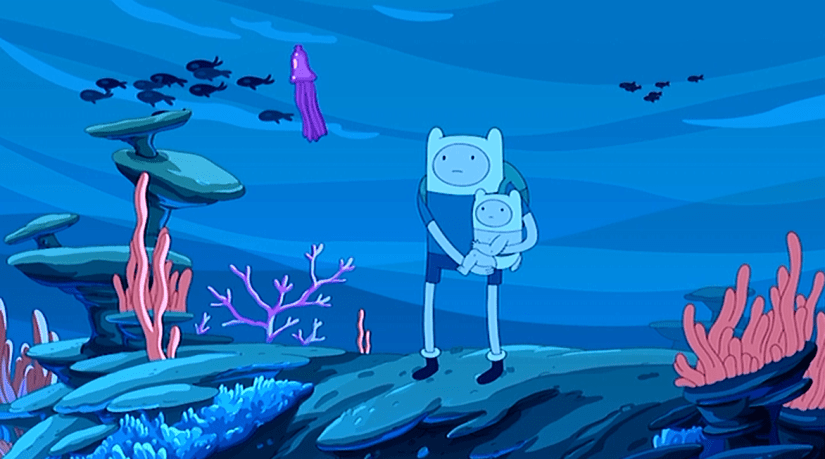
The episode begins with another dream sequence to add to Adventure Time‘s absolute dream fetish quota. As usual, the sequence is pretty stellar and trippy, with allusions to Finn’s childhood self and the nature of his being. The sperm-y comet in his dream directly leads him on a path to Martin, as Finn carries his buff baby self. As the baby clings onto Finn and asks him to hold tighter, Finn responds, “it’s okay, I won’t ever let you go.” I saw this both as an allusion to Finn never giving up his childlike innocence, and also his failure to let go of his past history as a baby. Finn is still deeply affected by the fact that he was abandoned as a child, and he simply wants to know what the reason is behind that abandonment. It takes a long bit of time for him to truly move on from this aspect of his life. He acknowledges his statement in his mind by thinking, “that’s true.”

When finally confronted with his father once again, Martin seems as scummy and conniving as he did in Escape From the Citadel. The first shot we actually see of him depicts Martin eating the contents of a baby bird’s egg, and promptly spits the feathers out of his mouth once Finn enters the tree. Isn’t he just delightful? Martin also once again tries to divert Finn’s attention away from himself, though he fails entirely, and Finn figures his scheme out. The one difference between Martin’s original appearance and his role here is that he isn’t trying to get away from Finn with every chance that he gets… though he does try to at some points. Here, I think Martin is at least trying to bond with Finn, but he’s doing it entirely for himself, and not for Finn’s well-being. He wants to make himself believe he’s putting in the work of being a caring father, but doesn’t actually seem to care if he is one or not. And again, it seems as though he’s trying to find as many distractions as he possibly can; after crash landing on Earth, he immediately wants to return to space once more, because nothing beneficial is around for him on Earth. Or at least, that’s what he thinks.

TV 3.png

During this meeting, Finn isn’t entirely angry or furious with his father. He had gotten over the fact that Martin was the reason he lost his arm initially, and knows that revenge won’t bring him any form of satisfaction. Though, this doesn’t stop his general disgust from showing as Martin tries to hug him after tricking Finn into thinking he too lost a limb. Finn is rationally upset because he feels as though he can’t trust Martin for anything, and he’s only more-so disappointed by the fact that Martin assures him that he’ll never be able to tell the difference. One of the cleverest bits of Martin’s character is that you can never tell if he’s being sincere, or completely lying. Stephen Root’s work with Martin is great, because every line comes off as genuinely charming and affectionate, even is he’s being a complete asswipe. It’s an effect that not only works on the characters in this universe, but on the audience as well.

The villagers that Martin and Finn come across are pretty charming; their designs are super simplified, but their nature and character traits are actually somewhat profound. I kind of love that they’re smart enough to know that they’re being tricked, though they want to help out as much as they can just because they’re simple nature has allowed for them to become altruists. It’s pretty cool to see citizens of an area in Ooo who aren’t blatantly stupid or irrational, and some who are actually quite bright and humble in contrast. Fun fact: almost all of the guy villagers are voiced by Tom Herpich, and almost all of the girl villagers are voiced by Tress MacNeille.

TV 4.png

Most of the episode revolves around Martin manipulating the villagers into doing deeds for him, and while it’s relatively one-note, it’s all pretty funny to watch. I love seeing Finn’s absolute dead-pan reactions to all of Martin’s endeavors. The best part of it all is easily the party he throws for the villagers, in what is supposed to be a happy celebration, though everyone in sight looks like they’re either in pain, or absolutely miserable. Really paints Martin to be like an absolute monster, as it should. Even when he’s trying to do something for others, he still always selfishly puts himself first.

Though at the party, he does set aside time for his son, as Finn begins to grow introspective and wants to know some details about his past. Martin initially bats around the questions aimed towards him, though quickly grows to being genuine when he does acknowledge how much it means to Finn. This is probably Martin at his most sincere, and likely the most sincere I’d ever want to see him. Though as he proves, he can’t even really conquer sincerity the right way, as he just vaguely glances over key details in the story of Finn’s early days. It does add a bit of depth to Martin’s character, as he acknowledges that talking about Finn’s mother “stresses him out.” Again, not much is given when it comes to the concept of Finn’s mother, though we can at least gather that Martin did truly care about her at one point, and it’s a touchy subject for himself. It can be concluded that he’s the type of dude who has grown to eliminate anything even remotely stressful from his life, simply because, after all the traumatic things he’s been through, he doesn’t want to experience anything quite as emotionally taxing again. He does pull off the gist of Finn’s story quite nicely, and ends with, “I always planned to come back for you, but I didn’t.” Martin acknowledges this statement by mirroring Finn’s line earlier, “that’s true.” It’s a small, but huge moment that shows that, while Martin is a polar opposite in comparison to his son, the two do share at least one aspect of sincerity. Of course, Finn’s statement was about never letting himself go, while Martin’s statement related to actually letting Finn go, but it’s the one moment where Martin is completely and utterly honest with his son, and while it doesn’t lead to any actual development in Martin’s character, (which I wouldn’t want to see anyway) it does at least offer us a single scene in the grand scheme of things where the two characters are able to be somewhat real with each other.

TV 5.png

This doesn’t last very long, as Martin plans to leave on his ship (christened as the “Minnie”!) after leaving the entire village in absolute despair. He attempts to ditch Finn without even saying goodbye too, but also in a rare moment for himself, he invites Finn to come along with him in space. Granted, I don’t think this invitation is met with the same sincerity that his previous interaction was; I think Martin simply wants to use Finn as an ally and then to ditch Finn when he is no longer of use to himself. Finn is smart enough to now to know this truth, and instead of joining Martin in an attempt to either get closure or to bond with his father, he chooses the path that he knows and one that has benefited him in his toughest times: being a hero. And it also means sending his father directly into space, as far away from Finn as possible. Finn no longer feels like he needs Martin’s validation or love to move on with his life; Finn has a handful of other emotional support options to fall back on, and he realizes that his dad is genuinely a bad person. It certainly doesn’t make Finn whole completely, but he’s continuing to develop on himself by choosing to eliminate negative influences from his life, rather than to bounce back on them. In the end, he reigns a hero once more, but is confused about the lack of an actual comet that appeared in his dream. Little does Finn know, the actual convergence of a catalyst comet approaches shortly.

The Visitor is a good combination of funny and sad moments, with most of its poignancy reflecting just how awful Martin is to Finn and that Finn is still primarily deeply confused. It does end happy, however, with a positive step forward in Finn’s life path, and one that continues to increase his affirmation for life in general. Granted, I can see how a lot of people were disappointed with the lack of actual answers we got with Finn’s backstory, though I think I’m more so satisfied knowing that those answers are confirmed later on in the series. As is, The Visitor is an entertaining entry that focuses on the differences between Martin and Finn, yet cleverly also touches on their few similarities.

TV 6.png

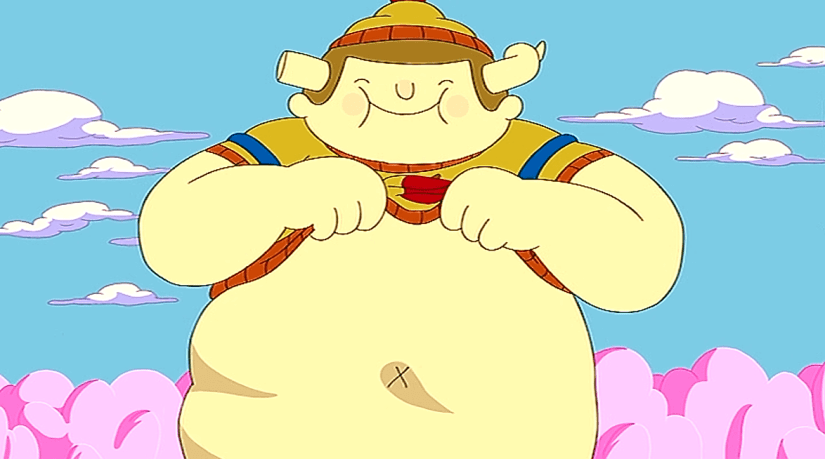
Favorite line: “Everything is ruined. Everyone is fat.”

Adventure Time, Animation, Lifestyles

“Gold Stars” Review

GS 1.png

Original Airdate: January 29, 2015

Written & Storyboarded by: Seo Kim & Somvilay Xayaphone

This is Sweet Pig Trunks’ (or, Sweet P. for short) first appearance since his faux-debut in Escape From the Citadel, and the episode doesn’t stray away from from the biggest topic on everyone’s mind: if the Lich still has power within Sweet P.’s psyche. While Gold Stars confirms this theory in a chilling and impactful way, the rest of the episode… meanders. It’s not completely awful, but it suffers from being a bit unoriginal and has bits of lazy writing throughout.

GS 2

I think one of the main struggles of the episode is that Sweet P. himself is not an inherently interesting character. His connection to the Lich certainly makes him interesting and makes me care for him, but Sweet P. in general doesn’t really have a ton to his character as an individual. He’s sweet, sensitive, and kind… and that’s practically it. And this is about as harsh as I could possibly be on this blog, but his voice actor, Ethan Maher, gives an entirely stilted performance. Obviously it’s not the kid’s fault, he’s only seven years old! I’m sure he was trying as hard as he possibly could to read the lines given to him in a convincing way. But it really is just a result of pretty much every young child actor that’s ever existed not having enough experience in the field to know what exactly makes a good performance. I’m not blaming or criticizing his voice actor at all, but I do think it also hinders Sweet P. from feeling like he’s more than just a blank slate, because every line that comes from him is monotonous. Where these monotone lines do work, however, is anytime when Sweet P. is allowed to act creepy or threatening, which only really comes into play by the end of the episode.

I liked Finn and Jake taking Sweet P. to school with the squadron of Candy Kingdom military force surrounding them, though it really makes me wonder: why the fuck would they give Sweet P. to Tree Trunks and Mr. Pig in the first place if they were so concerned about his unnatural state of being? I mean, it’s proven in this one that TT and Mr. P are far from being the best parents, so how did they ever think such an idea was a good one? Seems to be a cautionary action that’s too little, too late. I actually like how Tree Trunks and Mr. Pig’s negligence is portrayed as mostly harmless and doesn’t really make them come off as shitty people. I mean, they’re not very responsible parents, that’s clear, but it kind of comes from their own naivety rather than them being terrible or anything. It does make me wonder, though, do these two even know that their son is the Lich? I truly wonder if anyone told them, and my guess is no. But that makes it somewhat more bothersome, because why would they put this temperamental child in the hands of two senile, old coots? As more pieces come together, I struggle to make sense of this decision.

GS 3.png

Though, Sweet P. isn’t the only character who takes center stage in this one, as King of Ooo returns once more after his debut in Apple Wedding. It’s good to see him again; I enjoy the King of Ooo’s tendencies of being an obvious swindler, yet one that still has charm, much like Martin’s character. And it’s cool to see Toronto finally included in this one after his first appearance was cut out from Apple Wedding. The two are presented as enjoyable assholes throughout the episode’s run, though I’m not the first person to feel like the episode treads similar territory to PinocchioAdventure Time has followed the outline of already-done stories before, such as Puhoy did, though that episode was subversive in nature and took a unique spin on the source material. This one seems to be a bit too much like a rip-off, but it’s not an element that particularly bothered me in any which way because I like the story of Pinocchio a ton, and it’s fun seeing it represented through these characters. I guess it’s more so the fact that it’s entirely predictable where exactly this story is going, which makes it less fun, especially on a first viewing. It always struck me as weird that King of Ooo and Toronto steal from people while they’re hysterically laughing… wouldn’t it make more sense and be less risky to just charge people for Sweet P.’s circus act? I guess that’s part of the joke, but I dunno, I didn’t really go along with it. Sweet P.’s truffle shuffle in general is just kind of… awkward, I guess? It’s something that’s funny to the characters in the show, but not necessarily funny to the audience. Which makes it sort of hard to believe in terms of relatability. I mean, the dance practically puts everyone in a trance, and it’s largely ineffective as a comedy device for any of us watching at home. Granted, I’m sure it would be legitimately funny to see a giant baby-man wiggling his tummy around in real life, but it gets so much focus in the actual episode and never comes off as humorous, even from the first time it’s utilized. I wouldn’t have so much of a problem with it, but it’s an episode that’s relatively devoid of humor otherwise, so I wish there could have been something with a bit more substance carrying the actual laughs.

As I mentioned in my first paragraph, this episode suffers from some pretty lazy writing in certain areas. There’s parts that feel almost entirely like padding, such as when Toronto is trying to trying to convince King of Ooo that Sweet P. has talent. It goes on and on and on, and is yet another instance of Somvilay’s writing style slowing down the pacing of the episode. But I can’t put all the blame on Somvilay, because Seo’s bits feel equally uninspired in their dialogue. The scene where King of Ooo and Toronto openly discuss how they’re deceiving Sweet P. is unbelievably dumb. I mean, seriously, this couldn’t have been carried across in any other way? Toronto’s line of “what does it matter? None of it was good!” somewhat makes up for it, but it still feels lazy in its execution regardless. It’s also somewhat jarring to see King of Ooo go from this manipulative con man into someone who’s legitimately violent and aggressive, and I don’t think it’s handled in a natural way. I guess it makes sense because his identity as a “hero” was in jeopardy, but in that case, should he really be openly stealing from others? Wouldn’t that potentially harm his career as Ooo’s savior? And how does burning down Sweet P.’s house “take care of him”? Wouldn’t that bring more attention to the situation? I have so many questions, purely because this entire scenario just feels completely absurd.

GS 4.png

Regardless, it does lead up to the best moment in the episode: the Lich being summoned. I absolutely love this entire bit; the way that the reflection of KOO’s fire shifts to a green flame in Sweet P.’s eye is a purely awesome transitional moment, and the dialogue that mixes between Mayer’s voice and Ron Perlman’s voice is chilling to the bone.

“Stop. I have learned much from you. Thank you, my teachers. And now for your education. Before there was time, before there was anything, there was nothing. And before there was nothing, there were monsters. Here’s your gold star!”

It’s awesome how difficult it is for the series to make a Lich monologue fail, and it helps that they’re used quite sparingly. The way everything goes silent, dark, and then fades into the Lich’s realm of monsters, sets an extremely off-putting atmosphere that once again builds on Adventure Time‘s lore and is pretty awesome in its own right. It’s cool to once again confirm that the Lich has existed for as long as time itself, and that he is likely the oldest being in the existence of this world. The designs of the monsters are all grotesque, yet aesthetically pleasing, along with a cameo from a little guy who we will be meeting shortly. The only thing more disturbing than the actual speech is Sweet P.’s remark that it was “just a dream,” mirroring his line earlier. The Lich is horrifying enough as it is, but connecting him to the life and being of this innocent child makes things even more terrifying. Really leaves a bad feeling in my gut every time I see it.

GS 5.png

However, it still leaves for a relatively happy ending, as Sweet P. is truly a kind kid by nature. Even after being bullied by others, he chooses to laugh along and not let others bother him, rather than channel into his own self-conscious fears and darker tendencies. It’s a bit telling for what kind of a character he is, and plays into his development later on.

As is, this one is mainly mediocre, with some bits I think are really just plain bad. The Lich’s speech at the end surely justifies Gold Stars‘ existence, but the rest of the episode is coated with poorly written dialogue, a predictable story, and a pretty sub-par main character at the helm. It really doesn’t help that it’d be a whopping 82 episodes before we would even get a follow-up of this story, which decreased my investment in this actual arc as time went on. Granted, this is not a fault of the episode, but Gold Stars has many other issues worth noting, with one gem moment that at least helps it stand out.

Favorite line: “Did your grandma knit your clothes?” “Yeah, and she’s my mom!”

Adventure Time, Animation, Lifestyles

“Astral Plane” Review

AP  1.png

Original Airdate: January 22, 2015

Written & Storyboarded by: Jesse Moynihan & Jillian Tamaki

Finn no longer suffers from the major depression that he experienced at the beginning of the season, but that hasn’t stopped him from his search for meaning and self-examining behavior. Finn is at the age (likely 16 by now) where he’s beginning to question his own purpose in the world, as well as the purpose of the world itself. And often, when looking at life and its results as a whole, disappointment is certainly one of the most common feelings that we as human beings experience, and the Land of Ooo isn’t a stranger to that either. Finn gets a firsthand experience of how loneliness impacts the people of Ooo, and begins to wonder if living life is actually really worth it. This one is written and storyboarded by Jesse Moynihan and Jillian Tamaki, who joined the AT crew for this episode, as well as The Diary later on. While Astral Plane includes some of those typical Moynihanisms that seem more as though they’d be coming from his mouth than the mouth of our main character, the episode does manage to come off in a pretty natural and interesting way, and does genuinely exude some though-provoking material.

AP  2.png

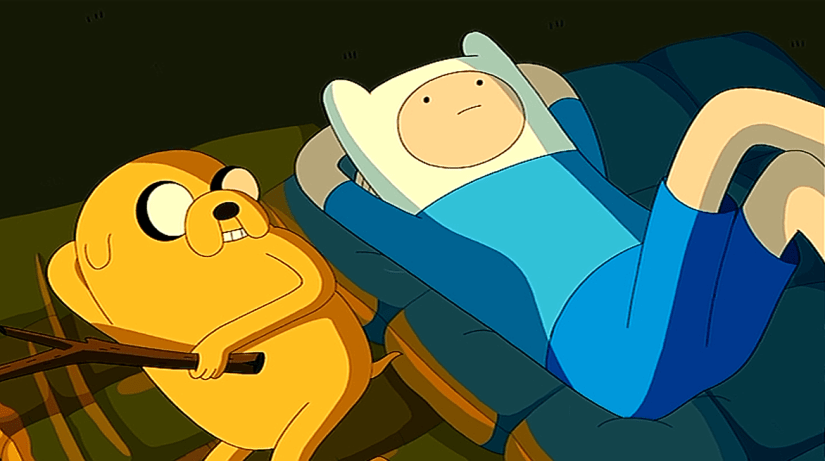
Not only is Finn beginning to act older and more mature, but the way he’s drawn in this one actually makes him look taller as well. It’s a nice touch, though I wouldn’t really call it a permanent change for his character design. Every storyboard artist has their own take on Finn, so his appearance is never really entirely consistent to begin with. But still, the effort is felt, and it’s really nice to just see how much he’s grown both physically and mentally. His camping experience with Jake is also super cute; I love any moments that showcase the two brothers just hanging out and enjoying each other’s company, and Finn’s ponderous concern about owning pets is just the kind of goofy conversation I would expect them to share, which also ties into Finn’s behavior in the episode.

It’s notable that Finn entering his astral form in this episode is kept mostly ambiguous. While he did so by sheer concentration back in Still, this one has him summoned against his will, which could be contributed to the nature of the comet. But of course, as we learn, the comet is actually Martin’s star ship, so I’m quite curious as to why exactly Finn entered this plane of existence. Was it because of his search for answers that sent him hurdling toward Martin, or possibly just to Mars? Was his ascension inadvertently caused by Martin? It’s tough to know, and I myself don’t have a definitive answer. But regardless, the ride is more noteworthy than the actual destination.

AP  3.png

As Finn laments later in the episode:

“If just being born is the greatest act of creation. Then what are you suppose to do after that? Isn’t everything that comes next just sort of a disappointment? Slowly entropying until we deflate into a pile of mush?”

This is reflected through his experiences in the astral plane, and just how much he realizes by observing other people. Using this quote for reference, I’ll be diving into each character’s story individually.

The first person Finn comes across is Mr. Fox – er, Mr. Fox’s subconscious, more like it. Leaving right where he left off in Another Five More Short Graybles, Mr. Fox lives completely alone in his log cabin, and has essentially only himself to chat with. Thus, Mr. Fox experiences a life of solitude and isolation, but one that’s completely by choice. Mr. Fox is lonely, as Finn notes, but it’s never addressed that Mr. Fox is actually depressed. In fact, his astral self is even somewhat sociable with Finn as he enters in. Yet, Mr. Fox would rather live a life of comfort and peace, rather than one following his dreams or achieving any types of life goals. Finn notes that, while this lifestyle does seem awfully lonely and unfulfilling, it has some perks. People who are lonely often have more time to focus on work and their own personal projects, as Mr. Fox showcases. Though, it argues the question: is it more fulfilling to spend your time alone to work, than to experience life and the outside world? Should one attempt to fill their life with as much as they possibly can, or focus on developing their own skills in absolute seclusion from the outside world? There’s a happy medium for both, but I don’t think there’s a solid solution either way: The former has you sacrificing part of yourself, while the latter leaves you with nobody to share your life with. It’s a dicey path for people who especially love their own work.

AP  4.png

Bounce House Princess, the most obscure featured character in this episode, (seriously, this is her second, and also last, appearance in the series. Kinda weird to see her here, but also welcomed) is the next person Finn experiences on his travels. Bounce House Princess is also an introvert, though one that suffers from a pretty bad case of agoraphobia, and who can blame her? The world is pretty dangerous for a little bounce house, especially when there’s porcupines roaming about Ooo. Bounce House Princess’s dilemma is a sad one; she wants to be able to put herself out there and connect with other people, but she’s too afraid of (literally) getting hurt and/or ruining her life. It shows how dreadful anxiety can be: BHP loathes herself and is angry that she can’t just get out there and socialize with others, though anxiety can be consuming and is something that is somewhat out of her control. And her worst fears actually do come true when she deflates, proving that allowing herself to interact with the world may just be a bad life choice. Poor gal.

Ice King brings to the table his usual awkwardness, though it’s viewed somewhat in a complex light. Here, he’s actually pretty social. He’s talking to ladies at a party, and keeping everyone happy with supplies of ice. Yet, he’s overshadowed by his talent of producing ice, and nobody really wants to get the chance to know him otherwise. He is insane, after all, and everyone in the Cloud Kingdom likely recognizes this. While he’s not outright rejected, it becomes pretty clear that Lauren, the cloud chick, is more interested in Finn than she is by the IK. Thus, Ice King feels lonely, and only contributes to his own loneliness by pushing away the people around him. He freezes all of the Cloud People, thus eliminating a way for himself to be rejected. As Finn notes “it’s like part of him wants to be a sad wong-lord.” While Ice King likely doesn’t want to be sad, he eliminates all opportunities for himself to be happy because of his self-destructive and unorthodox behavior. He wants to be happy, but doesn’t rationally understand people and social cues enough to achieve such bliss. He’s simply stuck in his own awkward ways, unable to move forward because of society’s perception of him, and the fact that he’s never able to make choices to shift this perception. This leads Finn to question, “why would anyone want to be sad?”

AP  5.png

This transitions into Marceline’s tune (it had been months between Princess Day and Astral Plane by this point, I almost forgot that Marceline was even a character) “Yeah Girl, It Stinks,” which is brief, but awfully depressing and sheds light on Marceline’s emotional state as a whole. Practically in response to Finn’s question, Marceline sings about how she pushes away everything and has taught herself to not care simply because everyone she’s ever cared about has either died off or forgotten about her. Marceline also wonders what the point of everything is, because after a thousand years of putting her care and love into the world, everything is fleeting and nothing lasts, and she’ll continue to end up being alone. Marcy realizes that and channels that negative energy into her own creative outlet: music. This causes Finn to question whether sadness spawns creativity, which isn’t completely far from the truth. Oftentimes, sadness and loneliness can be channeled into something exceptionally beautiful through artistic mediums, but like Mr. Fox, is it worth it to feel sad and lonely if it means that you’ll possibly be more creative?

Finn has all of these conclusions about the meaning of sadness and loneliness, but no true answers. It isn’t until he experiences the convergence of space lards, and the birth of a baby lard, that he discovers the true amazing nature of creation and just how spectacular it is. Birth is a nearly unexplainable gift of nature that can ultimately not be conquered by any other event in life as more significant. In general, the scene is pretty gnarly. I love the simplistic design of the lards being used for something so epic, and the continuation of the ever-growing lard species never ceases to amaze me. There’s also the notion that they can see and even know Finn by name, further exemplifying their mystical nature.

AP  6.png

Though, the episode hits its climax as Finn hovers over to Mars, which is awesome to see once more. It’s even cooler to see the CG-animated introduction shot of Mars, which looks like something straight out of Futurama. All of Finn’s lingering questions arise when he’s met with the “G-Man” himself, Grob Gob Glob Grod. It’s cool to see the Glob gang back again, and even cooler to see that Finn essentially turns to answers from “God.” Of course, we have the background story of the “comet” heading straight for Mars, which is a direct continuation of the previous episode. Adventure Time is getting much better at picking up more quickly on story arcs and plot points, and that really only continues to improve with the next few seasons. But back to Finn and Glob’s conversation, this is where Finn begins to drop his knowledge on what he’s learned about the world around him, which is where Glob mentions that, “it’s not enough to have created something amazing, right? What if I just let my Martian super society go to butt?” meaning that anything one creates is deserving of protection and care. Creating is one thing, but managing and allowing that creation to thrive and develop is another. Of course, Finn retorts with the obvious, “what’s the point if we’re all gonna die in the end?” which is inherently nihilistic, but a thought process that’s easy to get wrapped up in. Ultimately, life is short and fleeting, and everything we do and everything we are will eventually come to end, so is there really any point in trying to impact the world, one might ask. This is counteracted by Glob’s decision to fly head first into the comet, ultimately deciding to potentially give up his own life for the sake of his own creation. Thus saving Mars and allowing everyone to continue living their own lives. Glob proves that, even through the disappointment of life, there’s something worth fighting for. Whether it be the lives of others, yourself, or the greater good, there’s always something tying purpose and meaning into the gift of life, and that’s defined through actions and personal impressions of yourself. Of course, not everyone in this episode is able to combat their own lives filled with disappointment: Ice King, Marceline, Mr. Fox, and BHP don’t have any well-defined resolutions, but they’re living regardless, knowing to trust their own intuitions and to keep moving forward.

As Finn states upon landing, “Glob is dead,” which is both literal, and humorously ties into Friedrich Nietzsche statement of “God is dead,” which references that fact that the rise of modern philosophy practically disproves the existence and effect of God. Finn realizes that, with all of the enlightening things he’s experienced, there are more complex ways of experiencing life and its meaning than just by one, solely-defined answer. There are many ways to live life, and many other opportunities, both disappointing and successful, in the future. One opportunity that fits under the category of both is the fact that Martin’s spacecraft is actually the comet hurdling toward Earth, and that his next meeting with Finn is inevitable. Though this really kind of bothers me: a space craft is what killed Glob? Really? Considering that he’s practically God in this universe, I have trouble believing that a machine would be his ultimate downfall. Granted, it makes sense that it wouldn’t actually be the catalyst comet, but it still feels like somewhat of a letdown that Glob was killed by a mere spaceship, and that he didn’t even destroy it in the slightest.

AP  7.png

Regardless, Finn, back in his own body, mentions to Jake that Bounce House Princess needs their help. Following in Glob’s own footsteps, Finn realizes that there’s something in life worth protecting. Adventuring has provided a gateway for the boys to preserve life and to help others in the past, and it truly helps to propel Finn forward into a more rounded and meaningful lifestyle.

I really dig the motifs going on in this one; the whole thing kind of feels like a Graybles episode specifically dedicated to sadness. I maybe would have chosen some different characters for representation… like, it’s cool to see obscure characters like Mr. Fox and Bounce House Princess, but I ultimately think it’s easier to connect with the characters we know better. I think Princess Bubblegum would have been able to fill in the shoes for isolation quite nicely, and maybe even Lumpy Space Princess could have fit in Bounce House Princess’s place. But that’s not a complaint by any means, I still do enjoy M.F. and BHP’s individual roles. As always, Moynihan creates a trippy and psychedelic environment that is pretty unforgiving with how philosophical it gets, and it’s always pretty sweet to see something this unique and different on a mainstream children’s network. Of course, to some it’s pretentious, and I understand where those people are coming from, but man, is it interesting regardless. Moynihan and Tamaki successfully create an interesting concept and environment based on the overarching theme of sadness and loneliness, and leave you with no defining answers, but rather even more questions than you had before. In typical Adventure Time fashion, Astral Plane aims to make the viewer think, rather than to be spoon-fed answers. And in a world with goofy Candy People with noodley arms, it’s always nice to see a little touch of sadness and existentialism.

AP  8.png

Favorite line: “Hey, do you ever say ‘Oh my Glob?'” “No, but sometimes Gob does.”

Adventure Time, Animation, Lifestyles

“Evergreen” Review

EG 1.png

Written & Storyboarded by: Tom Herpich & Steve Wolfhard

Original Airdate: January 15, 2015

That beginning transition from the opening title with Finn and Jake to the title card with Gunther and Nina is all we really need to completely engross us in a prehistoric version of the world of Adventure Time, and the first pre-Mushroom War episode to date. This is a pretty huge episode, and it doesn’t really take its time explaining anything. It immediately throws you into an entirely new, but familiar world, yet it’s another example of what season six does so well. By this point, we’re somewhat used to episodes that don’t focus on Finn and Jake, and as long as the characters and stories are interesting, we don’t truly feel the weight of their absence. This episode is not only big in its scope, but it’s also somewhat significant in how this episode was practically written entirely by Tom Herpich. While Andres Salaff directed it and Steve Wolfhard assisted with some bits and pieces during the storyboard process, Herpich conceived the story for this episode entirely on his own – a rarity for the series in general. Though, I couldn’t think of a better person to put at the helm of Evergreen. Herpich is one of the greatest storytellers in the series, both visually and writing wise, and he’s able to tell a tale that is heartwrenching, and serves as one of the most lore-heavy episodes of the entire series.

EG 2.png

Even if Finn and Jake aren’t in the episode, their identities are still captured through the presence of Gunther and Nina, who aren’t exactly like their human counterparts, but still manage to capture some of that charm. For instance, Gunther is a pretty goofy kid with a good heart who only wants to serve for what is right (Urgence Evergreen) even if that means he can often times get wrapped up in his own conflicted behavior. Nina shares virtually no similarities to Jake aside from her appearance, but doesn’t do much to impact the story in any way either. She’s simply there to be Gunther’s loyal companion, as Jake is to Finn. Gunther is enjoyable by just how much his childlike inspiration consumes him, which, like many other characters in the AT universe, is attributed to some terrific voice acting. Pamela Adlon voices Gunther, whose voice is likely most well-recognized from King of the Hill, and she does a spectacular job of giving Gunther the right amount of energy and heart behind his lines.

It always surprises me just how serious and straightforward this episode is. That’s not to say it’s devoid of lighter and funnier moments, but this is the type of episode that is entirely more focused on creating an enticing story and an apprehensive atmosphere than trying to force laughs from the audience, and I commend it for that. The convergence between Evergreen, Chatsberry, Slimy D, and Balthus is entirely foreboding. The “funniest” aspect of this meeting is the fact that the elements in the Adventure Time world are fire, ice, candy, and slime, which are both hilarious and kind of awesome bits of lore to add to the series. In a world where candy is so dominant, it nearly makes sense that such a heavily focused aspect of the series would have some sort of elemental nature, and helps the Adventure Time world to stand apart even more from other fantasy worlds. Sure, they could’ve gone with the already well-known classically defined elements, but in the surreal and unusual world of Adventure Time, this seems the most fitting. The elementals are all really well-designed and portrayed. It’s a nice touch having Keith David voice Balthus, though it’s a little disappointing in hindsight, seeing as how Flame King didn’t end up being the fire elemental. Having Alan Tudyk voice Chatsberry was sheer brilliance, seeing as how he previously voiced King Candy in Wreck-It Ralph. And of course, Tom Kenny does a standout job voicing Evergreen. I know Kenny is used rampantly throughout western animation, so it’s a given that he’s a talented guy, but it’s his distance from the more goofy and cartoony inflections through his characters in AT that truly define how much range Kenny has. He’s able to capture Ice King, Simon, and Evergreen, who all relatively have the exact same voice, in unique and diverse ways, giving each character a specific identity. I also gotta give props for his design; he sorta just looks like a more disheveled and ominous Ice King, but the random inclusion of chicken legs helps to provide Evergreen with interesting mythological properties.

EG 3.png

The entire middle of the episode is dedicated to showing Evergreen and Gunther’s relationship in great detail. The connection between the two is simple, yet telling: Evergreen is so consumed with his own ego and desires to save the world (but mainly himself) from impending dangers that he doesn’t recognize Gunther’s desires for love and compassion, or at least doesn’t care. It’s made very clear from the beginning that Evergreen is a loony survivalist who really only wants to preserve himself and his legacy, but doesn’t care for those around him or their well-being. Gunther is quite the opposite; he cares for Evergreen and respects him probably more so than he does for himself. But Evergreen doesn’t accept Gunther’s niceness and loyalty, and views Gunther more as a prop or a servant to help him to carry out his more tedious deeds. Evergreen simply manipulates Gunther by bringing the little dino boy under his wing, only to make Gunther feel inferior and as though he’ll never be able to achieve any success as long as Evergreen is around. And Gunther feels just that, as his undying loyalty to his master causes him to feel increasingly low about himself. So much so that Gunther’s need to do things the way Evergreen would causes him to make the same behavioral mistakes that his master does. When his mission to gather water is failing, and his pet Nina attempts to help, Gunther smacks Nina aside and shouts “Nina, no!” It’s probably one of the darkest moments of the episode to see this cute little creature tossed aside so aggressively, and even a bit depressing that we watch this goofy character mirror his idol’s abusive behavior.

I haven’t mentioned it yet, but good God does this episode just look beautiful. Once in Magwood’s volcano, the eruption of different reds and oranges illuminate the screen, and the way these colors reflect through the characters just makes everything look like one big visual treat. And keeping in the realm of variety, those reds switch to harsh greens when the catalyst comet grows closer, giving the entire location a feeling of trepidation. This is probably the best example of using color to shift atmosphere in the entire series, and it really gives the entire episode a cinematic feel. There’s also some solid bits of animation, mainly with the way Magwood interacts with its surroundings, and when Evergreen nearly melts while in its cave. The design and different forms of Magwood are inherently interesting in general, ‘specially since it kind of resembles Tree Trunks, despite the fact that it is supposedly a dog. Would not be surprised in the least if this resemblance was on purpose – this episode was storyboarded by Tom and Steve, after all.

EG 4.png

The battle inside Magwood’s cave is all pretty awesome and the stakes do truly feel high (Magwood even kills the poor, old Ice Imp!) but the real clincher is the way that Evergreen responds to Gunther’s actions. Though Gunther was noticed by Magwood, his distraction gave Evergreen an opportunity to rejuvenate and to successfully steal the jewel off the Magwood’s head. But Evergreen doesn’t acknowledge this, as the only thing he knows is that Gunther disobeyed his orders. Despite having essentially saved the day, Gunther is left only with the impression that he disappointed his main hero, as he solemnly drops his head before a dramatically placed fade-to-black.

The hectic climax begins to build as the catalyst comet grows closer, and it becomes more obvious what the comet represents. As the ice tower is shadowed by the color green and the comet continues to fall with two twirling horns, it’s pretty apparent that said comet represents the Lich. The Lich’s history began to become a little confusing at this point, as most people were conflicted as to whether the Lich’s origins were brought about through the mutagenic bombs during the Mushroom War, as opposed to a deadly comet. Though, these next few episodes, and the rest of the series in general, make apparent that the Lich simply represents anything that embodies mass death. He is the entity of ending all life, whether it be a deadly comet offering nothing but extinction, or a harmful nuke used in the brink of a war. It makes his presence much more frightening and deadly.

EG 5.png

It’s nice to see that the ice crown’s creation ties back into Ice King’s statement in What Have You Done? that he built it with the magic that he stole. Once again, the writers outdo themselves by touching on previous plotholes early on in the series and correcting them without retconning anything. After a reckless encounter with Magwood, Evergreen is left in a state he isn’t quite used to: being completely powerless. For once his life, he cannot rely solely on himself, and must turn to Gunther to do so. Following Evergreen’s orders, Gunther must put on the crown and focus on his deepest and truest wish. However, as Gunther places the ice crown on his head, we’re reminded of Chatsberry’s words earlier in the episode:

“This wish may see things in you you cannot see yourself. Can you truly say you know your heart’s truest desire?”

Evergreen never told Gunther what exactly his truest desire should be, and Gunther is left with nothing but his own inhibitions in that regard. Sadly, Gunther does get his wish: to be just like his master Evergreen. What Gunther didn’t know, however, is that it meant being an obnoxious, loud, egotistical maniac. Had Evergreen taught Gunther how to use magic as he said he would, or if he even just treated Gunther as a genuine person, Evergreen possibly could have saved the lives of himself and others, but he failed to do so simply because his own negligence backfired on him. It’s a cautionary tale to show how important it is to treat others with care and respect, as that failure to do so could lead to the worst possible results. And it’s genuinely somewhat uncomfortable to watch Gunther transform from his wacky, dumbfounded self into a completely lunatic. Again, it’s one of the darkest endings to any Adventure Time story to date, only lightened by a somewhat comedic realization that it was all a dream sequence of Ice King’s… or was it? Obviously we know that said events actually happened, just as how we know that the events of Joshua and Margaret Investigations were legit. Annnnd, just when the episode feels as though it couldn’t get even grimmer, we’re left with the sole image of a comet heading directly for Ooo. Knowing what we know now, that “comet” isn’t as disastrous as we once thought, but the ending still strikes as an impactful and alarming conclusion to an episode that is pretty unnerving on its own.

EG 6.png

But as off-putting as it is, Evergreen is Adventure Time’s storytelling at its absolute finest. Like I said, it’s mostly straightforward, but I honestly think the way it’s told and and the message that’s carried across makes it feel like a fable of some sort. I could easily see this working as a story from Grimms’ Fairy Tales, because its characters and writing are so strong that they could also stand alone from the AT universe. But, in the spirit of it being in AT’s world, Evergreen is able to build on its lore so significantly. We learn more about the ice crown, catalyst comets, the elementals, the Lich, and life before Ooo all in the course of one episode. It packs so much into one neat package and doesn’t feel at all like it’s trying to cover too much territory. Plus, the visuals are GORGEOUS, as I mentioned, which helps Evergreen to feel like one big source of eye candy. This is one that I think hits home on almost every level: its characters, story, visuals, atmosphere, scope, worldbuilding, and so much more. Evergreen is truly one of Adventure Time’s most ambitious efforts to date, and it feels like a big jump forward for season six, as well as the series, as a whole. 

Favorite line: “Gettin’ fat. Gettin’ fat, right?”

Adventure Time, Animation, Lifestyles

“The Pajama War” Review

TPW 1.png

Original Airdate: January 8, 2015

Written & Storyboarded by: Somvilay Xayaphone & Seo Kim

There’s been years of awkward tension surrounding Finn and PB by this point. Finn loved her, briefly moved on from her, went running back for more, and then generally distanced himself as he began to get wrapped up with other issues. The Tower showcased PB more as a therapist than as a friend to Finn, even though her efforts came from a caring place, and the two haven’t truly hungout as friends in what seems like forever. The Pajama War puts an end to any apprehension between the two and allows Finn and PB to connect through their respective periods of growth.

TPW 2.png

The name and initial premise of the episode sounds jarringly similar to Slumber Party Panic, and while The Pajama War isn’t a direct sequel to that episode in the way that Too Old is a sequel to Too Young, there’s a couple different allusions to it. The hilarious interaction between Finn and Mr. Pig at the beginning when Finn mentions Tree Trunks’ “hot buns” is an obvious reference to his line in the first episode, and works as a mechanism to show just how much time has passed since the series premiere. Likewise, the dynamic between Finn and PB in this one really shows how much has changed in their own relationship; Finn no longer swoons over her and feels head over heels in her presence. He still loves her, but understands that there is no romantic future between the two. Likewise, PB still deeply cares for him, but no longer wants to tease him or give him false hope for such a future. So the two are casually nice and polite to each other, but don’t know exactly how to connect after so much change has occurred over time. Their interactions are clearly awkward after their failure to land a seat in “music chairs” leaves them stuck in a closet to play “7 Minutes in Heaven.” Finn has a way of politely trying to respect people’s boundaries as much as possible: he attempts to be as quiet and to mind his own business as much as possible around PB, and is even surprised when she invites him to go for a walk with her. This is once again brought up again later in Bun Bun, when Finn almost immediately leaves the Fire Kingdom until Flame Princess invites him in. After making a long chain of mistakes, Finn realizes how pushy and clingy he may have been, especially with his female comrades. That being said, he’s still very naive. He chooses the polite and respectful path, but doesn’t realize that those people he hurt still care for him and want to be his friend.

During their time together, the two mainly shoot the breeze; they go for a walk in a VR grassland, play with PB’s giant cat named Timmy, and eat edible fire. It’s pretty cool to see that Prubs has an entire secret room where she can get away from the stressors of her everyday life, though I also bet that she rarely ever uses it. Bubblegum’s whole deal is being encased in her work and barely ever having time for herself, but as of her recent decision to allow herself to take a chill pill for once, she’s allowed herself an opportunity to explore her own laidback realm with the company of her close friend. It also allows the two to open up to each other for the first time in a while. It’s kind of awesome that we have PB talking about her own revelation that she wants to relax more and allow her citizens to go about their lives as they please only an episode after The Cooler. Adventure Time usually takes its sweet time with following up on plot points, though it’s refreshing to see this element of PB’s development being referenced so soon. One thing that hasn’t been referenced in quite some time is Finn’s father, who Finn seems to have been dwelling on over time and has come to his own conclusions about Martin’s questionable behavior. As Finn states, “but, but maybe acting like daddy just isn’t what he does. Maybe my dad’s not a dad but a kid stuck in a dad’s body.” It’s a step forward for Finn to feel some form of empathy for his father, though he’s still attempting to justify Martin’s behavior. It isn’t for some time that Finn finally accepts his father for being genuinely shitty, as Finn still wants to believe that Martin is worth changing. PB and Finn are able to chat about these issues casually, as most people with a long history are. Though, in the spirit of close friends, they don’t focus on this heaviness, and get right back into having carefree fun.

TPW 3.png

There’s also a small, but huge moment when Finn realizes the Candy People have gone completely insane. He’s hesitant to tell Bubblegum, but then shows her quickly after she asks a second time. The Finn we saw in Too Old would have totally tried to divert the attention from the video so he could spend more time with Bubblegum, but it’s clearly framed here that Finn doesn’t want to show PB because he doesn’t want her to suffer. It’s an example of Finn being much more selfless in his behavior to the princess; he doesn’t want to be dishonest with her, but he also doesn’t want to tell her anything at the expense of her own happiness. Months earlier, his primary concern would have been his own suffering, but as Breezy proved, his love and care for others is what defines Finn as a person.

As the two reflect while watching the VR sunset, they confide to each other how much they enjoyed hanging out. That’s the subtle beauty of Adventure Time; you don’t need to have PB and Finn talk about how awkward things have been and then decide to be best friends once more or something shmaltzy like that. As solid writing typically goes, The Pajama War shows, rather than tells. It shows PB and Finn bonding and rekindling their friendship, but kind of leaves things ambiguous for the future. When this episode first aired, there were a ton of people who thought it was implying that Finn and PB would eventually hook up, but the show has continued to disprove that possibility from this point on. It’s a terrific shift in dynamic for the series, and continues to showcase AT’s desire to move forward with its characters in new and exciting directions.

TPW 4.png

And I didn’t even mention the main plot yet featuring the Candy People, which is good fun! Albeit nothing special or new, but entertaining regardless. It’s always nice to see side characters like Manfried, the suddenly very popular Colonel Candy Corn (seriously, what is it about season six and its obsession with this guy?), and Crunchy, whose introspective fascination in tyranny makes a lot more sense in hindsight. It also ties back into the allusions of Slumber Party Panic, by mainly focusing on the absurd nature of the Candy Kingdom’s citizens. It’s a great opportunity to showcase the stupidity of the Candy People, and just how easy it would be for their society to collapse without Bubblegum around. It really paints a gray picture for PBubs: as much as she wants to be chill and let her people live their lives, they’re incredibly stupid and have no shot of living a well-kept life on their own. At least she tried to have faith in them, even if it backfired. Regardless, I don’t have much to say about the A-Plot. It’s full of intermittent humorous moments, like the way Jake sadistically watches as the Candy Kingdom collapses before his eyes, but it isn’t really worth going over in great detail.

As a whole, I think this one is mostly solid. It captures the heart of PB and Finn’s developing friendship, with the Candy People providing good laughs in between. Granted, this is one I respect more than I actually enjoy on a personal level, but it’s deserving of that respect. This is probably Somvilay Xayaphone and Seo Kim’s best episode of the season (this one has Seo written all over it, with its Fubblegum centered premise and its desire to be as cute as possible), and that’s because it focuses on the growth and development of our main characters. And, as Somvilay and Seo have proven in these later seasons, that growth is something they can pull of with great results.

TPW 5.png

Favorite line: “For a society to function, it needs rules. 1. You must drink tea with your pizza. 2. Pizza can only be eaten alone. 3. If a pizza is found in a field, you must make the next person you see holding a glass of milk eat it.”