Adventure Time, Animation, Lifestyles

“The Comet” Review

TCO 1.png

Original Airdate: June 5, 2015

Written & Storyboarded by: Andy Ristaino & Jesse Moynihan

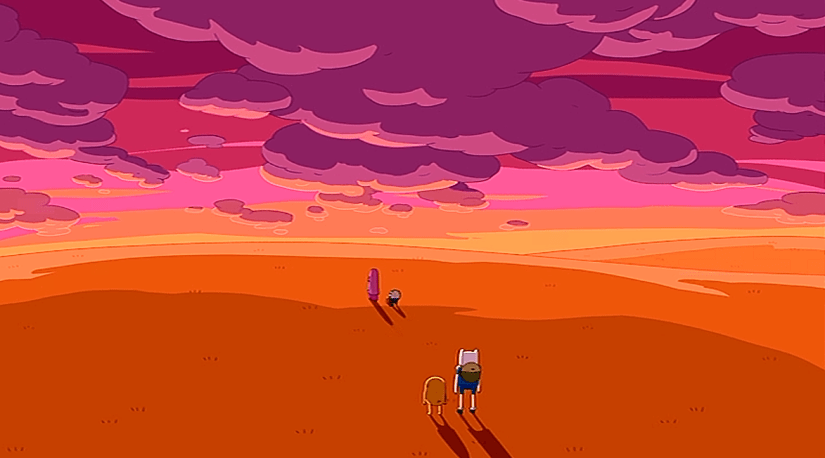
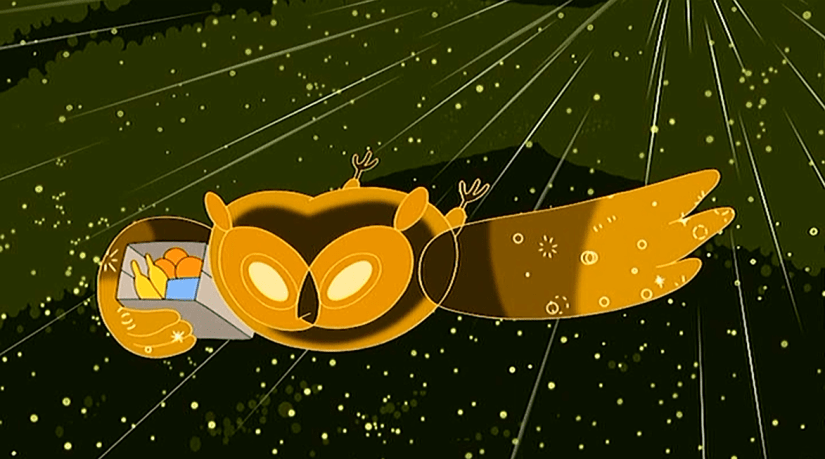
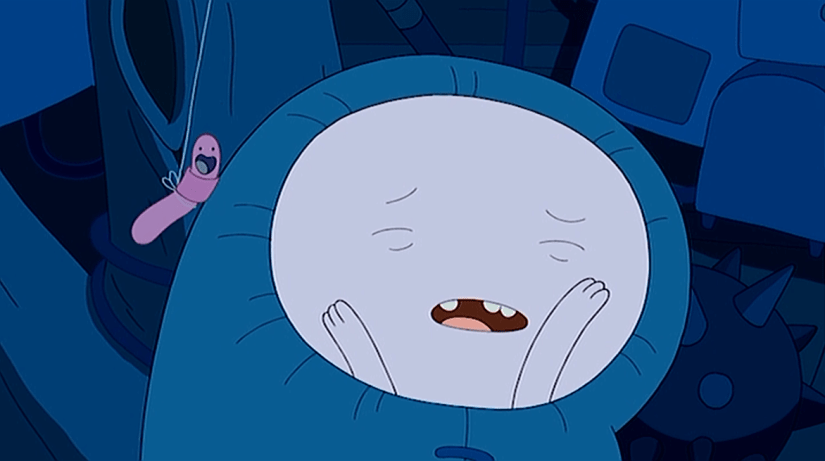
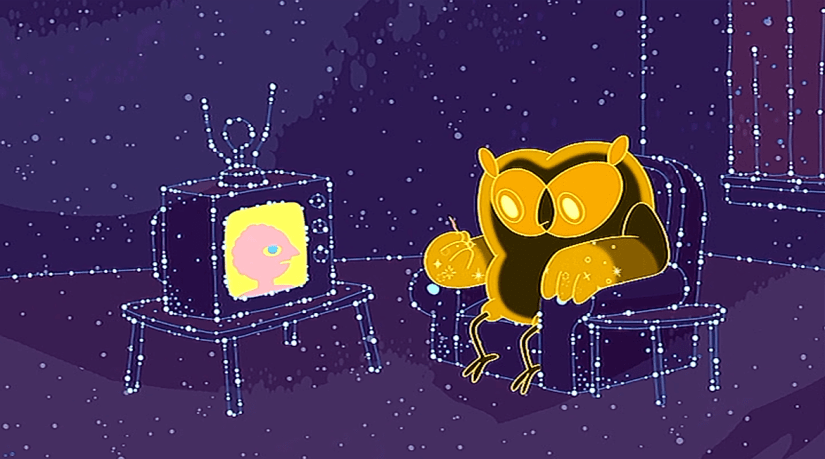
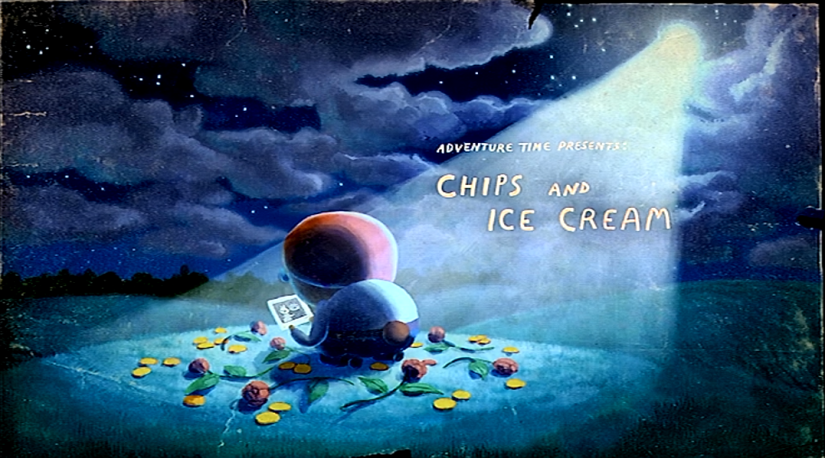
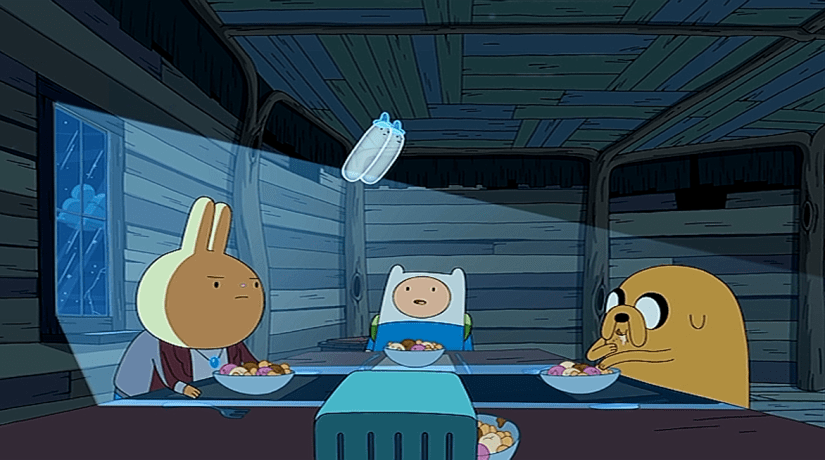
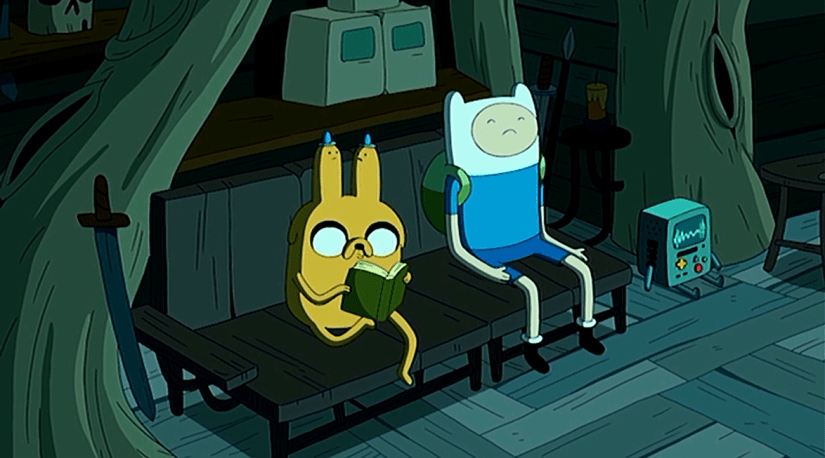
The Comet works as both sheer satisfaction and slight disappointment. The disappointment arises from the fact that this big, hyped-up finale doesn’t really progress the story of Adventure Time further, nor does it seem to take any risks or ensue changes regarding the status of this world. If anything, things seem to hit the reset button more than ever: Gunter is back to normal, the comet no longer poses as a threat to Ooo, Martin is out of Finn’s life for good, Finn has once more contained the grass sword embedded in his hand, and everything seems to be fully back to normal. In fact, the previous episode Hot Diggity Doom, actually comes with more lasting changes to the status quo than The Comet does. With the past three season finales that all came with with cliffhangers that seemed to change the world of Adventure Time as we all knew it, this is certainly a change of pace. On the other hand, that satisfaction comes from the combination of different themes regarding the meaning of life that were explored through Finn and many other characters throughout this season. After questioning the meaning of life countless times throughout this season, Finn now has fully grasped the essentials to a better method of living, including his faith in the world around him as a whole and his acceptance of some of the shitty that are inevitably going to surround him. And honestly, it’s all so genuinely enlightening that I don’t really mind that it doesn’t cap off in some huge cliffhanger. The Comet is a conclusion of central themes, but not a conclusion to the series. There’s plenty more episodes moving forward that aim at driving other AT plot points forward, but this one simply exists to progress not its story, but its central character into a more content way of living. Its setting is also a rather beautiful depiction of space, giving it a proper atmosphere for the heady bits of knowledge Moynihan does so well at dropping.

TCO 2.png

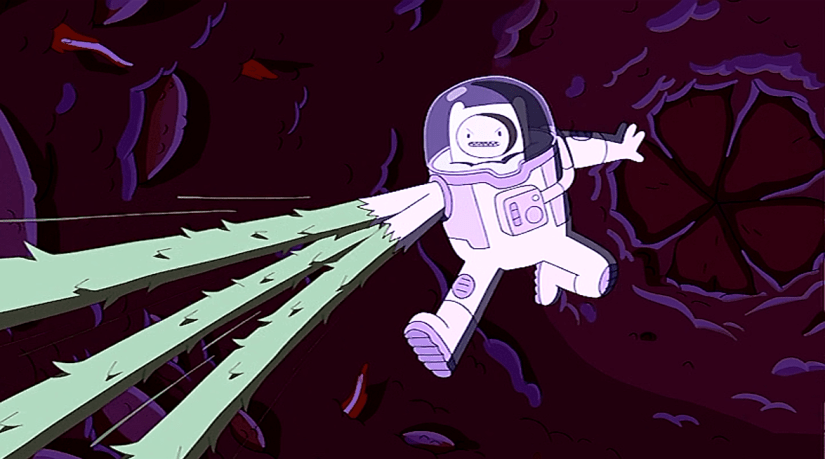
Immediately, as the boys are shot into space, Finn is saved by the rarely seen thorn embedded in his palm. The thorn was a scar that was left as a reminder of all that Finn has lost: his father, his girlfriend, his previous way of life. That scar remained on Finn’s palm as a constant day-by-day notification of his impending worries that still have an effect on his life. Though, here, it’s this very scar that helps to save him from impending death. It’s very clear that, in this episode, Finn is learning that those scars are exactly what helped him into a new way of being. All of the devastating things that happened to Finn were signal from the universe that helped to teach him new methods of coping and existing, and here, it’s the exact scar that spawned Finn into a pit of depression that is saving him from certain death. I’m probably reaching, but it’s nice to see that all of these elements come back successfully to show how much Finn’s view on the things around him have changed over the course of several months. He no longer views negative aspects of his life as strictly negative, and even the shitty things that he acknowledges are shitty, he still is able to accept and understand them, but we’ll get to that more later.

The first chunk is mainly a fun and silly space adventure featuring Finn, Jake, and Slinkma- er, Orgalorg… and it’s relatively enjoyable to say the least. Think it goes without saying for myself that Orgalorg hasn’t grown on me at all – he’s still a pretty lame villain with little motivation and lacking a personality that actually makes him unique or interesting outside of the fact that he’s connected to Gunter. Otherwise, I care little for his plan, his character, or his design. The way Finn and Jake comedically work off of him is nice, however. This is Andy Ristaino’s last board in the series, and it’s nice to see that he did incorporate some of his trademark humor into his final episode. I personally think Cole Sanchez and Ristaino made for the best comedy duo in the series, and while this one mainly doesn’t go for straightforward comedy, it still is packed with silly moments. Though Orgalorg is primarily an antagonist, he provides a bit of wisdom about the universe’s presentation of open doors that Finn can get behind. But, the ideas presented by Orgalorg are similarly dissonant to Finn’s own desires. Orgalorg uses the opportunities given to him to destroy and harm the life around him, while Finn uses said “open doors” to preserve life and to help others. Of course, this is nothing new in Finn’s development. Despite his maturity, he’s still willing to kick butt for the common good, even if that means foolishly threatening a space deity.

TCO 3.png

Of course, it’s to no avail at first. Finn and Jake are separated, as Finn realizes the hard truth that Jake could possibly live out his worrisome croak dream. Finn also laments that it’s quite possible that he himself will croak, “like a fish in the hands of a small child.” It’s here where Finn’s patience in the world that surrounds him is tested. Finn has no other choice but to sit back and sing an auto-tune filled song about his acceptance of his current state. Finn puts all of his faith in the universe, knowing that things will work out and that the world has his back, even if that faith isn’t based behind any logic. Finn simply trusts in the concept that everything around him is happening for a reason, and though he can’t truly explain or understand that reason, he knows that it’s for the best. And it undoubtedly comes as a surprise when Martin is the one who ends up saving him.

It can clearly be seen as an utter coincidence that Martin and Finn ended up at the same place at the same time, which can reflect Martin’s view more than his son, but Finn humbly and unabashedly thanks the universe for such an action, knowing that fate must have stepped in and brought the father and son duo back together. The interactions between Martin and Finn make for probably my favorites exchanges between the two thus far. I like how it brings out even more differences and disagreements the two seem to share, that being their view on life. Martin sees everything as meaningless and without purpose; Martin doesn’t believe in outside forces or people that have a control on his life or the things around him because he only ever believes in himself and what he’s able to accomplish. Martin sees the world as a fun place to exist in because he believes that everything lacks a purpose, and so it doesn’t matter what one does or chooses to do because it inevitably doesn’t matter at all in the grand scheme of things. Finn is the perfect contrast to his father, as Finn is one to see purpose in life in even the simplistic of things. Which makes for the brilliant response, “I dunno, there are some stars and stuff,” as Martin describes space as completely empty. Throughout the season, we’ve seen Jake’s tail charm a load of circus carnies, a baby worm save an entire village of leaf people, a group of wizards find meaning in the power of inclusivity, Peppermint Butler show loyalty beyond his orders to help the common good, Sweet P. using kindness and humor rather than the darkness that lies inside of him, Susan Strong saving a baby from becoming a cult leader, and so on. All of these little events that seem totally inconsequential, but ultimately are small events that had a purpose in one way or another to benefit the good of the world. Even when Finn isn’t paying attention, all sorts of meaningful, positive events are occurring in radical bouts, no matter how much they actually impact things on a universal level.

TCO 4.png

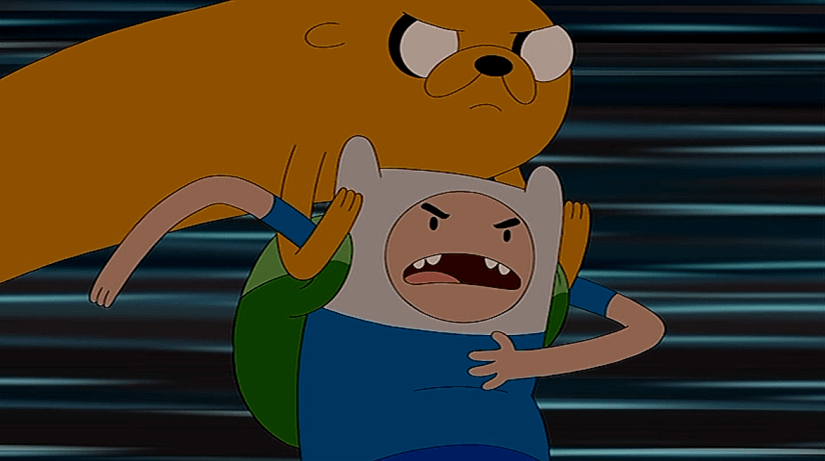
When faced with the adversity of Orgalorg right in front of them, Martin once again reminds Finn, “it’s out of our hands now,” which is yet another cowardly excuse to take the bystander approach and to convince Finn that his actions are generally meaningless. But Finn isn’t one to stand by and to allow things to go to shit, and he curses his father with “skronk that!” as he selflessly propels himself forward into the belly of Orgalorg. While Finn is torn at by the vessels of Orgalorg, his grass sword finally fully unveils itself, revealing that it never truly left Finn’s body, and he’s ultimately able to control it in order to help him beat Orgalorg. Touching on my statement earlier, this is Finn finally gaining control over his life. Though the grass sword would later become an issue that Finn was unable to fully have a handle on, as life does fluctuate, Finn has one true moment of authority over his own being, and uses all that he has learned about himself and the power within him to power through Orgalorg’s body.

It’s here where the Catalyst Comet reveals itself, as we’re treated to a heady conversation that only the likes of Moynihan could whip up. We travel through Finn’s vault and once again are reintroduced to Finn’s past lives, as he begins to touch on the unexplainable and the absurd, as which is presented to him when the comet invites him on an entirely new path of existence, to continue such random absurdity that began his existence. I won’t call out everything that the Comet lists off, but I just wanna say how happy I am that the comet labeled Margaret and Joshua as “mothers” and “fathers” while Martin holds the unflattering title of “scoundrels.” Joshua was more of a father to Finn than Martin will ever be, and such a title doesn’t represent Martin in the slightest. Though, Finn quickly grows tired of these listings and realizes that nothing on the list is inherently a bad thing. Again, most of them are just random and absurd occurences of existing that are inevitable. Though, as the comet reassures him that the things he would abandon are not bad in the slightest, Finn remarks that he’d like to see the meat reality that he put so much into through. It’s a huge moment for Finn, who is essentially left with the decision to erase himself from existence for the promise of eternal bliss, or to continue to live a life that is understandably full of constant struggling. Once again, Finn has chosen to put his faith in the universe and the support groups around him to see his life through, even with the chance that not everything is going to end up okay. That work he put into getting through his own life crisis is certainly worth something, and all of the effort he put into helping others around him in general is enough to give him a reason to see such things through. And if that wasn’t a significant enough development for the little guy, he finally comes to accept that Martin is nothing but a scummy, selfish dude who cannot be changed simply by Finn’s persistence. This is the last we saw of Martin’s (current) self in the series, and although I do wish we got to see more of what his decision entails, it feels like a fitting conclusion to his character that he would once again unwittingly jump aboard the next opportunity that presents itself to him. Though Finn’s disappointment is likely masked with him simply laughing it off, it does show how far he’s come from wanting to literally rip his father’s arm off. Finn is choosing to accept the shittiness of his father as it is, knowing that there’s nothing he could do or could have done to change it. Finn is no longer stuck in the past, but rather focused on the present and the future, knowing that he has plenty of other people around him that do love and care for him.
TCO 5.png

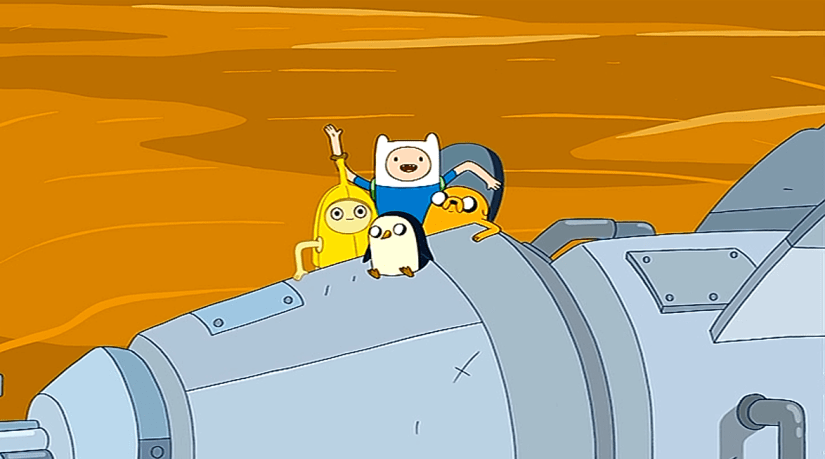
And speaking of loving and caring people, Jake ends up being saved by Banana Man! Jake’s croak dream turns out to actually be a survival dream, entailing Banana Man saving Jake in space, rather than watching him die. Jake remarks, “pretty random, right?” Though, in the face of what’s possible and realistic within life, it’s often hard to decipher what exactly is or is not on purpose, which is something The Comet tackles head on. Finn contemplated about “bananas, man” earlier, which may contribute to his belief that he had a part in Jake’s saving, and while it’s unlikely, it is hard to argue with how many seemingly “random” things do occur in the episode that are undefined by nature.

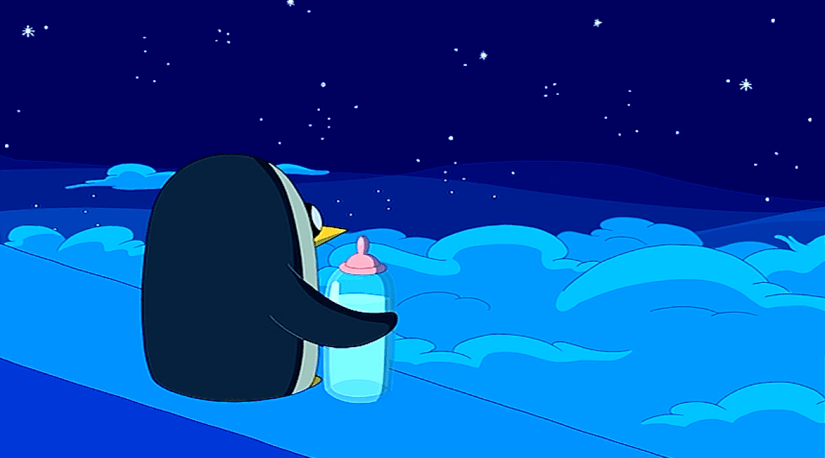
That question also arises when Peppermint Butler and Bubblegum debate Finn and Jake’s safety, in a really nice exchange. PB’s statement that everything in life is a 50/50 chance, too, sums up quite nicely what The Comet is all about: certainty and uncertainty. Though nothing can be known in life, there’s a chance everything will end up alright, and a chance that nothing will. But there’s also the similar possibility that both realities will either fall apart or turn around in the end, leading to an endless strain of 50/50 chances. Though, for the time being, everything does end up alright, with Finn, Jake, Banana Man, and Gunter back on Earth once more. A struggling fish in the hands of a small child(?) does remark, “I’m gonna croak out here.” While it seems likely for the poor fish, it’s also quite possible that Pepbut will simply throw him back into Butterscotch Lake to swim on happily once more. The episode leaves us with one final reminder that there are a limitless amount of opportunities within the world for happiness, sadness, survival, death, wellbeing, sickness, and may other contradicting statuses, but having faith in the world around you and powering through is what helps to get one through any state of uncontrollable being. It’s a meat reality, but one that does exist with the purpose and meaning that anyone is able to create.

TCO 6.png

The Comet is a terrific cap to some really nice ideologies that made this season so ambitious and enjoyable. After going through episodes that seemed to question whether or not there was truly meaning to the world, this episode is a positive reinforcement to showcase a message that’s affirming and enlightening. It also successfully makes a breakthrough in Finn’s growth, as he finally begins to accept his life as it is. Though this certainly wouldn’t be the end to Finn’s troubles and sorrows, it does help Finn look onto the world with fresh eyes and feelings, knowing that he’ll be able to get through anything life throws at him, no matter how harsh or stressful.

And that’s the end of season six, folks! Thank you all for joining me during this beast of a season. Your comments over on the reddit are really what keep this project interesting for me, and I enjoy every second of discussing this series as it continues to get more thought-provoking than before. The remainder of this week will be dedicated to reviewing season six as a whole, followed by a review of Graybles Allsorts, and then I will begin reviewing season seven by next week. As always, I’m so very excited to keep diving into these reviews, so stay tuned! There are some truly remarkable episodes on the horizon.
TCO 7.png

Favorite line: “I don’t have a star to revolve around to track time.”

Adventure Time, Animation, Lifestyles

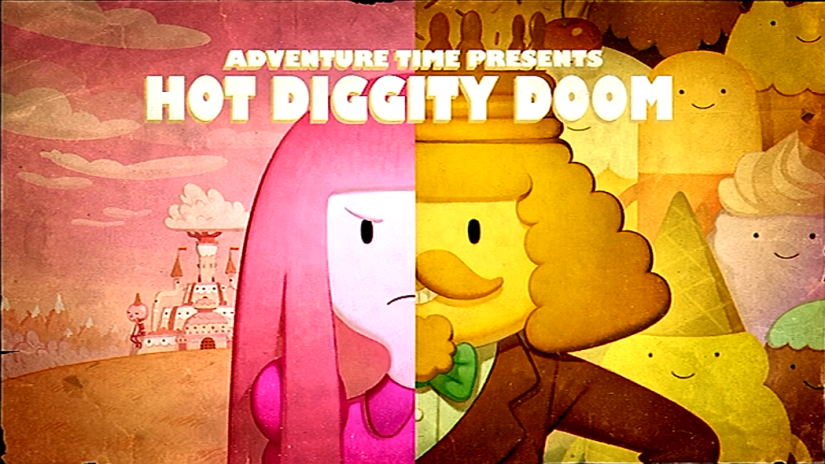
“Hot Diggity Doom” Review

HDD 1.png

Original Airdate: June 5, 2015

Written & Storyboarded by: Steve Wolfhard & Tom Herpich

A few tears were shed from myself after watching this year’s San Diego Comic-Con Panel (which you can watch online here).  A lot of beautiful words were said from the cast and crew who really hit the nail on the head about why the series is so terrific in general: it’s a big, exciting fantasy world filled with truly earnest and passionate characters. With that being said, it’s fitting to rewatch an episode like Hot Diggity Doom, which is primarily set-up for the next episode The Comet, but is also filled with some really nice character moments from Finn, Jake, and Princess Bubblegum respectively. Granted, I don’t think it’s particularly strong in its story, but it makes up for it with a decent amount of funny moments and plenty of nice character moments, mainly from Princess Bubblegum herself.

HDD 2.png

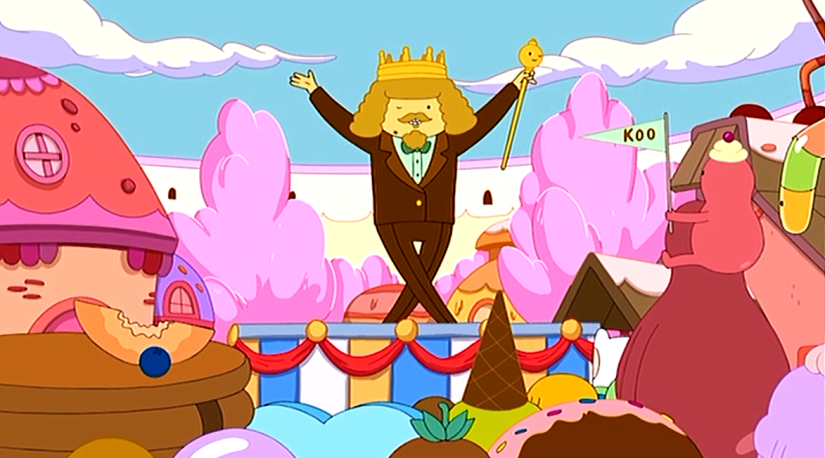
An election in Ooo is something I’ve wanted since the very beginning of the series. Granted, I think it totally seemed like a contrived idea in my head, and it still seems like one in this episode, but it plays with this idea to a great extent. It’s equally fitting that the election stars the King of Ooo, as the conflict between PB and himself continues to build. It’s appropriate that Steve Wolfhard boarded the first half of this episode, as KOO is a personal favorite of his, and you can almost see Wolfhard’s excitement while writing for the character. KOO is, as always, a charismatic and likable douchebag. I think he borders on being a tad bit annoying when he actually does pick up a more prominent role in following episodes, but he’s used quite fittingly as an foil for PB and as a charming manipulator of the ignorant Candy People. Though, one aspect that bothered me was how cool Sweet P. suddenly is with being around the King of Ooo. Wouldn’t he still be slightly traumatized by his behavior after threatening to burn down his house? I kind of would have liked this better if King of Ooo was forcing Sweet P. to seem like he didn’t care, but the fact that he really didn’t care was weird in presentation.
The idea of having a princess “election” in Ooo is a very silly and unique concept, but I’m always somewhat curious about just how much this holds as factual from what has already been established. I mean, we’ve seen kings and queens throughout the course of the series: Flame King, King Huge, Lumpy Space King and Queen (though, to be fair, they aren’t citizens of Ooo), Marceline, Xergiok, etc. All of these beings are portrayed as the rulers of their kingdom, even with princes and princesses roaming about. Is there something decreed regarding a certain part of Ooo where princesses like PB, Slime Princess, Hot Dog Princess, and so on are elected officials of their kingdom? Ooo politics are certainly confusing as fuck, and I feel like this added layer only adds to that confusion. It still is a funny and enjoyable concept in execution, it’s just kind of hard to piece together these bits of world building when it comes to the nature of hierarchies in Ooo.

HDD 3

Most of the fun from this episode derives from PB’s reaction to the whole debacle. Hynden Walch’s acting here is really on point, giving PB just the right amount of snark, and also sincerity in her deliveries. The tone surrounding her behavior is also fitting, seeing as how it starts out quite amusing when Bubblegum does flip her lid, but soon turns melancholic once she realizes her people have effectively turned against her, all while she was working on protecting them from possible disaster. With all that has been building up between the Candy People and PB’s shady behavior, it does feel fitting that the citizens would make a decision this drastic, even while keeping the prophetic dream sequence from Hoots in mind. There’s even a couple legitimate points made, such as James’ mom’s explanation (in a humorously boarded sequence by Wolfhard) of how PB told her son to basically get the fuck out of the kingdom, even if it was warranted. Though I guess that’s actually another problem I have with the way PB’s demotion is presented. I think the entire reason she’s voted out is simply shown as an example of how easy the Candy People are persuaded into swooning over a charismatic stranger, rather than the fact that PB has recently exuded some unorthodox behavior. I would have liked if the episode was a bit more challenging in how it tied back to some of PB’s questionable acts, rather than mentioning a few trivial things that don’t have a ton to do with what the past two seasons have been trying so hard to emphasize. I think a good amount of PB’s own angst regarding the situation is touched on in a meaningful way later on, but it doesn’t feel like her actions truly had a direct impact on her fall as a leader, which would have been a lot more of an intriguing demotion in my opinion.

There’s a ton of great PB moments that follow, however. Her bidding Finn and Jake goodbye was really sweet; even with her pettiness shown in the past, PB still wants Finn and Jake to remain loyal to the King of Ooo and to protect the kingdom. It shows how much PB does care for the kingdom that she was so mercilessly kicked out of, and still wants to see all of the hard work she put into it to remain intact. While we’re on the subject of loyalty, I think it’s really awesome that Peppermint Butler is the one person who remained absolutely true and by Bubblegum’s side throughout the whole endeavor. This was something already touched on in Nemesis, but I can’t express how cool it is that this super complex master of the dark arts is a totally loyal and perfectly self-aware guy who does everything out of loyalty for another being. It’s why I love his character so much: he’s the perfect embodiment of dark and light. I really dig a lot of the quieter moments when the two arrive at Uncle Gumbald’s cabin. Of course, it’s unique to get this kind of name drop of Uncle Gumbald at all. He was previously mentioned in Susan Strong, and the way PB talks about him in this episode, along with the way her sentence is framed, implies that there’s definitely something worth exploring in that category. Though, there’s quite some time before that exploration.

HDD 4.png

The rest of the episode is mostly fun shenanigans with Finn and Jake and the Candy People. I like Finn’s really relaxed and natural reaction to the comet approaching, and on the opposite side of things, the exceptionally terrified behavior of the Candy citizens. It’s always fun watching the Candy People in a state of panic, and there are some notably fun bits here, like the Banana Guard trying to throw his spear at the comet, or the trash can smash backfiring and hitting Starchy.

The eventual battle between the mysterious campaign manager and Finn and Jake is decently staged, though for myself, I thought it was pretty obviously going to be Gunter. Maybe it was because I had already seen the TV Guide summary for The Comet, but I knew that Orgalorg had to be incorporated in here somewhere, so the reveal never came off as shocking. The reaction from Finn is amusing, as Herpich provides some rather goofy but still arguably funny bits of dialogue to work with (“what the bing bong, ping pong?!”). This all builds to the inevitable cliffhanger, as PB’s rocket, along with Finn, Jake, and Gunther, head into space to converge with the comet.

Hot Diggity Doom is decent set-up that’s filled with some laughs and funny moments, and the occasional lull. I think some of the problems I listed above could have made the episode a bit stronger if they were addressed, but when taking it for what it is, I still do enjoy this one. I actually do like a lot of those quieter moments I mentioned earlier. The scenes that feature PB and Peppermint Butler in or by the cabin are really nice and calmly executed. And, as I mentioned, Finn and Jake make for a lot of fun in their own sequences after being absent for three straight episodes. It’s a mostly solid entry that provides for plenty of anticipation regarding the true season six finale.

HDD 5.png

Favorite line: “I don’t know what a dillweed is.”

Adventure Time, Animation, Lifestyles

“On the Lam” Review

OTL 4.png

Original Airdate: June 4, 2015

Written & Storyboarded by: Somvilay Xayaphone, Seo Kim & Cole Sanchez

I was somewhat nervous for this episode when it was first announced, because I really figured that an entire episode devoted to Martin would try and portray the character in some sort of tragic light. While the later episode Min & Marty managed to do so with great success, I was unsure about how much sympathy I actually wanted to feel for Martin’s character, and really liked how refreshingly committed this season has been in showcasing Martin’s awful attributes. Thus, On the Lam is just the kind of episode I wanted Martin to be the star of. It’s primarily a really fun, adventure-packed episode that capitalizes on how Martin charms and manipulates his way to success, with little remorse in the slightest of the people of whom he hurts in the process.

OTL 1.png

It’s nice to get not only one, but two alien societies in the course of two episodes! This one isn’t as ambitious or unique as the one we saw in Orgalorg, but it does features a wide variety of some neat looking aliens. I especially like the koala people, mostly for their cuteness factor. This one does a really great job of defining just how Martin is able to survive through countless planets, worlds, and galaxies. The way I see it, he has two main skill sets:

  1. He’s quick on his feet and easily able to work instinctively off of his survival skills, rather than logic or the fear of being prosecuted.
  2. He’s able to charm the pants off of literally any community that is unknowing of his shitty nature.

The second is the aspect that plays the biggest part in this one, as Martin tricks the koala-like alien society into thinking that he’s practically a God. Or at least, he believes that they think so. Even with the idea in mind that Martin literally abandoned his son and cares little about that aspect, he still manages to be surprising in just how shitty he is. After tricking his alien allies into thinking that he is on their side, Martin immediately sells the moth that has been nurturing the alien society and presumably keeping them alive. And even after bonding with his new little friend, Martin 2, Martin eventually ditches the little guy after the two are faced with certain dangers.

OTL 2.png

The connection between Martin and Martin 2 was a nice touch to carry through the episode as kind of a misleading story that would often lead to a sweet ending for any other character, but this is Martin we’re talking about. The parallels between Martin and Finn’s relationship and the connection between Martin 1 and 2 are what really adds to said story. I even like how Martin explains that “if I’m going to heroically save your life, I’m going to need to take drastic action!” Despite the fact that Martin describes his past life as a “pile of mush” earlier in the episode, he clearly remembers how he did have one moment of heroism back in the day when he saved his son from certain death. Of course, the same logic does not apply now, because even though Martin tries relive the same heroic actions he embarked on in the past, they’re quickly squandered by the fact that he flees the second he has an opportunity to do so. I do wonder what compelled his decision to at least try to initially save Martin 2. I get the feeling that it was either because Martin wanted to convince himself that he’s a hero for his own selfish gains, or because he simply doesn’t care if he lives or dies. It could very likely be the latter; no matter where Martin runs off to, he keeps running into himself and is unable to truly keep moving forward when he is constantly turning the world against himself. I get the feeling that Martin acknowledges and accepts that, sooner or later, he’s not going to have any place left to run to. And while he does have that in mind, he’ll still take any opportunity he can to keep going and to spoil himself with all the riches that he can obtain, while simultaneously ruining everything and everyone he comes into contact with in the process. Poor Martin 2.

This one is packed with lots of fun moments. A lot of the humor does derive from just how relentlessly awful and charismatic Martin is as a character. Other funny moments include the bartender who took an awfully long time to piece together that Martin was a criminal, and the hauling turtle that casually delivers expository dialogue before he hauls garbage. I think the only real annoyance I had with this one is the fact that Martin 2 was randomly revealed to be super old in the last leg of the episode. It always bothers me when shows pull sight gags like these; why weren’t the wrinkles and liver spots on Martin 2 visible throughout the episode? These twists always feel somewhat lazy to me, though I think Martin 2 being the actual rebel leader was a genuinely good one, just without the added attributes that didn’t even really need to be a part of the episode.

So, On the Lam doesn’t aim at developing or touching on the history of Martin’s character, but instead chooses to have fun with him, which is just as rewarding. It’s admittedly a bit shallow, because the general gist of the story and the humor in general predominately revolve around Martin’s shittiness, but I enjoy Martin and he’s tons of fun to be with, so I don’t mind it as much. Definitely gets a pass in my book.

OTL 3

Favorite line: “I hate this city, and I love hauling! I should probably go do something…”

Adventure Time, Animation, Lifestyles

“Orgalorg” Review

Org 1.png

Original Airdate: June 3, 2015

Written & Storyboarded by: Graham Falk

As a whole, I think I’m pretty neutral to the idea that Gunter is truly a space deity. I mean, on the one hand it’s kind of funny and clever, especially since it ties back into a small gag that was established all in the way back in It Came From the Nightosphere and also that it’s an unlikely backstory that I would expect from Adventure Time’s most ambiguous character. But on the other hand, I’m kind of curious as to what it actually adds to the series. As far as I’m concerned, Orgalorg could have been cut out of the series almost entirely and not much would be lost, so it’s weird to me that the writing staff even decided that this was a story important enough to introduce at the very end of a season and then effectively glance over for the remainder of the series. In addition to that, I don’t really care enough for Gunter as a character to actually want to see his backstory explored. He’s primarily a gag character whose sole purpose is to add comic relief or to work off of Ice King in some way. But going back to my original point, it’s not something that actively bothers me or strikes me as story carried out in an absolutely horrible way. Granted, I really don’t care a ton about the history explored in Orgalorg, but Graham Falk’s oddball style blends with this one quite seamlessly, and helps to give it a compellingly off-putting atmosphere.

Org 2.png

I think the beginning goes on waaaay too long, but in a way that’s actually pretty amusing and still reels a couple chuckles out of me. It’s pure Ice King goodness, as he starts out knitting various different “tummy yarmulkes” and takes his sweet time to eat a piece of a cheesecake (with sleeping gas very poorly concealed inside). Again, I can’t argue that it’s not drawn out, but it’s executed in such an absurd way that I can’t help but enjoy it. Like, Ice King got out the cheesecake, took one bite, and then mentions that he’s getting full. No wonder the dude probably weighs less than Finn. Absurdity continues to ensue once the sleeping gas is released, as a penguin party is underway.

The party of Gunters is a lot of fun; the penguins on Adventure Time often help to provide for some of the show’s silliest moments, and this is no exception. I also like the random inclusion of LSP at the Gunter party, because apparently this is the only crowd that actually invites her anywhere. Oh well, at least she was getting along good with Gunthalina. Gunter is a character that’s hard to get into because of how little we’re able to actually understand what he’s feeling at any given time, though Falk does a pretty good job at keeping him expressive. Him leaning into the walrus as he envisions a comet was a pretty well-timed scene, and one that transitions into the bizarreness that is the remainder of the episode.

Org 3.png

The red-ish filter that encapsulates the Gunter’s perspective helps to emphasize that off feeling, and Gunter’s flashes of trauma are a legitimately neat way to capture his shifted mindset. The scenes to follow are delightfully trippy as well, as Gunter feels compelled to create wooden silhouettes of familiar faces from his past. The music in this one really ups the unsettling tone, as Tim Kiefer tries his hardest to make the audio as unnatural as possible.

Once transitioning over to the alien planet where citizens are notified of Orgalorg’s revival into society, things get even crazier. It’s rare that we actually get to see a full-blown alien society within the Adventure Time universe, and these beings are especially likably bizarre and unique in their designs. They provide plenty of funny lines, such as the elders’ disgust with “makeouts” and their desire to inform people of Orgalorg because of it. This is where Orgalorg’s backstory is presented, and while it’s cool to see side characters like Glob and the King of Mars once more, and the narration itself from one of the elders is also quite delightful, I feel like the history itself is kind of half-baked. So Glob cast Orgalorg down and the weight of the Earth turned him into a penguin? Why? Even if the form simply cast him into a smaller version of himself, why would he then just become indistinguishable from every other penguin in the world? It’s absurdity that doesn’t really work because I think it’s sacrificing what is supposed to be a story that’s legitimate lore-building, but kind of fails because I don’t think a lot of it adds up. Also, if this happened eons ago, then why is Glob shown with headgear in the flashback? I know that’s kind of a nitpick, but it’s somewhat more distracting when the You Forgot Your Floaties was only two episodes earlier and was clever in referencing the G-Man’s flowing hair.

Org 4.png

The flashes of Gunter’s past following this backstory are good fun and it’s nice to see actual painted drawings within the show itself for a change. Another big gripe I have with this flashback sequence is that there’s also a small bit of discontinuity: as Gunter is riding on a boat, there’s a letter “G” labeled on his sail. Though it can be considered up for debate and ambiguous enough, the obvious implication is that the “G” stands for Gunter, which doesn’t make sense, because Gunter wouldn’t have even gotten the name until he became Ice King’s companion. Again, I might be nitpicking here, but it’s little stuff like this that really bugs me in the grand scheme of things. I guess someone may have noticed it, but left it up for interpretation as to what the “G” could stand for, but it’s likely that it was just missed in translation. Speaking of missed in translation, Ice King stupidly mistakes Gunter’s literal brain gushing out as a mere infliction, and sees to it that his little buddy’s wound is treated. Little does Ice King know what actually lies ahead for the penguin. Which will be mentioned once more and then never, ever again!

Orgalorg has its flaws: there’s bits of discontinuity, unconvincing pieces of information, and an overall story that I think in general is not inherently as intriguing as it wants to be. But it does get the tone right, and I think it cleverly carries the episode where the story does not. I kind of enjoy this one in the same way I enjoy Ghost Fly; it’s weird, unusual, and silly in some areas, with a hint of disconcerting elements to really execute the visual and tonal elements within. So I think Orgalorg actually works in presentation much better than on paper. It’s the backstory of a character that I don’t particularly care about, but I enjoy visiting it still for its heavy atmosphere and visual flare.

Org 5.png

Favorite line: “It’s like… a big yarmulke… for the tummy…”

Adventure Time, Animation, Lifestyles

“Be Sweet” Review

BS 1.png

Original Airdate: June 2, 2015

Written & Storyboarded by: Seo Kim & Somvilay Xayaphone

Season six has certainly not been kind to LSP’s character. The Prince Who Wanted Everything was another example of the series using her extreme vanity as a cheap way to garner laughs, while Princess Day was a thoroughly unpleasant experience that focused on Marcy and LSP at their absolute shittiest. Be Sweet, on the other hand, is a refreshing visit from her character that poses similar attributes to the season five episode Bad Timing. Be Sweet doesn’t shift LSP’s character around to make her feel more sympathetic, but it uses her vanity and obnoxious behavior to help elaborate on the true insecurities that are hidden inside of her.

BS 2.png

Though LSP’s behavior is obnoxious throughout the episode, as expected, there’s something about her demeanor that makes me actually enjoy it rather than deplore it. I sort of like her taking in the luxuries of having a small house to enjoy her time in, even if that means she’s abusing her power as a babysitter to do so. It doesn’t really make her behavior likable, but at the very least, enjoyable. It’s fun to also see how Tree Trunks and Mr. Pig react to said behavior, as they’re actually depicted as pretty competent parents in this episode! I didn’t think they were necessarily bad parents in Gold Stars, but their belief that Sweet P. should be left alone inside their house simply because he was doing good was based entirely in ignorance for themselves. It seems they learned their lesson after presumably learning the truth about the one true King of Ooo, and thus decided to get a babysitter, even if that meant it was LSP. I thought Tree Trunks’ explanation of how she says goodnight to Sweet P. in general was just adorable; even in utter stupidity, Tree Trunks is still a delightfully caring person. And as if The Pajama War didn’t feature an angry enough Mr. Pig, this episode has him shoot absolute death glares at Lumpy Space Princess. I seriously don’t think there’s a single storyboard artist on the show who draws Mr. Pig funnier than Somvilay.

Sweet P. is also a delight in this one, and much more enjoyable than in his previous appearance. This episode really ups the humor with his character by making some really terrific sight gags with just how large he is, along with audio gags as well. The fact that Sweet P. stomps every single time he takes a step is, for some reason, really hilarious to me. I dunno, it’s just really enjoyable watching this really cute child character within the body of a giant, monstrous form, and I think Be Sweet has a lot more fun with it than Gold Stars did. This one also plays with his creepiness too, using it for humor, as well as playing it straight forward when necessary. I like that, even without knowing that Sweet P. is the Lich, the candy citizens are genuinely terrified by his appearance. I criticized Ethan Mayer’s performance as Sweet P. in my review of Gold Stars while also acknowledging that he’s a child actor and it’s really not his fault, but I think the wooden nature of his performance actually contributes to Sweet P.’s deliveries in this one. It allows for lines like “will you be sweet to me?” to capture the essence of cuteness, humor, and absolute terror, all in one line that isn’t really supposed to be taken exactly one way. It’s pretty nice and I think it adds a lot to Sweet P.’s character in general: he can evoke a lot of different emotions all at once.

BS 3.png

Back to the LSP side of things, it continues to be enjoyable to watch her soak in the simple joys of living, and also nice to see that she still remains in touch with Marceline! I know most people probably hated this bit, but I loved watching Marceline pick bugs out of her navel. I feel like it’s a friendly reminder that she is a demon and a vampire, after all, and probably doesn’t live the most sanitary life. I mean, we have seen her pick her nose, after all. But it’s nice to see her spending her private time taking care of that sort of thing. I’m sure PB wouldn’t be happy with a navel filled with creepy crawlers.

The episode becomes really intense and interesting once the raccoon who was seen at the beginning of the episode enters Tree Trunks house, and starts muttering insults at LSP. Of course, it’s clear that the raccoon isn’t actually talking, and that LSP is merely projecting her own thoughts and envisioning it as the words of the raccoon. For LSP, the raccoon represents her at her absolute lowest, being forced to live in the woods in the absolute lowest of conditions possible, and a reminder that it is the life she leads. The words that LSP imagines the raccoon speaking are representative of the idea that she is afraid that she doesn’t deserve good things in life, and that that’s she’s nothing more than just an animal herself. The confrontation is pretty emotionally intense, and characterizes that sympathy I mentioned earlier. Though LSP put herself in a position where she’s abusing the nice things given to her, she isn’t able to fully enjoy them, simply because she intrinsically believes that she doesn’t deserve nice things. Even through her own vanity, LSP is deeply insecure and as judgmental of herself as she is with other people. The raccoon even utters, “just accept that you’re garbage,” meaning that LSP wants to believe that she’s a good person and that she has a greater purpose in life, but is constantly brought down by the idea that she is nothing more than a useless hobo. It propels her to do the first selfless thing she’s done in the entire episode, which is to find Sweet P. somewhere in Ooo. It’s another instance of LSP technically being in the wrong, but I still care for her situation and hope that she is able to make things right. LSP is at her best when she is faced with these insecurities, because she’s able to come up with legitimate reasons as to what does, or what will, help her to be a better person. When she finally does reunite with Sweet P., it makes for a cute and endearing scene that shows that Lumpy Space Princess did actually pay attention to Tree Trunks’ words, even if it was implied she didn’t, and Sweet P. seems legitimately content and happy with her treatment. Considering that the root of all evil is contained within Sweet P., this could have ended much, much worse.

BS 4.png

The main story ends on an appropriately hilarious note, because even though LSP did manage to successfully rescue Sweet P., she also ruined Tree Trunks and Mr. Pig’s entire house in the process. And to cap it all off, LSP even thinks that she deserves to raise Sweet P. on her own, and is appropriately kicked out. Again, the episode manages to give depth to LSP’s character without necessarily sacrificing who she is, which makes for some truly potent moments, as well as hilarious. And, as she returns to her former state, she does slightly accept her role as Ooo’s most prominent hobo by partaking of the chicken she sought to resist. Oh, LSP.

This episode is pretty solid on all levels. Has a good jumble of funny moments, and expands on LSP’s character in all the right ways. After an entire season of some truly deplorable LSP entries, it’s nice to have this one that does something legitimately meaningful and telling with her character. Despite my overall mixed feelings about his character, it’s also nice to have Sweet P. back again, and this time his connection to the Lich is barely even elaborated on. Though it’s primarily what makes Sweet P. interesting, it is cool to feature his character being able to just breathe and be (somewhat of) a normal child for once. He is able to have that genuinely chilling moment at the end, as we learn that the catalyst comet is closer than ever, and that it will be converging with Ooo very shortly.

BS 5.png

Favorite line: “Maybe we can get, uh, Neptr to sit. I don’t know.”

Adventure Time, Animation, Lifestyles

“You Forgot Your Floaties” Review

YFYF 7.png

Original Airdate: June 1, 2015

Written & Storyboarded by: Jesse Moynihan

With all that I ended up writing about Breezy, you’d likely assume that it was my favorite episode of season six. It comes close, but such an achievement would not be accomplished until You Forgot Your Floaties came along. This is an absolute favorite of mine, and I don’t just mean top 10 or 20 – this is top 3 material right here. Jesse Moynihan goes outright ballistic with how much emphasis he puts on ambiguity, to the point where it feels as though nothing is completely spelled out for the benefit of the audience. I wouldn’t say it’s left to the viewer’s interpretation as much as The Mountain; most of You Forgot Your Floaties is interpreted with a common consensus among fans. It’s scattered with riddle-like speak, but nothing that feels nearly impossible to decode or to be understood. But it’s not just the deeper layers that help this one to really stick out, it’s a passion story about a character of whom is known no better than by Moynihan himself. Magic Man’s backstory was previously elaborated on in Sons of Mars, and the hints of tragedy regarding his character come full circle in this one, as he finally confronts the madness and sadness within himself. Betty also gets some much needed screentime after her previously physical debut in Betty, and is cleverly used in comparison to Magic Man himself as an unfortunate soul who painfully lost her significant other. It doesn’t sound like a typical episode of a children’s animated show, or even most adult animated shows for that matter. You Forgot Your Floaties is an unbelievably impressive tale focusing on the hidden depth behind the true nature of magic within the world of Adventure Time, and stands out as one of the most unique episodes of television that I’ve ever witnessed.

YFYF 1

In typical Moynihan form, this episode doesn’t waste much time throwing us directly into the action, as Finn and Jake search thoroughly for the remnants of Glob’s helmet after his “death” in Astral Plane. This episode doesn’t feature much of Finn and Jake, but it’s fun to have this little opening regardless. As always, the boys are tons of fun, and their dialogue exchanges are as delightfully quirky as ever. I think I quote “I have a weird feeling in my fat basket” at least once a week. It’s also cool to see their general interest in retrieving remnants of Glob’s being; though Finn humorously implies that the two are scavengers, I get the feeling that part of him also desires to keep Glob’s head as a choice souvenir, as it seems like just the bit of treasure that Finn would want to proudly protect within the comforts of the Tree Fort.

But, as Finn and Jake are quickly turned into breakfast foods at the episode’s beginning, we’re introduced to our main characters within this episode: Magic Man and Betty. The  episode also wastes no time by showing Magic Man at his absolute most sadistic and cruel. I mean, he’s done shit like this to Finn and Jake before, but here, he practically kills Finn and Jake and leaves them to rot as food products while he leaves Earth for eternity. It also ties into what’s quite frankly amazing about Magic Man as a character: despite what a sadist he truly is, it’s still easy to feel empathy for him in his more vulnerable moments. There’s something irresistibly tragic to me about jerks who were once caring, passionate souls, but were hardened by the circumstances of their life and no longer could bring themselves to show any form of affection whatsoever. It’s the Joker archetype of character building that sort of reigns similar to Ice King’s tragic history, though not exactly in the same realm of tragedy. Magic Man is consciously aware of his loss, and chose a path of madness and sadness during his inability to cope with said loss in his life. Though, that latter part is certainly up for debate. Just how much are sadness and madness directly caused by magic?

YFYF 2.png

Betty brings up M.M.S. – or Magic, Madness and Sadness – which she directly correlates to the nature of being a magic user in general. It brings up a unique argument about the nature of how magic users operate when it comes to their own emotional states. We’ve seen magic users who do seem relatively competent and happy-go-lucky demeanor, but mainly on the surface. Ron James is even used as an example of sadness, of which we’ve never even known about his character in the past. Yet, I don’t necessarily think that magic, madness, and sadness are inherently linked in one defining path… I think it’s a bit more complicated than that. Magic is something that can be used for the greater good, and as of this episode, we’ve seen two examples of how having such mystical powers can affect somebody inadvertently: Evergreen went mad trying to keep himself safe and preserve the world, while Magic Man went both mad and incredibly sad while trying to perfect his magic in order to bring back his late wife. So no, I don’t think magic users are intrinsically sad by just simply possessing magic abilities, but also that having such power can often lead to thoughts and desires that could be considered unorthodox by any “normies”, ex. “How can I save myself from certain disasters with magic?” “How can I save the people I love with such abilities?”

Betty seems to have the upperhand by understanding just how much magic affects other people, but simply knowing her facts doesn’t protect her from the inevitability of falling into the same steps as her acquaintance. The connection between Betty and Magic Man is quite interesting and unique. I get the feeling that Betty knows just how untrustworthy Magic Man is, but needs to be around him in order to get some kind of breakthrough in her studies regarding how to reverse Simon’s behavioral antics. Betty knows exactly how sad and mad Magic Man is, and wants to discover what kind of raw energy and history surrounds him so that she can discover the true cause of M.M.S. and how it connects to magic as a whole. Of course, this conversation leads to a lot of different neat Moynihanian metaphors that only someone as bizarre as him could come up with, namely regarding the coconut crab who swims within Betty’s neighbor’s pool. It’s such a weird and unusual analogy to capture the idea of people metaphorically failing to stay afloat as they try and manage to survive through the sadness and madness surrounding themselves.

YFYF 3

Magic Man’s continuous inference that his past and mind is essentially a waste basket (which is referenced again later on) connects to the fact that Margles is gone and erased from history, and that any past he had with her must be erased from viewing eye as well. His line, “you imagined the lock before the key,” references the ideology that there’s nothing to see within Magic Man as it is. With his suppression and his madness, it’s easy for Magic Man to get lost within his own psychosis and to create his own false sense of being, though Betty smartly brings the actual key, which is the one remaining token to Magic Man’s past: the picture of MM and Margles.

It’s also worth noting how funny this episode manages to be even amongst all of this heady drama. Tiny Manticore makes interlaced appearances throughout Betty and Magic Man’s interactions, and he’s simply hilarious. For a character who only had a couple of minutes of screentime in Sons of Mars, he actually manages to be a pretty fun and likable character through competent voice acting by Tom Kenny, per usual, and his absolute desire to be a hero, despite his unfortunate role of being stuck with Stockholm Syndrome.

YFYF 4.png

A pretty rad poem read off by Magic Man is what transitions into Betty entering the mind of her manic partner,

“Smooth and gray as far as you can see. No life grows in me. Nothing to weed. Nothing to seed. Pure and perfect. Like the marble floors of a bank.You slide with no obstacles, forever blank.”

Again, Magic Man once more tries to mask his sadness by offering a blank perspective of his true state of being. It’s appropriate then, that a literal “mask” is the key to figuring out the truth behind Magic Man’s life history, as the picture leads Betty past the smooth and gray marble floors and into the eyes of Margles. The following scenes are pretty fucking amazing all-around, and played as seriously and dramatically as possible. Again, Kenny’s voice acting is absolutely superb in capturing the more subdued and quiet side of Magic Man, as he slowly utters, “Margles? Wake up, Margles.” Even with a voice that’s designed to sound manipulative and snarky, Kenny is able to breathe a surge of humanity into such an apathetic character. It’s even more interesting that this story takes the relationship between Margles and Magic Man to an entire new level and defied expectations almost completely. This is a lot more interesting than the implication in Sons of Mars that Margles just simply fell off Olympus Mons and died, and it’s further elaborated on by showing that said Margles isn’t even really Margles. M.A.R.G.L.E.S., or magical automated resistance generating laser energy supplier, was created to protect against the second coming of GOLB, but it’s very clear that this is where Magic Man’s madness and sadness came into play. The second coming of GOLB was likely a heavily anticipated event that Magic Man was forced to be prepared for, though he was unable to leave the hardship of his deceased wife out of it. He was left with the hardship of choosing between creating a being that would protect the greater good, versus a being that he loved deeply and wanted nothing more than to be with forever. He settled for both, but ultimately still suffered because of his inability to cope with said feelings. Yet, his magic created a visual appearance of Margles, but not a reincarnation of Magic Man’s past wife.

Magic Man’s proclamation of his sadness on Olympus Mons really sums up the nature of just how powerful his feelings of sadness and loss are. Adventure Time always hits it out of the park whenever it deals with sadness, and this is no exception. Using a fantasy world emphasizes exactly how desperate one can become when dealing with such sadness and loss within one’s life. Magic Man detailing: “every dimension, every dead world” as a means of how far he went just for the possibility of bringing his wife really adds depth and meaning to just how much Magic Man adored Margles. For a relationship that was barely ever elaborated on before, You Forgot Your Floaties manages to encapsulate the true extent to how much Magic Man loved Margles, and the true impact that her death left on him. Going back to the waste basket comment, the extent of Magic Man’s madness is shown through Prismo’s timeroom, when he wish for Margles only ends up appearing as the wastebasket that Magic Man previously mentioned to be what existed in his mind: nothingness. The Margles that Magic Man created, in turn, was not the Margles he was expecting to see. After hundreds of years without seeing Margles, even Magic Man himself cannot truly recreate the past that he once lived. The new Margles was exactly what Magic Man stated to be: a product of his nightmares. A Margles who was created for one function, but was deeply conflicted with another. I always figured the events on Olympus Mons were traumatizing for Magic Man, but my God, the way it’s presented in the episode really makes it as maddening as possible. After hundreds upon hundreds of years for searching for his wife, Magic Man finally is faced with the opportunity to see his wife again, though it all proves to be a complete failure. After dedicating his life to such work, it’s no wonder Magic Man gave up on his life almost completely. With all that he strived to do for his own good and the good of his wife, it simply ended up as an utter disaster. Which is where Betty comes back into the story…

YFYF 5.png

After making countless attempts to save her fiance from the magic that possesses him, Betty is left with the magic, madness, and sadness that took control of Magic Man after the transmutator malfunctioned. Betty took her own dive in the pool of madness and sadness after trying to figure out how exactly magic makes other wizards and beings tick, though she ultimately took a dive too deep and was unable to resurface from it. As a resurfacing Simon silently mutters, “you forgot your floaties,” Betty finally realizes how far she’s submerged herself within the loomy gloom. She’s effectively surrounded herself with exactly what she was trying to fix, and follows in Magic Man’s steps of being completely stuck in her own purgatory of sadness at the hands of their loved ones. Without even realizing it at first, this episode really manages to parallel Betty and Magic Man to a tee, and feels like one of the most unique and ambitious character studies to date. It analyzes entirely how one character feels (Magic Man) but also shows how much it applies to Betty’s character as well. It really is an act of brilliance in just how much we learn about these two characters in the course of eleven minutes, with a heavy emphasis on the emotion that Adventure Time tends to capture better than any other: sadness. Of course, there’s the lovely and delightful ending that features the ultimate moment of triumph: Tiny Manticore flying Bread Boy Finn to Wizard City in order to save his humanity. A truly brave soul he is.

This one is truly amazing on all levels: the way it delves into its main characters, its beautiful setting (always love to see Mars), the unique dialogue, its presentation of sadness and madness, worldbuilding, lore, and much, much more. This is one that only seems to get better every time I watch it, and once again brings me back to my main point: this episode is about as unique as they get. Never in my life have I seen a story told this different in its connection to themes, story, and characters, and it’s one that continues to shock me in just how devoted it is to tell a compelling story, rather than to comply with what actually works with the common everyday television audience. As much flack as Moynihan gets, he really is a dude that’s dedicated to telling some of the most bizarrely ambitious stories that television has ever seen. And, as You Forgot Your Floaties proves, television could benefit from having more stories this ambitious and remarkable.

YFYF 6.png

Favorite line: “Balls, man, that has never happened before!”

Adventure Time, Animation, Lifestyles

“Water Park Prank” Review

WPP 1.png

Original Airdate: May 21, 2015

Written & Storyboarded by: David Ferguson

Uggggggh. Water Park Prank.

The point of the guest animator episodes, to me at least, is to capture Adventure Time’s style and tone within the medium of a different animation style (A Glitch is a Glitch and Bad Jubies), or to execute a certain story that is effectively ties into a unique animation style (Guardians of Sunshine, Food Chain, Beyond the Grotto, and Ketchup). It’s also a chance to introduce a fresh face to the AT world, which Water Park Prank does with Scottish animator David Ferguson, but ignores the former elements. Ferguson’s style doesn’t really capture the essence or tone of AT at all, and the way the animation works with the story is virtually pointless.

WPP 4.png

A bit of background to Ferguson in general: he’s an indie animator who lives in Glasgow, and publishes all of his work on spazpat.net. Pendleton Ward himself stated that he’s a big fan of Ferguson’s work, and after checking out his cartoons myself, I did find myself enjoying his genuinely charming animations and their unique stylization. Do I think this style works with Adventure Time? Not at all.

Adventure Time’s style allows for a lot of attention to shapes and fluidity in the characters’ movements. Their bodies are mostly rounded and their arms and legs are super noodley, which allows for some really malleable animation and motion. The designs in Water Park Prank are super flat and stilted, in a way that imitates early South Park episodes, and just really fails at capturing that motion and energy on a visual level. It doesn’t help that a good amount of the designs are super ugly. I don’t know what Ferguson was thinking when he concocted his own version of Finn, but the little guy looks pretty hideous and unappealing in almost every way. There are some cute designs, namely Jake’s, which is still true to his character, but I think the heavy focus on giving everyone else eye-whites is more off-putting than charming. Not to say that eye-whites can never work in Adventure Time art, but this is one example that I think does it wrong; I typically think the dotted eyes are more fitting for the simpler, cartoon-y adaptations, while more realistic interpretations allow for more of a focus on human anatomy.

WPP 2.png

The story in this one is about disjointed as it gets. The daddy sad heads concept was something that I actually thought was a decently cute concept that could easily fit within this world’s atmosphere, but it adds absolutely nothing to the actual plot and merely exists as an opportunity for a couple of jokes surrounding the magic token Finn gets from Princess Orangutan. The story within the water park itself is even less substantial, as it’s a series of gags that never really leads to anything of interest, and occupies most of the remainder of the episode until its quick procedure to wrap itself up. I get that Adventure Time has some elements of real-world civilization even in its post-apocalyptic state, but man, do I think a water park is waaay too out of place in this era. And how uncreative, as well! Ooo is a realm with mystical springs and streams located everywhere, Ferguson couldn’t have settled with something a little more ambitious than an actual up-and-running water park?

This isn’t really a story-driven one, however, as it’s more focused on being as jokey and humorous as possible. That would be fine if it was the least bit funny, but God is it painful in how it approaches humor. The writing is SO fifth grade, and is quite possibly this series at its most juvenile. Finn singing about his underwear, the boys arguing over eating ginger hair as a snack, and Ice King being unable to get down the slide because Jake keeps propelling him back. There are two moments I actually did think were funny: the moment when Jake’s fake watch quickly changes as he talks about Finn being late and Jake saying “ooooh” as a circular transition opens to the next scene were both clever visual gags. Otherwise, every joke was pretty pitiful to get through. And by God, is this episode dialogue heavy as well. It barely ever takes a second to breathe, and seems incredibly fast-paced in its writing style, while somehow also slowing down the episode even more to a point where it feels like it’s going way past 11 minutes. I can’t think of an instance where I’m more painfully bored watching this show than when Finn and Jake discuss whose coin they should use for the locker.

WPP 3.png

I usually don’t care about continuity when it comes to guest-animated episodes, but man, does it feel like Ferguson only watched about four or five episodes from season one. Ice King is presented as a straight-up villain to Finn and Jake, and the boys outright have a vendetta against him. Ice King was also painted in a similar antagonistic role in A Glitch is a Glitch, but that episode was at least true to his pathetic and creepy ways, and didn’t treat him as if he was just a downright evil guy. His plan in Water Park Prank doesn’t even make sense… he wants to freeze the water park and turn it into a frozen water park? W-why? He already has an entire kingdom made of ice. What purpose would this serve him? I similarly thought Finn and Jake were presented as way too immature. They haven’t been strangers to pranking Ice King in the past, but was publicly antagonizing him for their own gain really a proper way to deal with his behavior? I get that the entire episode is based around said behavior, but it really doesn’t feel in line with the boys’ demeanor, and paints them more as goofy, immature kids, rather than fun-loving and righteous bros. The sentient whistle lifeguard also seems to only exist as a method of Ferguson being somehow incorporated into the actual episode. His character was virtually pointless.

This has been considered by many to be one of the worst episodes in the series, but is it really that bad? Ehhhhh, kinda. I will say that it has SOME decent elements and isn’t just a total shitshow; one part I actually really love about this one is that the music is terrific! Seems like Tim Kiefer had a ton of fun with this one in particular, and released a sample of the music he composed for Water Park Prank on his SoundCloud, which you can listen to here – it’s great stuff! One subtle element I like is the fact that Finn actually uses his Finn Sword in this episode. Finn is usually never depicted with his current weapon of choice during the guest animated episodes, but this is one that actually utilizes said weapon and feels in touch with the current series. Though, that somehow makes it more distracting. Finn is sporting his Finn Sword, yet he’s acting this childish? Yeah, not the best example of this method. Aside from those elements, this episode is pretty bottom-of-the-barrel. It’s not even bad in the way that an episode like The Red Throne is bad; The Red Throne is at least interesting in analyzing exactly what went wrong with it, while Water Park Prank is just a boring, unfunny mess.

But all of that negativity aside, y’all should really check out Ferguson’s other work. As I mentioned above, he has some really neat and cute animations that are benefited entirely by his distinct style, which is much more fitting when he’s doing his own thing. You can check out his website here. I don’t like this episode by any means, but I commend Ferguson for taking on this role regardless. It can’t be easy to work with an already existing property and make it your own, and it obviously shows, but it was probably a huge honor and an exciting escapade to take on a big series like Adventure Time regardless. One final comment, this episode also has a special outro, which was actually pretty fun. It depicts all of the other villains previously banned from the water park, including Lemongrab, the squirrel, Magic Man, Tiffany, Ricardio, Lumpy Space Princess, and a rare cameo from Donny.

WPP 5.png

Favorite line: “That visualization technique worked a treat!” Only because Jake says “worked a treat” earlier in the episode and I thought it was cute that Finn mirrored his bro.

Adventure Time, Animation, Lifestyles

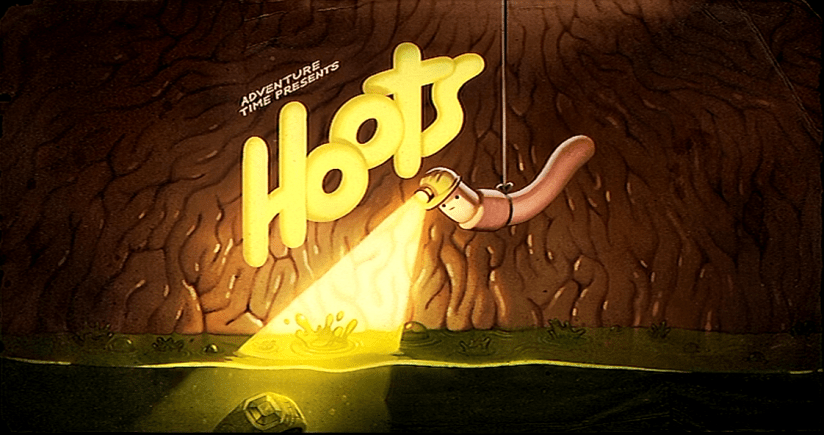
“Hoots” Review

H 1.png

Original Airdate: May 14, 2015

Written & Storyboarded by: Kent Osborne & Andy Ristaino

AT’s special guest star of the week is the Cosmic Owl! I was never really a fan of how the show turned this all-powerful cosmic being into a simple “bro” who wanted to chill in a hot tub and play board games, because I think it really diminishes his overall importance in the series as this deity that has an unspeakable amount of power regarding the dreams over others. I get that Adventure Time likes to approach said powerful beings by giving them a little dose of humanity to show that they aren’t very different from anyone else, which is fine, but I think the Cosmic Owl’s interpretation is a little boring. I mean, there’s already PLENTY of lonely characters in the series, including Ice King, Banana Man, Mr. Fox, and the already established lonely cosmic being, Prismo. So focusing on Cosmic Owl’s simple life as a dude who lives alone and just wants the love of another woman is nothing new, and nothing especially interesting.

H 2.png

I think Cosmic Owl’s star-aligned motel is truly neat. Going back to my original point, I don’t really know why an all-powerful being like the Cosmic Owl would live in a motel, but it works because it’s well-designed and visually interesting. And I thought the Cosmic Owl’s method of entering other people’s dreams was nicely conceived. Not only is it a duty for Cosmic Owl to fulfill his prophetic endeavors, but it’s done through a coin system and he’s given direct orders as to which dreams he should visit each night. It’s also shown that ANY dream that the Cosmic Owl does appear in is prophesied to come true. It’s a neat little system they set up, and pretty funny that the Cosmic Owl verbally acknowledges that he visits Finn’s dreams a lot. On a side note, the shenanigans between Jake and Shelby were absolutely great. I have no idea how Jake’s class ring ended up within Finn’s stomach, but the two of them engaging in “stomach fishing” while Finn is asleep is just delightful. I get the feeling that outside of the main Tree Fort trio, Jake and Shelby are the closest to each other in their home. They’re both cool dudes who enjoy the occasional party, and likely have the highest amount of common interests outside of Finn and Jake. I love Finn’s half-awake reaction to their behavior as well, and his hesitation to follow a Cosmic Owl dream because the last time he did he “got dumped.”

The dream version of Gunther is… interesting, to say the least. I mean, on the one hand, it’s a unique way of fleshing out Gunther’s personality and psyche in a way that the show is unable to do so. The dream version of Gunther is sturdy-headed and social to some extent, but is shown to be clouded by darkness and raw power, and is unable to shake those negative traits. Though, this form of development is tough for a gag character who rarely speaks or emotes. In fact, the next instance of Gunther shows that he’s full-on evil and doesn’t even consider his own morality as a result, so it kind of feels like this dream interpretation doesn’t really effectively flesh out his character in any way, besides reminding us that Gunther does have a secret malicious side that is just waiting to be unleashed. The twist ending actually did get me the first time around, though going back and rewatching it, I find that there’s very little telling details about Gunther’s character. Again, not that I really need Gunther’s character fleshed out to begin with. That being said, I’m more optimistic toward his revelation as a cosmic being, but we’ll get to that later on.

H 3.png

I don’t think the relationship between the Cosmic Owl and dream Gunther is very compelling at all, seeing as how it just seems like a story to progressively move the plot forward. I’m never really fully behind the Cosmic Owl’s romantic feelings because of how little I’m invested in his actual character, and aside from the fact that he’s shirking his duties because of it, there’s no real conflict presented that actually has me invested in the situation. Of course, there’s the aftermath of Cosmic Owl’s actions that leads to him directly sabotaging Princess Bubblegum’s role in her kingdom, though it never really has any consequences directly to the CO. In fact, does it even really matter if the Owl slacks on his duties? I mean, it’s presented as if it’s supposed to be a big deal, but what does it really matter? There’s no clear issues presented to the fact that Cosmic Owl is ignoring his job. Even in the case that he was involved in prophesying PB’s morbid dream, doesn’t this stuff happen all the time? Cosmic Owl’s role in Finn’s dream lead the boy to being dumped, which sent Finn on a spiraling path of depression. I just think it’s odd for the Cosmic Owl to actually care about the lives of mortals in this way. I guess he’s more concerned that he directly affected someone’s dream in any which way and reversed the results of the future, but once again, it doesn’t seem like there’s anything that Cosmic Owl directly has to worry about regarding his state of being or his “job.” This also raises another question in my mind, if Gunther didn’t ruin PB’s dream, would she even be replaced as princess? I mean, it’s clear that her citizens are already unhappy with the way she’s been controlling her kingdom, and it only seems natural that their stupidity would lead them to eventually vote-in a manipulative ne’er-do-well. It almost feels like the events of this dream didn’t really need to happen as the plot would progress forward regardless, unless the original state of the dream is supposed to imply that the Candy Kingdom is happy with the way PB is approaching a new leaf. It’s interesting thought fuel.

So yeah, I think there’s plenty of clunky bits, but the episode has its perks. That Jake and Shelby scene is certainly a highlight, and I like any bits featuring Prismo (though it somewhat angers me that he briefly forgot who Finn was… how do you forget the dude that sacrificed himself for you??) and his newly found passion to play the banjo. A small tidbit, but I also love the fact that all of Cosmic Owl’s “oo’s” are represented by an owl call, how clever! This episode is also really cool on a visual note, with a lot of unique dream sequences featuring various major and minor characters. But otherwise, I think it’s a bit of a dull stroll through the life of a somewhat uninteresting side character.

H 4.png

As a little added bonus, since I love dream interpretations so much, I’m gonna take a quick glance at all the dreams we did get to see throughout the episode and their possible interpretations:

  • Finn’s convergence with Sweet P and Martin is interesting, because I’m pretty positive it was carried out, just not in the literal sense. The most common interpretation is the upcoming anticipation of the comet, as these three beings come together, two of which were once incarnates of comets, and one of which who will join paths with one quite shortly. There’s also Jake muttering “say goodbye,” in reverse, which could represent Finn ultimately saying goodbye to his father, as well as the Lich, since he is now contained by Sweet P.
    • Also, Finn seeing clock bear is a more literal example, as Finn meets him later in Preboot.
  • Turtle Princess dreams of getting a haircut, and changing ones hair within a dream typically represents taking on a new change in life. She later dyes her hair completely black in Blank Eyed Girl!
  • Abracadaniel being laughed at in his underwear is a pretty obvious one, as he simply doesn’t feel that he’s accepted in his daily life by the people surrounding him. These insecurities were touched on in Thanks for the Crabapples, Giuseppe!
  • Peppermint Butler checking his wristwatch could be humoring the idea that Pepbut feels trapped and unable to truly unwind in his environment, as his darker and more twisted side counteracts with his duties as a butler.
  • Have no theory for what Forest Wizard’s could represent!
  • Tree Trunks finding a bag full of skulls most likely represents her subconscious fear of the dangers around her. I’m not sure how cognizant she is of Sweet P’s true demeanor, but I get the feeling that these two bits are somehow correlated.
  • Marceline flying on Hambo was cute. Mostly just saw it as Marcy embracing the freedom that’s around her with an adorable and cuddly friend from her past.
  • Lemonhope being shown in his shackles once more was pretty sad, seeing as how the little guy likely still feels restrained and held back by his past.
  • King of Ooo is appropriately seen in a tub full of water, which typically has to do with a positive change in the upcoming future. Though, he’s also pouring some of it out, which may embody the idea that he’s also sabotaging himself in the process.
  • The next bunch are pretty silly, as Punchy observes a flying kitten, Party Pat has huge thighs, and Mr. Cupcake tries to decide between a sandwich and a human head.
  • Mr. Pig mowing the lawn to no avail was humorous, simply because a dry dude like Mr. Pig would likely dream about such a mundane task. Also, flower heads sprouting from a mowed law imply that Mr. Pig needs to show his softer side, which he hasn’t been doing as of episodes like The Pajama War.
  • Huntress Wizard is seen crawling within a small cave, which could show how she has difficulty expressing herself and truly showing her full personality to the world. This is displayed in her hesitation to express feelings of infatuation in Flute Spell.
  • The snakes in Kim Kil Whan’s dream may embody his unresolved issue of bitterness towards his father Jake and the possible fear that said relationship may never be resolved.
  • Cherry Cream Soda tripping in her dream represents the unexpected challenges that oppose her. She recently lost her husband in Something Big.
  • Banana Man’s is pretty silly and mostly just revolves around his desire to get closer to Finn and Jake.
  • And finally PB’s, which quite obviously represents her downfall as a ruler after working so hard to build up her kingdom.

I doubt all of these interpretations hold true, but hey, it’s fun to take a gander regardless!

H 5.png

Favorite line: “Cosmic Owl was in it, he was acting all choco-loco.”

Adventure Time, Animation, Lifestyles

“Graybles 1000+” Review

G1000 1.png

Original Airdate: May 7, 2015

Written & Storyboarded by: Steve Wolfhard

Out of the experimental projects Adventure Time has focused on over the years, the Graybles episodes are likely the least memorable. That’s not to say that they’re completely awful; the Graybles episodes are an assortment of inoffensive and often relatively humorous short stories, but typically nothing more than that. Between the acclaimed Fionna & Cake series and the visually unique guest animated episodes, it’s no wonder that the Graybles entries are generally sidelined. However, Graybles 1000+ manages to be an absolutely memorable gem by staying true to its source material while also expanding on the various interesting ways these stories can be told and the Adventure Time world as a whole.

G1000 2.png

Continuing in season six’s tradition of focusing on the many different inhabitants of the Land of Ooo and beyond, this one focuses almost entirely on the life of Cuber, and once again, the show manages to make me care about a character I didn’t really think twice about before. Emo Phillips reprises his role as Cuber, who not only has one of the most distinct voices in the entire series, but also manages to capture the sense that Cuber is not from the present timeline to a tee. Cuber’s backstory as a baby – or in this case, a bayble – is not inherently really interesting, but is one that I grow affectionate for as the episode goes on.  It’s really awesome to me that Cuber’s connection and investment in Graybles go beyond just his role as an obscure television host. This episode presents Graybles as Cuber’s method of coping with his issues and his guide to getting himself out of trouble. As the beginning of the episode and a majority of the episode shows, Cuber seems to be a being stricken by constant paranoia, and Graybles are what help to propel him forward. It’s kind of neat that Graybles were given a purpose aside from just their initial intent, and even cooler that they represent the hierarchy of needs (despite Cuber’s directions to the audience to NOT look for a theme) and help Cuber to acquire his own set of necessities. Starting first with his physiologic needs.

I’ll talk about the actual Graybles in a bit, but I wanna get to the real meat first: the futuristic version of Ooo. We’ve had plenty of episodes that have dealt with the AT world’s past history, like Simon & MarcyThe Vault, and Evergreen, but this is the first episode to strictly focus on the future of said world, after getting some visual hints sprinkled around in Lemonhope – Part 2. This one was solo-boarded by Steve Wolfhard, and is his first solo-board to date, and boy, does he love including these little lore-based Easter eggs as much as possible. Wolfhard once stated,

“A fav part of working on AT is writing stuff like Martin’s speech in The Visitor, knowing what we throw will be caught later by the writers… I love that stuff. Feels like playing catch.”

This episode is very much in the same vein, with little hints of information and nothing explicit. But while an episode like The Visitor had questions that still demanded answers, the inquiries brought up by Graybles 1000+ don’t really demand as such. I mean, of course, there’s obvious bits that do require more information, like the appearance of the Ice Thing and what he actually embodies, though the rest of the episode comprises of small hints of information that are unsatisfying in all the right ways. For example, we hear a banjo strumming within Marceline’s still standing house, which could imply that Marceline is still living there, or it could mean that somebody else has moved in entirely. There’s also the Prizeball Guardian (who has a pretty incredible design, by the way) and the secluded living room within its interior, though no actual resident is seen. Again, this could imply that Bubblegum is still alive and has taken refuge inside her own safe haven, but again, these are questions that I think are best left up to interpretations of the audience. I’m sure some of these will ultimately get answered when the finale finally does air 12 years from now, but I’d hope that a couple of these hints are left mysterious. I even like the little implication that the interrupted wedding may involve descendants of Jake’s family, as they look somewhat similar in design to a character like Kim Kil Whan, and also speak in Korean.

G1000 3.png

This episode is really dull and uncolorful in its scenery, but in a way that I think is fitting and ultimately tragic. It’s really unforgiving in how much it emphasizes the fact that nothing in Ooo that we know and love will last forever. Hell, Cuber even flat out says that Jake is dead when he states, “bobble bobble, as the dead might say,” which is obvious considering it takes place one thousand years in the future, but holy shit is it bleak to think about our main characters dying at all. Graybles 1000+ is depressingly honest in all the right ways, and shows how finite the world as a whole is. It’s easy to think everything is forever, but as this episode shows, even vivid fantasies don’t last. The lack of color really adds to how much has changed within the Candy Kingdom and beyond, and the lifeless, grown tree is pretty heartbreaking considering how fun and vibrant the Tree Fort is as a location in general. A lot of people consider the ending of Lemonhope – Part 2 to be the really depressing futuristic version of Ooo, but I think this episode takes it one step beyond and really hammers in the tragedy of it all, considering that it’s all featured subtley in the background. To me, that’s the brilliance of it all. You have Cuber, who simply wants to get himself out of trouble and could care less about the people and lands that occupied his surroundings, and so we, the audience, are left to respond to his surroundings for him. It’s all really nicely tied together, which is again, mostly thanks to Wolfhard’s tremendous focus on small details.

I’ll chat briefly about each Grayble now. Finn, Jake, and BMO’s little shtick is nothing particularly spectacular, though it’s cute and fun as always. This Grayble is representative of safety, which is nice to see, because I feel like Finn actually using the wand would totally be the story of a first or second season episode, while he’s grown to recognize the dangers of such an item, and would prefer to keep it out of harm’s way instead. There’s actually three really interesting bits in the storyboard that ultimately didn’t make it into the episode:

  • Finn asks Jake is he’s ever imagined the two of them as girls, which is pretty obviously an allusion to Fionna and Cake.
  • Jake states, “lately I’ve been thinking about whoever your mom is, I have a lot of questions for her!” Kinda glad this one didn’t make the cut, because there’s already so much going on in this one as it is, but it’s still cool regardless to get a mention of Finn’s mother after the events of The Visitor. I have a feeling Finn did inform Jake of the story Martin told him.
  • BMO mentions, “I think a lot about the Lich!” Pretty dark for the little dude.

G1000 4.png

Onto Ice King’s, where it’s pretty much the same in tone as the first Grayble: it’s cute and fun, but nothing great. I don’t say this to demean the episode in any way, however. As I mentioned, I think it was really clever for Cuber to use these cute little stories as a method to help him cope with the world around him. Even if that means fixing his own broken leg, which still makes me squick to this day. Ice King’s Grayble very clearly represents social belonging, when he mentions that he loves Gunther.

Starchy’s is easily the funniest and most intriguing, as he discovers a chip in his tooth that is used by Princess Bubblegum to detect his every movement. I didn’t really like this at first, because I felt as though it was taking a step backward in PB’s developmental path, but at the same time, we don’t really know when the Grayble takes place. PB’s wearing her “I ♥ Bunny” t-shirt, which could imply that this took place during Jake the Brick, thus before the events of The Cooler. Regardless, it’s fun to see the ever-paranoid Starchy flee the Candy Kingdom, and the idea that the remainder of the series probably features a clone of Starchy and not the initial one we see in this episode. I’d love to see an episode elaborate on where the first Starchy fled off to. Also, it’s once again pretty cool to see a new lard species, with this one being a Grass Lard. I’d love to see a Pokemon Go! rip-off featuring the entire lard species. Starchy’s Grayble represents esteem, as he mentions that walking gives him self-esteem (which actually doubles as a good message to the kiddies about the importance of exercise to benefit overall psychological health).

G1000 5.png

The final Grayble is cute, with Tuber teaching Cuber a lesson in self-actualization (the final part of the triangle!) as he realizes that he is able to protect himself, with some much needed help from his Graybles. I guess the one thing I sort of feel weird about with this one is that Cuber pretty much straight up killed someone at the beginning, but he’s still kind of viewed as a hero in the end. I mean, granted, it was an accident and he didn’t really get a chance to explain his behavior, but I do think it’s weird that it’s kind of glanced over by the time we get to the end of the episode. It didn’t really affect my overall investment in his character, though.

Regardless, I think Graybles 1000+ is pretty awesome. Not only is it an awesomely tragic view of the futuristic Ooo, but it also adds so much depth to Cuber and the Graybles in general. It’s also just some really high stakes fun as well. I think Cuber’s situation is legitimately enticing, and it’s kept that way through a fast-paced tour among the post-post-post apocalyptic civilization. This is one that I definitely think deserves more recognition, as it manages to be really intriguing, mainly because of its subtle Wolfhardian details, but also because it builds on the AT world in so many different ways. Graybles 1000+ is another strong, lore-based episode in season six, and the best Graybles episode to date.

G1000 6.png

Favorite line: “You try not to think of a sandwich, and look what happens! A sandwich!”


Adventure Time, Animation, Lifestyles

“Chips & Ice Cream” Review

CAC 1.png

Original Airdate: April 30, 2015

Written & Storyboarded by: Somvilay Xayaphone & Seo Kim

Chips & Ice Cream is certainly not a fan favorite among AT’s audience. Aside from Sad Face, I’m pretty positive this is one of the most universally disliked episodes of the season, and the series in general. While I agree that I think it’s kind of annoying from an audio perspective, the episode has a lot of underlying implications that are quite fascinating. Or, underlying implications that I myself picked up on, even if they might not actually be there. I’m sure this isn’t the first time most of you readers have heard the comparisons between the plot of this episode and Pendleton Ward stepping down as the showrunner of Adventure Time, and AT’s identity as a whole. Again, I’m not entirely sure if this was the intended thought process behind the episode, but it makes it for one hell of an interesting ride.

CAC 2.png

The Chips and Ice Cream show that’s presented to BMO and a bunch of other children (lil’ rabbits) could easily be seen as analogy for Adventure Time itself, and that’s carried across even further by Finn and Jake’s response to said performance. Any outside viewer of the series, mostly from a parental perspective, would pass off Adventure Time as nothing but absurdity for the sake of absurdity. Of course, there are plenty of adults who do like AT, but Finn and Jake are supposed to represent a first time viewer more so than anything else. It’d be quite easy to fall into that confused mindset if you watched any episode of the series for the first time, no matter how complex or emotional. And then there’s Morty Rogers, the creator of Chips and Ice Cream who just so happens to be a bear. Interesting choice to say the least.

Though he created Chips and Ice Cream, Morty Rogers no longer wants the companionship of the two imps who are literally attached to himself. The reason Pendleton Ward stepped down as showrunner for Adventure Time was because, in his own words, “it was driving [me] nuts.” Ward could have never predicted how popular Adventure Time would become, and when it did reach peak popularity, Ward’s quiet and introverted passage of life became threatened. To the surprise of not a single fan, Adventure Time was huge in mainstream popularity for a period of time, spanning from around the beginning of 2012 to the middle of 2014. It has had tons of different spin-off material from books, games, t-shirts, action figures, and so on, most of which required Ward to devote his time to in regards to production as well, in addition to being a showrunner, which is already one of the most demanding jobs in the industry. Ward felt consumed, and wanted his quality life to return after feeling like he was unable to escape the confines of the series, and separated himself from his creation, as Morty Rogers does.

CAC 3

Chips and Ice Cream are now the responsibility of Jake, and I’m not sure how much of Jake’s response parallels Adam Muto’s (or even how Finn ties into all of this) since Muto is essentially a pretty mysterious guy, but it is intriguing to think of how this could have played out. I suppose Muto’s response could have been quite neutral and unremarkable, given that the weight of said responsibility is not really clearly defined. On one hand, Muto now has a chance to be the head honcho of one of the most prominent forces in modern animation, but he also has to ensure that the quality of the series will remain fresh, or even better than ever. Muto was left with news that he probably didn’t know how to express his feelings on or even comprehend, as Jake does when he’s left with what initially seems like an eternal curse.

BMO is also cleverly used in this episode as the childlike force to help showcase the importance of Chips and Ice Cream. As Chips and Ice Cream are left ignored by BMO’s parental figures and seen as “annoying,” Chips and Ice Cream begin to sing a soft lullaby under the moon, as BMO starts to understand the complexity and beauty behind their simple and silly demeanor. Finn and Jake are two characters that we viewed as silly and enjoyable goofballs when the series began, though as the series progressed, it became quite apparent that they were more than just a couple of knuckleheads, and that their truth strengths lied deeply in the passion and effort that was put into their respective developments.

CAC 4

While Ward stepped down as showrunner, he still remained as a somewhat active participant in story development. Ward did alleviate the stress of having the show consume his life, but he still never escaped from Finn and Jake completely. Morty Rogers’ absolute breakdown could represent this failure to completely escape the thing that was previously tormenting Ward, and the complicated results that often come from obsessions. Obsessions are impossible to escape from completely, especially when one is actively trying to escape them, and it can often be a confusing process on whether you are supposed to avoid said obsession, or to completely give into its power. Both are harmful regardless, and Morty Rogers is left with the pain of not knowing whether he wants Chips and Ice Cream in his life or does not. Again, these are really interesting behind-the-scenes details that we’ll likely never know entirely about, and while this episode doesn’t provide an outward answer to that drama, it is interesting to paint a picture in one’s head about how things actually went down, though I’m sure some bits and pieces hold true.

While Morty Rogers decides he does want Chips and Ice Cream back in his life, it’s all but too late, as Chips and Ice Cream are let free to exist on their own beyond being controlled by one person, as Finn and Jake are through the various creative influencers that Adventure Time has to offer. Obviously that was still an attribute of the series when Ward was at the helm, but this episode reinforces that Finn, Jake, and their TV show are able to flourish and exist creatively outside of the control of one mastermind. Though Ward put a great amount of time, effort, blood, sweat, and tears in Adventure Time, his influence lead for the creation of two characters so strong that they were able to find passionate voices beyond Ward’s sole direction. As Rogers laments, “what am I gonna do without you guys??” I can’t help but feel that Ward may have had similar thoughts. Adventure Time put Ward’s name out there and was his baby, but he gave it up and put it in the hands of another person. He’s worked on video games and web animations since, but has mostly kept himself out of the spotlight. I’m sure he’s much happier now at his own comfortable pace, though that initial separation period must have been a doozy, and he likely felt some form of regret. I have nothing but the deepest respect and affection for this man that brought me one of my favorite shows of all-time, and hope that he was able to find peace and solace when finally creating that separation. And, as Chips & Ice Cream proves, that separation may have been the best choice on both sides: for the show to prove it can thrive beyond one man’s ultimate pull, and for Ward to finally regain his peaceful quality of life.

CAC 5

Looking past these analogies, Chips & Ice Cream is fairly decent on its own. I think Morty Rogers’ obsessive turmoil is pretty interesting in its own right, some of Finn and Jake’s reactions to the imps are quite funny, BMO plays a pretty likable part as the main hero of this one, and there’s some funny gags that humored me. I actually really like the gruff man who owns the ice cream stand a good amount, mainly because his overly feminine voice is both really silly and kind of sweet in hindsight. It’s funny because it defies expectations, but it’s also cool because it’s easy to just accept that this random guy has a really feminine voice. It ties back into the standard that there’s all kinds of different and diverse people scattered around Ooo, and the fact that this guy isn’t treated as a joke within this world is pretty rad. There’s also a nice moody atmosphere that shadows this one, primarily during the nighttime scenes, that help to give Chips & Ice Cream a bit off an unusual and off feeling. I think the Pokemon speak that Chips and Ice Cream deliver can get rather obnoxious, though it tends to bother me less on repeated viewings. It was a nice touch to have Garfunkel & Oates play the comedy duo even if they don’t do much; this is the second episode in a row to utilize a voice actor from Steven Universe! Also quite interesting is that Chips and Ice Cream’s dialogue is translated within the storyboard of this episode, and you can actually check it out here.

So yeah, I think this one is pretty cool. I know not everyone is gonna be able to get behind the mindset that this episode is representative of Ward’s turmoil regarding Adventure Time, but that’s also what makes the show, and primarily season six, so much fun. There’s so much ambiguity that each episode can pretty much be however you interpret it; hell, Oliver Sava over at the A.V. Club has been going on and on about dick metaphors within the series for years! But it is cool to see the different mindsets and perspectives that individual viewers can take away from each episode, and this one strikes me as particularly interesting. I’m always really drawn by developments that happen during the production of TV shows, and using that series to represent said developments is a great way to go about releasing those fears and anxieties. It reminds me of the Reverend Jack Cheese episode of The Ren & Stimpy Show, and how that used cleverly placed metaphors to represent its previous showrunner’s influence on the series. Adventure Time takes a similar, yet more heartfelt approach to portraying said drama, and creates something that I think is genuinely pretty intriguing. It’s a personal perspective that I know is likely not shared by most, but it’s one that likewise reminds me what a special show this is to begin with.

CAC 6.png

Favorite line: “You have the best – out of this world day!”