Adventure Time, Animation, Lifestyles

“The Enchiridion & Marcy’s Super Secret Scrapbook!!!” Review

MSSS 1.png

Release date: October 6, 2015

Created by: Martin & Olivia Olson

I’ve explored about half of Adventure Time’s expanded universe when it comes to literature. I’ve checked out a good chunk of the comics, Playing with Fire, Marceline Gone Adrift, Islands, The Art of Ooo, Adventure Time Encyclopaedia, The Official Adventure Time Cookbook, and so on. Many of these range in quality, with some really cool entries like The Art of Ooo and Islands, and some pretty lame additions like Encyclopaedia. There’s also the other graphic novels, which I haven’t check out yet, and then there’s also the Epic Tales From Adventure Time novel, which… well, has anyone actually read those? I’m really curious what their deal is.

But of all the AT literature I’ve checked out, nothing is as potent or lore heavy as The Enchiridion & Marcy’s Super Secret Scrapbook!!!, created by Martin Olson and Olivia Olson, the voice of Hunson Abadeer and Marceline respectively. Filled with actual excerpts from the show’s version of the Enchiridion, this book is practically a dream come true for most Adventure Time fans, including myself. And it’s the one piece of Adventure Time merch (aside from Art of Ooo) that feels like it’s specifically aimed at the teen/adult demographic, rather than children. To which I commend Martin Olson for his decision not to pander in the slightest.

The first part of the book is focused specifically on the Enchiridion side of things, with chapters like “Hero vs. Wizard: Which is Which?”, “Meet Your Sword”, and “How to Defeat Witches”. Most of these chapters are both elaborate and fun, touching on mythology with university level English skills, while also trying to be as silly and entertaining as possible. The book also manages to be as convoluted as possible. One thing I don’t really like about this portion of the book is that I think it ends up being a little too fanservice-y, as in there’s little nods to stuff going on within the show currently that really could have been left out all together (like the poster for Billy’s crack, or the inhabitants within Ooo). The book somewhat justifies itself by not really making any sense; it includes elements from the past, present, and future, and as a whole feels like one big paradoxical journey with no clear identifiers as to what time period it is actually deriving from, which adds to the fun, really. It truly feels like the book is real on its own, and the Olsons did their damndest to make it feel like a true hero’s handbook.

MSSS 2.png

The art all looks awesome, with fantasy renditions of wizards, heroes, Abraham Lincoln, fairies, swords, and so on. This book actually had twelve different illustrators: Tony Millionaire, Renee French, Mahendra Singh, Lily Nunenmacher, Emily Olson, Leah Tiscone, Anthony Vukojevish, Ricky Blanco, Celeste Moreno, Aisleen Romano, Dan Povenmire, and Sean Terjaratchi. I always feel somewhat mixed about different artists incorporating AT’s different style into their own style, but here it really works. The drawings are very reminiscent of renaissance artwork, and it looks really cool and overall fits the tone of the book.

There’s also commentary from the main cast throughout, which is… fine. It’s perfectly serviceable, I just feel as though I was always so engulfed by what was going on within the actual book that the commentary never struck me as being nearly as interesting and the content itself. But whatevs, it’s cute and has some decent back-and-forths between Finn, Jake, and the Ice King.

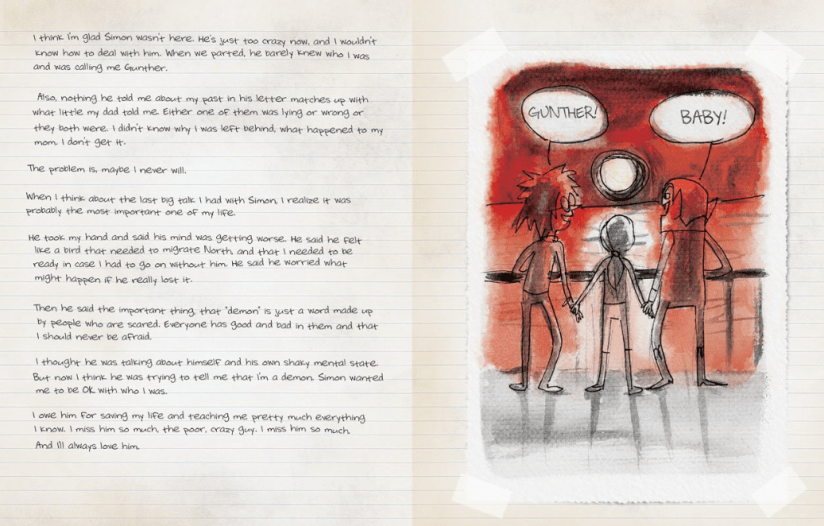
Surprisingly enough, while the Enchiridion stuff is great on its own, the scrapbook portion might be even better. I’m serious guys, this shit is some powerful stuff. I picked up this book expecting the scrapbook portion to be nothing but silly, lighthearted material to weigh out the Enchiridion portion, but by GOD is it dark. It’s a nearly complete history of Marceline’s time with Simon and her transition as a vampire after the Great Mushroom War, and while I think it gives us a little more than I needed to know about Marcy’s past history, it’s not canon, so you can kind of take everything with a grain of salt if you’d like. But some of the material is so unbelievably good that I wouldn’t mind adopting any of it into my belief system. The first half of the scrapbook is written by Simon, which is by far some of the most heartwrenching material in the entire universe of Adventure Time. We view Simon’s literal deterioration as the book goes on, as his handwriting and constructive thinking goes from professional and intelligent to messy and haywire in a short amount of time. It’s some of the most effective writing for Simon’s character I’ve ever seen, and while it touches on the Alzheimer’s allegories a bit, the way they characterize the crown in this book is closer to addiction than anything. The novel goes into great detail about how much Simon doesn’t want to put on the crown anymore, but he can’t resist the power and the energy it gives him to survive amongst the disasters occurring around him.
MSSS 3.png

Not only that, but Simon’s fears of losing Marcy are touched on in great detail. The book notes that Simon fears losing Marcy because she is all he has left after Betty departed, and Simon’s paranoia is shown in clear detail. I honestly think it’s pretty terrific how much of Simon and Marceline’s thoughts we get in this book. We get to see how some of their daily adventures play out, but it’s mostly a platform to show just how Simon and Marceline are feeling each day. It’s admittedly pretty emotional, and significantly less goofy than the Enchiridion portion, but justifiably so. It’s also filled with an equal amount of lore that still leaves me questioning its contents and analyzing how it fits into the world. For instance, Simon mentions “God” twice. I remember the first time I read the words “God help me” in this book; my mind was blown! What this implies about the world of AT as a whole could imply so many things; is there actually a God? Is he related to Glob? Was the concept of God generally lost in translation following the apocalypse? It really raises so many questions and I love how it’s never really touched on outside of a few mentionings.

The second half of the book is basically how Marceline learns to cope after Simon departs and how she transitions into a vampire hunter. It’s slightly less interesting than the Simon parts, but still pretty great. It touches on Marceline’s emotional vulnerability after Simon leaves, and just how alone in the world she truly feels. Again, I feel as though I would have no problem accepting any of this as canon, despite the fact that some bits contradict the actual show. For instance, Marceline details herself meeting Schwabl in her endeavors, and that Schwabl was originally a rust color. During Marceline’s transition into vampirism, she sucks the red from Schwabl’s fur and is deeply ashamed of herself for doing so. Yet, in the Stakes miniseries, Schwabl is white the entire time. I think I’m more disappointed because the idea of Marceline sucking the color from Schwabl’s fur is a pretty neat concept, especially because it touches on Marceline’s struggle as a vampire and how it affects the people around her. But regardless, it doesn’t put a damper on the intentions at all, the and the Marceline portions are still tremendously well done.

The artwork in Marcy’s Scrapbook ranges from cute to aesthetically pleasing doodles. It’s really cool how they touched on Marceline’s drawing and art skills developing more and more throughout her teen years.

So overall, this is a terrific read. It’s so rewarding for fans who really into the show that this book doesn’t talk down or pander to the audience. Martin and Olivia Olsen clearly understand what an impact Adventure Time has had on older audiences, and it’s nice that they created something almost entirely for that demographic. If you haven’t checked it out, yet please do. It’s a must read for any diehard AT fan out there.

See you all this upcoming week for the first of the Summer of Season Six reviews!


Adventure Time, Animation, Lifestyles

Season 5.2 Review

S52 1

Season 5.2 is arguably the most drastic shift in tone from previous seasons in the entire series. As I’ve mentioned before, and as most of your probably know, Adam Muto took over as showrunner beginning with this half season for the remainder of the series, and by comparing the first half of the series to the second half, you get a pretty clear sense of each showrunner’s attitude and influence on the show. Pendleton Ward is a quiet, yet silly guy who wanted a quiet, yet silly show. He always wanted the series to be kept light, with hints of darkness and beauty scattered throughout. The show was able to have moments of tragedy and heartache, but was always interlaced with lighter and sillier moments. While season 5.2 has similar attitudes in its execution, Adam Muto took a stance towards a darker, more controversial approach in terms of how the characters are written and how most of the stories are told.

Thus, Adventure Time became less about the individual adventures that Finn and Jake embark on and how their actions affect the people around them, and much more about Finn and Jake dealing with tougher and more realistic trials such as the loss of a loved one and the struggle to find out what place they truly have in the world. The scope of focus also became broader, and Finn and Jake are no longer the sole stars of the series. Inhabitants of the Land of Ooo all get their chance in the limelight, more so than ever in the following season.

S52 2

The show definitely lost a bit of its identity for this shift; no longer was this the series that was so goofy and weird that it spawned a cult following (and honestly, thank God for that on some accounts. Couldn’t tell you guys how much it bothers me when people address that AT is the best show to get high to). It’s now a series that is less focused on what made it work in the first place, and instead focused on evolving and developing on the world and characters it set up in the first place. And Muto chose some risky decisions to emphasize this direction.

This half season mostly focuses on Finn’s break-up with his loving girlfriend, Flame Princess. Though it doesn’t take up the entirety of the season, it is the main focus in episodes like Frost & Fire, Earth & Water, and The Red Throne, is an overarching theme in episodes such as Too Old, Love Games, and Dungeon Train, and is shown to still affect Finn deeply in The Pit and Rattleballs. And though we sympathize with Finn during his tough time, it’s almost as if the show intentionally placed him into unlikable territory and wanted the audience to turn against him in an attempt to show how much he has lost his way. Honestly, this is what makes this story arc so enticing for myself. Shifting Finn from a kind, caring hero to a slightly incompetent douchebag was a pretty ballsy decision, and while I think the writers went too far with his portrayal in some instances (i.e. The Red Throne), this display of Finn’s character was filled with ripe and interesting details. I’m glad that the series took time to show that, despite his identity as a hero and an overall do-gooder, Finn is still deeply flawed and is not immune to human insecurities. Finn is the human; this series is filled with so many (literally) colorful characters, that Finn is the one that we’re supposed to relate to and be able to empathize with the most. While I certainly don’t want him to embody all of the darker elements of humanity, it is refreshing to see that he is just as misguided and confused as the rest of us. I think that’s the best way to describe his behavior, “misguided.” I like that the show is still able to make him seem enjoyable and likable even during some of his less heroic moments. Regardless of his actions, you can just tell the little guy is confused and uncertain of his needs and desires as ever. In an episode like The Red Throne, where Finn’s behavior is exemplified to its own detriment, his portrayal fails because it touches less on making Finn seem human and flawed and just focuses on making him as cartoony and unrealistically incompetent as possible. The reason Finn’s character works so well is because of the honest, compassionate, and genuine storytelling that carries out his character. This season may not have showcased the Finn we all have come to love so dearly, but a different side of his personality that we can still accept and invest in, despite how unexpected it is. We care because we love Finn, and even in moments where we dislike how he’s acting, we understand his circumstances for what they are. It’s something this half-season really excels at.

S52 3.png

Aside from the Finn focused bits, this half-season also dabbles in some pretty experimental exercises. The Vault  cleverly uses a past life of Finn as a framing device to show a bit of depth into the creation of the Candy Kingdom, Root Beer Guy centers around the life of background citizen of Ooo, Lemonhope is an ambitious, visually interesting tale focusing on substance and allegories rather than all-out action, and Bad Timing features a very neat visual gag, while also managing to do the unthinkable by making Lumpy Space Princess a genuinely sympathetic character. Many episodes of this season also amped up Princess Bubblegum’s presence by showing her shadier and more questionable character traits, such as Frost & Fire, James, Apple Wedding, and Rattleballs. Again, it’s a bit of a controversial decision, but nonetheless an interesting route to take her character in, and one that really makes every one of her spotlight entries raise more intrigue and questions. Hell, Finn and PB steal the spotlight so much in this season that several other main characters take a bit of a step back from the limelight. Marceline had major appearances in Sky Witch, Red Starved, and Betty, yet of the three, only Sky Witch was truly telling and impactful for her character. Even Jake takes a bit of a step back and is absent for a total of four episodes toward the end of the season. Whether John DiMaggio was busy or not, I think it is somewhat appropriate that the series does not feel the need to shoehorn Jake in every time that Finn appears. Not that his presence isn’t welcomed, but it’s cool that the show is able to breathe with just having Finn on screen and leaving it at that.

While I overall enjoyed 5.2 more than 5.1, I will say that this second half to the season did fluctuate in quality quite a bit, but for interesting reasons. Part of the reason is because some episodes were so unbelievably good, and some of the best that the show has ever put out, that others seemed weaker in comparison. Dungeon Train is a perfectly delightful episode that continues to show off Finn’s insecurities, though through Jake’s perspective, yet I gave it a lukewarm review because it was also coming directly after the epic The Vault and the ever-hilarious Love Games. And because some of these episodes were so good, the weight of the actual clunkers felt much more diminishing. An episode like Red Starved might have been well fitting a couple of seasons earlier, but with where the series is now, it doesn’t truly do anything that justifies its placement this late in the series. And I don’t say that because Red Starved is filler; one of the best episodes to come out of this entire season is Time Sandwich, and that’s practically the epitome of filler. What I mean is that the bar is set so high by this point that anything “average” comes closer to feeling like a misfire. Which means that episodes like Box Prince and The Red Throne really feel like the worst pieces of shit ever created, even though I’d probably still prefer to watch them over anything else on television. What a complicated series this is.

S52 4.png

This half-season benefited from some really solid teams. Cole Sanchez and Andy Ristaino were practically comedic geniuses when working together (which really helped divert from the somewhat unfitting Sugar-Sanchez pairing), Tom Herpich and Steve Wolfhard continued to create some of the most ambitious efforts that AT has ever put out, and occasional guest work from Pendleton Ward, Graham Falk, and Luke Pearson gave an extra boost of creativity to each of the episodes they worked on. Somvilay Xayaphone and Seo Kim were unfortunately the only dead weights this season; feel bad ripping on them, but of the five episodes they worked on during this half-season, only Blade of Grass stands out as a truly competent episode. Earth & Water had some storytelling flukes, Box Prince was incredibly banal, parts of Play Date were good, but the episode as a whole suffers from being disjointed, and The Red Throne features some of the worst writing for Finn in the entire series and awful pacing. Luckily, the two eventually find their feeting with each other as partners, though this season certainly is not one of them. If I had to pick the true shining stars in terms of boarding partners, I’d say that Jesse and Ako were all around a pretty superb pairing, per usual. In terms of quality episodes, I think Herpich and Wolfhard definitely churned out more gems, but Castuera and Moynihan felt the most competent and unique in their efforts. Even an episode like Betty, which could have so easily tanked due to its haphazard pacing, succeeded because the two artists have really mastered the practice of fitting as much substance as they possibly can in 11 minutes. And of course, Billy’s Bucket List works as a perfect swan song for the temporary end to this team.

Top 5 Best Episodes

Honorable Mention: Lemonhope – Threw in an honorable mention last time, so why not do it again? Lemonhope isn’t an absolute favorite of mine, but its terrific storytelling and out-of-the-box visuals give it a very unique and different presence from any other episode in the series.

5. Root Beer Guy – A terrific noir-themed episode that centers around one of AT’s best background characters.

4. Frost & Fire – Was really debating putting this one in the top five, but I think it really deserves it. It’s the direct turning point for AT as a whole, and capitalizes on Finn’s mistakes in all the right ways.

3. Bad Timing – The best LSP episode to date, and one that is fueled by enticing emotional turmoil.

2. Too Old – A really great tale about the dangers of recreating the past, and one that’s done using Lemongrab and Finn of all pairings.

1. Time SandwichAT at its all-time funniest; a pure romp of undeniable joy, cleverly featuring most of AT’s main cast in all the best ways.

Top 5 Worst Episodes

5. Earth & Water – A follow-up to the “Finn’s break-up arc” that showcases an interesting backstory for Flame Princess, but nevertheless offers nothing particularly insightful or challenging.

4. Red Starved – A mostly dull episode that doesn’t offer anything new between the Jake-Marceline relationship. (Also, that fucking colorblind joke still rubs me the wrong way)

3. James – One that feels extremely convoluted and contrived, and also pretty bad on the storyboarding and animation side as well.

2. Box Prince – Very little of substance or interest.

1. The Red Throne – One of Finn’s worst portrayals to date, and an abysmally disjointed story to go along with it.

Final Consensus

Season 5.2 definitely spent a lot of time testing the waters for the new direction the series was heading in, which is often apparent, but man, some of these entries are just so damn good. It was also nice to get a bit of serialization that gave this season a compelling arc that (mostly) carried all the way through. Season 5.1 had a handful of gems as well, but often times I felt that it was… directionless. Where 5.2 feels much more focused on telling a consistent story, with plenty of delicious fluff in between. Overall, I thought this half-season was great. It fully committed to telling some really ambitious stories, many of which would become even more unique and creative in the following season.

Adventure Time, Animation, Lifestyles

“Billy’s Bucket List” Review

BBL 1.png

Original Airdate: March 17, 2014

Written & Storyboarded by: Ako Castuera & Jesse Moynihan

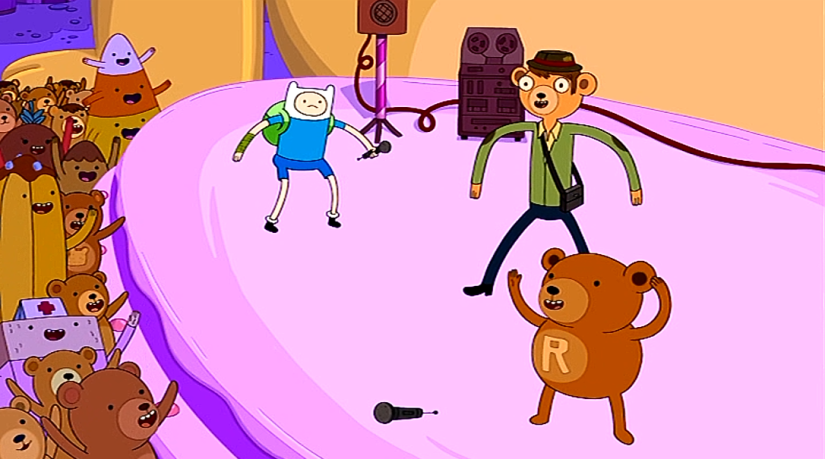
We’ve seen Finn at his absolute lowest during this particular half-season, and the little guy has certainly been through a lot. He not only lost his girlfriend of whom he deeply cared for, but also battled quite heavily with his own identity, to the point where he begins to lose himself in his own insecurities a bit, as shown in episodes like Rattleballs and The Red Throne. It’s clear that Finn has regained a bit of his happiness and self-confidence in Billy’s Bucket List, however. He’s rapping away with his admirable rival Rap Bear, and has the support of his friends and his acquaintances behind him. The ending of this episode, however, opens up an entirely new wound that would send Finn into an new state of depression and existentialism when he’s faced with the one person he likely never expected to meet: his human father.

BBL 2.png


I enjoy the silliness of this episode’s introduction; I’m never really a huge fan of when AT incorporates rap into their melodies, because it often comes off slightly awkward and never actually catchy (Regular Show was able to do rap episodes much better), but this instance is goofy enough to be enjoyable. And again, it’s nice to see Finn back being proactive and entertaining. Steve Wolfhard once mentioned that the previous episode, Lemonhope, saw Finn at his absolute dumbest (spurting loud noises and referring to cupcakes as “cup cups”) and while I don’t think it was to that episode’s detriment, it is nice to see the more competent and standard version of Finn that we haven’t seen much of throughout the past handful of episodes.

Finn’s happiness is slowly brought to a halt when Party Pat somewhat uncomfortably brings up Billy, who last was revealed to be dead in the episode Finn the Human. It was nice to bring Billy and the Lich back into the mix of things after an entire season of barely even mentioning the two. It’s also nice to get a bit of a flashback sequence that shows Billy and Finn hanging out with each other, partaking in adventurous activities. Though it was implied that they had hung out following the episode His Hero, it is at least nice to see some visual evidence that they did set aside time for cool quest shit before Billy’s inevitable death in The Lich. Makes the weight of his death feel much more impactful from Finn’s perspective.

BBL 3.png

It’s a surprising and somewhat surreal experience to hear these characters talk about Billy’s death so earnestly. Adventure Time characters who die very rarely stay dead; up to this point in the series, the only characters who died and actually stay dead are Billy and the King of Mars, and to my knowledge, only one other character’s death is solidified following this episode. Everyone else who perishes in the AT universe is either revived or reincarnated, so it is somewhat refreshing to have these characters so solemnly discuss the death of a loved one. It all feels very honest and in good taste, which really helps this episode soar beyond its main premise. Even Jake himself is dealing with a bad case of being in denial about the whole thing.

One character that helps really add mood and substance to the episode is Billy’s ex-girlfriend, Canyon. Canyon is a side character I quite enjoy, again, mostly relating to her earnesty in her past relationship with Billy. She doesn’t have a huge presence on her own, but I think her relationship with Billy and wistfully zen behavior are enough. I enjoy how her connection to Billy is kept really mature and realistic; there was no ultimate drama or intensity that led to their break-up, Canyon simply felt stagnant in her path and decided to let Billy go because of it, though you can tell there was still a heavy feeling of love that stuck with them even following their break-up.

BBL 4.png

In addition to that connection, I really love the way Canyon and Finn work off of each other. It’s a simple mutual connection that really goes a long way in regard to how much respect the two show for each other. It really just feels like two mature people naturally relating to each other, and honestly, I think the episode is really underrated on that aspect. The atmosphere with which the premise is carried out is truly terrific, and even though only half of the episode is dedicated to mourning Billy’s loss, it’s still treated better than I could’ve expected. Canyon’s identity is also formed through some strong voicework by Ako Castuera, and it’s even more fitting that this was initially her last episode as a storyboard artist for Adventure Time. Ako and Jesse certainly put their all into this one, and while I enjoy the direction Jesse’s writing style takes in the following season, the two certainly made for one of the best boarding teams in the duration of the series. Ako’s presence will be missed.

And as mentioned before, Finn’s portrayal in this episode is much needed and refreshing. I enjoy the degree to which he understands Billy’s flaws and issues as Canyon lists them off, to which Finn responds “even heroes have slumps, bro.” After an entire season of making countless mistakes, Finn realizes that heroes, like anyone else, are still “human”. Despite the fact that Finn and Billy are regarded as two of the most legendary heroes within Ooo, they are still flawed and imperfect beings, and Finn is beginning to understand that he can be hero, but still fuck up from time to time.

BBL 5.png

Following Finn’s desire to finish Billy’s bucket list, he discovers that the final unmarked option (aside from telling Finn “that thing”) is to lay on his back in the ocean. It’s also a sign of Finn’s growth, that instead of automatically deciding that he can’t face his fear, he at least wants to attempt to do so. Finn has experienced fears and traumas during his entrance in adolescence whether he likes them or not, and he’s now more willing to put himself into uncomfortable situations because, hey, he made it out alright the first time, right? Though he isn’t without adversity, as the Fear Feaster returns once more to extract torture onto his host body. It’s nice to hear Mark Hamill’s voice again after being gone so long from the show, and his inflections continue to hit on both menacing and humorous notions.

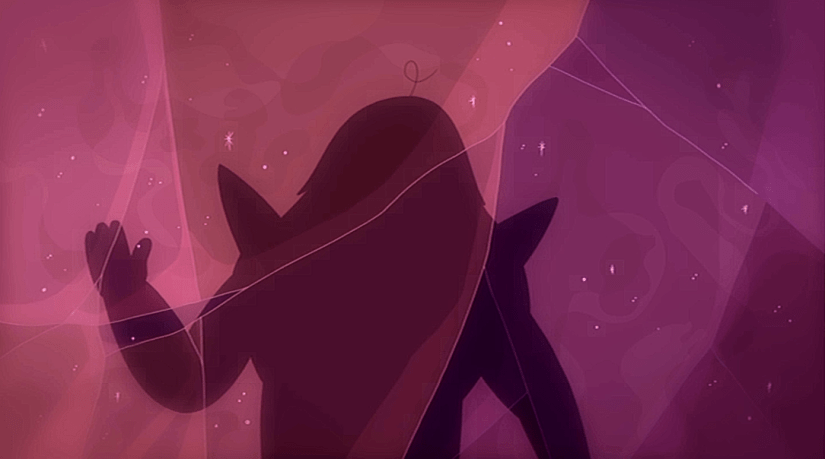
While he’s unconscious in the ocean (or is he?) we’re treated to a delightfully trippy sequence in which Finn’s hat is taken from his head and sizes up to giant levels, while shades of bright purples, yellows, and pinks make up the sea floor. I’ve seen a lot of interpretations of this scene, mainly that the loss of Finn’s hat symbolizes the loss of his youth, though I’m much more inclined to believe that it’s just an entertaining visual experience. I’m not opposed to the idea that it has some sort of deeper meaning, but I’m perfectly fine with it being surface level enjoyment as well. The colors, the backgrounds, and the music are all wonderfully executed, making it for equally entertaining experimental experience (pulled that alliteration out of my ass) after coming off the heels of Lemonhope.

BBL 6.png

When awakening and resurfacing, Finn is still afraid while being confronted with the Fear Feaster. Though, his instinctual terrors and anxieties in relation to his eternal grass sword curse take over, and Finn’s grass sword effectively disperses of his fears and adversaries, which is attempt to make the grass sword’s owner content and safe in his own experience. This is a nice set up to the long running saga of the grass sword having a brain of its own, and it’s nice to see Finn’s confusion and lack of understanding when it comes to the grass sword’s power over his own body, and his own actions.

Though, the grass sword ultimately worked in Finn’s best interests, as he finally is able to experience the ocean without a care in the world. It’s here that Billy presents himself to Finn within the stars, and suggests that Finn go to the Citadel, where he will meet his human father. It’s a huge moment in Finn’s developmental path, and one can only wonder what is going through Finn’s head as he repeatedly hears Billy’s voice over and over again. Finn likely didn’t question the existence of his human parents much before, as I’m sure it was something he locked away within his vault because he simply didn’t want to deal with the emotional weight of the issue. Now he’s confronted with the existence of his biological father whether he likes it or not. Does Finn even want to meet his father? Why did Finn’s father abandon him as a baby? Why is he in the Citadel to begin with? These are all questions that are likely running through Finn’s head nonstop, and questions that we as viewers are inclined the wonder ourselves.

BBL 7.png

Though the biggest question remains: knowing what we know now in the series, why would Billy want Finn to meet his father in the first place? Some have speculated that it was actually the Lich projecting himself as Billy, though I don’t really buy into this one at all. I simply think that Billy knew it was an important part of Finn’s journey that he did meet his father at some point. It would lead to much suffering for Finn, though it would overall lead to the growth of Finn’s character and his developmental as a smart, young man. Regardless of whether Billy telling Finn was a good choice or not, Finn will have a ton to chew on in the future, as he experiences one of the toughest hardships in his life.

This episode is definitely one that gets overlooked a lot, and I think it deserves more attention. The atmosphere is terrific, the characters featured are just swell, and it’s nice to have a crucial solo journey for Finn that really shows us as an audience that he hasn’t transformed into a complete idiot manchild. And all with a big, dramatic cliffhanger to boot the longest season to date.

And that’s it for season five! Again, thank you to everyone who has kept up with the blog to this point, I honestly can’t believe I’ve made it this far in such short time. The season five review will be out later this week, followed by the secret bonus review, and some updates about how season six will be covered are soon to come. Big stuff is on the way folks, and I look forward to everything that’s ahead!

BBL 8.png

Favorite line: “Well, that’s gonna bother me forever.”